What Is National Diabetes Week and Why It Matters
National Diabetes Week is an annual awareness campaign that brings attention to the people, families, and communities living with diabetes. Held each July, it shines a light on a condition that affects more than half a billion people globally — and continues to grow at a pace that has the World Health Organization calling it one of the great public-health challenges of our time.
The week is more than a hashtag. It funds research, educates the public, supports advocacy, and offers people living with diabetes a moment to be seen, heard, and supported. Whether you have Type 1, Type 2, gestational diabetes, or pre-diabetes — or you love someone who does — National Diabetes Week is a chance to learn, share, and act.
The Reality of Living With Diabetes
Diabetes is not a single disease — it's a family of conditions that affect how the body produces or uses insulin, the hormone that regulates blood sugar. The most common forms:
- Type 1 diabetes — an autoimmune condition where the pancreas stops producing insulin. Usually diagnosed in childhood or young adulthood, requires lifelong insulin therapy.
- Type 2 diabetes — the body becomes resistant to insulin or doesn't produce enough. Often linked to lifestyle, family history, and age. Managed with diet, exercise, oral medication, and sometimes insulin.
- Gestational diabetes — develops during pregnancy and usually resolves after birth, though it raises future Type 2 risk.
- Pre-diabetes — blood sugar above normal but below diabetes threshold. A clear warning sign and an opportunity for early intervention.
The Numbers Behind the Awareness
According to the International Diabetes Federation, over 537 million adults worldwide live with diabetes — and projections show that figure rising sharply by 2045. The condition is responsible for one death every five seconds globally. Awareness weeks exist because behind every statistic is a person, a family, and a daily routine of careful self-management.
Recommended for you
Products related to this article
Hand-picked to go with what you just read.
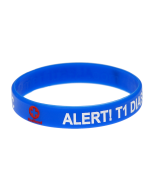
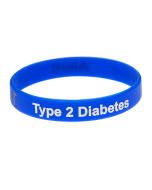
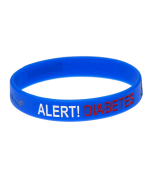
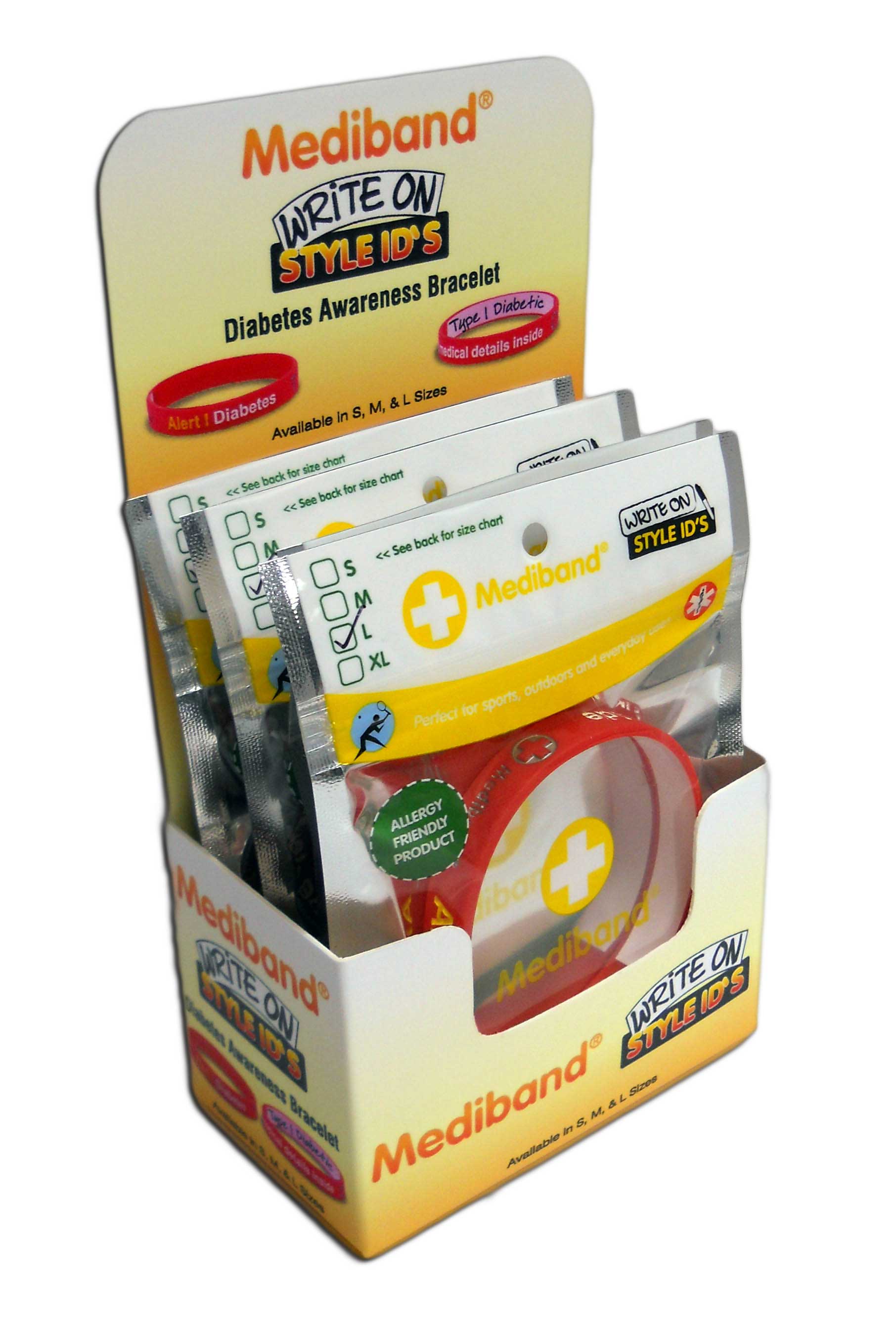
Why a Medical Alert Bracelet Matters for People with Diabetes
For someone living with diabetes — particularly insulin-dependent — a medical alert bracelet is one of the simplest, most effective safety tools. Diabetes emergencies happen fast: a hypo (low blood sugar) can cause confusion, slurred speech, or unconsciousness within minutes. The first responder may not know what they're looking at. The bracelet does the talking.
The five most common diabetes emergencies where a clear medical alert changes the outcome:
- Severe hypoglycaemia — confusion or unconsciousness easily mistaken for intoxication or stroke.
- Diabetic ketoacidosis (DKA) — high blood sugar with vomiting, deep breathing, and altered consciousness.
- Hyperosmolar hyperglycaemic state (HHS) — severe dehydration in older Type 2 patients.
- Insulin-pump malfunction — abnormal sugar swings if the pump is removed or malfunctions.
- Cardiac and renal events — diabetes complicates heart attacks and kidney emergencies; responders need to know.
What to Engrave on a Diabetes Medical Alert Bracelet
The most useful diabetes ID is short, action-relevant, and unmistakable. The five priority fields:
- Wearer's first and last name
- Type of diabetes — "Type 1 Diabetic", "Type 2 Diabetic", "Insulin Dependent", "On Insulin Pump"
- Critical action — "Insulin Therapy", "May Need Glucose", "Don't Remove Pump"
- Emergency contact phone number — answered 24/7 by family or carer
- "See wallet card" if longer info travels with you
Some wearers add a QR code on the band linking to a digital profile with current insulin doses, last A1C, hospital details, and endocrinologist contact. Useful for full disclosure without crowding a small band.
Beyond the Bracelet — How to Mark Diabetes Week
Wearing a medical ID is only one part of supporting people with diabetes. National Diabetes Week is also a chance to:
Get Tested or Encourage Family to Test
Pre-diabetes is silent — many people don't know they're heading toward Type 2 until a crisis. Free or low-cost diabetes risk checks are available through GPs, pharmacies, and online risk calculators. National Diabetes Week is the right reminder.
Learn What a Hypo Looks Like
If you live, work, or coach someone with insulin-dependent diabetes, know the signs of hypoglycaemia: confusion, sweating, shakiness, irritability, slurred speech. The intervention is simple — give fast sugar. Knowing the signs saves lives.
Support Diabetes Charities and Research
Diabetes Australia, JDRF, the International Diabetes Federation — all run national-week campaigns that fund research, education, and patient support. Even a small donation amplifies the awareness effort.
Update Your Care Plan
If you have diabetes, this is the perfect week to refresh your management plan with your GP or endocrinologist. New medications, new pumps, new monitoring tech — the field evolves quickly, and your plan should keep pace.
Wear Blue
The Blue Circle is the global symbol for diabetes awareness. Wear blue, share your story, post a photo. Visibility creates conversation, and conversation drives action.
Living Well With Diabetes — Day to Day
Modern diabetes management is more sophisticated than ever — continuous glucose monitors, smart insulin pens, hybrid closed-loop pumps, GLP-1 medications, and digital coaching tools have transformed daily life for many. But the fundamentals haven't changed: regular monitoring, balanced eating, regular movement, medication adherence, and ongoing care from a diabetes team. A clear medical ID supports all of it by closing the gap when an unexpected emergency happens away from home.
Frequently Asked Questions
Do all people with diabetes need a medical alert bracelet?
Anyone on insulin therapy benefits the most — Type 1 diabetes and insulin-dependent Type 2. People managing diabetes with diet or oral medication still benefit from a wallet card or simple ID, as it tells responders why blood sugar may behave abnormally during an emergency.
What's the difference between a Type 1 and Type 2 medical alert bracelet?
The engraving differs — Type 1 bracelets clearly state "Type 1 Diabetic / Insulin Dependent" because the treatment in an emergency is critically different. Type 2 bracelets state "Type 2 Diabetic" with current medications. Both serve the same fundamental purpose: telling first responders the metabolic state to expect.
Should my child wear a diabetes alert bracelet at school?
Yes — particularly for Type 1 diabetes. The bracelet flags the condition for teachers, coaches, casual relief teachers, and excursion leaders. Pair it with a school care plan that includes hypo signs, snack rules, insulin schedule, and emergency steps.
Can I wear my insulin pump and a medical alert bracelet together?
Yes — many people with insulin pumps wear an additional bracelet specifically engraved "On Insulin Pump – Do Not Remove" to instruct emergency staff. The pump itself isn't always obvious to a paramedic, especially if attached on the abdomen and hidden under clothing.
How do I update the bracelet when my diabetes management changes?
Write-on silicone bands are easy to update — refresh the ink or write on a fresh band. Engraved bands can be re-engraved or replaced inexpensively. Plan to review at every endocrinologist visit, after every medication change, and annually as part of National Diabetes Week.

Written by
Founder, Mediband
Founder of Mediband; over 20 years providing medical IDs worldwide.
← Previous
Elderly Medical Alert Bracelets: Making Safety Simple at Any Age
Next →
Preventative Care: How Smart Health Habits Improve Your Life
Comment(s)