
Why Penicillin Allergy Is a Family Issue, Not Just a Personal One
Penicillin allergy runs in families. If one parent has it, children have a higher chance of developing it. If one sibling reacts, the others may carry the same risk. And in any household, the moment of emergency rarely involves just the patient — it involves whoever calls the ambulance, whoever speaks to the paramedic, whoever rides to the hospital. Looking after penicillin allergy is genuinely a family affair.
According to HealthDirect Australia, penicillin is the single most commonly reported drug allergy, affecting an estimated 1 in 10 Australians. About 10% of those report severe (life-threatening) reactions. Yet most people who say they're "allergic to penicillin" don't carry any visible identification — leaving every emergency response and hospital admission to depend on memory, paperwork, or luck. A medical alert bracelet fixes that gap permanently.
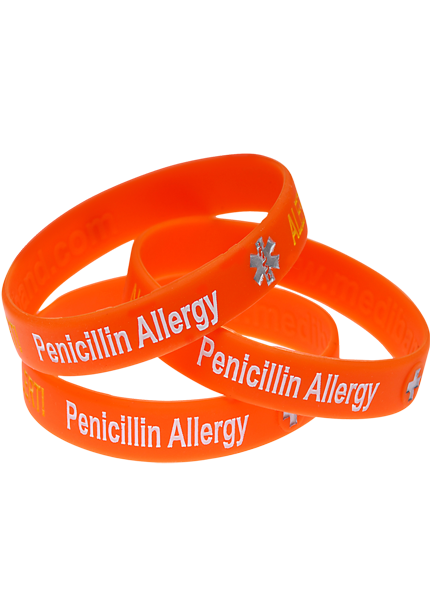
What Makes Penicillin Allergy Especially Dangerous?
1. It's Common — So Doctors Reach for Alternatives Without Asking
Penicillin and its derivatives (amoxicillin, ampicillin, flucloxacillin) are the most commonly prescribed antibiotics in Australia. Without a clear alert, an emergency department doctor may give one before checking for allergies — particularly during high-pressure events like trauma or sepsis.
2. Reactions Range From Mild Rash to Anaphylaxis
About 90% of penicillin reactions are mild (rash, itching). But 10% progress rapidly to severe anaphylaxis: airway swelling, blood pressure collapse, loss of consciousness. The wearer cannot warn anyone in that state — only the bracelet can.
3. Cross-Reactivity Affects Other Antibiotics
People allergic to penicillin may also react to cephalosporins (Keflex, Rocephin) and rarely carbapenems. The bracelet ideally specifies "Penicillin + Beta-Lactams" so prescribers avoid the entire class.
4. Most Reactions Happen Outside the Home
Workplaces, restaurants, schools, sport venues, holiday destinations — these are where allergic reactions strike. The bracelet is the only ID guaranteed to be on the wearer at every one of those locations.
5. Children Often Don't Know to Tell
A young child with penicillin allergy may not understand the medical word, may not remember what they were told, or may simply be unable to speak when reacting. The bracelet speaks on their behalf.
Recommended for you
Products related to this article
Hand-picked to go with what you just read.
Building a Penicillin Allergy Plan for the Whole Family
Treating penicillin allergy as a family safety system, not just an individual concern, means three layers:
Layer 1: Bracelets for Everyone Affected
Every family member who has tested or reacted to penicillin should wear a medical alert bracelet. Soft silicone for kids, designer reversible for teens, stainless steel or premium materials for adults. The wearable is the foundation.
Layer 2: Wallet Cards or QR Codes
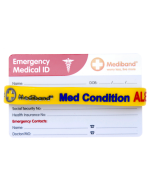
Carry deeper detail — the date of the original reaction, the specific drug that caused it, what alternative antibiotics are safe. A laminated wallet card or QR-coded version backs up the bracelet for hospital intake.
Layer 3: Family Medical Sheet at Home
A laminated sheet on the kitchen fridge, listing every family member's allergies, medications, and emergency contacts. Babysitters, house guests, and grandparents can read it instantly — backup for when the bracelet wearer is asleep or out of the room.
What Should Be Engraved on a Penicillin Allergy Bracelet?
Less is more. The five priority fields:
- Wearer's name — first and last.
- "Penicillin Allergy" or "Anaphylaxis – Penicillin" — depending on severity.
- Other significant allergies — if any: cephalosporins, sulpha, NSAIDs.
- Emergency contact phone — answered 24/7 by family or carer.
- "See wallet card" — points responders to deeper detail.
Common Penicillin Allergy Bracelet Mistakes
- Vague engraving — "Allergic" without specifying the drug. Every paramedic asks the same follow-up question, wasting seconds.
- No emergency contact — paramedics need someone to confirm or expand on what's engraved.
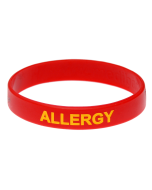
- Wrong colour for severity — mild penicillin allergy can use a generic alert band; anaphylaxis-severity should be the red allergy alert.
- Outdated info — children outgrow some drug allergies, adults develop new ones. Review every six months.
- Bracelet in the drawer — engraved jewellery worn only "when going out" misses 80% of the time. Daily wear is essential.
How a Penicillin Allergy Bracelet Saves Lives in Real Emergencies
Across customer accounts and clinical experience, the typical sequence:
- The wearer collapses, faints, or has a sudden reaction.
- A bystander, family member, or paramedic notices the bracelet within 30 seconds.
- "Penicillin Allergy" is read off the wrist before any IV antibiotic is started.
- The hospital intake form is filled out with the allergy noted from the bracelet — even before the wearer can speak.
- The whole care chain — from ambulance to ED to ward — uses the bracelet info to choose safe antibiotics.
That 30-second window is the difference between a routine treatment and a fatal allergic reaction triggered by the very medication meant to help.
Choosing the Right Style for Each Family Member
Match the bracelet to the wearer's life:
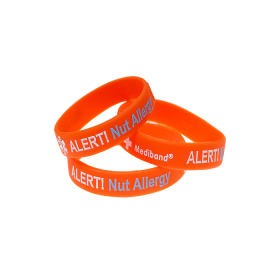
- Babies and toddlers — soft silicone, bright colour, parents' phone number engraved.
- School-age children — kid's silicone Mediband in a colour they chose, simple "Penicillin Allergy" + parent phone.
- Teens — designer reversible (alert hidden when self-conscious, visible when needed), or stainless steel for jewellery-style appearance.
- Adults — stainless steel classic for office wear, silicone for sport, premium leather for formal.
- Older adults — comfortable wide-band silicone or stainless steel; pair with a wallet card for the deeper medication list.
Browse the full Mediband range by age, condition, and style. For more on what to engrave and how to choose, see our first responder guide.
Frequently Asked Questions
If only my child is allergic to penicillin, do other family members need to wear bracelets too?
No — but everyone with the allergy should. If only one child is affected, only that child needs the bracelet. However, family medical history matters: if one parent or sibling is allergic, others are at higher risk and may develop the allergy later. Allergic reactions can occur on first exposure, so a family history of penicillin allergy is something to flag at every medical appointment.
Should the bracelet just say "Penicillin Allergy" or specify what reaction occurred?
For mild reactions (rash, itch), "Penicillin Allergy" is enough. For severe anaphylaxis, engrave "Anaphylaxis – Penicillin" or use the red allergy alert design. The severity tells responders whether to call for emergency adrenaline or simply note the allergy on the chart.
Can I take a penicillin allergy bracelet off when I'm at home?
You can — but the data shows that most allergic reactions happen at home or just outside it (kitchen, garden, supermarket, school pickup). Daily wear is the most reliable approach. Modern silicone and stainless steel bands are comfortable enough for sleep, shower, and exercise without removal.
What if I'm not 100% sure if I'm allergic to penicillin?
See your GP. Around 90% of people who report a penicillin allergy are not actually allergic on testing — but the 10% who are face real risk. Skin-prick testing or oral challenge testing can confirm or rule out the allergy definitively. Until tested, treat the suspected allergy as real and wear the bracelet.
What if my penicillin allergy disappears after years of avoidance?
About 50% of people lose their penicillin allergy after 5-10 years of avoidance. Confirm with a GP and allergist before removing the bracelet — never remove based on assumption. Until medically cleared, the bracelet stays on. Cleared patients should still keep records of the original reaction in their medical history.

Written by
Founder, Mediband
Founder of Mediband; over 20 years providing medical IDs worldwide.


I am on also a lot of medication & under Medical supervision, does this need to be documented.
Thank you in advance.
We have a few different instock penicillin allergy bracelets to choose from and each type has a different price. Please click <a href="https://www.mediband.com/ca/catalogsearch/result/?q=Penicillin" target="_blank">Penicillin</a> for the standard instock ready to ship penicillin allergy bracelet.
Alternatively, you can create a custom mediband at this link <a href="https://www.mediband.com/au/custom-id/" target="_blank">Mediband Custom ID</a>. You can add a lot more information to these than the standard instock medibands. We also have a service called <a href="http://www.medibandplus.com/" target="_blank">medibandPlus</a> to store further medical details.
All of our silicone medical id are made form food grade silicone and contain no latex rubber. They are hypo (non) allergenic.
We ship world-wide from <a href="https://www.mediband.com/au/" target="_blank">www.mediband.com</a> or you can search for a pharmacy stocking regular instock medibands.
Hope this helps. Let me know if you have any further queries.
regards,
Michael