

The Reality of Caring for Someone with Alzheimer's
Caring for a loved one with Alzheimer's disease is one of the most demanding journeys a family can take. The disease changes the relationship, the home routine, and the carer's own life — slowly at first, then in waves. According to HealthDirect, dementia (most commonly Alzheimer's disease) affects more than 55 million people globally, and that figure is projected to nearly triple by 2050. Most of those people are cared for at home, by family members, with limited formal support.
This guide offers five practical ways for carers to make day-to-day life a little easier — physically, emotionally, and practically. None of them remove the hard parts of Alzheimer's caregiving, but each one creates space, safety, and energy for the longer journey ahead.
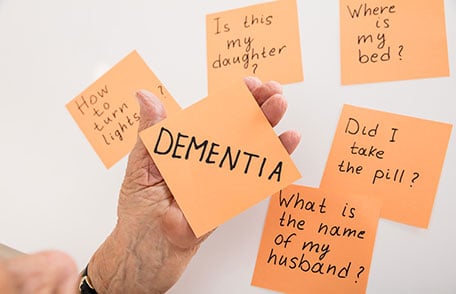
1. Build a Predictable Daily Routine
People with Alzheimer's cope much better when life is predictable. The unfamiliar — new places, new faces, new schedules — increases confusion, agitation, and "sundowning" symptoms in the late afternoon. A simple, repeatable daily routine reduces stress for both the person being cared for and the carer.
What a Helpful Routine Looks Like
- Wake-up and morning care at the same time daily
- Meals at consistent hours — including snacks
- One main outing or activity per day, in the morning when energy is highest
- Quiet, calming hours in the late afternoon to ease sundowning
- A familiar bedtime ritual — same lights, same music, same caregiver if possible
Predictability isn't boring — it's protective. The brain that's losing memory leans on routine the way a tired runner leans on a pacer.
Recommended for you
Products related to this article
Hand-picked to go with what you just read.

2. Make the Home Safer for Memory Loss
The home environment can either reduce risk or quietly increase it. As Alzheimer's progresses, ordinary household items become hazards: stovetops, hot taps, slippery rugs, medicine cabinets, locked doors. Small changes prevent emergencies before they happen.
Kitchen Safety
- Install stove safety knobs, automatic shut-off timers, or a child-lock cover.
- Lock or remove sharp tools when not in use.
- Set water heater to maximum 49°C (120°F) to prevent scalding.
Bathroom Safety
- Install grab rails near toilet and shower.
- Place a non-slip mat in the shower.
- Remove loose rugs that can cause falls.
- Lock medicines and cleaning chemicals out of reach.
Wandering Prevention
- Install door alarms or motion sensors at exits.
- Camouflage exits with curtains or door-coloured paint to reduce attention.
- Keep car keys, wallets, and phones secured if needed.
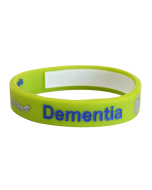
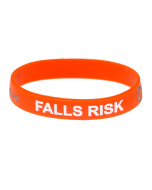
- Place a medical alert bracelet on the wearer at all times — bright colours like neon green increase the chance of being spotted by a stranger.
3. Use a Medical Alert Bracelet — Always
This is the simplest, lowest-cost intervention with the highest return. A clear medical alert bracelet on the person with Alzheimer's:
- Identifies the wearer if they wander or become lost.
- Tells passers-by what they're dealing with — many people with Alzheimer's appear lost or "drunk" to a stranger; the bracelet flips the response from suspicion to help.
- Tells emergency responders the diagnosis instantly — critical when the person can't communicate.
- Lists an emergency contact so a family member is reached within minutes of any incident.
A simple "Alzheimer's / Memory Loss / Call [name] [phone]" engraving covers most scenarios. Pair it with a wallet card carrying more detail — current medications, GP, recent surgeries, advance care directives.
4. Simplify Communication
As Alzheimer's progresses, the person's ability to follow conversation declines. Carers who learn to communicate in dementia-friendly ways report dramatically less day-to-day frustration.
What Works
- One sentence at a time, with eye contact.
- Yes/no questions instead of open-ended ones — "Would you like tea?" instead of "What would you like to drink?"
- Use the person's name often — it grounds them.
- Match your tone to a calm, low pace.
- Use gestures and touch alongside words.
- Validate feelings rather than correcting facts: "You're worried about your mum — that's understandable" works better than "Your mum passed away years ago."
What Hurts
- Quizzing ("Don't you remember?")
- Reasoning with delusions or anxieties — agitation grows when challenged.
- Loud or fast speech.
- Multiple voices or conversations in the same room.
5. Look After Yourself — Carer Burnout Is Real
The one thing that derails Alzheimer's caregiving fastest is the carer's own collapse. Burnout, depression, and physical exhaustion are common — and they harm both the carer and the person being cared for. Looking after yourself is not optional, it's the foundation that makes everything else sustainable.
Carer Self-Care Essentials
- Respite care — even a few hours per week of someone else stepping in. Most regions have funded respite programs.
- Carer support groups — local and online. Hearing from others doing the same job halves the load.
- Your own GP appointments — keep up regular check-ups; carers often delay their own care for years.
- Sleep — non-negotiable. Bad sleep makes every other carer skill harder.
- Exercise and outside time — even 20 minutes a day affects mood and energy.
- Mental-health support — talk to a GP about counselling if depression or anxiety builds up.
Resources for Australian Carers
Globally, families caring for someone with Alzheimer's have access to support networks, government respite, and clinical guidance. Useful starting points include national dementia organisations (Dementia Australia, Alzheimer's Society UK, Alzheimer's Association US), local memory clinics, and GP-coordinated care plans. Most allow free helpline access for carer questions and crisis support.
Frequently Asked Questions
Should every person with Alzheimer's wear a medical alert bracelet?
Yes — even at early stages. Wandering, confusion, and inability to communicate can occur at any point and often without warning. A bright, clearly engraved medical alert bracelet is one of the simplest, lowest-cost interventions for safety. Pair it with a wallet card that carries fuller medical history.
What information should be on an Alzheimer's medical alert bracelet?
Five essentials: the wearer's first name, "Alzheimer's" or "Memory Loss" alert, a critical medication or allergy if applicable, the primary carer's phone number, and "see wallet card" if more detail lives in a bag. Bright colours (neon green, orange) increase visibility for first responders and bystanders.
How do I prevent my loved one from wandering?
Layered approach: door alarms, motion sensors, camouflaged exits, secure car keys/wallets, a medical alert bracelet for outdoor identification, and a recent photo on hand. GPS tracker watches and tags add another safety net. Establish a "search plan" with neighbours and family before an incident, not after.
How do I cope with my own stress as an Alzheimer's carer?
Three pillars: respite care (even short breaks help), carer support groups (online or in-person), and your own healthcare (sleep, exercise, GP appointments, mental-health check-ins). Burnout is common and treatable — talk to a doctor early if you're struggling. Asking for help is part of the job, not a failure.
When should I consider residential care for my loved one?
There's no fixed answer — it depends on safety, your capacity, and your loved one's needs. Common triggers: 24-hour supervision becomes impossible, complex medical care exceeds home capability, your own health declines, or unsafe wandering can't be managed at home. Discuss early with your GP, family, and a dementia care navigator.

Written by
Founder, Mediband
Founder of Mediband; over 20 years providing medical IDs worldwide.
← Previous
Active Life with a Medical Condition: 5 Practical Ways to Keep Going
Next →
Autism and Your Child: Understanding ASD Symptoms & Support
Comment(s)