
By Michael Randall · Founder, Mediband
Medically reviewed · Updated May 2026 · 9 min read
Medically reviewed · Updated May 2026 · 9 min read
If you are one of the millions of Australians who suffer from an allergy, you will understand how miserable and unpleasant an allergic reaction can be. It is estimated that around 4.1 million Australians have an allergy of some sort, a figure which represents almost a fifth of our population.

Of these 4.1 million individuals, each has an average of 1.74 allergies, which means there are around 7.2 million cases of allergic diseases shared among the population. These figures illustrate just how serious Australia’s allergy problem really is; in fact, the ASCIA-Access Economics Report estimates that Australia and New Zealand have the highest prevalence of allergies in the developed world.
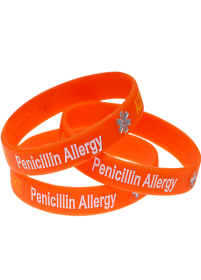
But it does not need to hinder your wellbeing. Through proper management and preparation, allergy sufferers can enjoy a full and positive life. Here is why you need to make silicone allergy wristbands a part of your anti-allergy emergency kit.
Allergy Wristbands Help Secure the Right Treatment
For those of us who suffer from severe allergic reactions, getting the right treatment is vital. If this applies to you, then it is vital that you have an effective method to communicate your condition and your medical requirements to paramedics or other healthcare professionals when they administer treatment.
This can make all the difference between receiving critical treatment when you require it and doctors not understanding your condition. To put it bluntly, this can prove to be lifesaving for an allergy sufferer.
Allergy Wristbands Prevent Worsening Conditions
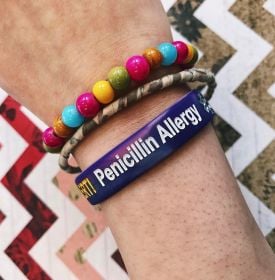
The last thing an allergy sufferer wants is to be exposed to the substance or ingredient which triggers their allergic reactions. This is where wearing a visible allergy wristband can help you to avoid any adverse reactions.
Some of the most common allergic reactions are related to specific foods or ingredients within them, and avoiding these foodstuffs usually requires the sufferer to repeatedly tell people about their condition. While a wristband does not eliminate this, what it does do is provide an extra line of defence against the allergy, giving others a visual reference and enabling you to keep your allergies at bay.

Recommended for you
Products related to this article
Hand-picked to go with what you just read.
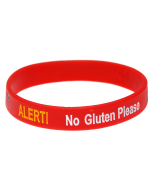
Allergy Wristbands Are Unobtrusive
Wearing medical ID allergy wristbands will have no negative impact on your day to day life at all. Work, study, play, and all manner of tasks can still be accomplished while wearing your wristband, which means that you need not worry about any hindrance to your everyday life.
The fact that something so simple, so comfortable and easy to wear, and so unobtrusive can have such a profound benefit to your health and wellbeing is nothing short of miraculous. This is a testament to the simple power of the medical ID wristband.
Kids Love Allergy Wristbands
Unfortunately, allergies affect our children too and, as any parent will know, convincing kids to make the precautions necessary to keep them safe and healthy can be a struggle. Fortunately, the nature of allergy wristbands makes them perfect for kids.
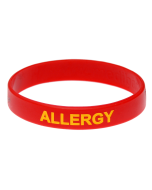
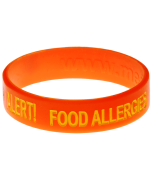
Children love accessories and they love anything that they can show off to their friends. Wristbands fulfil both of these criteria, making it much easier to convince your little ones to wear this potentially lifesaving bit of kit. Available in a variety of colours and styles, parents will have no problem finding a wristband that makes their child feel happy and comfortable, while also safeguarding their health.
Wristbands cannot solve the problem of allergic reactions alone, but when used as part of a careful and considered approach, and when incorporated into an anti-allergy kit, they are a major weapon in your battle against allergies. First aid kits are another good place to start with, if you have serious allergies that result in anaphylaxis.
Frequently Asked Questions
Frequently Asked Questions
Quick answers from the Mediband team
What's an anti-allergy kit and what should it contain?
A small bag/pouch you carry containing: 1-2 in-date EpiPens (if prescribed), antihistamine tablets (cetirizine or loratadine), an asthma puffer if relevant, a printed ASCIA Action Plan, and emergency contact details. Some kits also include a spacer for the puffer.
Do I need both a bracelet and a kit?
Yes — they work together. The bracelet identifies the condition; the kit lets you (or someone helping you) treat it. Without the bracelet, paramedics may not realise to look for the kit. Without the kit, the bracelet alone can't reverse anaphylaxis.
Where should I keep my anti-allergy kit?
Always with you — handbag, backpack, glovebox, school bag. Many families keep duplicate kits at school, daycare, grandparents' house and the car. EpiPens expire after 12-18 months so check dates monthly.
How do Australian schools manage anaphylaxis?
Under the National Allergy Strategy, every Australian school must have an anaphylaxis management plan, train staff on EpiPen use, and store backup EpiPens. Provide your child's ASCIA Action Plan and a clearly engraved allergy bracelet at enrolment.
Can I travel internationally with EpiPens and an allergy kit?
Yes — EpiPens are allowed in cabin baggage on every Australian and most international airline. Carry a doctor's letter, the original prescription label, and a spare. Wear your bracelet through security to flag the medical reason for the device.

Written by
Founder, Mediband
Founder of Mediband; over 20 years providing medical IDs worldwide.
← Previous
Pregnancy Basics 101 — A 2026 Australian First-Timer's Guide
Next →
Medical Information & Health Records — Why a Medical Alert Bracelet Still Matters (2026)
Comment(s)