
By Michael Randall, Founder, Mediband · Updated 12 June 2026 · 9 min read
A healthy start in life sets the trajectory for the next eighty years. Research from the Australian Institute of Health and Welfare shows that habits formed by age five — eating patterns, sleep rhythms, activity levels — predict adult health markers more strongly than any single intervention later in life. This guide is the practical playbook Australian parents and carers actually need.
For families managing food allergies, anaphylaxis, autism or any diagnosed condition, the medical ID layer matters even more in the under-5 years — paramedics, childcare staff and emergency responders need information in seconds when the wearer can't speak for themselves.
Why the first five years matter most for lifelong health
The brain doubles in size in the first year and reaches 90% of adult size by age five. The Royal Children's Hospital Melbourne tracks how feeding, immunisation, sleep and movement in this window shape later cognitive, immune and metabolic outcomes. Get the basics right early, and you build a buffer that protects against decades of preventable illness.
The five anchors below come straight from the Australian Government Department of Health's 0-5 guidelines, refined by the practical lessons our customers have shared since 2009.
5 healthy-start anchors for Australian babies and toddlers
1. Stay on the National Immunisation Program schedule
Free childhood vaccines protect against 13+ serious diseases. The schedule starts at birth (hepatitis B) and continues through age 4. Use the Australian Immunisation Register to track. Speak with your GP about the new RSV vaccine for at-risk infants added in 2024.
2. Introduce solids from 6 months with allergens early
ASCIA guidelines now recommend introducing peanut, egg, dairy and other common allergens between 4-12 months. Early exposure reduces lifetime allergy risk. Watch for reactions and document any flagged food on a medical ID if anaphylaxis is later diagnosed.
3. Sleep 11-14 hours per day (toddler), 12-16 (baby)
Sleep Health Foundation recommends 12-16 hours including naps for ages 4-11 months, 11-14 hours for 1-2 years. A consistent bedtime ritual (bath → book → bed) matters more than precise timing. Sleep is when growth hormone and immune cells do their work.
4. Move every day — even pre-walkers
Australian 0-5 physical activity guidelines: babies need supervised floor and tummy time; toddlers should be active 3+ hours daily across the day. Screen time under age 2 should be zero (per Royal Children's Hospital guidance); 2-5 years up to 1 hour quality content.
5. Fit a medical ID for any diagnosed condition
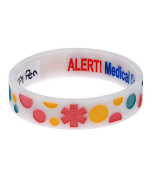
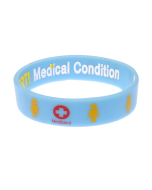
Anaphylaxis, asthma, autism, diabetes, epilepsy, severe eczema or congenital conditions — a soft silicone medical ID bracelet lets carers and paramedics see the diagnosis instantly. Mediband bracelets are latex-free, dishwasher-safe and fit toddler wrists from 130 mm up.

Recommended for you
Products related to this article
Hand-picked to go with what you just read.
Building a healthy-start routine that actually fits a parent's day
Morning
Breakfast within 60 minutes of waking. Five-minute outdoor play (helps vitamin D + sets circadian rhythm). Quick medical-ID check — replace any cracked or sun-bleached silicone.
Daytime
Three balanced meals + two snacks. Active play in 10-minute bursts throughout the day. One nap (for under-3s). Limit screens entirely under 2; max 1 hour 2-5.
Evening
Bath at the same time each night. One book. Lights low. Consistent bedtime regardless of weekday or weekend.
Weekly
One outdoor adventure — beach, park, bushwalk. Family meal together with everyone at the table. Update the medical ID if any condition or contact has changed.
What to write on a medical ID for a baby or toddler
Keep it short, urgent and actionable. Paramedics read the bracelet in under 5 seconds:
- Name + date of birth — speeds up hospital admission paperwork
- Primary condition — "Anaphylaxis: peanuts", "Autism — may not respond to name", "Severe asthma"
- Medication — "EpiPen prescribed", "Inhaler in bag"
- Parent mobile — Mum first, Dad second, grandparent third
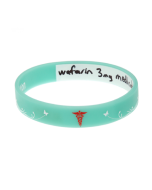
Reversible write-on bracelets allow updates as the child grows. Use a fine-tip permanent marker; wipe with isopropyl alcohol before rewriting.
Australian organisations every parent should bookmark
- Raising Children Network — government-funded plain-English child development library
- Allergy & Anaphylaxis Australia — ASCIA-aligned anaphylaxis plans
- Sleep Health Foundation — age-specific sleep tools
- Royal Children's Hospital Melbourne — clinical fact sheets
- Australian Breastfeeding Association — 24/7 helpline 1800 686 268
- Tresillian + Karitane — parenting centres for sleep and feeding support
Small days, lifelong health
A healthy start in life isn't built in a parenting weekend — it's built one feed, one nap, one bath at a time. Stay on the immunisation schedule. Introduce allergens early. Move every day. Fit a medical ID for any diagnosis. Eighty years from now, today's bedtime ritual will matter more than any single doctor's visit.
Frequently Asked Questions
Quick answers from the Mediband team
When should I introduce peanut and egg to my baby?
ASCIA recommends introducing peanut, egg, dairy, wheat and other common allergens between 4-12 months for most babies. Early introduction reduces lifetime allergy risk. Always speak with your GP if the family has a strong allergy history.
How much sleep does a 1-year-old need in Australia?
The Sleep Health Foundation recommends 11-14 hours per day for ages 1-2, including naps. Consistency is more important than exact timing — same bedtime ritual every night.
Is the National Immunisation Program free for all Australian babies?
Yes — vaccines on the National Immunisation Program are free for all Australian children regardless of Medicare status. Speak with your GP or council clinic to schedule.
At what age can a baby wear a Mediband bracelet?
Mediband silicone bracelets fit wrists from 130 mm (most toddlers from 12-18 months). For babies under 12 months with a diagnosed condition, ankle-band styles or pram-attached IDs are available — speak with your GP.
How do I know if my toddler has a food allergy?
Watch for skin reactions, vomiting, breathing changes or facial swelling within 1-2 hours of a new food. Document the food, time and symptoms. Book a GP visit and ask for an immunologist referral if reactions are repeated or severe.
Should toddlers under 2 have any screen time?
The Royal Children's Hospital Melbourne recommends zero recreational screen time under age 2. Video calls with relatives are an exception. From 2-5, cap at 1 hour daily of supervised quality content.
What's the most important habit for a healthy start in the first year?
Sleep. The Australian Institute of Health and Welfare links infant sleep quality to cognitive, immune and metabolic outcomes more strongly than any other single factor. A consistent bedtime ritual from age 3 months pays dividends for decades.

Written by
Founder, Mediband
Founder of Mediband; over 20 years providing medical IDs worldwide.
← Previous
Health News Australia: 5 Medical Updates Families Need
Next →
MedibandPlus Pharmacy News: e-Medical IDs for Australians
Comment(s)