Trafalgar Personal First Aid Kit
$24.50
SKU
101292
Secure checkout
VISA
Mastercard
Apple Pay
Google Pay
+5 more
Also accepted
AMEX
Afterpay
Zip
Klarna
PayPal
Personal First Aid Kit
4.9 · 1 reviews
Since 2004
A 62-piece kit for the glovebox, the bag or the pram
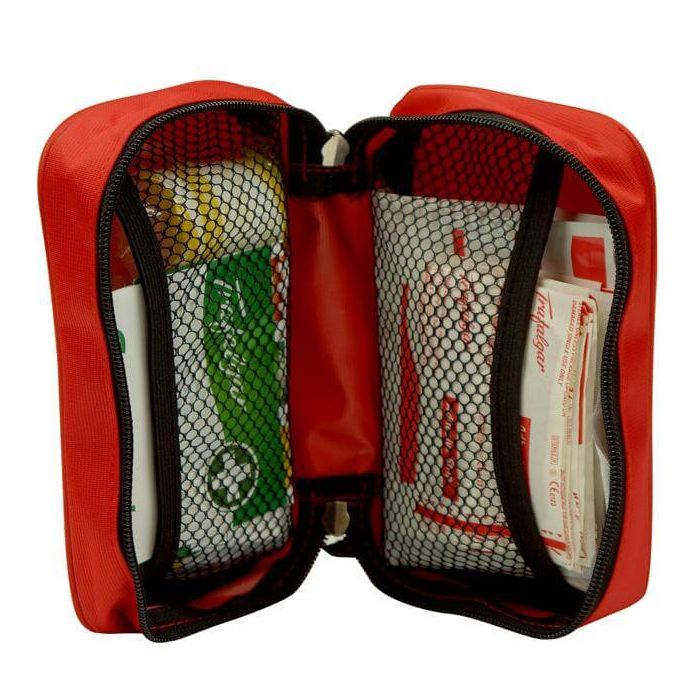
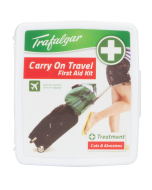
The Trafalgar Personal First Aid Kit is a soft-sided 62-piece kit measuring 180 × 110 × 60 mm — small enough to live in a glovebox, a backpack, a pram basket or a desk drawer and still be there in six months when you need it.
It is built for the ordinary stuff: a cut that needs covering, a graze that needs cleaning, a sprain that needs strapping, a cut finger when you are nowhere near a bathroom.
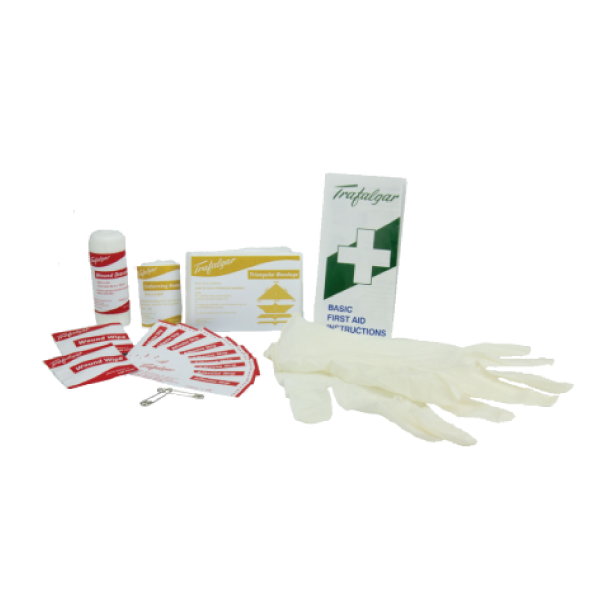
What is in it, and what each piece is for
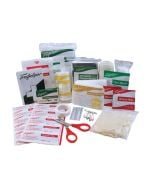
| Item | Qty | What you use it for |
|---|---|---|
| Adhesive strips | 50 | Everyday cuts, grazes and blisters — the bulk of what any personal kit gets used for |
| Conforming bandage, 5 cm | 1 | Holding a dressing in place; light support for a sprain |
| Wound dressing | 1 | A larger wound that a strip will not cover; pressure on bleeding |
| Triangular bandage | 1 | A sling for an arm or shoulder, or a broad bandage for immobilising |
| Wound wipes | 2 | Cleaning around a wound before dressing it |
| Disposable gloves | 2 | Protecting you and the injured person — put these on first |
| Safety pins | 2 | Securing a sling or a bandage end |
| Resealable bags | 2 | Containing waste, or keeping a dressing dry |
| First aid guide | 1 | Basic instructions for when you are the one who has to act |
Worth being straight about the piece count: 50 of the 62 pieces are adhesive strips. That is not a criticism — strips are what a personal kit actually gets opened for — but it does mean you should read the list rather than the number when comparing kits.
What this kit handles, and what it does not
It covers
- Cuts, grazes, splinter wounds and blisters
- Bleeding that needs a dressing and pressure
- Strains and sprains that need light support
- An arm or shoulder injury that needs a sling
It does not include
- Burn gel or burn dressings
- An eye wash or saline
- A CPR face shield or resuscitation mask
- An instant cold pack
- Any medication — including an adrenaline autoinjector, which is prescribed and carried by the person who needs it
If you need burns or eye irrigation covered as well, the Go Anywhere Waterproof kit is the larger option, and the full range sits under accessories.
What Healthdirect says about keeping a kit
Healthdirect defines first aid as the steps you take in the first minutes of an illness or injury until further help arrives, and its advice is direct: put together a first aid kit for use at home and in the car, and consider doing a first aid course so you know what to do with it.
That second half matters more than the kit. A bag of dressings is only as useful as the person opening it.
The DRSABCD action plan
Healthdirect's action plan is the sequence taught in Australian first aid courses. Remember it as “Doctor's ABCD”:
- D — Danger. Make sure the area is safe for you, for bystanders and for the person. Do not add yourself to the casualty list.
- R — Response. Ask their name loudly and touch them gently. No response? Call for help immediately.
- S — Send for help. Call triple zero (000) or have someone else call, and stay on the line.
- A — Airway. Check the mouth and throat are clear.
- B — Breathing. Look, listen and feel for 10 seconds. Breathing normally? Recovery position, and keep monitoring.
- C and D — CPR and Defibrillation, if they are not breathing.
Healthdirect is also explicit that if someone is having anaphylaxis, the adrenaline autoinjector is used immediately, then you call triple zero (000). No first aid kit substitutes for that, which is why an autoinjector is carried by the person, not stocked in a kit.
Where to keep it
The best kit is the one that is where the injury happens. At this size you can reasonably keep more than one.
- The car — the single most common place a kit earns its keep. Glovebox or door pocket, not the boot under the shopping.
- A day bag or backpack — walks, markets, sport, travel.
- The pram — grazed knees are the entire use case.
- A desk or locker — for your own use, separate from the workplace kit.
One caution on the car: a kit left on a parcel shelf or in a hot glovebox through an Australian summer will degrade adhesives and dressings faster than one kept in the cabin. If the car bakes, check it more often.
Is this a workplace first aid kit?
Treat it as a personal kit. Workplace first aid is governed by work health and safety law, and what a particular workplace must provide depends on the hazards present, the number of workers and how far the site is from emergency help — a question for your WHS officer or regulator, not for a product page.
Plenty of people carry one of these in addition to the workplace kit, because the workplace kit is in the kitchen and you are in the car park. That is a sensible use of it. It is not a substitute for whatever your workplace is required to hold.
Restocking is the part everyone skips
What goes off
Adhesive strips lose their stick. Wound wipes dry out in the sachet. Latex gloves perish and tear as you pull them on. Dressings have a shelf life and lose sterility once the seal is broken. None of this announces itself — you find out at the worst moment.
A routine that works
Tie the check to something you already do. When the car goes in for a service, open the kit. Replace anything used, anything past its date and anything that looks tired. Five minutes, twice a year.
And replace items as you use them, not later. The most common reason a kit fails is not age — it is that the last person took the last two strips and meant to restock.
The one thing a first aid kit cannot do
A kit treats the injury in front of you. It says nothing about the person.
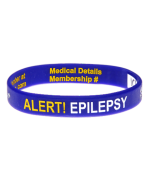
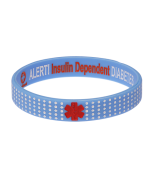
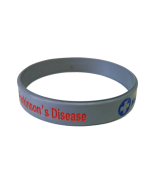
If the person being helped has a serious allergy, is on an anticoagulant, has epilepsy or diabetes, or carries an implanted device, that changes what a responder should do — and if they cannot speak, nothing in the bag will tell anyone. That is the gap a medical alert bracelet covers, and it is why checking wrists and neck for identification is part of a standard primary survey, as we explain in do paramedics check medical ID.
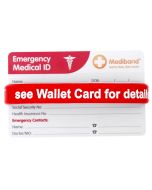
For detail that will not fit on a wrist — medication lists, doses, contacts — an emergency information wallet card sits well alongside a kit, and the rest are under wallet cards. If the household includes someone at risk of anaphylaxis, our anaphylaxis ID guide covers how the band, the action plan and the autoinjector work together.
Buying several
Kits like this are commonly bought in quantity — one per vehicle in a fleet, one per classroom, one per volunteer. Tell us how many and we will come back with pricing and a date.
Frequently asked questions
Is 62 pieces a lot?
It is a normal count for a personal kit, but read the breakdown rather than the headline: 50 of the 62 are adhesive strips. The dressings, bandages and gloves are the part that determines what the kit can actually handle.
Can I keep it in the car all year?
Yes, and the car is the best place for one. Keep it in the cabin rather than a hot boot or parcel shelf where it can, and check it twice a year — heat shortens the life of adhesives, wipes and gloves.
Does it contain any medication?
No. There is no paracetamol, no antiseptic cream and no adrenaline autoinjector. An autoinjector is prescribed to an individual and carried by them; it is not a kit item.
Is it suitable for a workplace?
Treat it as a personal kit. What a workplace must provide depends on its hazards, its size and its distance from help, and that is set by work health and safety law — check with your WHS officer or regulator rather than assuming any off-the-shelf kit satisfies it.
How is it different from the Go Anywhere kit?
The Go Anywhere Waterproof kit is the larger, water-resistant option — better where the kit will be exposed to weather or kept on a boat. This one is the compact soft-case version for a bag or glovebox.
Should I do a first aid course?
Healthdirect recommends it, and it is the single thing that makes any kit more useful. Knowing the DRSABCD sequence and how to put someone in the recovery position matters more than the contents of the bag.
SKU 101292Manufacturer Trafalgar
| SKU | 101292 |
|---|---|
| Manufacturer | Trafalgar |
Shipping
In-stock orders are dispatched the same business day when placed before 12pm AEST, Monday to Friday (excluding public holidays). Orders placed after 12pm AEST, or on weekends and public holidays, are dispatched the next business day.
Express, Regular and Courier delivery estimates are shown at checkout and apply from the dispatch date.
More information about shipment and delivery times can be found on our shipping page.
Returns & guarantee
100% Quality Guarantee. Your satisfaction is our priority. If there is a confirmed quality issue, return the item to us in its original condition and packaging within 14 days of receipt and we will issue a full refund (excluding the original delivery charge) or replace the item.
In-stock items may be exchanged for a different size or colour, provided they are returned as new, unworn and in their original packaging within 14 days of receipt.
Custom and made-to-order items are produced to your specification, so we do not accept returns or exchanges for change of mind, size or colour. Please check your size, colour, spelling and details carefully before ordering. First Aid Kits and Defibrillator Supplies also cannot be returned or exchanged except for a confirmed quality issue.
Please view terms and conditions for further information.
Loading reviews…
Complete your order
Related products


Based on this product