
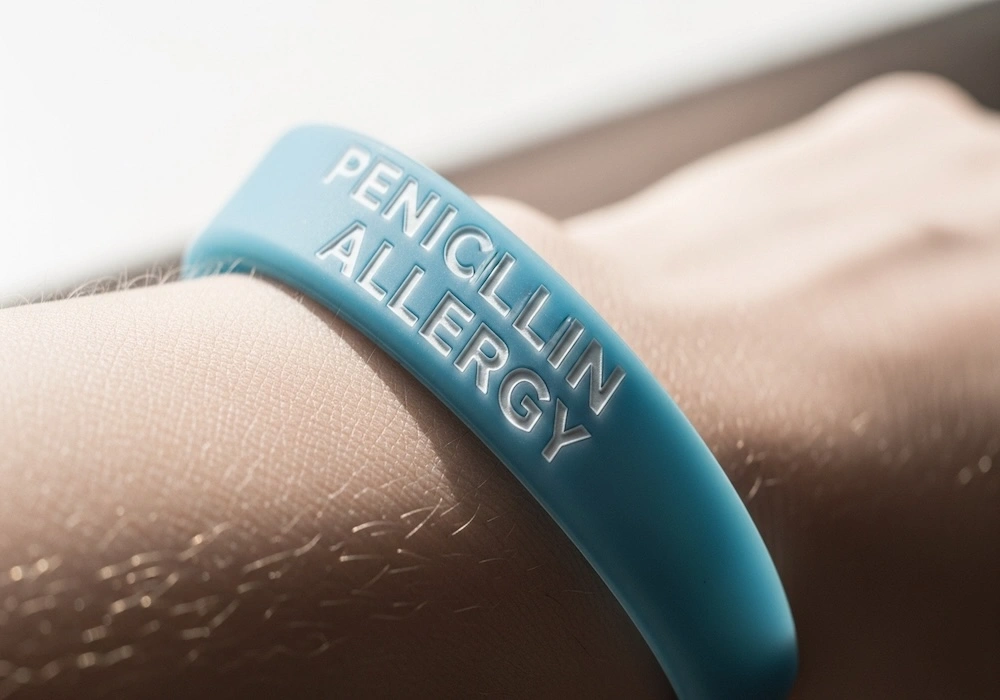




Medical bracelet with penicillin allergy

Most people don't think twice about what happens when they're rushed into an emergency room. But for someone with a penicillin allergy, that moment could be the difference between receiving the right treatment and facing a dangerous — even fatal — reaction. A single piece of identification worn on the wrist can change everything. That's the power of a medical bracelet, penicillin allergy relies on every day.

Penicillin is one of the most commonly prescribed antibiotics in the world. According to reported data, roughly 10% of the general population reports having a penicillin allergy, making it the most frequently documented drug allergy in medical records. Whether the reaction is a mild rash or a life-threatening anaphylactic response, the allergy demands consistent, proactive communication — especially in situations where the person may not be able to speak for themselves.

Immediate Identification in Emergencies

Life-Saving Benefits That Happen in Seconds

When someone is brought into an emergency setting — unconscious, disoriented, or unable to communicate — medical staff work quickly. Their priority is stabilizing the patient, and part of that process often involves administering antibiotics. If a healthcare provider doesn't know about a penicillin allergy in those first critical moments, they may give a medication that causes more harm than good.

A medical ID bracelet is the first thing trained emergency responders look for. It communicates essential health information before any paperwork is filled out, before a family member can be reached, and before the patient can even form a sentence. For someone with a severe allergy, this silent communication is irreplaceable.

Real-World Scenarios Where It Makes a Difference

Think about the situations that can happen without warning: a car accident, a fall, a sudden allergic reaction to something else, or a medical event at work or school. In each of these cases, the people around — bystanders, paramedics, or hospital staff — are looking for clues. A visible medical bracelet gives them the information they need without delay.

Here are common emergency scenarios where a medical bracelet becomes critical:

  • Car accidents where the person loses consciousness and cannot communicate their medical history to paramedics.
  • Sports injuries or outdoor emergencies in remote locations where getting to a hospital takes time, and first responders need to plan care accordingly.
  • Medical episodes at school or work, where colleagues and staff may call for help before any family members can be contacted.

Ensuring Correct Treatment During Medical Visits

Emergencies aren't the only setting where allergy identification matters. Routine medical visits, dental appointments, surgical procedures, and walk-in clinic visits all carry a risk of medication errors if allergy information isn't communicated clearly.

Preventing Medical Errors Before They Happen

Medical errors remain a significant concern in healthcare systems worldwide. Medication-related errors — including administering a drug a patient is allergic to — account for a large portion of preventable harm in clinical settings. Electronic health records help, but they rely on information being correctly entered and consistently checked. A physical bracelet adds an extra, highly visible layer of protection.

When a nurse or doctor glances at a patient's wrist and sees a clear allergy notation, it prompts an immediate conversation. It serves as a check that no system or form alone can fully replicate — because it's always present, always readable, and doesn't require logging into any software. Some of the most common situations where a bracelet has prevented a medication error include:

  • Pre-surgical preparation — anesthesiologists and surgical nurses review a patient's wrist ID as part of their standard pre-op checklist, catching allergy conflicts before any medication is given.
  • Dental procedures — dentists commonly prescribe amoxicillin, a penicillin-type antibiotic, after extractions or implants; a visible bracelet stops this before it becomes a problem.
  • Walk-in and urgent care visits — these settings often lack access to a patient's full medical records, making the bracelet the most reliable source of allergy information available on the spot.

Communication in High-Stress Situations

Medical settings can be overwhelming. Patients are anxious, in pain, or simply too focused on what's happening to remember every detail of their medical history. Doctors and nurses are moving fast, managing multiple patients, and relying on quick information gathering. In this kind of environment, wearing medical bracelets ensures that the most critical piece of information is never accidentally left out of a conversation for those with penicillin allergies.

Aids in Medication Administration Across Settings

This matters beyond hospitals, too. Dental offices routinely prescribe antibiotics after procedures. Urgent care centers treat infections on the spot. Even travel clinics give medications without full access to a patient's existing records. In each of these situations, wearing a bracelet makes the allergy known immediately — no assumptions, no oversights.

Peace of Mind for Both Wearer and Loved Ones

Beyond the clinical benefits, there's a deeply human reason to wear a medical bracelet — the comfort that comes from knowing that even when the unexpected happens, something is in place to help.

Relieving Anxiety for the Allergy Wearer

Living with a serious allergy means carrying a certain level of background worry. What if something happens and nobody knows? What if a medication is given before anyone can ask? These aren't irrational fears — they're realistic concerns that affect daily quality of life. 

A medical bracelet that penicillin allergy wearers choose to put on each morning is a direct answer to that worry. It takes the responsibility off the individual's shoulders in moments when they can't manage it themselves.

What It Means for Family and Friends

When a loved one has a known allergy, the people around them carry that awareness too. Parents worry about their child's school trip. Spouses think about whether their partner carries enough health information when traveling alone. Friends wonder what would happen if something went wrong on a hiking trail.

Support for Children and Vulnerable Individuals

Children, elderly individuals, and people with cognitive or communication challenges are particularly vulnerable in medical situations. A young child with a penicillin allergy cannot reliably communicate that information in a stressful moment. 

An elderly person with dementia may not remember or be able to express their allergy history. For these groups, a clearly labeled medical ID bracelet isn't just helpful — it's essential. It removes the burden of verbal communication entirely and lets the bracelet speak on their behalf. Key groups who benefit most from wearing one include:

  • Young children in school or daycare settings — teachers and school nurses are often the first responders to a medical event, and a bracelet gives them instant, reliable information before they can reach a parent.
  • Elderly adults living independently or in care facilities — staff turnover in these settings is common, and a physical bracelet ensures the allergy is communicated even when caregivers change.
  • Individuals with autism, hearing impairments, or other conditions that affect communication — a bracelet provides a reliable, consistent form of identification that doesn't depend on the person's ability to speak in the moment.

Accessible and Affordable Emergency Alert Options

One of the most common misconceptions about medical alert jewelry is that it's either expensive, uncomfortable, or unattractive. That used to be more true than it is today. The market for medical ID products has grown considerably, and there are now options to suit nearly every preference, lifestyle, and budget.

Convenience and Everyday Wearability

Modern medical bracelets are designed to be worn all day, every day — including during exercise, sleep, and water activities. Silicone options are flexible and lightweight. Metal versions are polished and professional-looking. The goal is that wearing one doesn't feel like wearing a medical device at all. When something is comfortable enough to forget about, it's also worn consistently — and consistency is what makes it effective.

Variety of Options to Suit Different Lifestyles

There's no single look for a medical ID bracelet, and that variety matters for long-term compliance. People are more likely to wear something they actually like. Here's a look at the most popular types available:

  • Silicone sport bands — lightweight, waterproof, and ideal for active lifestyles or children who need something durable.
  • Stainless steel or sterling silver chains — a polished, professional option that looks more like jewelry than a medical device, suitable for workplace environments.
  • Beaded and fabric bracelets — customizable, casual, and often used for children or adults who prefer a creative, personalized design.

Beyond the physical bracelet, many providers now offer the option to link a QR code or serial number to a detailed online health profile. This means emergency personnel can access more comprehensive medical information with a quick scan — making the medical ID bracelet penicillin allergy identification even more powerful than a simple engraved label.

The Bottom Line: Wearing a Medical Bracelet Is a Simple Act With Serious Impact

A penicillin allergy isn't something that can be set aside or assumed will come up in the right conversation at the right time. In medical emergencies, there often is no right time — there's only the information that's immediately available. Wearing a medical bracelet, penicillin allergy patients rely on is one of the simplest, most practical ways to make sure that information is always accessible, no matter the circumstance.

From faster emergency response to fewer medication errors, from personal peace of mind to reassurance for families, the benefits of wearing medical bracelets for penicillin allergy wearers are well-documented and genuinely meaningful. These aren't hypothetical advantages — they're real outcomes that occur because a piece of information was visible at the right moment.

If wearing a small bracelet could prevent a serious medical error, speed up emergency treatment, or give a parent peace of mind about their child's safety, it's worth it. For anyone with a known penicillin allergy, that bracelet isn't an accessory. It's a critical part of how they stay safe in a world that doesn't always wait for the right moment to ask.