
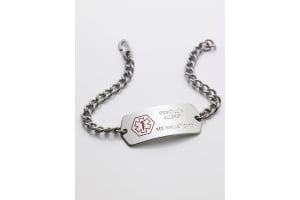
Medical Allergy Bracelet

For those who live with severe food allergies, safety isn’t just about avoidance — it’s about being prepared for the unexpected. A simple piece of engraved jewelry, like a medical allergy bracelet, can mean the difference between confusion and clarity during a health emergency. When words fail, this small item speaks loudly, ensuring responders have the information they need when every second counts.

The Reality of Severe Food Allergies

Severe food allergies affect millions of people worldwide and are one of the most unpredictable and dangerous health challenges. Even trace amounts of allergens — a drop of milk, a crumb of peanut, a whiff of shellfish — can trigger a chain reaction in the body that leads to anaphylaxis, a condition that can escalate within minutes. Symptoms like swelling of the lips and throat, hives, vomiting, and dizziness can quickly spiral into a life-threatening emergency. In such moments, time becomes critical, and communication becomes impossible. That’s where wearing an allergy medical alert bracelet becomes a vital safeguard rather than an optional accessory.

Food allergies can occur at any age and often without warning. Parents of allergic children know the fear of accidental exposure at school or a restaurant. Adults with newly diagnosed allergies face similar anxieties when eating out or traveling. A medical bracelet ensures that emergency responders, teachers, or even bystanders can identify an allergic reaction instantly, even if the wearer is unconscious or unable to speak. According to Better Health Channel, quick identification and administration of adrenaline through an EpiPen is the most effective response to anaphylaxis, and visible identifiers like alert jewelry are recommended as part of emergency preparedness.

In a world where allergies can be triggered by the smallest mistake — a shared utensil, mislabeled packaging, or trace contamination — visibility is safety. The medical allergy bracelet quietly but powerfully communicates a person’s medical needs in environments where help might otherwise hesitate. It ensures that responders don’t waste time guessing or making assumptions — they act, informed and confident.

How a Medical Alert Bracelet for Allergies Works

A medical alert bracelet for allergies functions as a personal health communicator. When an emergency happens, the bracelet bridges the communication gap between the wearer and responders, making vital information instantly available. Each engraving carries the weight of preparation — it can include allergies, medications, and treatment instructions that can guide life-saving care in the first crucial minutes.

These bracelets are usually engraved with short but vital details: specific allergens such as “PEANUT” or “SHELLFISH,” medication notices like “CARRIES EPIPEN,” and contact information or “CALL 000” for Australian emergency response. Each line of text is intentional, chosen to minimize confusion when adrenaline must take over precision. For someone experiencing an allergic reaction, even basic communication can be impossible; their airway may be swelling, or they may lose consciousness. The bracelet becomes their voice — a message carved in metal or silicone that speaks directly to the people who can help.

In medical settings, paramedics and hospital staff are trained to look for alert jewelry during assessment. This quick identification avoids harmful errors, like administering medications that contain allergens or overlooking a hidden condition such as asthma. It also guides first responders to use epinephrine early, improving outcomes and reducing the chance of prolonged hospitalization. The allergy medical alert bracelet doesn’t just save time; it saves clarity — and in emergencies, clarity saves lives.

What to Engrave on Your Allergy Medical Alert Bracelet

The power of a medical bracelet lies in its engraving — the information it carries must be clear, relevant, and precise. Your bracelet should summarize your most critical health facts in a few lines, written in plain, universally understood terms. Typical examples include:

  • “Anaphylaxis – Carries EpiPen”
  • “Allergic to Peanuts and Dairy”
  • “Asthma Trigger – Dust/Mold”

These examples show how to condense complex medical conditions into short, direct messages that are instantly readable. They give emergency responders the context they need to act confidently and avoid mistakes.

Engraving Best Practices

Keep it short and readable. The goal isn’t to tell your full medical story — it’s to give clear, immediate instructions. Paramedics in emergency settings scan quickly for key information, so every word counts. Use standard language, avoid jargon, and focus on essential details only.

Use capital letters for allergens. This isn’t just stylistic — it’s functional. Words like “PEANUT” or “SHELLFISH” in bold uppercase lettering grab attention, ensuring responders identify allergens at a glance. This visual cue can be the difference between correct and delayed treatment.

Update your information regularly. Allergies can change over time, and so can treatment plans. If you develop new allergies, change medications, or switch to a new brand of epinephrine, order a new bracelet right away. Think of it as renewing a safety contract with yourself — one that must always reflect your current health.

Best Materials and Styles for Allergy Sufferers

Choosing the right medical allergy bracelet goes beyond design — it’s about comfort, longevity, and ensuring you actually wear it every day. A bracelet can’t help if it’s sitting in a drawer. That’s why the best choice depends on lifestyle, skin sensitivity, and personal preference.

Silicone for Everyday Comfort

Silicone bracelets are the go-to option for active individuals, children, and those with sensitive skin. They’re lightweight, waterproof, and non-irritating, meaning they can be worn 24/7 — even while sleeping or showering. Their flexible material prevents friction burns and allows comfortable movement during sports or work. For kids, silicone bracelets can be customized with bright colors or patterns, making them appealing rather than clinical. Parents often find that when a bracelet looks fun, children are more likely to keep it on.

Stainless Steel for Long-Term Durability

For adults, stainless steel provides a more professional look without compromising function. It’s hypoallergenic, rust-resistant, and long-lasting, ideal for people who prefer a sleek and durable option. The engraving on stainless steel tends to be sharper and easier to read, even years later. Many modern designs allow interchangeable tags or plates, so you can update medical details without buying an entirely new bracelet. It’s a balance of practicality and style, suitable for both everyday life and formal settings.

Specialized Safety Designs

Some bracelets are designed with specific safety needs in mind. Breakaway clasps help prevent strangulation risks, making them ideal for children or individuals who work in physically active environments. Adjustable clasps allow quick removal in hospital settings, while universal medical symbols — such as the red Star of Life — ensure instant recognition by paramedics and emergency staff.

For those seeking reliable, medically verified options built to perform under real-world conditions, the medical allergy bracelet collection from Mediband offers trusted designs across Australia, combining precise engraving, lasting comfort, and dependable durability for everyday protection.

Medical Alert Bracelet for Allergies When Traveling

Travel adds an extra layer of complexity for anyone with food allergies. Different languages, cuisines, and healthcare systems can make an already dangerous situation even riskier. That’s why a medical alert bracelet for allergies is essential for safe travel — it communicates universally, across borders and languages.

Communicating Across Borders

One of the most common problems allergic travelers face is misunderstanding. A waiter or medic may not understand “tree nuts” or “shellfish” in English, but a symbol or translated phrase on a bracelet can make all the difference. Multilingual engravings — for example, adding “ALLERGIA A CACAHUETES” (Spanish for peanut allergy) — can bridge the gap. Even when Wi-Fi is down or your translation app fails, your bracelet speaks for you.

Packing and Preparedness

When preparing for a trip, treat your medical bracelet as essential as your passport. Always wear one and carry a backup in your luggage. Keep your EpiPen or auto-injector in your hand luggage, not checked baggage, and pack antihistamines and other medications nearby. You can also carry a printed allergy action plan — a simple card listing your condition and steps for responders — tucked beside your passport. It’s a small effort that can make a huge difference during emergencies abroad.

Travel-Specific Reminders

  • Carry at least two EpiPens — one primary, one backup, in case of loss or malfunction.
  • Inform airlines, hotels, and restaurants in advance about your condition and emergency protocols.
  • Download mobile translation apps for explaining allergies when ordering food or seeking care.

Traveling with allergies doesn’t have to be limiting — it just requires proactive preparation. The bracelet becomes your silent travel partner, ensuring that no matter where you go, your safety information travels with you.

Empowerment Through Awareness

Living with food allergies often means living with a quiet fear — a fear of hidden ingredients, social misunderstandings, and the unpredictability of exposure. But empowerment begins with awareness. A medical allergy bracelet is a simple yet profound form of self-advocacy. It tells the world, “I’m prepared. I’m aware. I take my health seriously.”

Parents of allergic children often describe these bracelets as sources of reassurance. Knowing their child’s condition is visible to teachers, babysitters, or strangers creates an invisible safety net. Adults report similar peace of mind when dining out or attending events — they can participate fully without constant anxiety. The bracelet doesn’t just communicate danger; it communicates confidence and preparedness.

Wearing one also helps normalize allergy management. When others see it, it opens conversations about what allergies really mean, how serious they can be, and how to respond appropriately. In this way, a bracelet does more than protect an individual — it educates a community. By making safety visible it promotes empathy and collective understanding.

Conclusion

Severe food allergies transform everyday life into a series of calculated decisions. Yet preparation offers liberation. Tools like a medical alert bracelet for allergies turn uncertainty into confidence, ensuring help is guided, not delayed. Whether crafted from stainless steel or soft silicone, these bracelets are far more than accessories — they are lifelines.

Preparedness isn’t about fear; it’s about control. When you wear your medical allergy bracelet, you’re not announcing vulnerability — you’re announcing strength. You’re saying: “I know my risks, and I’m ready.” In moments when your voice can’t be heard, this small band speaks volumes — protecting your health, empowering your independence, and giving peace of mind to everyone who loves you.