Quick answer: what to do during a seizure
Stay calm and stay with the person. Time the seizure. Move hard or sharp objects away and cushion their head. Do not restrain them and do not put anything in their mouth. Once the jerking stops, roll them onto their side. Call 000 if the seizure lasts longer than 5 minutes.
This is general information, not medical advice. It is not a substitute for care from a health professional. For advice about epilepsy or seizures, speak with your GP or call Healthdirect on 1800 022 222 or the National Epilepsy Line on 1300 37 45 37. In an emergency, call 000.
Seeing someone have a seizure can be frightening, especially the first time. The good news is that most seizures run their own course and end on their own, and a few simple steps make a real difference to keeping the person safe. This guide covers what to do during a seizure, what not to do, and when a seizure becomes an emergency — based on Epilepsy Action Australia first aid guidance.
Designed in AustraliaNDIS-registered22+ years supporting wearers
What is seizure first aid?
Seizure first aid is the set of simple actions that keep a person safe while they have a seizure — staying with them, protecting them from injury, timing the seizure, and rolling them onto their side once it stops. You do not need training or equipment. A seizure is a sudden burst of electrical activity in the brain that briefly changes movement, awareness or behaviour. The most widely recognised type is a tonic-clonic seizure (once called a grand mal), where the person loses consciousness, goes stiff, then jerks. Not all seizures involve convulsions — some involve staring, confusion or repeated movements — but the first-aid priority is always the same: keep the person safe and let the seizure run its course.
What to do during a tonic-clonic seizure: first aid steps
During a convulsive seizure, keep the person safe and let it happen — do not try to stop the movements. Follow these steps from Epilepsy Action Australia:
- Stay with the person. Do not leave them alone while the seizure is happening.
- Time the seizure. Note when it starts — the length matters for deciding whether to call an ambulance.
- Keep the person safe. Move hard, sharp or hot objects out of the way and protect their head from injury, for example by cushioning it with something soft.
- Roll them onto their side after the jerking stops — or straight away if there is food, fluid or vomit in the mouth. This is the recovery position and it keeps the airway clear.
- Observe and monitor their breathing as they come round.
- Reassure them gently until they have fully recovered. It is a good idea to make sure someone can go home with them.
What to do and what not to do
| Do | Do not |
|---|---|
| Stay calm and stay with the person | Do not put anything in their mouth — a person cannot swallow their tongue |
| Time the seizure from when it starts | Do not restrain them or try to stop the movements |
| Cushion the head and clear the area of hazards | Do not move them, unless they are in danger (for example near water or traffic) |
| Roll them onto their side once the jerking stops | Do not give food, drink or medication until they are fully alert |
When should you call an ambulance for a seizure?
Call 000 if a seizure lasts longer than 5 minutes, if another seizure follows quickly, or if the person is injured, has trouble breathing, or does not come round within 5 minutes. Seizures generally run their course and an ambulance is not always needed, but call 000 in any of these situations:
| Call 000 straight away if |
|---|
| The seizure lasts longer than 5 minutes |
| Another seizure quickly follows the first |
| The person is injured during the seizure |
| There is food, fluid or vomit in the mouth (they may have inhaled it) |
| The seizure happens in water |
| The person has breathing difficulties after the seizure stops |
| The person stays non-responsive for more than 5 minutes after the seizure ends |
| It is the person’s first-ever seizure, or you are in any doubt |
What should you not do during a seizure?
Never put anything in the person’s mouth, do not hold them down, and do not move them unless they are in real danger. Two of the most common and harmful myths are worth repeating: a person having a seizure cannot swallow their tongue, so putting fingers or objects in their mouth risks broken teeth and bitten fingers with no benefit. Restraining someone can cause injury and may make them agitated as they regain awareness. Let the seizure happen, keep the space around them clear, and be ready to roll them onto their side.
After the seizure: recovery and what to do next
After a tonic-clonic seizure a person is often tired, confused or embarrassed, and may not remember the seizure. Stay with them, keep them in the recovery position until they are fully awake, and reassure them calmly. Give them time and quiet. If this is their first seizure, encourage them to see a doctor even if they feel fine afterwards, because a first seizure should always be reviewed. For people who already know they have epilepsy, it can help to note what happened — how long the seizure lasted and what it looked like — to share with their treating doctor or record in their Epilepsy Management Plan.
How a medical ID helps in a seizure emergency
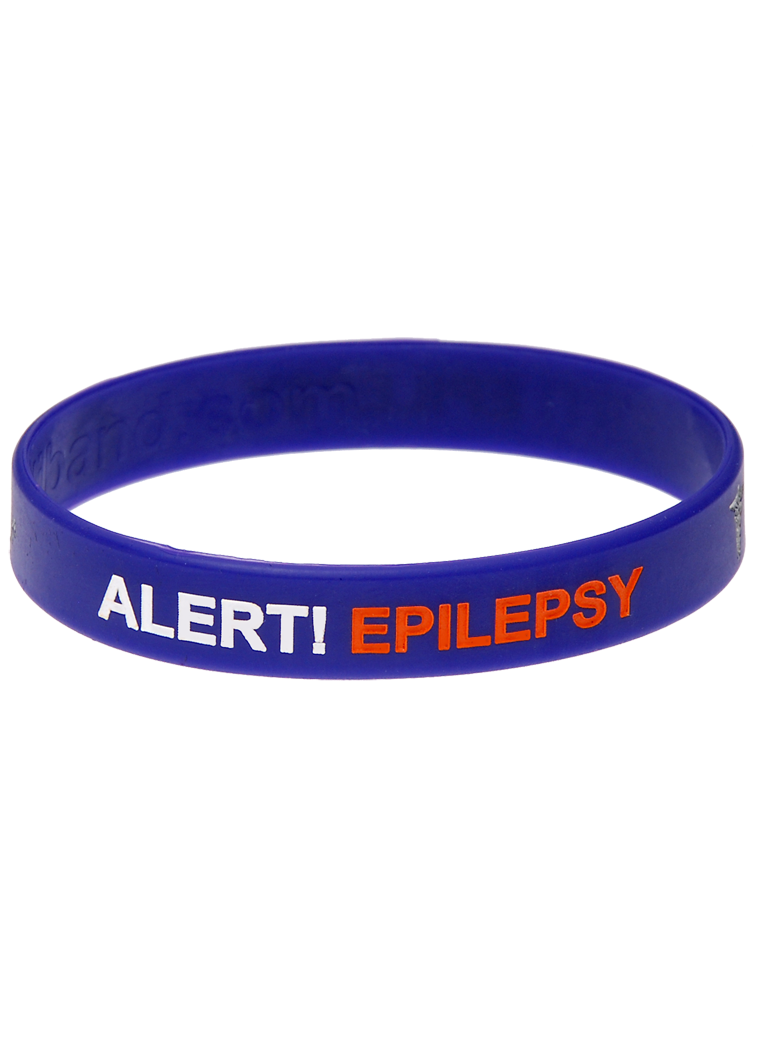
An epilepsy alert band flags the condition, key medications and an emergency contact at a glance — the information a first responder looks for first.
When someone has a seizure in public, the people helping are often strangers who know nothing about them. A medical ID does the talking in those first minutes: a bracelet or necklace engraved with “EPILEPSY”, key medications and an emergency contact tells a bystander or paramedic what is happening and who to call. It is exactly the information an Epilepsy Management Plan captures — carried on the wrist, where first responders are trained to look. For anyone living with epilepsy, or a carer supporting someone who is, a clearly engraved medical ID is a simple layer of safety.
Epilepsy medical ID bracelets
Custom-engraved and pre-printed bands that flag epilepsy, medications and an emergency contact for first responders.
Explore epilepsy medical IDsEpilepsy Alert bracelet
A pre-printed epilepsy alert band — a clear, at-a-glance flag for schools, sport and everyday wear.
View the Epilepsy Alert bandFrequently asked questions
Should you put something in the mouth of a person having a seizure?
No. A person having a seizure cannot swallow their tongue. Putting fingers or objects in their mouth can break teeth or injure both of you and does not help. Keep the mouth clear and, once the jerking stops, roll them onto their side.
When does a seizure become a medical emergency?
Call 000 if a seizure lasts longer than 5 minutes, if another follows quickly, if the person is injured or has trouble breathing, if it happens in water, or if they do not come round within 5 minutes. Always call for a first-ever seizure or if you are unsure.
What is the recovery position after a seizure?
Once the jerking stops, gently roll the person onto their side so any fluid can drain and the airway stays clear. Roll them immediately if there is food, fluid or vomit in the mouth. Stay with them until they are fully awake.
Do you need to call an ambulance every time someone has a seizure?
No. Seizures generally run their own course and an ambulance is not always necessary, particularly for someone with known epilepsy whose seizure ends normally. Call 000 if the seizure is prolonged, repeated, causes injury, or if you have any doubt.
What information should be on an epilepsy medical ID?
Useful details include the word “EPILEPSY”, any regular or emergency medications, and an emergency contact number. This mirrors an Epilepsy Management Plan and helps a bystander or paramedic act quickly and correctly.
Related guides: epilepsy medical ID bracelets · common medical ID abbreviations · do paramedics check for a medical ID?
Sources
Epilepsy Action Australia — First Aid (reviewed July 2026): epilepsy.org.au/about-epilepsy/first-aid/
Epilepsy Foundation — Seizure first aid: tonic-clonic seizures: epilepsyfoundation.org.au
Healthdirect — Seizures: healthdirect.gov.au/seizures
← Previous
Blood thinners and medical ID: should you wear a medical alert bracelet on warfarin or apixaban?
Next →
Recognising a hypo: low blood sugar signs and first aid
Comment(s)