
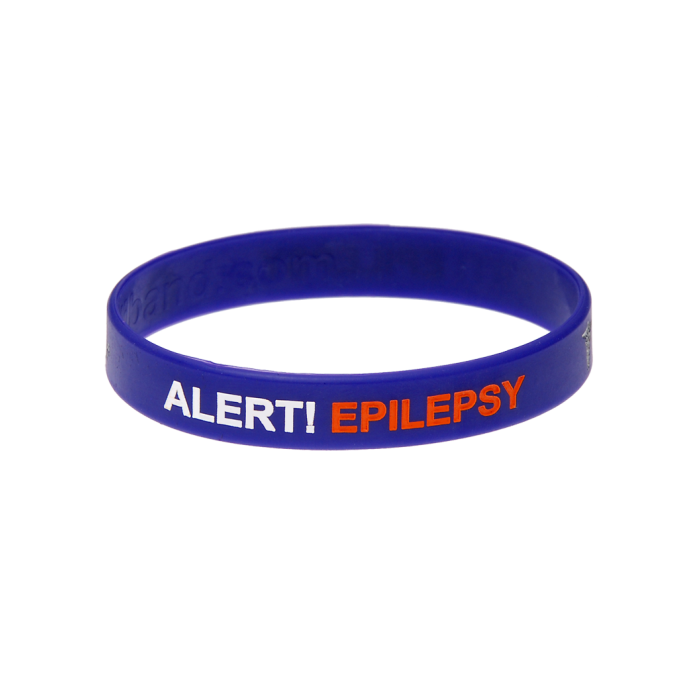
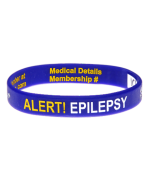
Epilepsy Alert Medical Bracelet
NZ$ 8.21
SKU
B0701
Secure checkout
VISA
Mastercard
Apple Pay
Google Pay
+5 more
Also accepted
AMEX
Afterpay
Zip
Klarna
PayPal
Enjoy life more knowing that you - or your loved one - can get immediate and appropriate treatment should something happen.
4.9 · 65 reviews
Since 2004
Looking for the full epilepsy ID guide?
The Epilepsy hub covers seizure types, rescue medication (midazolam, diazepam), VNS device safety, photosensitive flag, school and travel scenarios, NDIS funding, and the full Mediband epilepsy range.
EPILEPSY ALERT MEDICAL ID BRACELET
At Mediband, we work hard to help you stay safe and feel protected at all times. If you suffer from epilepsy, we have you covered. Our medical bands make it easy to alert others of your risks.
Understanding Epilepsy
Epilepsy is a relatively common disorder which takes the form of recurring seizures. A seizure occurs when there is a sudden, uncontrolled, surge in the normal electrical activity in all or part of the brain. Epilepsy can affect anyone at any age but most people with epilepsy will experience their first seizure before the age of twenty.
The ‘temporary breakdown’ that causes a seizure can happen to anybody; it’s simply a matter of getting the necessary activator or stimulus to start it off. With the stimulus of an electric current, for example, everyone would have a seizure. Some people, however, require comparatively less of a stimulus than others, to trigger off a seizure. The likelihood of someone having an epileptic seizure is described as the ‘epileptic threshold’. People with epilepsy have a low epileptic threshold – which means they may have a seizure if the working of the b rain is only slightly upset. Others are able to withstand quite a strong stimulus to the brain without having a seizure; these people have a high threshold.
Thus having epilepsy can, in some ways, be compared to having an allergy. Some people clearly have a low allergy threshold – and only a slight amount of pollen in the air will make their eyes sore and make them start sneezing. With others, no amount of pollen seems to have any effect. The epileptic threshold.
The sorts of stimulus that triggers off seizures in different people, can vary enormously. In young children aged six months to three years, a high temperature can cause a seizure, known as a febrile convulsion. In women, for example, hormonal changes associated with the menstrual cycle, may lead to chemical changes which may, in turn, lead to chemical changes in the brain. In some people, these changes may be prompted by a visual stimulus, such as flashing lights. A change of daily routine or lack of sleep, or more emotional factors, such as stress and excitement, can all prompt seizures in some individuals. Very often however, it is impossible to say what exactly acted as a stimulus for a seizure; there is no cause that we can readily see.
Treatment Options.
There have been important advances in anti-epileptic treatment over the past 25 years, with emphasis now on giving the patient a normal life. People with epilepsy need to discuss their medication requirements with their doctor or specialist – so that they get the full benefit from the treatment and risk or side effects is kept as low as possible. Pregnancy and epilepsy and medication during pregnancy are topics women need to discuss with their doctor. It’s very important for people taking anti–epileptic medication to keep their doctor informed of any other medication they are taking – the oral contraceptive pill, for example – because there can be an interaction between medication.
With modern anti–epileptic treatment, many people with epilepsy can lead a normal life. Children with epilepsy can achieve the same educational standards as other children according to their inborn abilities. Certainly, there may be limitations with regard to recreational activities – children with epilepsy should always be supervised when swimming – but such restrictions should not take all the fun out of life.
This is also why it’s so vital to alert medical staff of your condition. One of the best ways to achieve this is with a Mediband wristband. You’ll let the staff know how to treat you and what not to do.
Retail Customers: Why Choose Mediband?
Comfortable and Easy to Wear.
Medical wristbands come in a variety of sizes. They won’t irritate or chafe your skin. Therefore, you can feel free to wear them at all times. In fact, you may not even notice you’re wearing it.
Strong and Durable Silicone Material.
Next, each medical band is made from medical grade silicone. This material is built to last. And that means you won’t have to worry about breaking it, losing it, and other problems.
Clear and Easy to Read Text
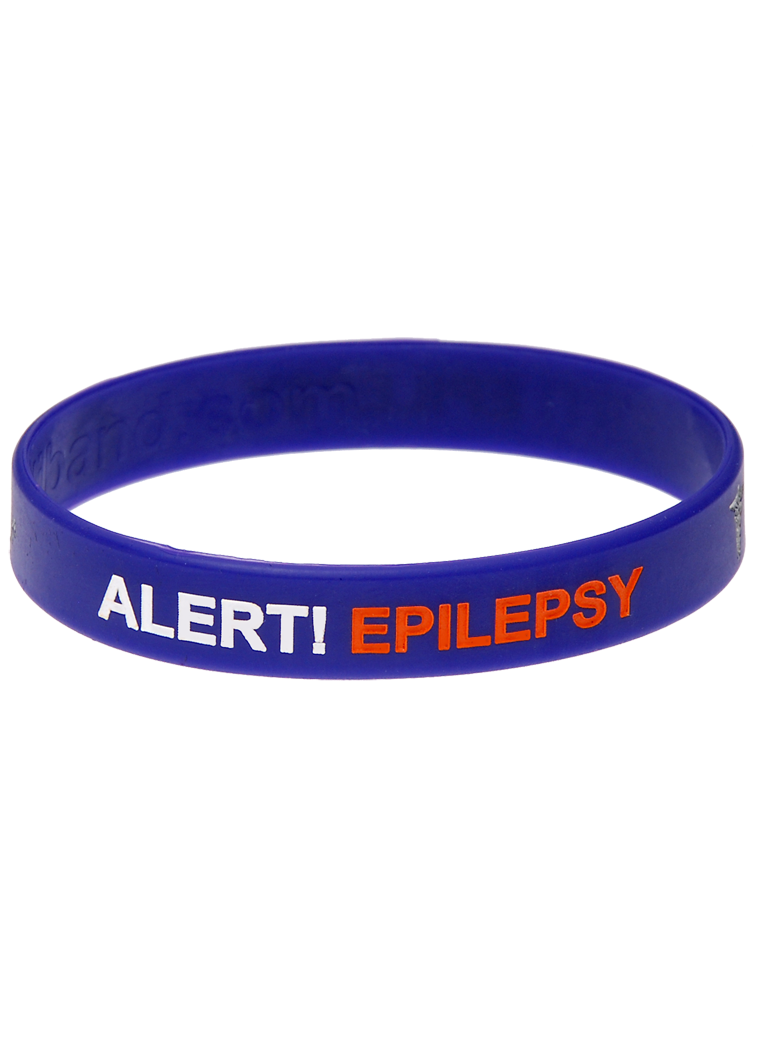
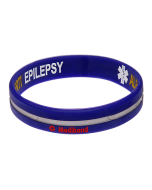
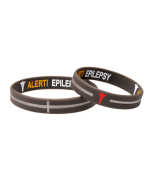
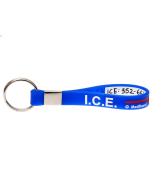
Our bracelets clearly display “ALERT! EPILEPSY” in clear text. Medical staff will have no problem reading this text. And that will ensure you’ll get the proper care in any emergency situation.
Low Prices with Quick Delivery.
Mediband wants everyone to have the medical wristbands they need for their safety. This is why we work hard to keep our prices low.
We also provide volume discounts for bulk orders. This makes them great for doctor’s offices, pharmacies, oncology departments, and more. Furthermore, our shipping options can get your wristbands to your door the next day.
Simple and Safe.
Mediband wristbands give you a simple and easy way to improve your safety. Just one wristband provides helpful warnings when you can’t speak because of an emergency. It’s the perfect way to protect yourself no matter what happens.
Medical Organisations: Improve Patient Care with Mediband.
Mediband Epilepsy and medical ID bracelets are a great item to stock in an office or a doctor's surgery. Doctors can help their patients to feel a little safer with these wristbands.
Mediband offers products for all sorts of conditions. Also, it’s an easy way for care givers to improve their patient care.
These wristbands are great for all of these places:
- Pharmacies.
- Hospitals.
- Oncology Departments.
- Doctor’s Offices.
Mediband: Making Safety Easy for You.
A Mediband medical ID bracelet ensures you’ll always get the right care when you need it.
Whether you're a patient or a medical facility, order your epilepsy bracelets today. You’ll love how easy it is to stay protected no matter what happens.
Phrase 1: ALERT! EPILEPSY
Phrase 1: ALERT! EPILEPSY
Logo: Mediband and Star of Life Logo
Colour: Purple
Colour Infill: White, Red & Silver
Why this band is read by bystanders, not just paramedics
Most medical IDs are written for trained responders. An epilepsy band is different, because the first person to reach someone having a seizure is usually a stranger — on a train, in a shop, at work.
It explains what is happening
A bystander who finds the band knows they are seeing a seizure rather than something else, and that the person is likely to recover. That changes how the situation is handled in the minutes before help arrives.
It gives them someone to call
An engraved contact number is often the most useful thing on the band. It connects a stranger to someone who knows the wearer’s history and what is normal for them.
It speaks after the event
Confusion and memory loss are common immediately afterwards. The band keeps stating the facts while the wearer cannot, which matters in the handover to ambulance or hospital staff.
What to engrave
| Line | Engrave | Why |
|---|---|---|
| Band front | Pre-printed epilepsy alert | Explains what a bystander is seeing |
| 1 | Full name | Identifies the wearer |
| 2 | Emergency contact number | Someone who knows the seizure history |
| 3 | Key medication, if space allows | Useful once care is handed over |
Keep it short. A band crowded with detail is slower to read, and the goal is for someone under stress to get the essential facts in one glance. Longer information — seizure type, triggers, a management plan — belongs in a wallet card and on My Health Record.
For information about epilepsy and seizure first aid, Healthdirect Australia is the reference to use. Anything about your own seizures, medication or management plan is a question for your neurologist or GP — we make identification products, not clinical recommendations.
Choosing a style
Pre-printed alert (this band)
Consistent wording, immediately recognisable, waterproof and inexpensive enough to keep spares. The most legible option for a bystander.
Write-on
A write-on band can be updated yourself, which suits changing medication or a child whose details shift.
Custom engraved
The custom ID builder lets you set the exact wording where a standard alert is not specific enough. See also the epilepsy ID hub and the full condition range.
Wearing and ordering
Designed to stay on
Silicone is waterproof, light and breakaway-safe, so there is no routine reason to take it off — and seizures do not wait for convenient moments. A band removed for swimming or sport is a band absent exactly when supervision is thinnest.
For children at school
A band travels with the child between classroom, playground and excursions, where the adult present may not be the one briefed that morning. Check the fit every few months as they grow.
Order spares
A lost band leaves the wearer unidentified until a replacement arrives. Schools, disability services and NDIS providers ordering several with different engraving can do it as one order — request a bulk quote.
Epilepsy bracelet FAQs
What should the band say?
The epilepsy alert is already printed on the band. Engrave your name and an emergency contact number, and a key medication if space allows. Keep it short so it can be read quickly by someone under stress.
Should I engrave my seizure type?
Only if it is brief and your treating team considers it useful. Detailed information is better kept in a wallet card or on My Health Record, with the band carrying what a bystander needs immediately.
Will the text survive daily wear?
Yes. The alert is colour-filled into the silicone and engraving is cut into it, both below the wear surface, so showering, swimming and sport do not remove them.
Is it safe for children to wear?
Yes. Silicone bands are flexible and breakaway-safe, which is why they suit school and play. Check the fit as the child grows so the band cannot slip over the hand.
Can it be worn during an MRI or EEG?
Silicone bands are non-metallic, but always follow the instructions of the staff running your scan or test — they may ask for anything on the limb to be removed regardless of material.
What if my medication changes?
If the medication is engraved, replace the band. Out-of-date information on a wrist is read as current, which is the situation worth avoiding.
SKU B0701Manufacturer Mediband
| SKU | B0701 |
|---|---|
| Manufacturer | Mediband |
Shipping
In-stock orders are dispatched the same business day when placed before 12pm AEST, Monday to Friday (excluding public holidays). Orders placed after 12pm AEST, or on weekends and public holidays, are dispatched the next business day.
Express, Regular and Courier delivery estimates are shown at checkout and apply from the dispatch date.
More information about shipment and delivery times can be found on our shipping page.
Returns & guarantee
100% Quality Guarantee. Your satisfaction is our priority. If there is a confirmed quality issue, return the item to us in its original condition and packaging within 14 days of receipt and we will issue a full refund (excluding the original delivery charge) or replace the item.
In-stock items may be exchanged for a different size or colour, provided they are returned as new, unworn and in their original packaging within 14 days of receipt.
Custom and made-to-order items are produced to your specification, so we do not accept returns or exchanges for change of mind, size or colour. Please check your size, colour, spelling and details carefully before ordering. First Aid Kits and Defibrillator Supplies also cannot be returned or exchanged except for a confirmed quality issue.
Please view terms and conditions for further information.
Loading reviews…
Complete your order
Related products

Type 1 Diabetes For Dummies
NZ$ 46.34
Diabetes For Dummies
NZ$ 61.63
CPR Face Shield Keyring
NZ$ 12.33
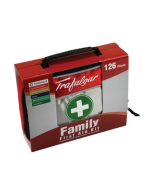
Trafalgar Family First Aid Kit
NZ$ 65.46
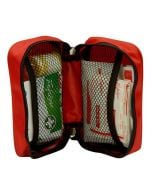
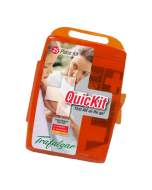
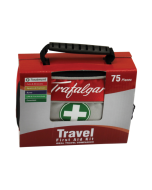
Trafalgar Travel First Aid Kit
NZ$ 48.06

St John Personal Protection Pack
NZ$ 14.22