
Why a Medical ID Bracelet Is More Powerful Than Most People Realise
Most of us know what a medical alert bracelet is — and many of us have been told we should wear one. But few people fully appreciate the depth of protection that small piece of engraved metal or silicone provides in an emergency. The bracelet doesn't just identify a condition; it directly changes the speed, accuracy, and safety of medical care delivered to the wearer when they can't speak for themselves.
This guide walks through four specific, evidence-based ways a medical ID bracelet can save your life. Some are obvious. Some are surprising. All four happen quietly, every day, in hospitals and ambulances around the world.

1. Clarification of Symptoms — Cracking the Diagnostic Puzzle
To deliver life-saving care, medical staff need to figure out what's wrong with a patient quickly. Most of the time, an experienced doctor or paramedic solves this puzzle in minutes. But some conditions have symptoms that mimic other illnesses, and the wrong assumption leads to the wrong treatment.
Examples of conditions that are commonly misdiagnosed in emergencies:
- Diabetic hypoglycaemia — confusion, slurred speech, and uncoordinated movement can look like alcohol intoxication or stroke.
- Anaphylaxis — early signs (skin flushing, throat tightness) can be mistaken for panic attack until breathing fails.
- Seizure post-ictal state — confusion and aggression after a seizure can look like agitation or psychiatric crisis.
- Fibromyalgia and rheumatoid flares — widespread pain misdiagnosed as muscle strain or anxiety.
- Adrenal crisis in Addison's disease — fatigue, low blood pressure, and vomiting easily mistaken for flu.
A medical ID bracelet flips the diagnostic conversation in seconds. Instead of "what is wrong here?", responders see "this patient has X" and adjust treatment accordingly. According to HealthDirect's first-aid guidance, accurate identification is one of the most important factors in early emergency care.
Recommended for you
Products related to this article
Hand-picked to go with what you just read.
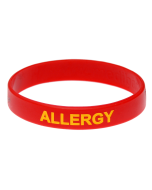
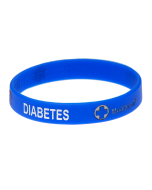
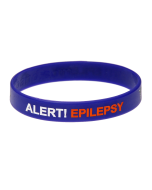
2. Precise Communication — When the Patient Can't Speak
Some medical conditions render the patient unable to communicate during an emergency. Epilepsy seizures, severe asthma, anaphylaxis, dementia, stroke, and brain injuries can all silence a person at exactly the moment when their medical history matters most.
For these situations, the bracelet is more than helpful — it's essential. It provides the information a doctor or paramedic needs to:
- Confirm the diagnosis without depending on family witnesses
- Choose treatments compatible with existing conditions
- Avoid medications that conflict with current prescriptions
- Contact the right family member or emergency contact
- Know the patient's wishes (e.g. DNR, advance care directive) if at end-of-life
For a non-verbal autistic adult, a stroke patient with aphasia, or a dementia patient who has wandered from home, a clear medical alert bracelet may be the only voice they have at the critical moment.
3. Secondary Treatment Safety — Avoiding Drug Interactions and Wrong Care
Many medical emergencies aren't directly related to a person's underlying condition — but the underlying condition still affects what treatment is safe. The classic case is the patient with a chronic illness who arrives at the ER for an unrelated injury. Without knowledge of the underlying condition, the wrong drug, blood transfusion, or anaesthetic could be administered.
Common Scenarios Where Secondary Treatment Decisions Change
- Anticoagulant patients (Warfarin, Eliquis, Xarelto) — minor injuries become major bleeding risks; surgical and trauma decisions change.
- Pacemaker recipients — defibrillator energy and MRI safety depend on knowing about the device.
- Penicillin allergy — first-line antibiotics in surgery, dental work, and infection treatment must be substituted.
- Rare blood types — transfusion compatibility is critical before any blood product is given.
- Implanted insulin pump or other device — must not be removed during emergency treatment.
The bracelet doesn't just say "I have X." It tells the responder what NOT to do — which is sometimes more critical than what to do.
4. Quick and Accurate Identification — The Time Factor
Time is the most precious resource in emergency medicine. The "golden hour" after major trauma, the first ten minutes of stroke onset, the first minutes of anaphylaxis — outcomes are dramatically better when the right care arrives quickly. Anything that wastes time hurts the patient.
Some patients try alternatives to wearing a medical bracelet — credit-card-sized info sheets in wallets, notes on phones, GPS-style apps requiring login. These can help, but each has a critical weakness:
- Wallet cards — paramedics may not search a wallet immediately; in some emergency protocols, wallets are sealed for property-handling reasons.
- Phone-based info — phones get locked, lost, or run out of battery; the lock screen "Medical ID" is the only universally-checked phone-based info.
- Apps requiring login — paramedics generally can't log into a patient's account.
- Family-only knowledge — family members may be reachable in 30 minutes; the patient may have 30 seconds.
The wrist is the universally-checked location. Paramedics worldwide are trained to inspect wrists, neck, and pockets in that order on an unresponsive patient. A clear medical bracelet, in those first 30 seconds, can be the single difference between the right treatment and the wrong one.
What Every Medical ID Bracelet Should Carry
Across all four life-saving scenarios, the same five fields cover the essentials:
- Wearer's name
- Primary medical condition
- Critical medication or allergy ("what NOT to give")
- Emergency contact phone number
- "See wallet card" if more detail is needed
Modern bracelets are lightweight, water-resistant, and discreet enough for daily wear. Stainless steel, silicone, designer reversible, rose gold, and QR-coded options all serve the same fundamental purpose. The right one is the one you'll actually keep on every day.
Frequently Asked Questions
How does a medical ID bracelet actually save a life — give me a concrete example?
Example: an unconscious diabetic in a public place. Without a bracelet, paramedics may treat for stroke, intoxication, or trauma — none of which help. With a "Type 1 Diabetic / Insulin Dependent" bracelet, they immediately check blood sugar, give glucose if low, and call the emergency contact. That's the difference between a 3-minute fix and a 30-minute crisis.
Do paramedics actually look for medical ID bracelets?
Yes — they're trained to. Standard emergency protocol on an unresponsive patient: check for medical IDs on wrist, neck, ankle, and in the wallet. The Star of Life and snake-and-staff symbols are universally recognised. A visible, clearly engraved bracelet is the fastest way to communicate medical information when the patient can't.
Is a medical alert bracelet better than a medical ID app on my phone?
They work best together. The bracelet works without batteries, signal, or a logged-in phone — universal and instant. The phone Medical ID can carry more detail and is widely accessible from a lock screen. Paramedics check both. Wear the bracelet for the first 30 seconds; let the phone fill in the deeper detail.
What if my condition isn't life-threatening — do I still need a medical ID?
Yes — for any chronic condition, prescription medication, severe allergy, or implant. "Not life-threatening today" doesn't mean "not life-threatening if treated wrong tomorrow." A penicillin allergy isn't dangerous on its own — but becomes dangerous if the wrong antibiotic is administered in an emergency. The bracelet protects you against future scenarios you can't predict.
What if I find someone unconscious wearing a medical alert bracelet?
Read it carefully and tell the emergency dispatcher exactly what it says when you call for help. Don't try to remove it — it stays with the patient through the entire response. If there's an emergency contact, you can also call that number after you've called emergency services. The bracelet is most valuable when its information reaches the responders who arrive.

Written by
Founder, Mediband
Founder of Mediband; over 20 years providing medical IDs worldwide.


And allergic to penicillin and tetanus where do I get one please