
Over 2 million Australians now take a GLP-1 medication like Ozempic, Wegovy, Mounjaro or Trulicity for type 2 diabetes or weight management — and almost none of them are wearing a medical alert bracelet. That's a problem. Paramedics, emergency doctors and anaesthetists are sounding the alarm: in a genuine medical emergency, your GLP-1 use changes how you should be treated, and nobody knows you're on it.
If you're one of the millions on semaglutide (Ozempic, Wegovy) or tirzepatide (Mounjaro), this is the guide every Australian user should read. A simple medical alert bracelet can be the difference between safe emergency care and a preventable complication.
What Are GLP-1 Medications?
GLP-1 receptor agonists are a class of injectable or oral medications that mimic the glucagon-like peptide-1 hormone. They slow gastric emptying, suppress appetite and trigger insulin release, which makes them effective for both type 2 diabetes management and weight loss. The most widely prescribed in Australia include:
- Ozempic (semaglutide) — weekly injection, primarily for type 2 diabetes
- Wegovy (semaglutide) — weekly injection, approved for weight management
- Mounjaro (tirzepatide) — weekly injection, dual-agonist for type 2 diabetes
- Trulicity (dulaglutide) — weekly injection, type 2 diabetes
- Rybelsus (oral semaglutide) — daily tablet, type 2 diabetes
These medications have transformed chronic disease management — but they also introduce new emergency-care considerations that most users have never been warned about.
Why GLP-1 Users Need a Medical Alert Bracelet
When you can't speak for yourself — after a car accident, heart attack, stroke, fall or simply being unconscious — first responders treat you based on what they can see. A medical alert bracelet gives them three pieces of critical information:
- That you're on a GLP-1 medication (and which one)
- Your other medical conditions (type 2 diabetes, heart disease, allergies)
- An emergency contact they can reach
Without that information, three serious risks compound: dangerous anaesthesia complications, untreated hypoglycaemia, or delayed care because your treating team is missing the full picture.
Recommended for you
Products related to this article
Hand-picked to go with what you just read.
The Anaesthesia Risk Every Ozempic User Must Know
This is the single biggest reason GLP-1 users need a medical alert bracelet. GLP-1 medications delay gastric emptying — sometimes dramatically. Your stomach may still contain food or fluid even after a standard overnight fast. Under general anaesthesia, this creates a serious risk of pulmonary aspiration, where stomach contents enter the lungs. Aspiration can cause pneumonia, lung injury and, in worst cases, death.
The Australian and New Zealand College of Anaesthetists and the American Society of Anesthesiologists have both published guidance since 2023 recommending:
- Stopping weekly GLP-1 injections (Ozempic, Wegovy, Mounjaro) at least 1 week before elective surgery
- Stopping daily oral GLP-1s (Rybelsus) at least 24 hours before
- Treating every GLP-1 user as "full stomach" in emergency or unplanned surgery, even after fasting
If you're rushed into emergency surgery after a car accident or fall, your anaesthetist must know you're on a GLP-1 medication. A medical alert bracelet tells them before you can — or before someone finds your phone.
What Should Be on Your GLP-1 Medical Alert Bracelet?
The best medical alert bracelets for GLP-1 users combine permanent identifying info with updatable fields, since dose changes and weekly injections are the norm. At a minimum, include:
- Medication name and strength (e.g. "Ozempic 1mg weekly" or "Semaglutide 1mg/wk")
- Last injection date — a write-on bracelet lets you update this every week
- Any other chronic conditions (type 2 diabetes, hypertension, cardiac history)
- Known allergies
- Emergency contact phone number
A write-on reversible bracelet is ideal for GLP-1 users because you can flip it and rewrite your last injection date each week. For users on long-term stable doses, an engraved silicone or stainless steel bracelet gives permanent, weatherproof visibility.
Choosing the Right Medical Alert Bracelet for GLP-1 Users
Mediband's range covers every GLP-1 scenario. Our most recommended options:
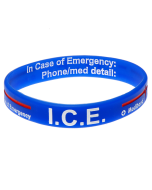
- ICE Reversible Write-On Medical Bracelet — waterproof silicone, write your medication and last dose date, reversible to update weekly
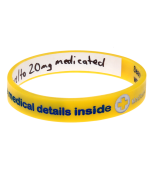
- Medical Condition Write-On Reversible Bracelet — high-visibility yellow, ideal for listing "Ozempic" plus emergency contact
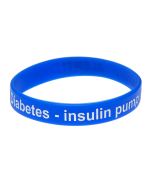
- Diabetes Medical Alert Bracelet — for type 2 diabetics using insulin alongside their GLP-1
- Browse our full Custom ID range for engraved and premium options
Three Real Scenarios Where a Medical Alert Bracelet Saves Lives
Scenario 1: Car accident requiring emergency surgery. Without a medical alert, the anaesthetist treats you as a standard fasted patient. With GLP-1 still in your system, you aspirate under general anaesthesia and develop aspiration pneumonia. With a bracelet reading "Ozempic weekly — last dose Tue," the team switches to regional anaesthesia, uses rapid-sequence intubation, or delays surgery if possible.
Scenario 2: Hypoglycaemia combined with insulin therapy. Type 2 diabetics on both insulin and a GLP-1 can experience severe hypoglycaemic episodes. Paramedics who see "Type 2 diabetes — Ozempic + insulin" on a bracelet know to administer glucose immediately, rather than running through differential diagnoses while you lose consciousness.
Scenario 3: Severe nausea and dehydration. GLP-1 side effects can cause vomiting and dehydration that masquerade as other emergencies. Knowing you're on semaglutide helps the emergency team rehydrate you correctly, avoid unnecessary imaging and spot gallbladder or pancreatitis complications faster.
Ordering Your Medical Alert Bracelet from Mediband
Mediband has supplied Australian GPs, pharmacists and patients with medical alert bracelets for over 20 years. Every bracelet is:
- Medical-grade silicone — hypoallergenic and waterproof
- Australian-designed and tested
- Covered by a 30-day satisfaction guarantee
- Shipped Australia-wide within 1–3 business days
Don't wait for an emergency to think about what's on your wrist. Order a medical alert bracelet today and wear it with confidence — on Ozempic or any other medication.
Frequently Asked Questions
Do I really need a medical alert bracelet if I'm on Ozempic?
Yes, especially if you're on a weekly injection. If you're in an accident or need emergency surgery, your anaesthetist needs to know you're on a GLP-1 before administering general anaesthesia to avoid pulmonary aspiration — a serious and sometimes fatal complication.
How long before surgery should I stop Ozempic?
Australian and American anaesthesia societies recommend stopping weekly GLP-1 injections (Ozempic, Wegovy, Mounjaro, Trulicity) at least 1 week before elective surgery, and daily oral GLP-1s (Rybelsus) at least 24 hours before. Always follow your specialist's instructions.
What should be engraved or written on my Ozempic medical bracelet?
At a minimum: the medication name and dose (e.g. "Ozempic 1mg weekly"), your last injection date, any other chronic conditions, and an emergency contact number. A reversible write-on style lets you update the date each week.
Can Ozempic cause hypoglycaemia?
Ozempic alone rarely causes hypoglycaemia, but when combined with insulin or a sulfonylurea medication the risk rises sharply. Type 2 diabetics using a GLP-1 alongside insulin should definitely wear a medical alert bracelet listing both medications.
Where can I buy a medical alert bracelet in Australia?
Mediband has been Australia's specialist medical alert bracelet supplier for over 20 years. Browse our full medical alert bracelet range with options for GLP-1 users, diabetics, allergy sufferers and more. We ship Australia-wide within 1–3 business days.
Is a medical alert bracelet better than a medical ID app or card?
Bracelets are checked first by paramedics — it's literally the first place they look. A phone app or wallet card may never be found in time, especially if your phone is locked, damaged, or your wallet is lost in the accident. A visible bracelet is always available.

Written by
Founder, Mediband
Founder of Mediband; over 20 years providing medical IDs worldwide.
← Previous
Medical IDs for pacemaker recipients — what to engrave and why it matters
Next →
Ear Thermometer Vs Forehead Thermometer In Real-Life Settings
Comment(s)