
How to Measure Your Wrist Size for a Medical ID Bracelet
A medical ID only protects you if it stays on — and that starts with the right wrist measurement. Here is how to get it right in under a minute.

Quick answer
Wrap a strip of paper or a flexible tape around your wrist, just below the wrist bone where you'd wear a band. Mark where the ends meet, then measure that length in centimetres against a ruler — that is your wrist circumference. Add about 1.5 cm for a comfortable medical ID fit. Most adults sit between 14 cm and 19 cm. Many Mediband bands are adjustable or custom-fit, so once you have your number, check the size guide on the product page before you order.
How to measure your wrist in three steps
You do not need special tools. A strip of paper and a ruler are enough. Measure the wrist you will actually wear the band on — for most people that is the non-dominant hand, so the band sits out of the way.
- Wrap. Take a flexible tape measure, or a thin strip of paper, and wrap it snugly around your wrist just below the wrist bone (the spot where a watch or band naturally rests). Keep it firm but not tight.
- Mark and measure. If you used paper, mark where the end overlaps, lay it flat against a ruler, and read the length in centimetres. That number is your wrist circumference.
- Add room to fit. Add roughly 1.5 cm to your wrist circumference for a comfortable medical ID fit — enough to slip a finger under the band so it sits securely without pinching. For a looser, bangle-style fit, add up to 2 cm.
Tip: If your wrists or fingers swell during the day, or with a condition such as arthritis or fluid retention, measure in the late afternoon when they are at their largest, and choose an adjustable band.
Shop medical alert bracelets →
How to measure your wrist without a tape measure
No tape measure on hand? Either of these works just as well:
- Paper strip method. Cut a thin strip of paper, wrap it around your wrist, mark the overlap, then measure the strip against any ruler.
- String method. Wrap a piece of string or a phone-charger cable around your wrist, pinch the overlap, then hold the pinched length against a ruler.
Three ways to measure — which to use
| Method | You need | Best for | Accuracy |
|---|---|---|---|
| Flexible tape measure | A sewing/soft tape | The quickest, most direct reading | Highest |
| Paper strip + ruler | Paper, scissors, a ruler | Measuring at home with no tape | High |
| String + ruler | String or a cable, a ruler | Measuring a child or someone else | Good |
Wrist size chart: which bracelet size fits
Use your wrist circumference (the measured length before you add room) to find a general size band. This is a guide only — many Mediband bands are adjustable or made to a custom length, so always confirm against the size guide on the product page.
| Wrist circumference | General size | Typical wearer |
|---|---|---|
| Up to 14 cm | Extra small / child | Children and small wrists |
| 14–16 cm | Small | Smaller adult wrists |
| 16–18 cm | Medium | Average adult wrists |
| 18–20 cm | Large | Larger adult wrists |
| Over 20 cm | Extra large | Broad wrists |
Engraved silicone, stainless steel and adjustable styles each sit a little differently on the wrist, so the size guide on each product page is the final word.
A medical ID is only useful if it is being worn. The right fit — secure, comfortable, easy to read — is what keeps it on the wrist every day.
What is the average wrist size?
Most adult wrists fall between roughly 14 cm and 19 cm in circumference. Adult women commonly sit around 14–16 cm and adult men around 17–19 cm, though there is wide variation. Children's wrists are usually well under 14 cm, which is why kids' medical IDs run smaller and are often adjustable. Averages are a starting point only — measuring your own wrist takes a minute and removes the guesswork.
Measuring your wrist for a bracelet vs a watch
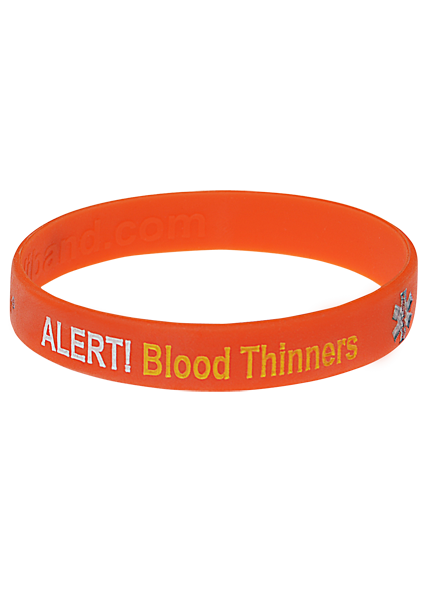
The measurement is the same — your wrist circumference — but the fit you add differs. A medical alert bracelet should sit snug enough to stay put yet loose enough to rotate slightly and be read quickly in an emergency, so add about 1.5 cm. A watch or watch-style ID can sit a touch firmer. For children, allow a little extra room for growth and choose an adjustable band where possible.
View silicone medical alert bands →
Designed in Australia•
NDIS-registered•
4.9★ verified customer rating•
Helping Australians stay safe since 2004
Find the right medical ID once you have your size
- Medical alert bracelets — the full engraved range
- Silicone medical alert bands — soft, adjustable, everyday wear
- Medical alert necklaces and ID pendants — for those who prefer not to wear a band
- What to engrave: medical ID abbreviations — the letters first responders look for
- Diabetes medical ID bracelets
- Anaphylaxis medical ID bracelets
- Medical ID wallet cards
- NDIS funding for medical IDs
Wrist-sizing FAQs
How do I measure my wrist for a bracelet?
Wrap a flexible tape measure or a strip of paper snugly around your wrist just below the wrist bone, mark where it overlaps, and measure that length in centimetres. Add about 1.5 cm for a comfortable medical ID fit.
How can I measure my wrist without a tape measure?
Use a thin strip of paper or a piece of string. Wrap it around your wrist, mark or pinch the overlap, then hold it against a ruler to read the length in centimetres.
What is the average wrist size?
Most adult wrists measure between about 14 cm and 19 cm in circumference. Children's wrists are usually under 14 cm. Measuring your own wrist is more reliable than relying on an average.
How tight should a medical alert bracelet be?
Snug enough that it will not slide over your hand, but loose enough to slip one finger underneath and rotate it slightly so the engraving can be read quickly. If your wrist swells during the day, choose an adjustable band.
How do I measure a child's wrist for a medical ID?
Use the string method — it is gentler and easier on a small wrist. Wrap string around the wrist, mark the overlap, and measure against a ruler. Allow a little extra room for growth and choose an adjustable kids' band.
About this guide. Mediband has designed engraved medical IDs in Australia since 2004 and is an NDIS-registered provider. This page is general sizing information, not medical advice. For the exact fit of a specific product, check the size guide on that product page.