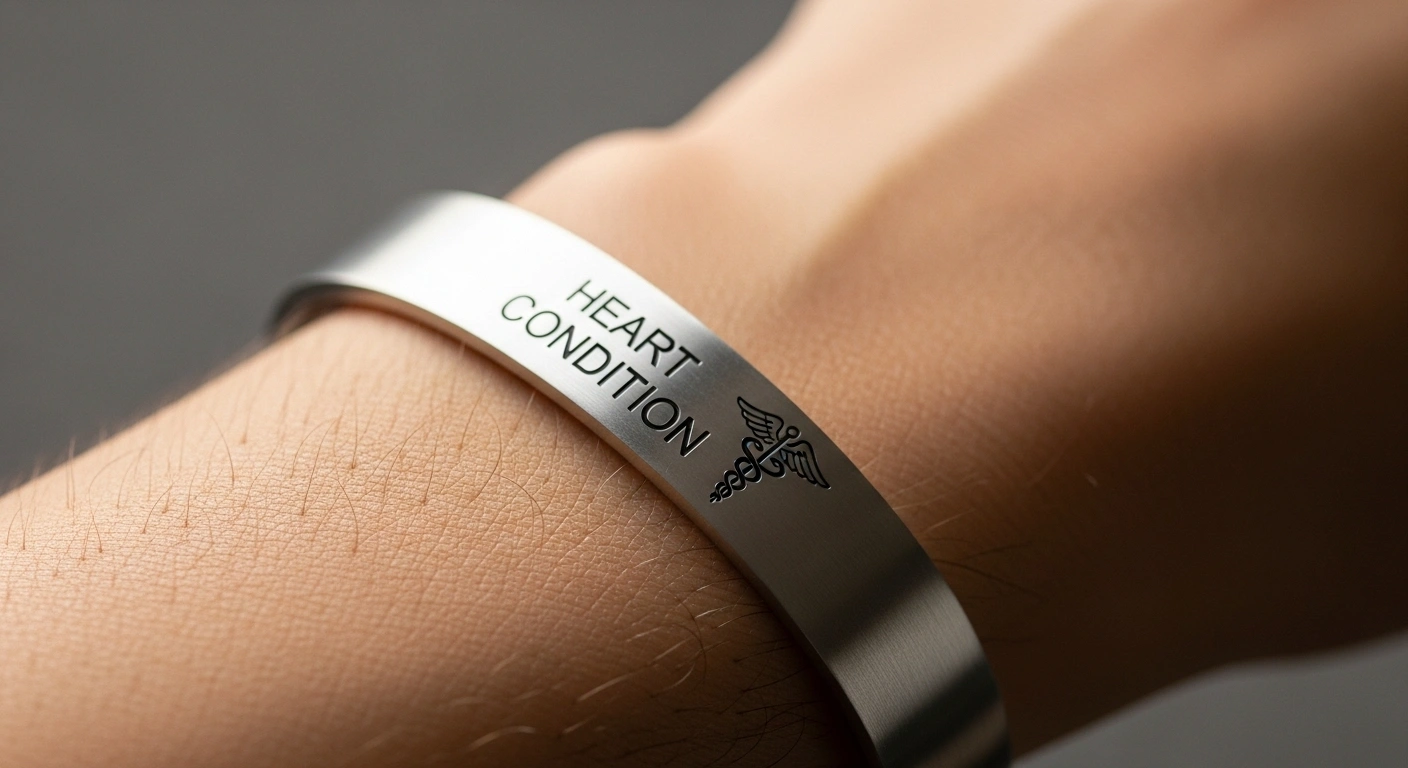
Wristbands for Hospital Patients: How the System Works and Why Your Medical ID Matters
January 17, 2008

Adverse drug events harm an estimated 1 in 10 hospital admissions in Australia, according to the Australian Commission on Safety and Quality in Health Care (ACSQHC, 2023). A significant contributor is the miscommunication of patient allergies and medical conditions at the point of care. Hospital patient identification wristbands are the first line of defence against these errors — but understanding how they work, what their colour codes mean, and how a personal medical alert bracelet complements the hospital system could make a critical difference to your safety.
What Is a Hospital Patient Identification Band?
A patient identification band — sometimes called a hospital wristband or ID band — is issued to every patient admitted to an Australian hospital. Under the National Safety and Quality Health Service (NSQHS) Standard 5: Patient Identification and Procedure Matching, healthcare facilities are required to confirm a patient's identity using their wristband before every clinical intervention: medication, blood transfusion, surgical procedure, or diagnostic test.
The ACSQHC specifies that all patient identification bands in Australia must include three core identifiers: the patient's full name, date of birth, and medical record number. These three data points, used together, prevent mix-ups in busy wards where multiple patients may share a similar name or be in adjacent beds.
What Information Is on a Hospital Wristband?
Australian hospital wristbands are standardised to carry only the three mandatory identifiers — full name, date of birth, and medical record number. The band does not carry clinical detail such as diagnosis, allergy type, or medication information. That detail lives in clinical notes and the electronic prescribing system. This is why the band alone cannot protect a patient from an allergic drug reaction — it only confirms who someone is, not what conditions they have.
Hospital Wristband Colours in Australia
Australian hospitals use a two-band colour coding system endorsed by the ACSQHC:
- White band: Standard patient identification — worn by all admitted patients
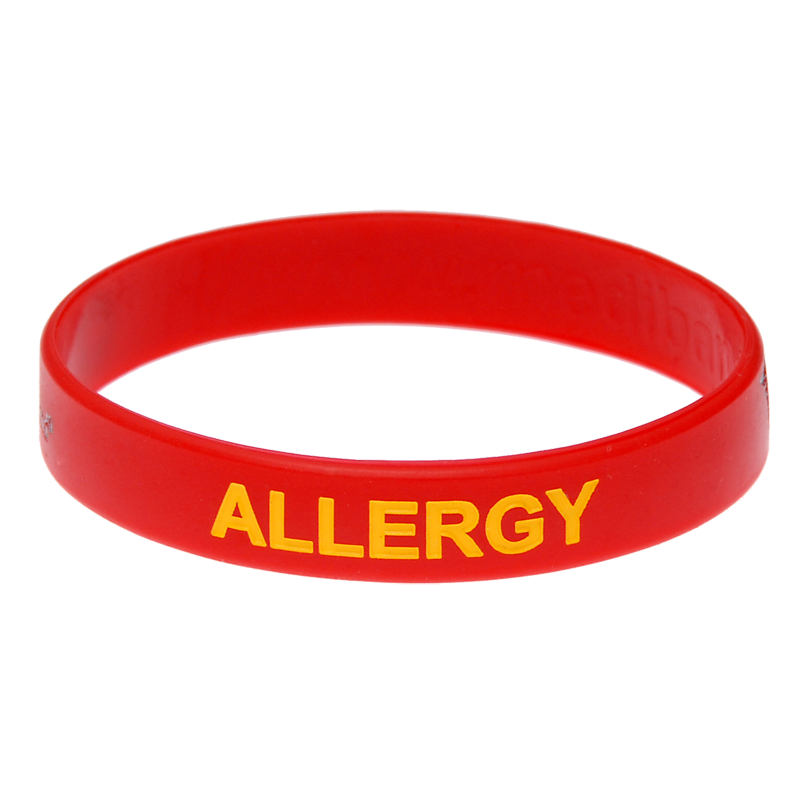
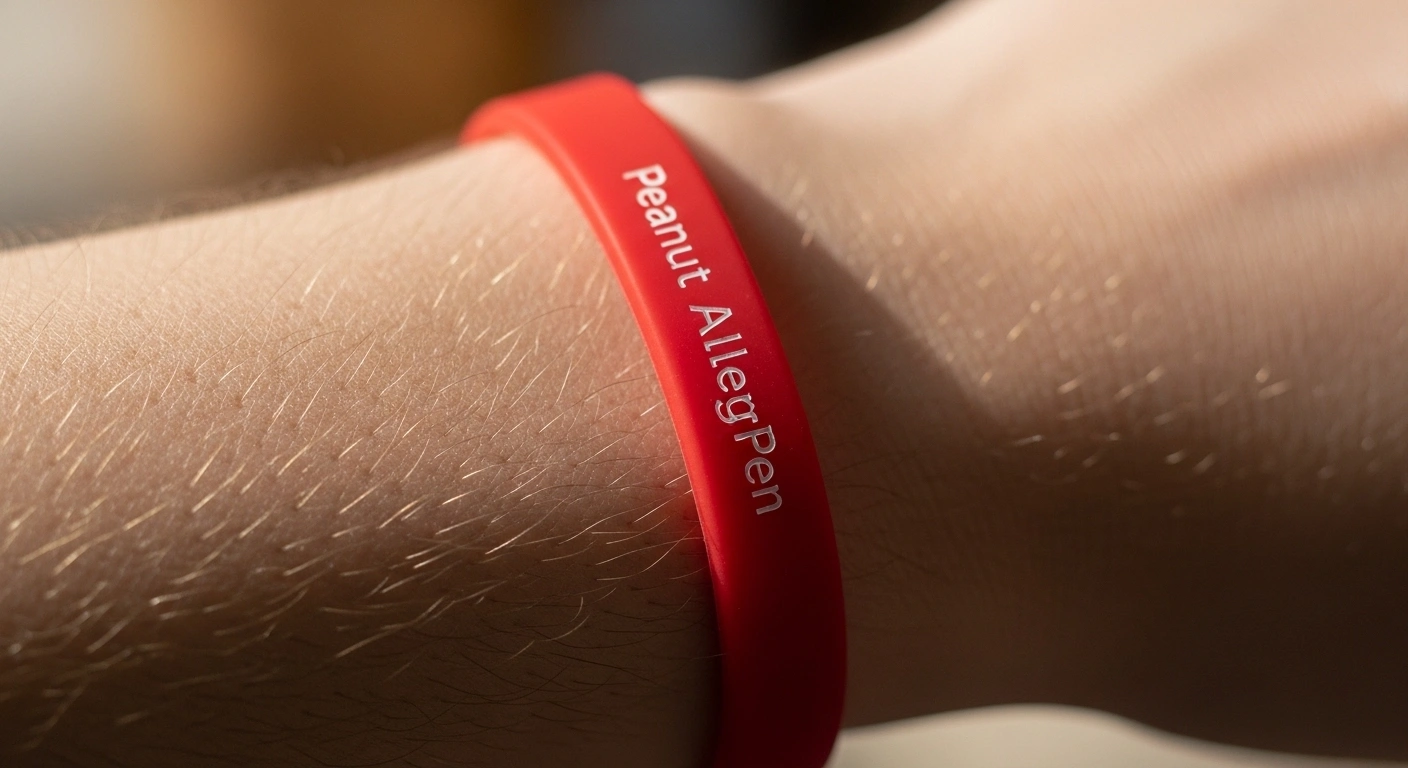
- Red band: Clinical alert — replaces or accompanies the white band when a patient has a known allergy, adverse drug reaction, or other clinical risk requiring special attention
Unlike hospitals in the UK, USA, and some Asian countries, Australian guidelines specifically prohibit the use of other wristband colours (yellow for fall risk, purple for DNR, green for latex allergy, etc.) to avoid confusion among staff who may work across multiple facilities. A red band in an Australian hospital has one meaning only: proceed with caution — check the clinical notes for this patient's alert.
Shop Allergy Alert Medical Bracelets
Worn every day, read in seconds — make sure hospital staff know your allergies before they treat you.

How Hospital Patient Safety Wristbands Reduce Medical Errors
The patient identification band is checked — or should be checked — at every point of care. A 2021 audit across NSW Health facilities found that compliance with the three-identifier check varies significantly between departments, with emergency departments and high-volume wards at greatest risk of non-compliance due to time pressure (NSW Health PD2021_033).
When the system works correctly, the wristband prevents:
- Wrong-patient medication errors — administering a drug prescribed for a different patient in the same ward
- Wrong-patient procedures — performing a procedure (including surgery) on the wrong individual
- Wrong-patient blood transfusions — one of the most dangerous and potentially fatal hospital errors
However, the standard hospital ID band is a reactive safety tool — it verifies identity after the patient arrives. It cannot communicate the specific allergy, condition, or medication information that determines how a patient should be treated. That gap is where a personal patient safety wristband becomes critical.
Medical Alert Bracelet vs. Hospital Wristband: What's the Difference?
A hospital wristband and a medical alert bracelet serve very different purposes and should be understood as complementary, not interchangeable.
Why Your Personal Medical ID Matters Before You Reach Hospital
A hospital wristband is only issued at the time of admission — it does not exist in the moments between a medical emergency and hospital arrival. Paramedics responding to an unconscious or incapacitated patient have no access to the hospital system. They rely on what they can see on the patient's body.
A medical ID bracelet for emergency use in Australia provides first responders with immediate, actionable information: the patient's name, medical condition, critical medications, and emergency contact. According to St John Ambulance Australia, paramedics are trained to check the wrist and neck for medical alert jewellery within the first 60 seconds of assessment. For patients who cannot speak for themselves — whether due to unconsciousness, a seizure, a diabetic emergency, or cognitive impairment — that bracelet can be the determining factor in whether the correct treatment is administered.
Allergy Alert Wristbands in Hospital Settings
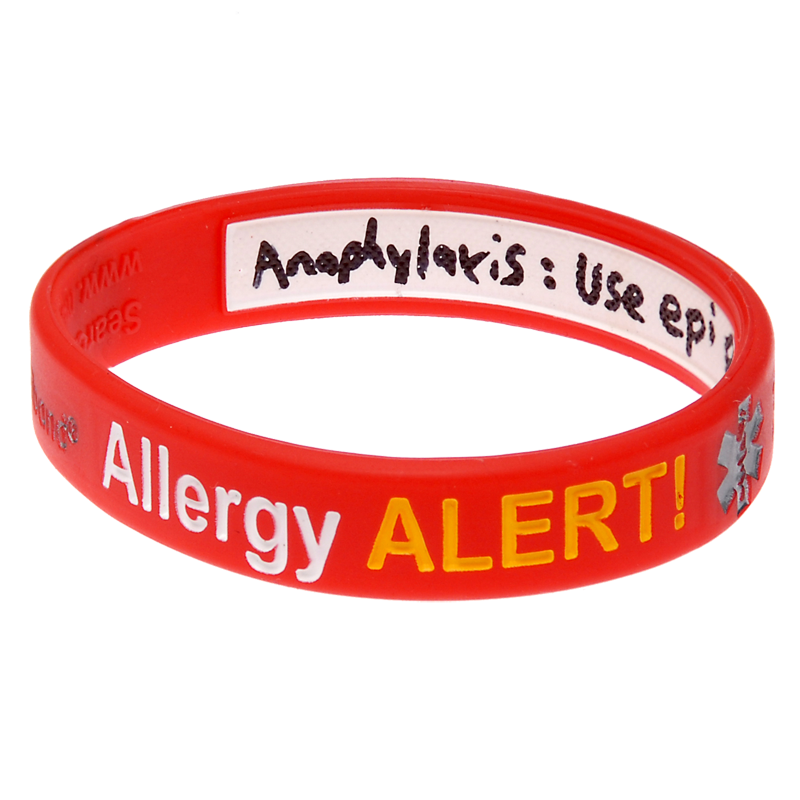
For patients with known drug allergies, wearing a personal allergy alert wristband to hospital adds a critical layer of protection beyond the hospital's own red band system. Here's why: a hospital red band signals that an allergy exists on record. It does not state what the allergy is. A nurse or paramedic still needs to stop, locate the chart, and check — a process that can be slow or fail entirely in a fast-moving emergency.
A personal allergy alert bracelet engraved with "Penicillin Allergy" or "Codeine Allergy" provides the specific information instantly. Research from Sunderland Royal Hospital found that drug allergies go unrecorded in clinical notes in up to 40% of relevant admissions. A personal bracelet worn on the wrist bridges that documentation gap.
Wristbands for Aged Care and Elderly Patients
In aged care identification wristband settings across Australia, patient identification is complicated by cognitive decline, communication difficulties, and the high number of residents with similar demographics. Dementia Australia reports that over 400,000 Australians currently live with dementia — the majority in residential aged care.
For elderly patients moving between aged care facilities and hospital — a common occurrence during acute illness or falls — a clearly labelled personal medical ID wristband ensures that critical information travels with the patient even when clinical records do not. Write-on style wristbands are particularly useful in aged care settings, as they can be updated whenever medications or emergency contacts change without requiring a new engraved band.
For patients with dementia specifically, a personal identification band can also help staff, family members, and members of the public identify and safely return an individual who has wandered or become distressed in an unfamiliar environment.
What to Wear to Hospital: A Personal Medical ID Checklist
Before any planned hospital admission — or if you have a condition that may result in an emergency presentation — consider wearing a personal medical alert bracelet in addition to any wristband the hospital will issue. Ensure your bracelet includes:
- Primary medical condition (e.g., "Type 1 Diabetic", "Epilepsy", "Penicillin Allergy")
- Critical medications or any medications that cannot be safely given (e.g., "No NSAIDs", "Blood Thinners")
- Emergency contact name and mobile number
- Any secondary condition relevant to emergency treatment
At Mediband, we've been helping Australians prepare for medical emergencies since 2009. Browse our range of allergy alert bracelets and medical alert bracelets designed to complement hospital patient identification systems.
Frequently Asked Questions About Hospital Patient Wristbands
Why do hospitals in Australia make patients wear wristbands?
Australian hospitals require identification bands to prevent medical errors, including wrong-patient medication, wrong-patient procedures, and wrong-patient blood transfusions. The ACSQHC mandates this under NSQHS Standard 5: Patient Identification and Procedure Matching. The band must be checked every time clinical care is delivered to confirm the right patient is receiving the right treatment.
What does a red wristband mean in an Australian hospital?
In Australia, a red band indicates a clinical alert — typically a known allergy or adverse drug reaction. Australian guidelines from the ACSQHC specify only two wristband colours: white (standard identification) and red (clinical alert). Unlike overseas hospitals, Australia does not use yellow, purple, or green bands, to avoid confusion among staff who work across multiple facilities.
What information is printed on a hospital patient wristband?
Australian hospital wristbands carry three mandatory identifiers: the patient's full name, date of birth, and medical record number. They do not include allergy details, diagnosis, or medication information — that detail is in the clinical notes. This is why wearing a personal medical alert bracelet with your specific allergy or condition is important, particularly in emergencies before you reach hospital.
What is the difference between a hospital wristband and a medical alert bracelet?
A hospital wristband is issued at admission and worn only during the hospital stay — it confirms identity but carries no clinical detail. A medical alert bracelet is a personal device worn daily, designed to communicate critical health information (conditions, allergies, medications) to paramedics and emergency responders in the minutes before you reach hospital. The two work best together.
Can patients refuse to wear a hospital wristband in Australia?
Patients have rights under the Australian Charter of Healthcare Rights, including the right to refuse care. However, refusing an identification wristband creates serious safety risks — clinical staff may be unable to safely verify identity before administering medication or performing procedures. Most hospitals will document a refusal and may limit the care they can safely provide without a confirmed identification.

Share on Facebook

Share on X

Share on Pinterest
Comment(s)
Recent Posts

The Risk Of Not Wearing An Allergy Medical Alert Bracelet
March 23, 2026