
What to Engrave on a Medical Alert Bracelet: The Complete Australian Guide
July 14, 2020
1
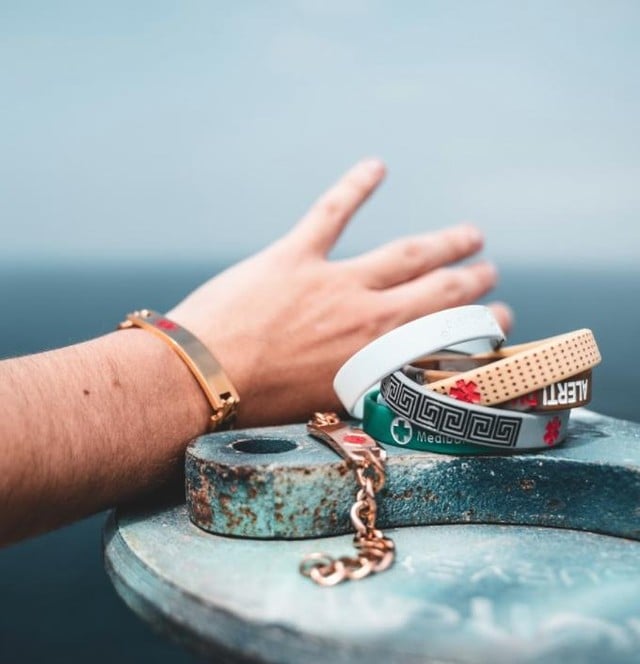
Every year, Australian paramedics and emergency responders check for medical alert identification as one of their first steps when attending to a patient who cannot communicate. According to St John Ambulance Australia, a clearly engraved medical alert bracelet can reduce critical treatment delays by giving first responders immediate access to your most important health information. But what exactly should you engrave on a medical alert bracelet — and what should you leave off?
This guide covers everything you need to know about medical alert bracelet engraving in Australia: what information to include, how to prioritise when space is limited, common abbreviations, and tips for getting the most out of your engraving.
Why Is Engraving Your Medical Alert Bracelet So Important?
In a medical emergency, every second counts. If you are unconscious, confused, or unable to speak, your medical alert bracelet becomes your voice. Paramedics are trained to check wrists and necks for medical identification within the first 30 seconds of patient assessment. The information they find directly influences treatment decisions — including which medications to administer, which to avoid, and who to contact.
According to the Australian Institute of Health and Welfare (AIHW), there were over 9.1 million emergency department presentations across Australia in 2022–23. In many of these cases, patients arrived unable to communicate their medical history. A properly engraved medical ID bracelet bridges that gap.
Having your medical information engraved on a bracelet can:
- Prevent dangerous drug interactions or allergic reactions during emergency treatment
- Speed up diagnosis when you cannot explain your symptoms
- Alert responders to conditions like epilepsy, diabetes, or heart conditions that mimic other emergencies
- Provide an emergency contact number so your family can be reached immediately
What Information Should You Engrave on a Medical Alert Bracelet?
The most effective medical alert bracelets include only the information that will change how you are treated in an emergency. Think of it as giving a paramedic a 10-second summary of the most critical facts about your health.
Your Medical Condition
Always engrave your primary medical condition first — this is the single most important piece of information on your bracelet. Use clear, standard medical terminology that any first responder will recognise immediately. Examples include: "Type 1 Diabetic", "Epilepsy", "Anaphylaxis — Peanuts", "Asthma", "Warfarin Patient", or "Dementia".
If you have more than one condition, prioritise the one most likely to affect emergency treatment. For example, if you have both diabetes and a penicillin allergy, both are critical — but the allergy may prevent a common treatment, making it the higher priority.
Drug and Food Allergies
Allergies that could cause anaphylaxis or serious adverse reactions must be on your bracelet. According to the Australasian Society of Clinical Immunology and Allergy (ASCIA), approximately 2% of adults and 10% of children in Australia have food allergies. Common engravings include: "Penicillin Allergy", "Anaphylaxis — Tree Nuts", "Allergic to Sulfa Drugs", or "Bee Sting Allergy — Carries EpiPen".
Drug allergies are particularly critical because emergency responders may administer antibiotics or pain relief without being able to consult your medical records first.
Current Medications
Medications that affect emergency treatment should be engraved — particularly blood thinners (warfarin, Xarelto, aspirin), insulin, anti-epileptics, and immunosuppressants. These medications change how paramedics manage bleeding, blood sugar, seizures, and infections. Use the generic drug name where possible, as brand names vary between countries.
Emergency Contact Number
Include one reliable mobile number preceded by "ICE" (In Case of Emergency). This allows responders to quickly reach your next of kin or primary carer. For example: "ICE: 0412 345 678". Choose someone who knows your full medical history and can make decisions on your behalf if needed. A second contact can be added if space permits.
Special Instructions
If you have specific treatment requirements, include them. Common examples: "No MRI — Pacemaker", "Adrenal Insufficiency — Needs Steroids", "DNR" (Do Not Resuscitate), or "Carries EpiPen". These instructions can prevent potentially fatal treatment errors.
Shop Engravable Medical Alert Bracelets
Choose from silicone, stainless steel, and designer styles — all built for everyday wear.

How to Prioritise When Space Is Limited
Engraving space on a medical alert bracelet is limited — typically 3 to 5 lines with 15–20 characters per line. This means you need to be strategic about what you include. Here is the recommended priority order:
- Primary medical condition — the one most likely to affect emergency treatment
- Critical allergy — especially drug allergies that could be administered in an emergency
- Key medication — blood thinners, insulin, or other treatment-altering drugs
- ICE contact number — one reliable mobile number
- Secondary condition or instruction — if space remains
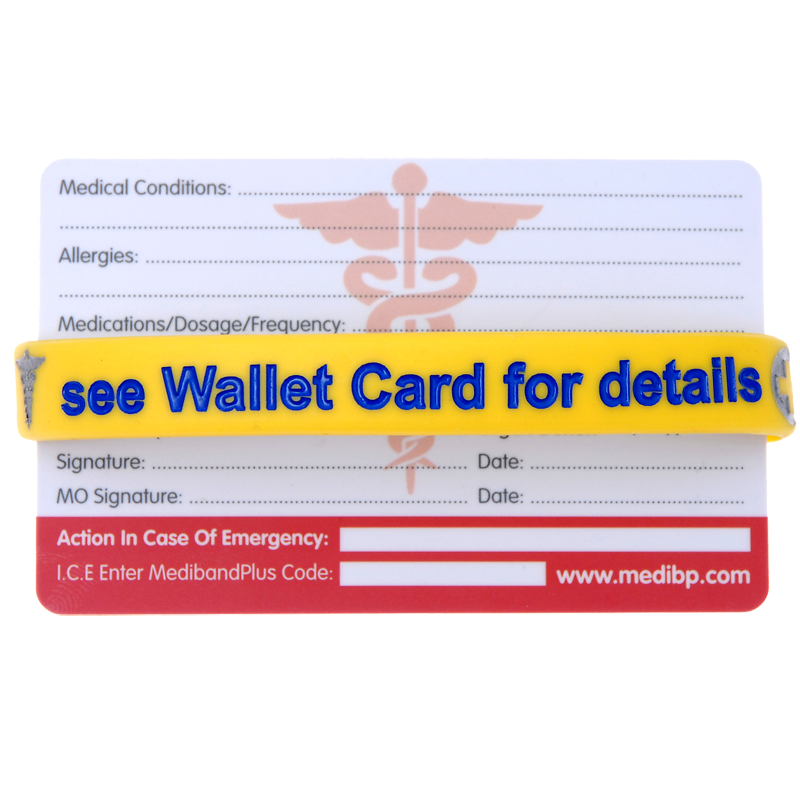
If you run out of space, consider pairing your bracelet with an emergency information wallet card that provides additional detail. You can also use a reversible write-on bracelet that offers two sides of writable space.
Common Medical Alert Bracelet Abbreviations
Using standard medical abbreviations can help you fit more information into a small engraving space. Only use abbreviations that are widely recognised by emergency medical professionals. Here are the most common ones used in Australia:
| Abbreviation | Meaning |
|---|---|
| ICE | In Case of Emergency |
| T1D / T2D | Type 1 / Type 2 Diabetes |
| IDDM / NIDDM | Insulin Dependent / Non-Insulin Dependent Diabetes Mellitus |
| PCN Allergy | Penicillin Allergy |
| NKA | No Known Allergies |
| NKDA | No Known Drug Allergies |
| DNR | Do Not Resuscitate |
| BP | Blood Pressure |
| AF / AFib | Atrial Fibrillation |
| EPI | Carries Epinephrine (EpiPen) |
Important: Always double-check abbreviations with your doctor or pharmacist before engraving. An incorrect or ambiguous abbreviation could lead to a treatment error. For a full guide to medical ID abbreviations, see our post on common abbreviations for medical ID bracelets.
Engraving Examples by Condition
Here are real-world engraving examples to help you decide what to include on your bracelet:
Diabetes
Front: TYPE 1 DIABETIC / ON INSULIN
Back: ICE: 0412 345 678 / PCN ALLERGY
Severe Allergy / Anaphylaxis
Front: ANAPHYLAXIS — PEANUTS / CARRIES EPIPEN
Back: ICE: 0498 765 432
Heart Condition on Blood Thinners
Front: AFIB / ON WARFARIN
Back: HIGH BLEED RISK / ICE: 0423 111 222
Multiple Conditions
Front: T2D / PCN ALLERGY
Back: ON METFORMIN / ICE: 0411 999 888
Custom Engraved vs Pre-Engraved Medical Alert Bracelets
When choosing a medical alert bracelet in Australia, you have two main options: custom engraved or pre-engraved (condition-specific) bracelets.
Pre-Engraved Condition Bracelets
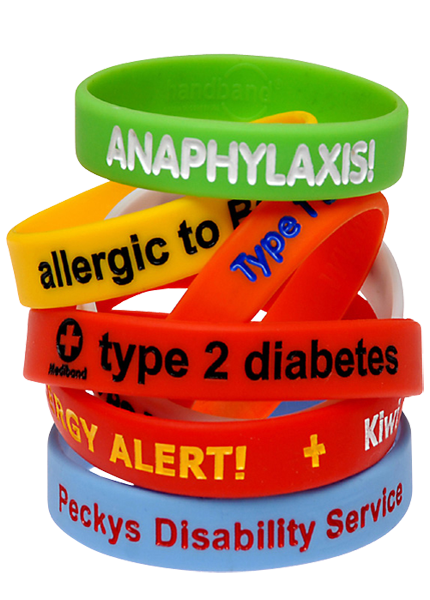
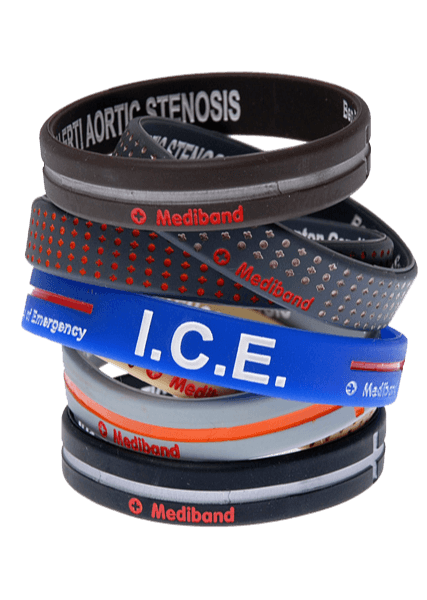
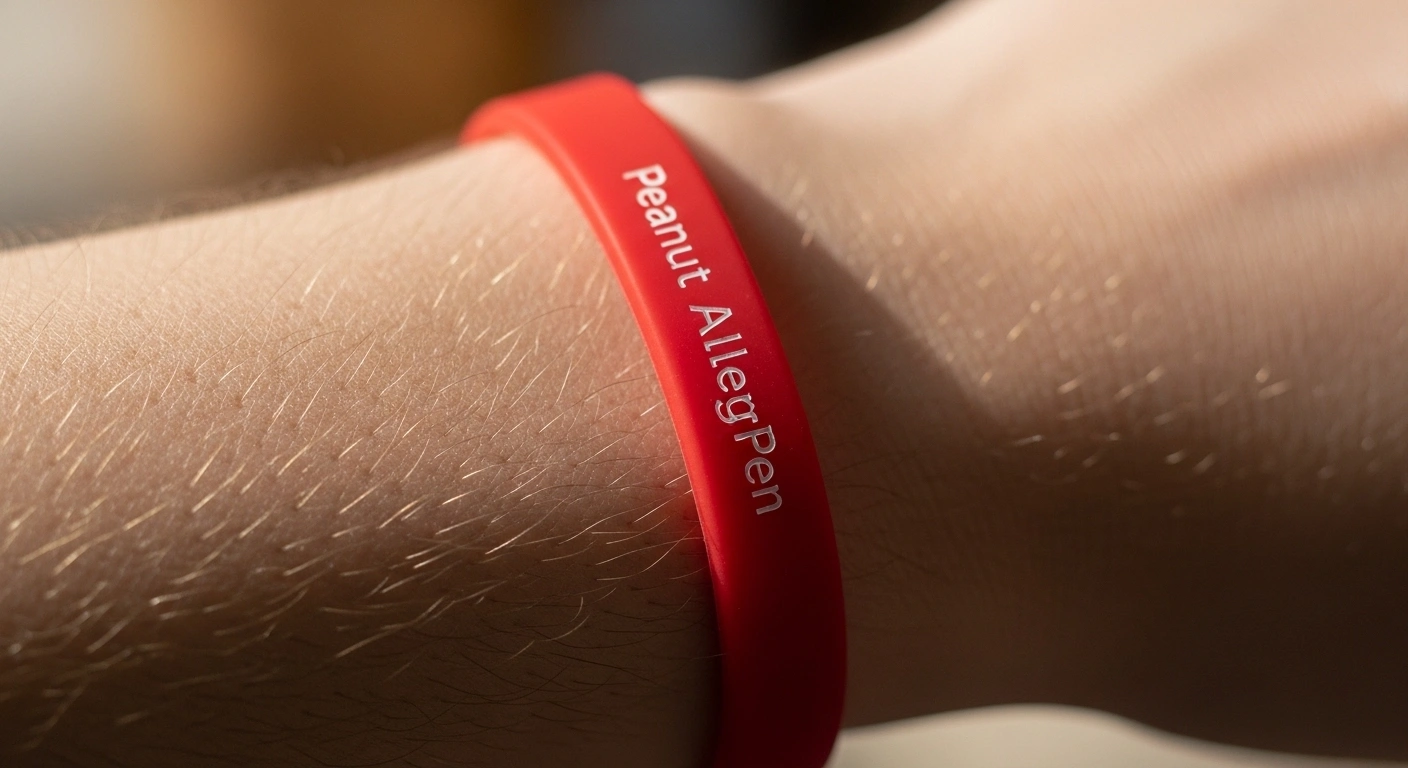
Pre-engraved bracelets come with a specific condition already printed — such as "Diabetes Alert" or "Penicillin Allergy". These are ideal if you have a single, clearly defined condition and want a bracelet ready to wear immediately. Mediband offers a wide range of condition-specific medical alert bracelets in silicone, with bold text and colour-coding for instant recognition.
Custom Engraved Bracelets
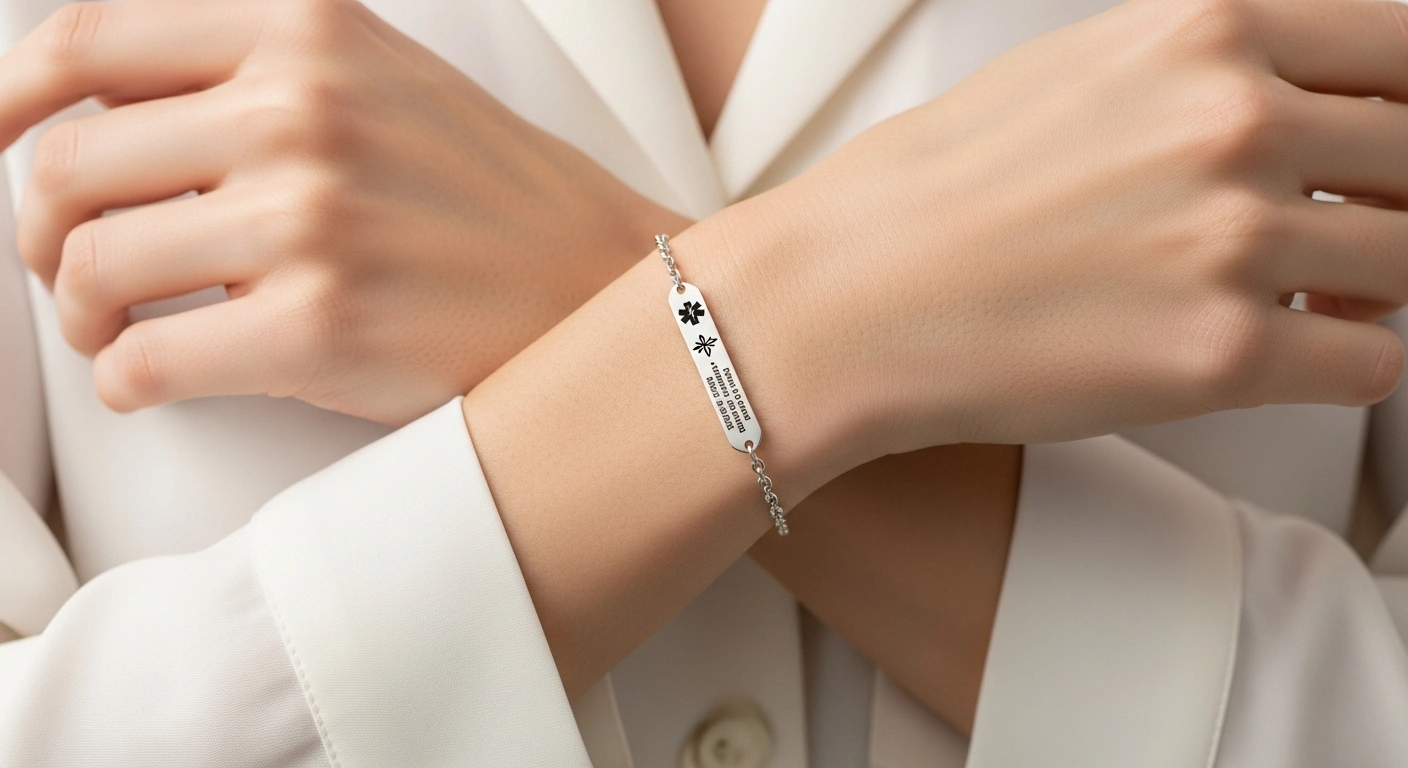
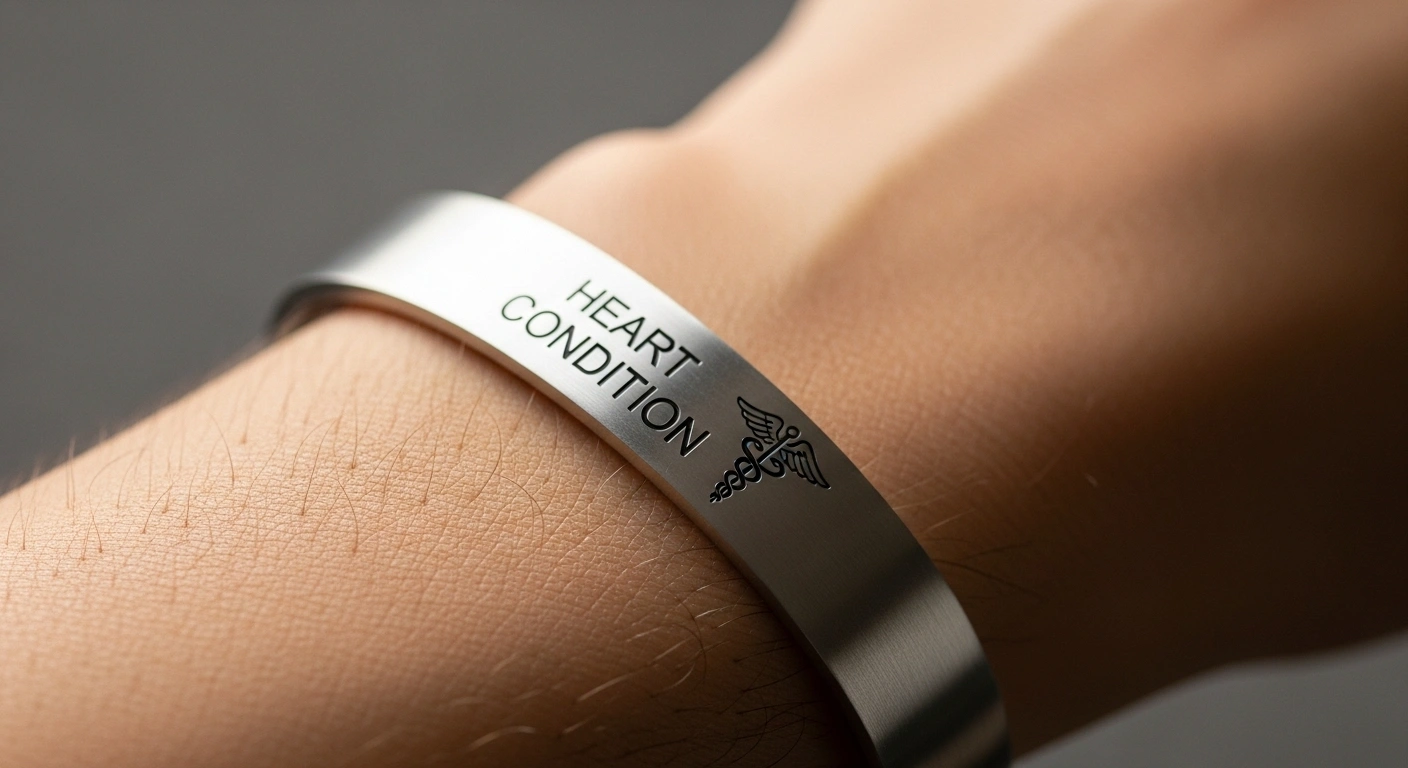
Custom engraved bracelets allow you to include your specific combination of conditions, medications, allergies, and emergency contacts. These are the best choice if you have multiple conditions or complex medical needs. Mediband\u2019s Bold Alert Signature Medical ID and Stainless Steel Classic Bracelet both offer custom engraving on durable, waterproof materials.
Frequently Asked Questions
What should I engrave on a medical alert bracelet?
Engrave your primary medical condition first (e.g. "Type 1 Diabetic"), followed by any critical drug or food allergies, key medications such as blood thinners or insulin, and one emergency contact number preceded by "ICE". Prioritise information that would change how a paramedic treats you in an emergency.
How many lines can you engrave on a medical bracelet?
Most medical alert bracelets accommodate 3 to 5 lines of text, with approximately 15\u201320 characters per line. Stainless steel engraved bracelets and reversible designs may offer front and back engraving, effectively doubling the available space. Use standard abbreviations to fit more information.
Should I put my name on my medical alert bracelet?
Including your name can help emergency responders confirm your identity and locate your medical records. However, if space is limited, prioritise your medical condition, allergies, and emergency contact number over your name \u2014 these are more critical for immediate treatment decisions.
What abbreviations are used on medical alert bracelets?
Common abbreviations include ICE (In Case of Emergency), T1D/T2D (Type 1/Type 2 Diabetes), PCN (Penicillin), NKA (No Known Allergies), DNR (Do Not Resuscitate), and AF (Atrial Fibrillation). Always verify abbreviations with your doctor to ensure they are unambiguous and widely recognised.
Can I update the engraving on my medical bracelet if my condition changes?
Engraved stainless steel bracelets are permanent and would need to be replaced if your information changes significantly. For conditions that change frequently, consider a write-on medical bracelet that lets you update details with a permanent marker at any time.
Find the Right Engravable Medical Alert Bracelet
At Mediband, we\u2019ve been helping Australians choose and engrave the right medical alert bracelet since 2009. Whether you need a simple condition-specific band or a fully custom engraved stainless steel bracelet, we have options to suit every need and budget. Browse our full range of medical alert bracelets or contact our team for personalised engraving advice.

Share on Facebook

Share on X

Share on Pinterest
Recent Posts

The Risk Of Not Wearing An Allergy Medical Alert Bracelet
March 23, 2026
Looking for codes or what to put on my medical bracelet,
Small space
Regards Megan