Helping Your Child Live with Allergies: A Parent's Complete Safety Guide
June 30, 2021

Understanding Childhood Allergies: What Every Parent Needs to Know
Raising a child with a serious allergy is a responsibility that never fully switches off. Every meal, every school event, every birthday party, every sleepover carries a calculation that other parents never have to make: is this safe for my child? For the estimated 7 to 10 percent of children worldwide who live with food allergies — and millions more who manage environmental and insect allergies — this vigilance is the quiet backdrop of every day.
An allergy occurs when the immune system mistakenly identifies a harmless substance as a threat and mounts an immune response. In mild cases, this produces symptoms such as hives, itching, or a runny nose. In severe cases, it triggers anaphylaxis — a rapidly escalating, potentially life-threatening reaction that requires immediate treatment with adrenaline (epinephrine).
The World Allergy Organization estimates that allergic diseases, including food allergies, affect up to 30 to 40 percent of the world's population — with prevalence in children rising significantly over recent decades. Understanding your child's specific allergy, its triggers, and the appropriate emergency response is the foundation of keeping them safe.
The Most Common Food Allergies in Children
The "big eight" food allergens — peanuts, tree nuts, milk, eggs, wheat, soy, fish, and shellfish — account for the vast majority of serious food allergic reactions. Of these, peanut and tree nut allergies are among the most commonly associated with anaphylaxis and are less frequently outgrown than milk or egg allergies.
It is worth knowing that your child's allergy profile may change over time. Regular review with an allergist — including updated allergy testing — ensures that management plans remain current. Some allergies that appear severe in early childhood may resolve; others persist or become more severe with age.
Anaphylaxis: Recognising and Responding
Every parent of a child with a serious allergy should know the signs of anaphylaxis and the correct response. Symptoms may include: sudden hives or flushing; swelling of the lips, tongue, or throat; difficulty breathing or swallowing; a drop in blood pressure; rapid or weak pulse; dizziness or loss of consciousness; and vomiting or diarrhoea. Symptoms typically come on within minutes of exposure and can escalate rapidly.
The correct response to suspected anaphylaxis is: administer adrenaline auto-injector (such as EpiPen) immediately if available; call emergency services; lie the child down with legs raised (unless breathing is difficult); and be prepared to administer a second dose of adrenaline if symptoms do not improve. Never assume mild initial symptoms rule out anaphylaxis — reactions can be biphasic, with a second wave occurring hours later.
Creating a Safe Home Environment for an Allergic Child
The home should be the safest place for a child with allergies. Creating a home environment that minimises the risk of accidental exposure requires planning, clear systems, and consistent habits across all household members — including older siblings and regular visitors.
Managing Food in the Home
For severe food allergies, many families choose to make the home entirely free of the allergen rather than managing a "may contain" environment. This means not only removing products that contain the allergen but also those processed in shared facilities, as trace contamination can be sufficient to trigger a reaction in highly sensitive children.
Implement clear labelling systems for safe versus unsafe foods. Use separate cooking utensils, chopping boards, and serving equipment to prevent cross-contamination. Teach all family members — including grandparents and regular visitors — about the allergen and the emergency response. If in doubt, keep the allergen out.
Educating Your Child About Their Allergy
From the earliest age possible, begin teaching your child about their allergy in age-appropriate terms. A toddler can learn "don't eat anything unless mummy or daddy says it's safe." A school-age child can learn to read food labels, identify their allergen by name, and know what to do if they feel a reaction starting. A teenager can manage their allergy with increasing independence, advocate for themselves in social situations, and carry and use their adrenaline auto-injector.
Role-playing difficult scenarios — being offered food at a friend's house, being pressured to eat at a party — builds the confidence to respond safely in real-world situations. Never frame the allergy as something to be embarrassed about; it is a fact of life that the child will be far safer for understanding clearly.
Allergy Medical Alert Bracelets for Children
Give your child protection that speaks for them — every day, in every setting.
Navigating School, Childcare, and Social Settings
Once a child begins school or childcare, managing their allergy becomes a collaborative effort. Building a strong partnership with educators and carers is essential — and in most countries, schools have legal obligations to accommodate children with serious allergies and to maintain emergency medication.
Provide the school with a written emergency action plan from your child's allergist, clearly stating the allergen, the symptoms to watch for, and the step-by-step emergency response including adrenaline auto-injector use. Ensure that multiple staff members are trained in recognising anaphylaxis and administering the auto-injector — not just the nurse or a single designated person.
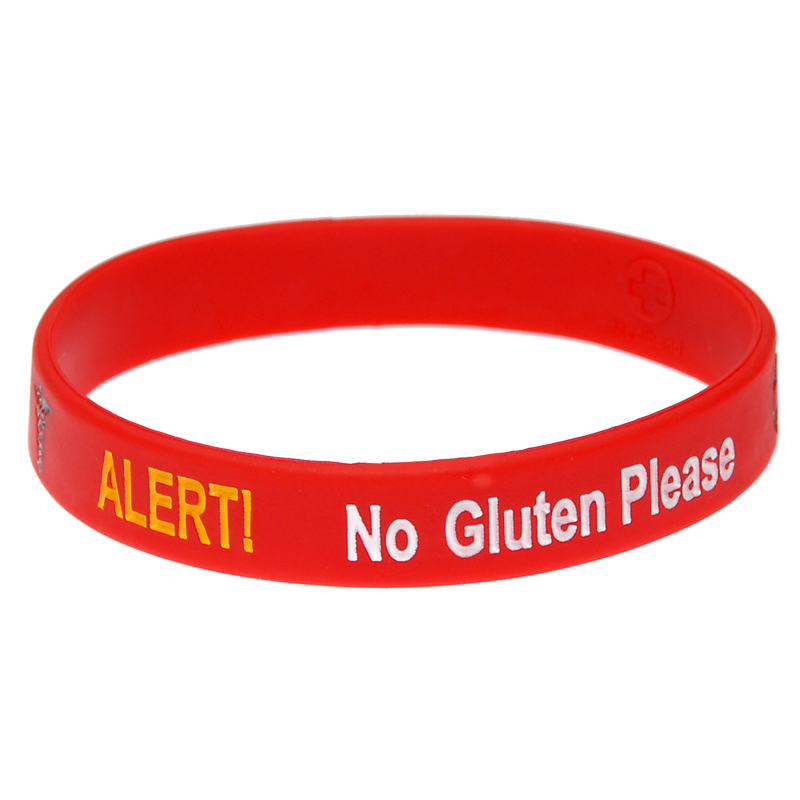
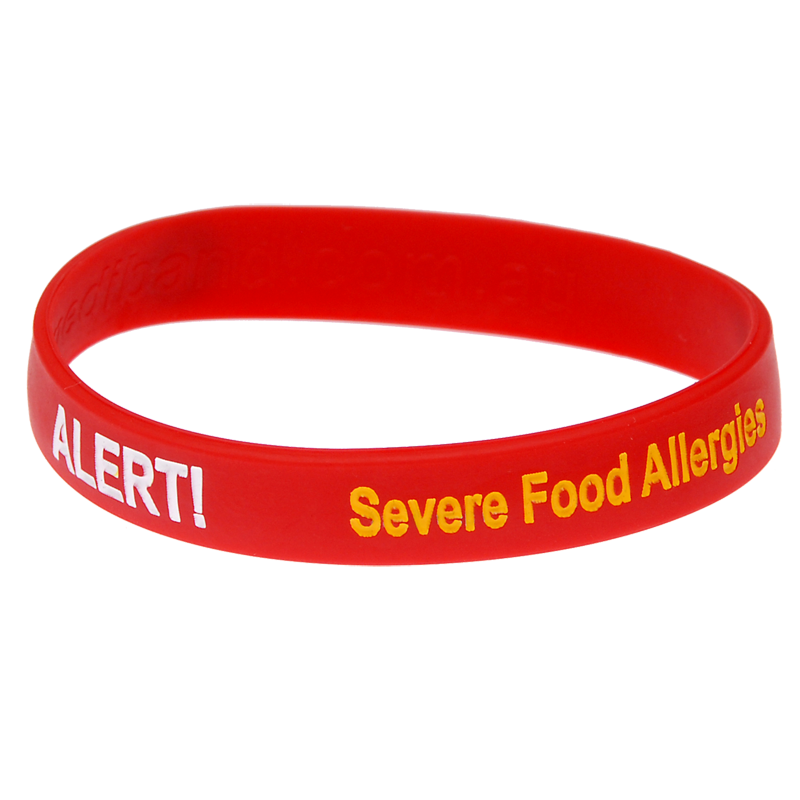
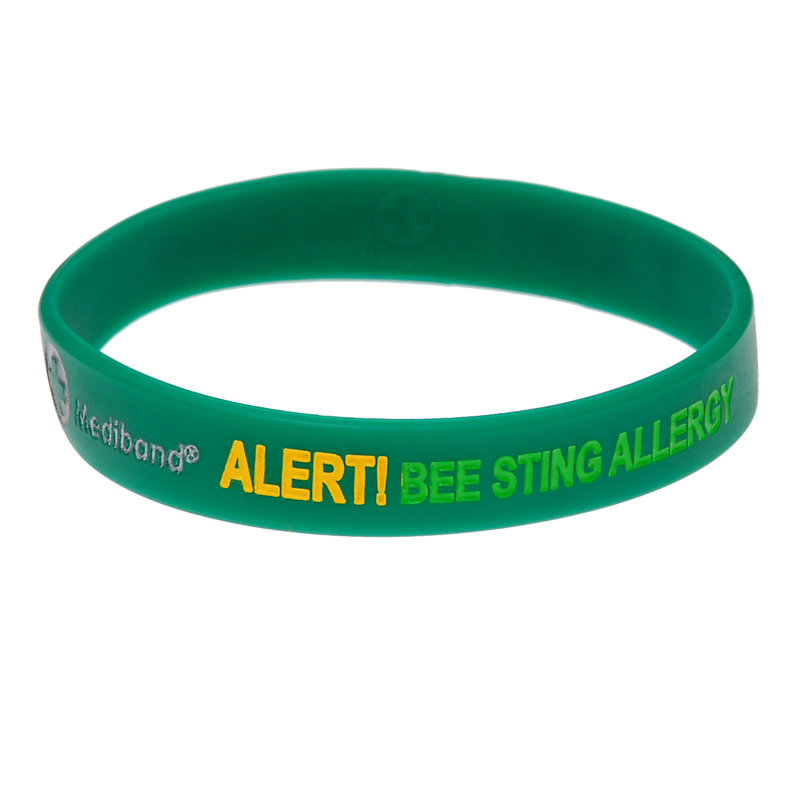
For school excursions, birthday parties, sports events, and other outings, the same principles apply: notify the responsible adults in advance, provide emergency medication, and ensure your child has their medical information accessible. A medical alert bracelet is invaluable in these settings — it communicates your child's allergy immediately to any adult who needs to know, without relying on your child to remember to tell someone or carry a card.
Medical Alert Bracelets: The Non-Negotiable Safety Layer
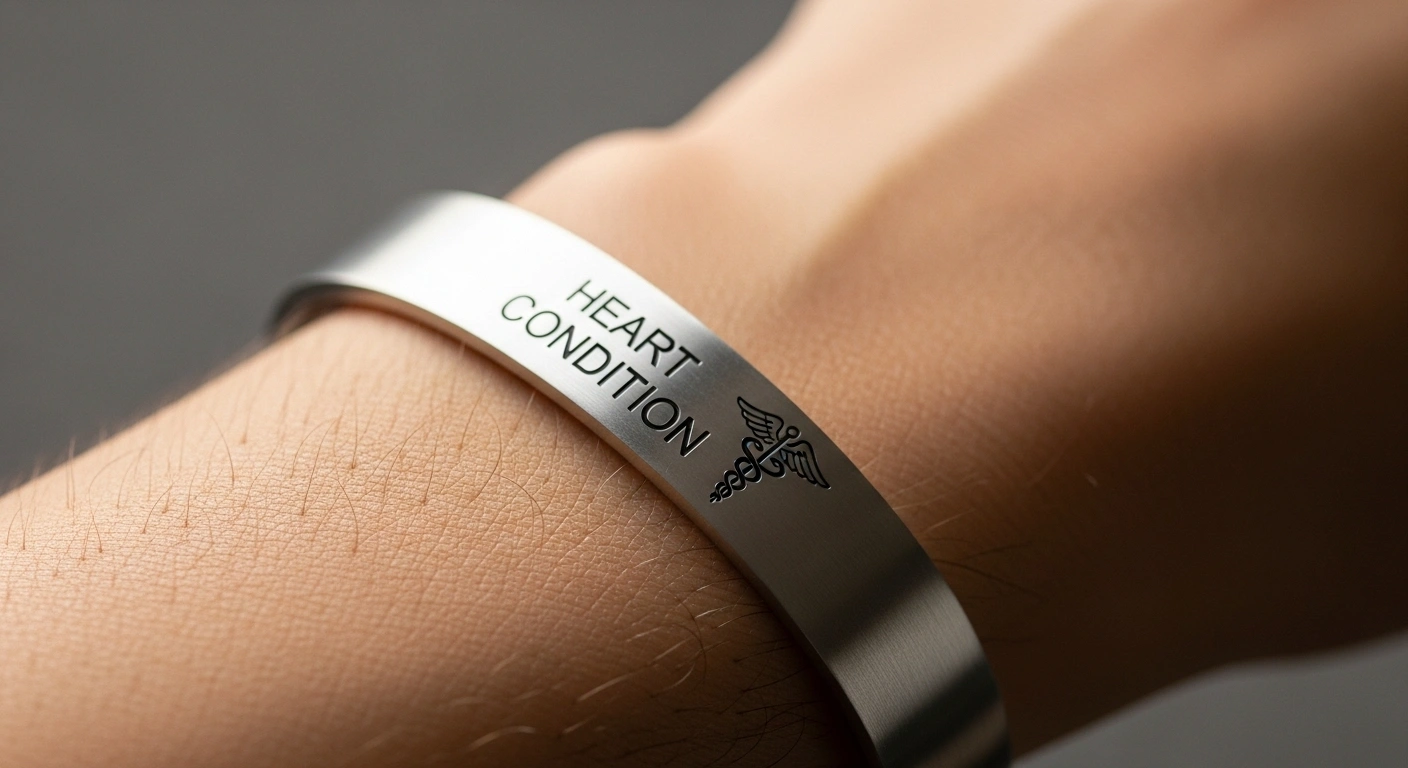
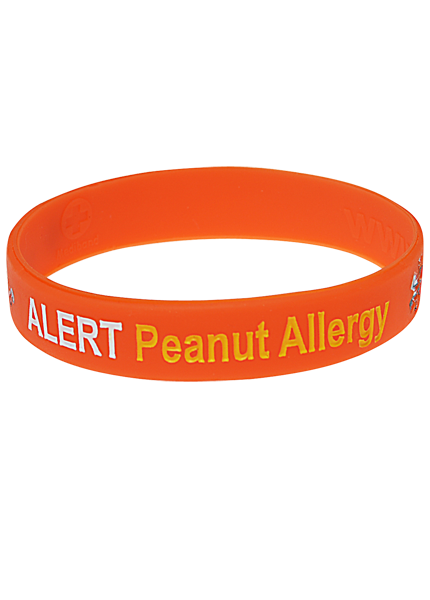
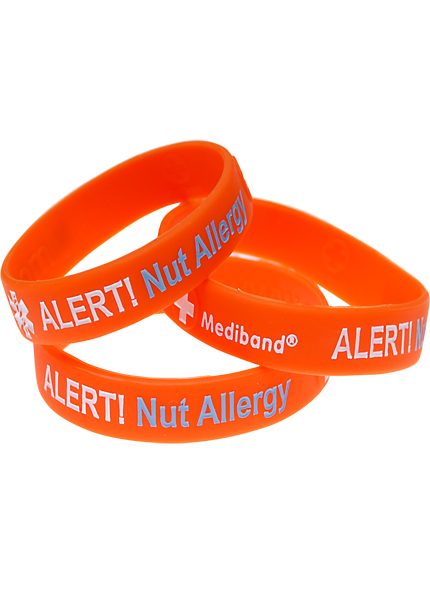
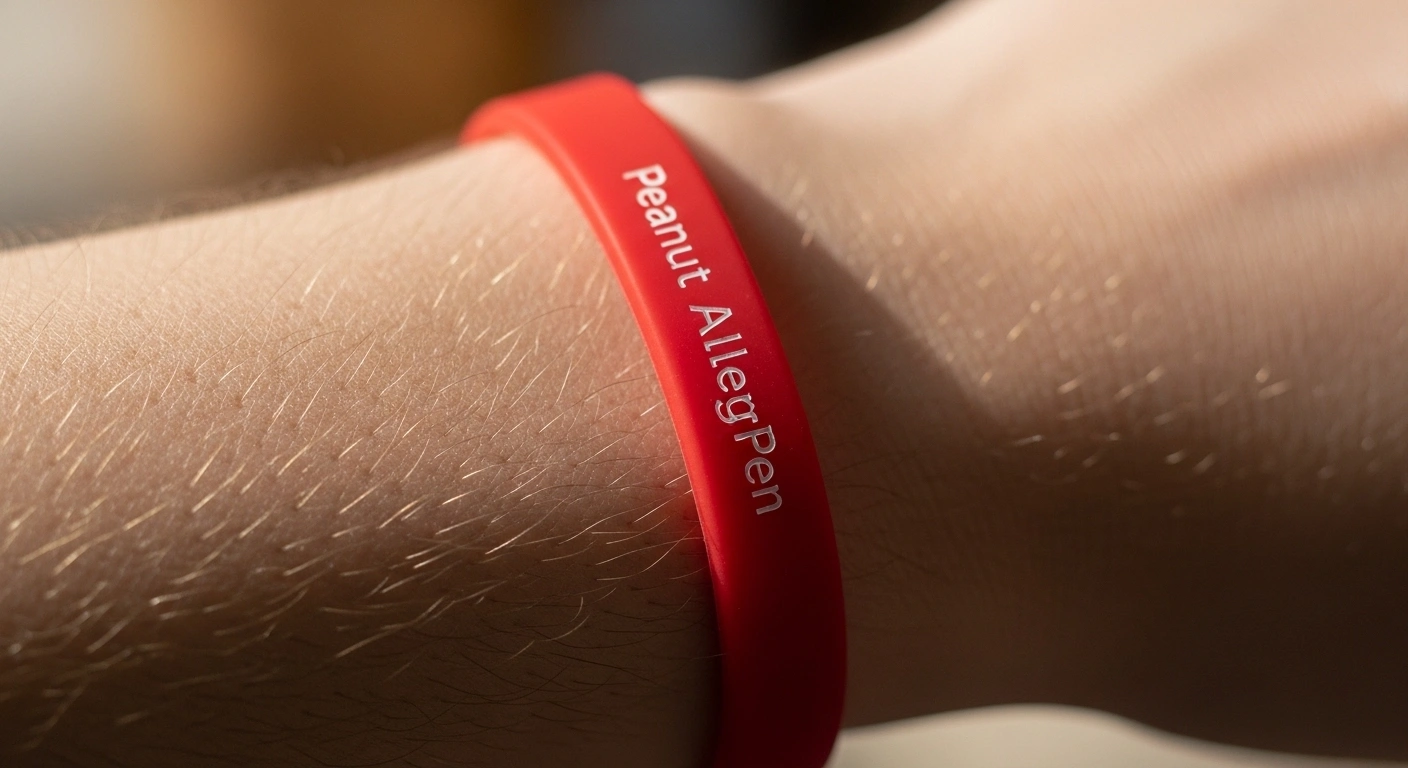
A medical alert bracelet is one of the most important safety investments you can make for a child with serious allergies. In a medical emergency — especially one involving anaphylaxis — speed is critical. First responders and bystanders who can immediately see from a bracelet that a child has a peanut or nut allergy, for example, can act decisively and appropriately from the first moment of contact.
According to the American Academy of Allergy, Asthma and Immunology, medical identification jewellery is specifically recommended for children and adults with severe allergies as part of a comprehensive allergy management plan. A bracelet that clearly states the allergy (and "Use EpiPen" if appropriate) can guide emergency treatment when a child is unconscious, unresponsive, or too distressed to communicate.
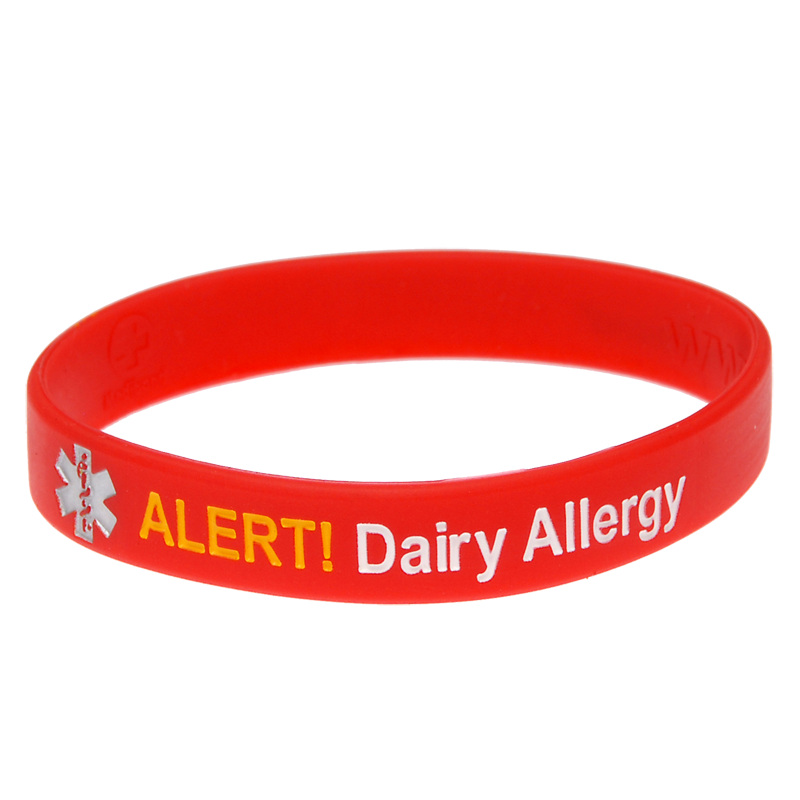
Mediband offers a range of allergy medical alert bracelets for children, from silicone bracelets with pre-engraved allergen alerts to customisable write-on options for children with multiple allergies. Choose a bracelet that your child will actually wear — comfort and style matter, because a bracelet left at home provides no protection.
For children with multiple allergies, a write-on bracelet allows you to list all relevant allergens, emergency medication information, and a contact number. The reversible design means condition information on one side and emergency contact on the other — maximum information in a comfortable, wearable format.
Travelling and Eating Out with an Allergic Child
Travelling with a child who has serious allergies requires additional preparation, but with the right planning, it should not be a barrier to family adventures. Before any trip, research restaurants, airlines, and accommodation options for allergen awareness. Many airlines now offer allergen-free meal options and restrict certain allergens on board — always call ahead rather than relying on website information.
Carry emergency medication in your hand luggage — never in checked bags — along with a written action plan and documentation of your child's allergy. In countries where you don't speak the language, carry a translation card that explains your child's allergy in the local language. These can be created through services such as AllergyTranslation.com or equivalent resources.
When eating out, always ask to speak with the chef rather than relying solely on menu descriptions. Ask specifically about shared cooking surfaces, fryers, and preparation areas. A restaurant that takes allergies seriously will always be willing to have this conversation — and one that is dismissive or impatient should be a red flag.
Emotional Wellbeing: Helping Your Child Thrive with Allergies
Living with serious allergies during childhood and adolescence carries an emotional burden that is often underestimated. Research published in Allergy found that children with food allergies report significantly lower quality of life scores than their peers — including heightened anxiety, social isolation, and feelings of being different or singled out.
Supporting your child's emotional wellbeing means acknowledging the frustration and anxiety that allergies can cause, without allowing those feelings to dominate or limit their life unnecessarily. Connect with families in similar situations through allergy support groups — knowing that other children live safely and happily with the same allergy is powerfully reassuring. Ensure your child has age-appropriate control over managing their allergy, as autonomy is strongly associated with positive outcomes.
If anxiety about the allergy is significantly affecting your child's daily life — refusing to eat away from home, constant fear of exposure, avoidance of social situations — consider seeking support from a psychologist who works with chronic health conditions in children. Cognitive behavioural therapy adapted for allergy-related anxiety is evidence-based and effective.
Frequently Asked Questions
How do I know if my child's allergy is severe enough to carry an EpiPen?
This decision should always be made with your child's allergist based on their specific allergy history, skin prick test or blood test results, and the nature of any previous reactions. As a general rule, adrenaline auto-injectors are prescribed for any child who has experienced anaphylaxis, who has a documented severe allergy (particularly to peanuts or tree nuts), or who has asthma alongside a food allergy, as the combination significantly increases risk. Never guess — get a formal assessment and written action plan from a specialist.
Should I send an EpiPen to school with my child?
Yes — in virtually all cases, a prescribed adrenaline auto-injector should be kept at school in addition to the family's own supply at home. Work with the school to ensure it is stored correctly (accessible, not locked away), that multiple staff members are trained in its use, and that an emergency action plan is on file. Many countries have specific regulations about schools holding and administering adrenaline auto-injectors — ask your child's allergist for guidance on the requirements in your area.
How can a medical alert bracelet help my child with allergies?
A medical alert bracelet ensures that your child's allergy is communicated instantly in any emergency — even if they are unconscious, too distressed to speak, or away from a parent or carer who knows their history. First responders are trained to check for medical ID on the wrist. A bracelet stating the specific allergen (and 'Use EpiPen' if applicable) guides correct, fast treatment and prevents well-meaning bystanders or responders from inadvertently administering something that could worsen the reaction.
What do I do if my child accidentally eats their allergen?
Act immediately. If your child has a prescribed adrenaline auto-injector, administer it at the first sign of a severe allergic reaction — do not wait to see how bad it gets. Call emergency services. Lie your child down with legs raised (unless breathing is difficult). Be prepared for a biphasic reaction — symptoms that return hours after the initial episode — which means hospital observation is important even after an apparently successful adrenaline response. Do not give antihistamines as a substitute for adrenaline in a severe reaction.
How do I talk to other parents about my child's food allergy?
Clear, early, and matter-of-fact communication is most effective. Contact parents before playdates or sleepovers, explain the allergy and its severity without catastrophising, and provide a written action plan with emergency contact numbers. Offer to bring safe food for your child if the setting makes that easier. Most parents respond well to clear, practical information — and those who are dismissive or resistant are giving you important information about whether that environment is safe for your child.

Share on Facebook

Share on X

Share on Pinterest
Comment(s)
Recent Posts

The Risk Of Not Wearing An Allergy Medical Alert Bracelet
March 23, 2026