What To Know Before Buying A Non-Contact Forehead Infrared Thermometer
March 09, 2026
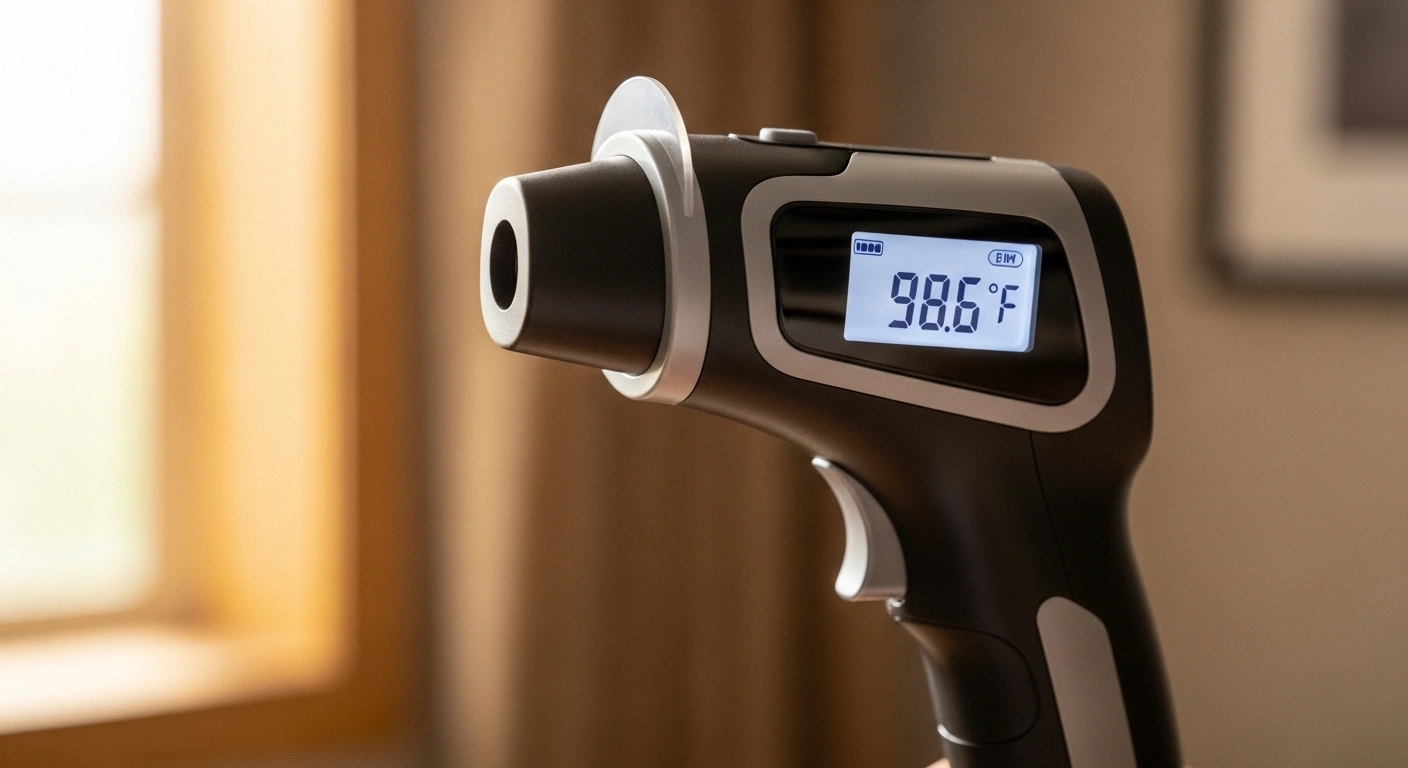
Quick Answer: A non-contact forehead infrared thermometer reads skin surface temperature in under a second, with no physical contact required. It works by detecting the infrared heat emitted from the forehead and converting it into a temperature value. For reliable results, use it at the correct distance, on a dry forehead, and at a stable room temperature - and always confirm borderline fever readings with a clinical-grade thermometer.
Some thermometers take thirty seconds, and others take one. Some require contact with mucous membranes, and others that never touch the person being measured. That gap is not just about speed - it is about how, where, and why temperature measurement happens in the first place. The non-contact forehead infrared thermometer sits in a category of its own: fast, hygienic, and practical enough to use on a sleeping toddler at 2 AM or across a line of people at a workplace entrance.
But non-contact does not automatically mean foolproof. Before buying one, there are things worth knowing about how they work, what affects accuracy, which features actually matter, and where they fall short.
Rising Demand for Non-Contact Forehead Infrared Thermometer Devices
The thermometer non-contact infrared forehead category has moved from a niche medical tool to a household staple. Parents use them on sleeping children. Clinics use them for quick preliminary screening. Employers have added them to entry-point health checks. The appeal is clear: zero cross-contamination, instant results, and no cooperation required from the person being tested. That wider adoption, however, has also produced a market full of devices at very different quality levels, which is exactly why knowing what to look for matters.
How A Non Contact Forehead Infrared Thermometer Actually Measures Temperature
The technology behind these devices is straightforward, but the details have a direct impact on accuracy.
Infrared Technology And Surface Temperature Readings
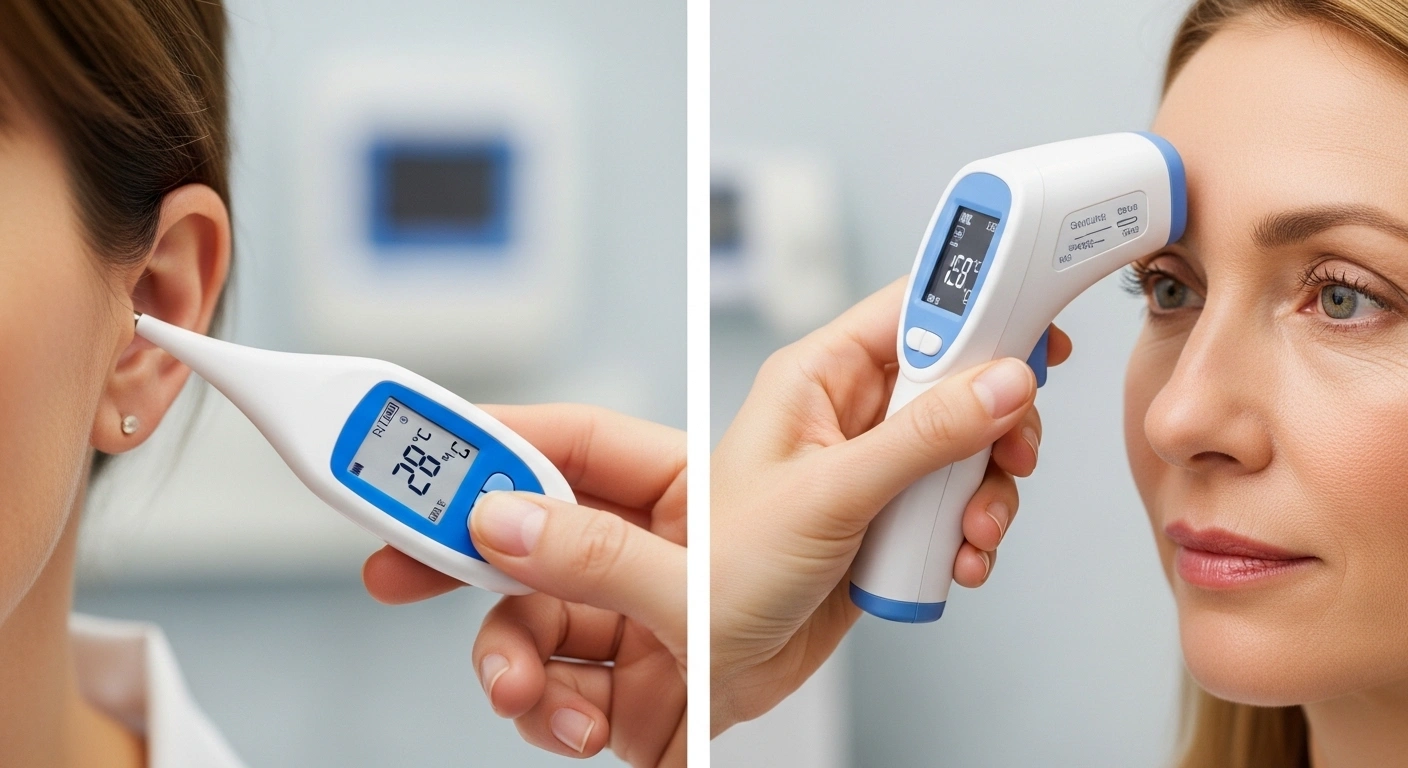
Every surface above absolute zero emits infrared radiation. A non-contact infrared forehead thermometer uses a built-in thermopile sensor to detect the radiation from the skin and convert it into a temperature value in under a second. Importantly, the device reads skin surface temperature, not internal body temperature. Most medical-grade models apply a correction algorithm to convert the surface reading into an estimated core temperature equivalent.
Why Forehead Readings Can Vary
Skin temperature is sensitive to outside conditions. Sweat, hair, cosmetics, or exposure to cold air can all shift the reading. Someone who has just come in from the cold may show a skin temperature several degrees below their actual core temperature. A 2022 study published on PubMed, which evaluated non-contact forehead infrared thermometers in 255 children, found strong overall agreement with tympanic thermometers (ICC = 0.87), but also noted a higher false-positive fever rate - particularly in children around age six. This confirms the device is a reliable screening tool, but borderline readings should always be confirmed with a more precise method.
Distance-To-Spot Ratio And Measurement Precision
The measurement area ("spot") of an infrared sensor expands the farther you hold the device from the skin. Most forehead thermometers are designed for use at 1–5 cm. Hold it too far away, and it picks up ambient temperature rather than skin temperature. Always follow the manufacturer's stated distance - not roughly, exactly.
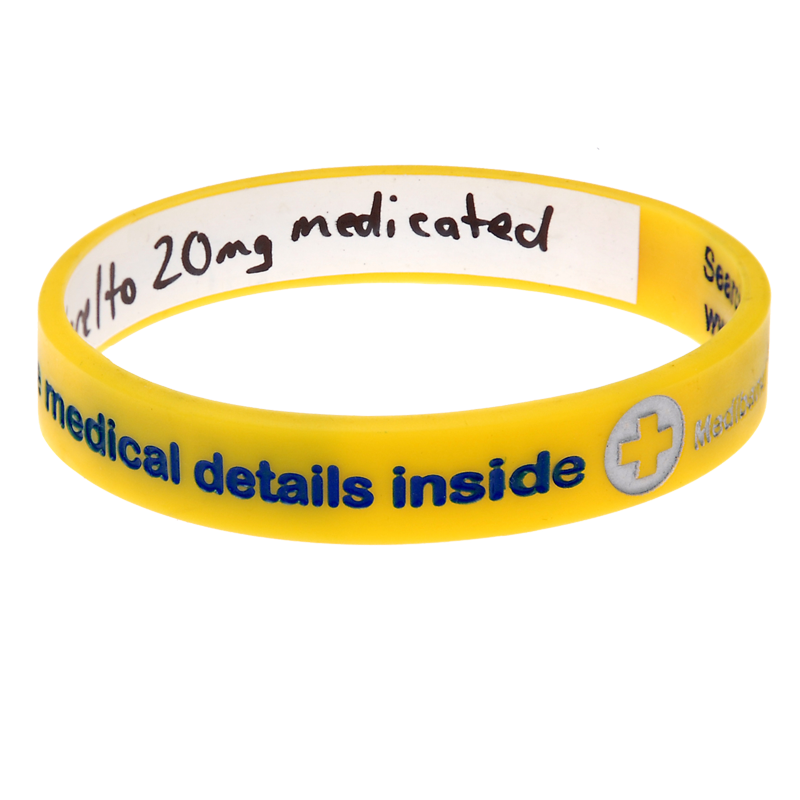
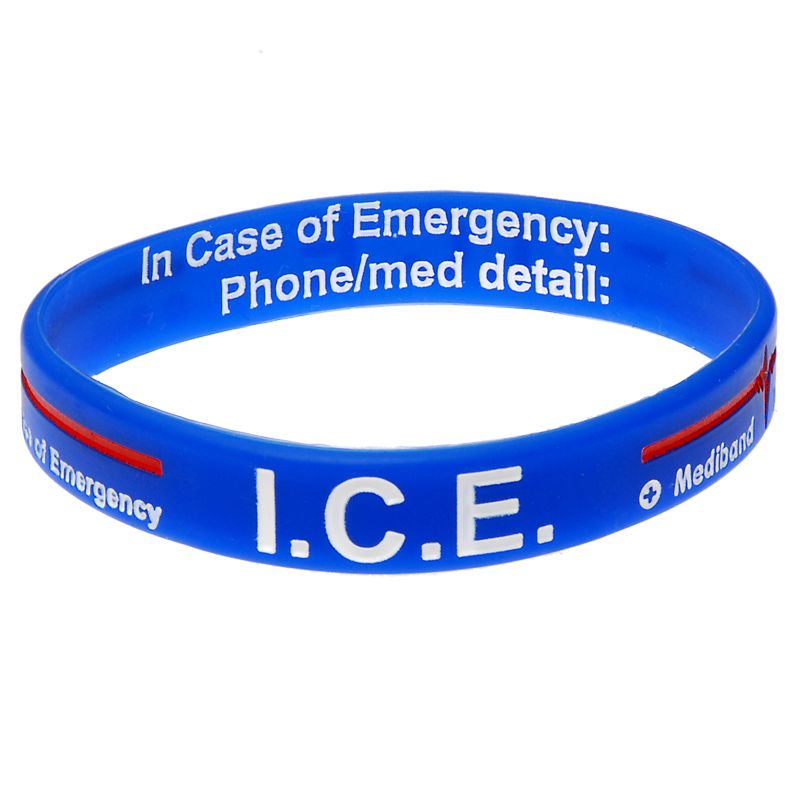
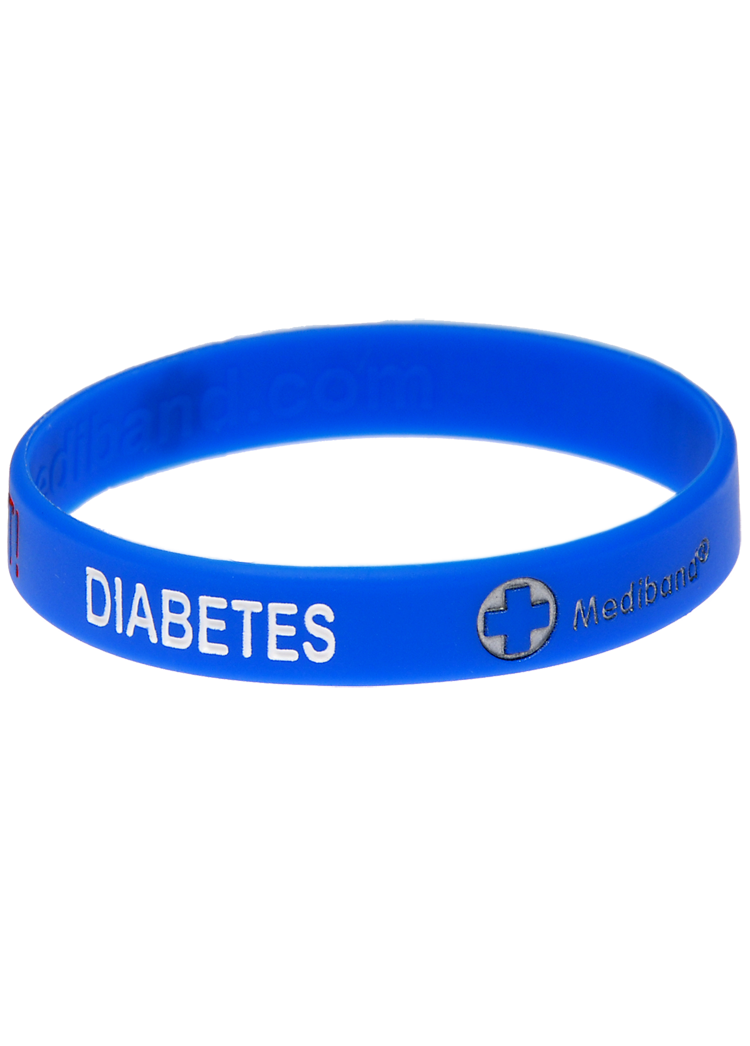
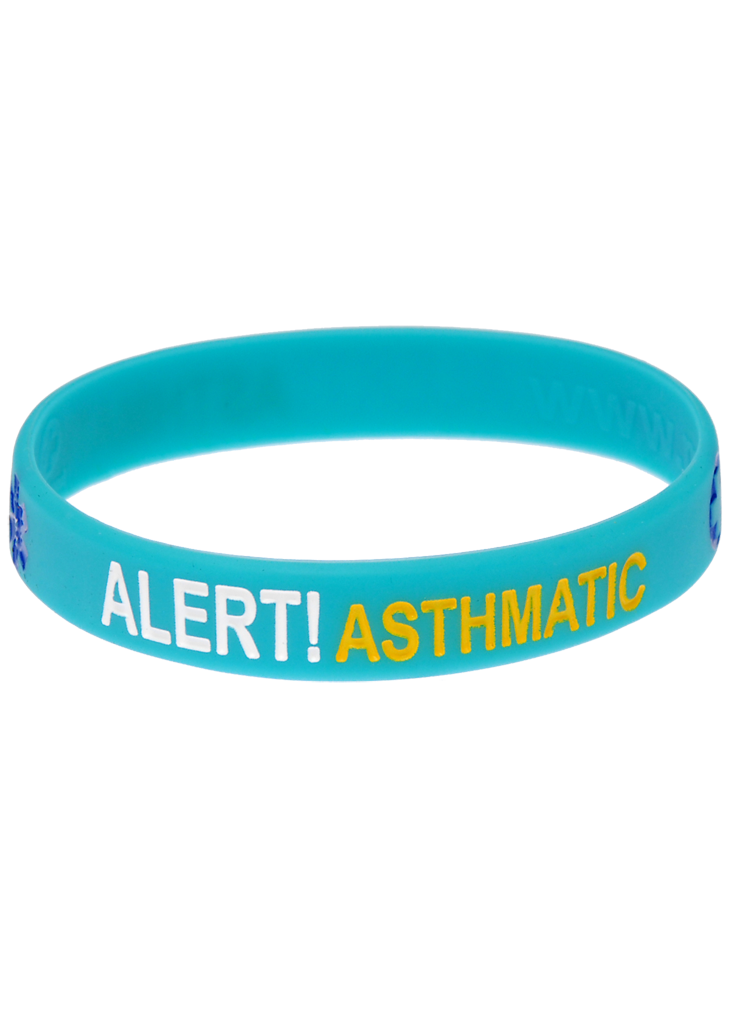
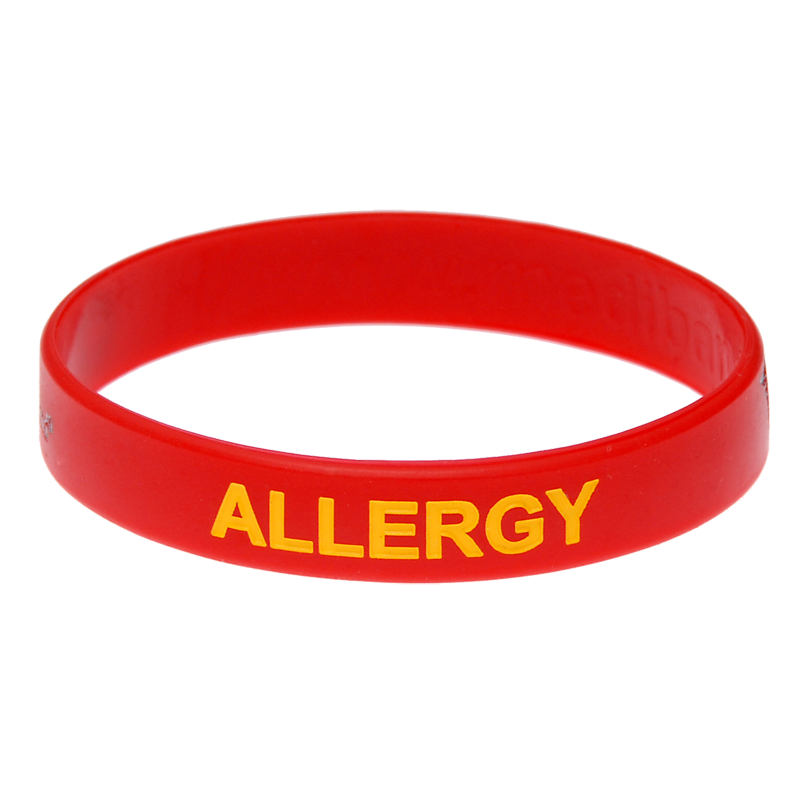
Shop Medical Alert Bracelets
Monitoring health at home? Make sure first responders know your medical conditions in an emergency.
Features That Directly Affect Usability
Two thermometers can use the same infrared technology and still feel completely different day to day. The table below covers what to look for in each key area.
| Feature | What To Look For |
| Response time | 1 second or under - critical for young children who won't stay still |
| Display & backlight |
Large backlit screen with °C/°F toggle - essential for low-light nighttime checks |
| Fever alert | Three-color system (green / orange / red) with audible alert - instant visual read |
| Memory storage | 20–32 saved readings - useful for tracking illness over hours or days |
| Accuracy rating | ±0.2°C for medical grade; avoid anything rated ±0.5°C or worse for health use |
When A Non Contact Forehead Infrared Thermometer Is The Right Choice
The infrared non-contact forehead thermometer is not universally the best option, but in several specific contexts, it clearly outperforms the alternatives.
Households With Children
A sick toddler will not hold an oral thermometer still. A tired infant will not cooperate with ear thermometer placement. A forehead device solves both problems - the reading is done before the child reacts. For families with young children, that alone makes it the most practical daily tool available.
Workplaces And Public Screening
In offices, schools, or event venues, the ability to screen many people quickly without physical contact is a clear operational advantage. The thermometer non-contact infrared forehead type covers one person per second, with no disposable covers and no cross-contamination between individuals.
Infection Control Situations
Any time an infectious illness is present, avoiding physical contact during temperature checks reduces transmission risk. This applies equally in a family home during flu season and in a nursing home or clinic. The non-contact forehead infrared thermometer became standard in these settings for exactly that reason.
Comparing With Other Thermometer Types
No single thermometer type is ideal for every situation. The table below shows where each type fits best and where it falls short.
| Type | Best For | Main Limitation |
| Non-contact forehead | Sleeping children, public screening, infection control | Reads skin surface, not core temperature |
| Ear (tympanic) | Clinical settings, adults, and older children | Requires correct positioning; needs probe covers |
| Oral/digital | For cooperative adults, the highest accuracy is needed | Cannot be used with infants; slower |
A Non-Contact Forehead Infrared Thermometer Is A Screening Tool, Not A Diagnostic Device
This distinction is often glossed over in product listings. An infrared non-contact forehead thermometer tells you that a temperature may be elevated. It does not tell you why or what the precise core body temperature is. Used correctly, it is an excellent first-pass tool that helps decide whether further assessment is needed - nothing more.
If a reading comes back normal in someone who clearly feels unwell, do not rely solely on the device - skin temperature can be pulled down by ambient conditions or poor technique. Equally, a reading of 37.6°C in a healthy adult who just came in from warm weather is not automatically a fever. Context matters every time.
| Step | What To Do |
| Acclimatise first | Let the person sit at room temperature for 5 minutes after coming in from outside |
| Clear the forehead | Remove hair, sweat, hats, or lotion from the measurement area |
| Use correct distance | Follow the manufacturer's stated range (typically 1–5 cm) - no guessing |
| Take two readings | If the result seems off, repeat once and use the most consistent value |
Buying Smart: What Separates A Useful Device From A Frustrating One
A non-contact forehead infrared thermometer is one of the most practical health tools you can keep at home, at a workplace, or in a clinical setting. It is fast and hygienic, and it works without anyone having to cooperate. But it performs best when the person using it understands what it is and is not: a reliable screening tool, not a substitute for clinical assessment.
When buying, prioritize accuracy rating (±0.2°C), a backlit display, color-coded fever alerts, and an operating range that matches your environment. Treat every non-contact infrared forehead reading from a thermometer as a starting point - and confirm anything borderline with a more precise method. That two-step approach turns a simple, inexpensive device into a genuinely useful health tool.

Share on Facebook

Share on X

Share on Pinterest
Comment(s)
Recent Posts

The Risk Of Not Wearing An Allergy Medical Alert Bracelet
March 23, 2026