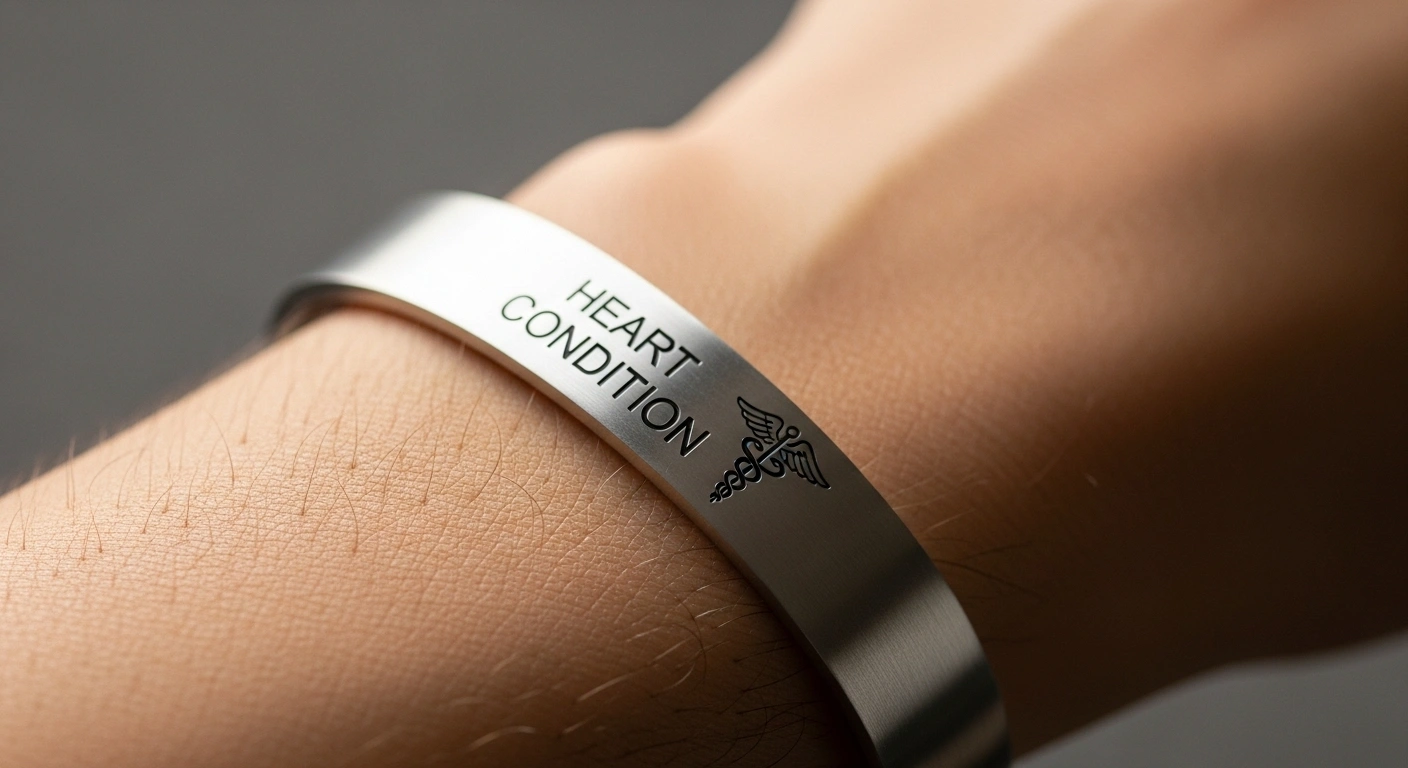
Life with a Pacemaker: Your Complete Guide to Recovery and Safety
May 18, 2022

Each year, thousands of Australians have a pacemaker implanted to regulate their heartbeat and improve their quality of life. According to Healthdirect Australia, pacemakers are one of the most common and successful cardiac procedures performed today — and most people return to normal activities within weeks of surgery.
If you or a loved one is preparing for a pacemaker, this guide covers everything you need to know: what a pacemaker does, what to expect during recovery, how to live safely with one, and why wearing a pacemaker medical alert bracelet is one of the most important steps you can take.
What Is a Pacemaker and How Does It Work?
A pacemaker is a small electronic device implanted under the skin of your chest. It monitors your heart rhythm and sends electrical impulses to keep your heart beating at a steady, appropriate rate.
A pacemaker consists of:
- Pulse generator — a small metal case containing the battery and electronic circuitry
- Pacing leads — thin, insulated wires that connect the pulse generator to your heart
- Battery — typically lasting 5 to 15 years, depending on how much the pacemaker needs to work
The device detects when your heart is beating too slowly (bradycardia) or irregularly, and delivers precisely timed electrical signals to correct the rhythm.
Why Do People Need Pacemakers?
Your doctor may recommend a pacemaker for several heart conditions:
- Bradycardia — when your heart beats too slowly (below 60 beats per minute at rest)
- Heart block — when electrical signals between the upper and lower chambers of your heart are delayed or blocked
- Atrial fibrillation — an irregular, often rapid heart rhythm
- Tachycardia — when your heart beats too fast
- Heart failure — a biventricular pacemaker can help both sides of your heart beat in sync
The Heart Foundation Australia estimates that cardiovascular disease affects more than 4 million Australians. Pacemakers are a proven, reliable treatment for many of these conditions.
Shop Pacemaker & Cardiac Medical Alert Bracelets
Alert emergency responders to your pacemaker — it could save your life.



What to Expect During Pacemaker Surgery and Recovery
The Procedure
Pacemaker implantation is a relatively straightforward procedure performed under local anaesthetic. The surgeon makes a small incision near your collarbone, creates a pocket for the device, and threads the pacing leads through a vein into your heart. The entire procedure typically takes one to two hours, and most patients go home within 24 to 48 hours.
Recovery Timeline
- First 24-48 hours — rest in hospital while your pacemaker is tested and programmed
- Weeks 1-2 — some soreness and bruising at the incision site is normal. Avoid lifting anything heavier than 5 kg with the arm on your pacemaker side
- Weeks 2-6 — gradually resume normal activities. Avoid strenuous sports, swimming and golf until cleared by your cardiologist
- After 6 weeks — most people return to their full range of activities, including driving, exercise and travel
Living Safely with a Pacemaker: Daily Tips
Devices and Electromagnetic Interference
Modern pacemakers are well-shielded, but some devices can interfere with their function:
- Mobile phones — safe to use, but hold the phone to the ear opposite your pacemaker
- Airport security — show your pacemaker ID card and ask for a hand search instead of walking through the body scanner
- MRI scans — some newer pacemakers are MRI-conditional. Always inform medical staff you have a pacemaker before any imaging
- Avoid — strong magnets, arc welding equipment, and large industrial motors. Keep at least 15 cm between your pacemaker and any strong magnetic source
Why You Need a Pacemaker Medical Alert Bracelet
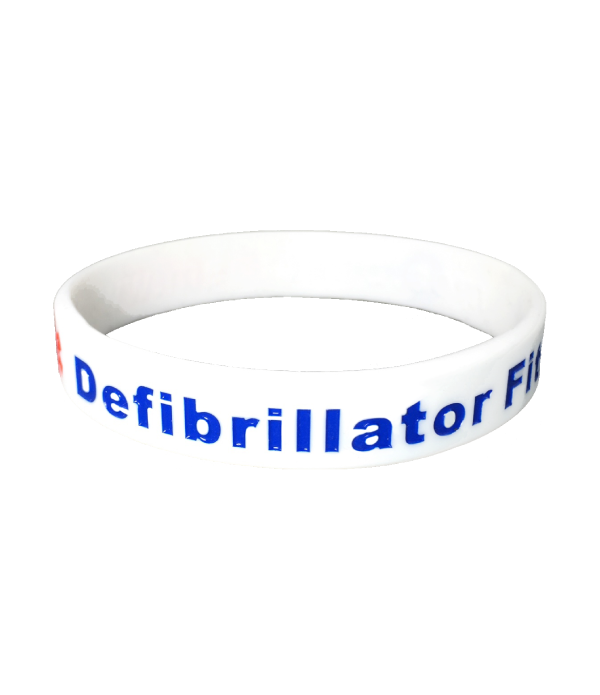
Your pacemaker card is essential, but a wallet card can be lost, damaged or simply not found quickly enough in an emergency. A pacemaker medical alert bracelet is always visible on your wrist — paramedics check for one within seconds of arriving at a scene. It tells them:
- You have a pacemaker implanted
- The type of device (pacemaker, ICD, CRT-D)
- Your emergency contact
- Any medications or allergies
Frequently Asked Questions
How long does a pacemaker battery last?
Most pacemaker batteries last between 5 and 15 years, depending on how frequently the pacemaker needs to send electrical signals. Your cardiologist will monitor battery life at regular check-ups and schedule a replacement well before it runs out.
Can I exercise with a pacemaker?
Yes. After the initial 6-week recovery period, most people with pacemakers can return to exercise including walking, swimming, cycling and golf. Avoid contact sports that risk a blow to the chest. Always check with your cardiologist before starting a new exercise program.
Do I need to wear a medical alert bracelet with a pacemaker?
Absolutely. A pacemaker medical alert bracelet is always visible on your wrist, unlike a wallet card that may not be found in an emergency. It tells paramedics you have an implanted cardiac device, preventing procedures like MRI that could interfere with it.
Can I go through airport security with a pacemaker?
Yes, but inform security staff and show your pacemaker ID card. Request a hand search or pat-down rather than walking through metal detectors or body scanners. Modern pacemakers are well-shielded, but it is best to avoid prolonged exposure to security scanning equipment.

Share on Facebook

Share on X

Share on Pinterest
Comment(s)
Recent Posts


The Risk Of Not Wearing An Allergy Medical Alert Bracelet
March 23, 2026