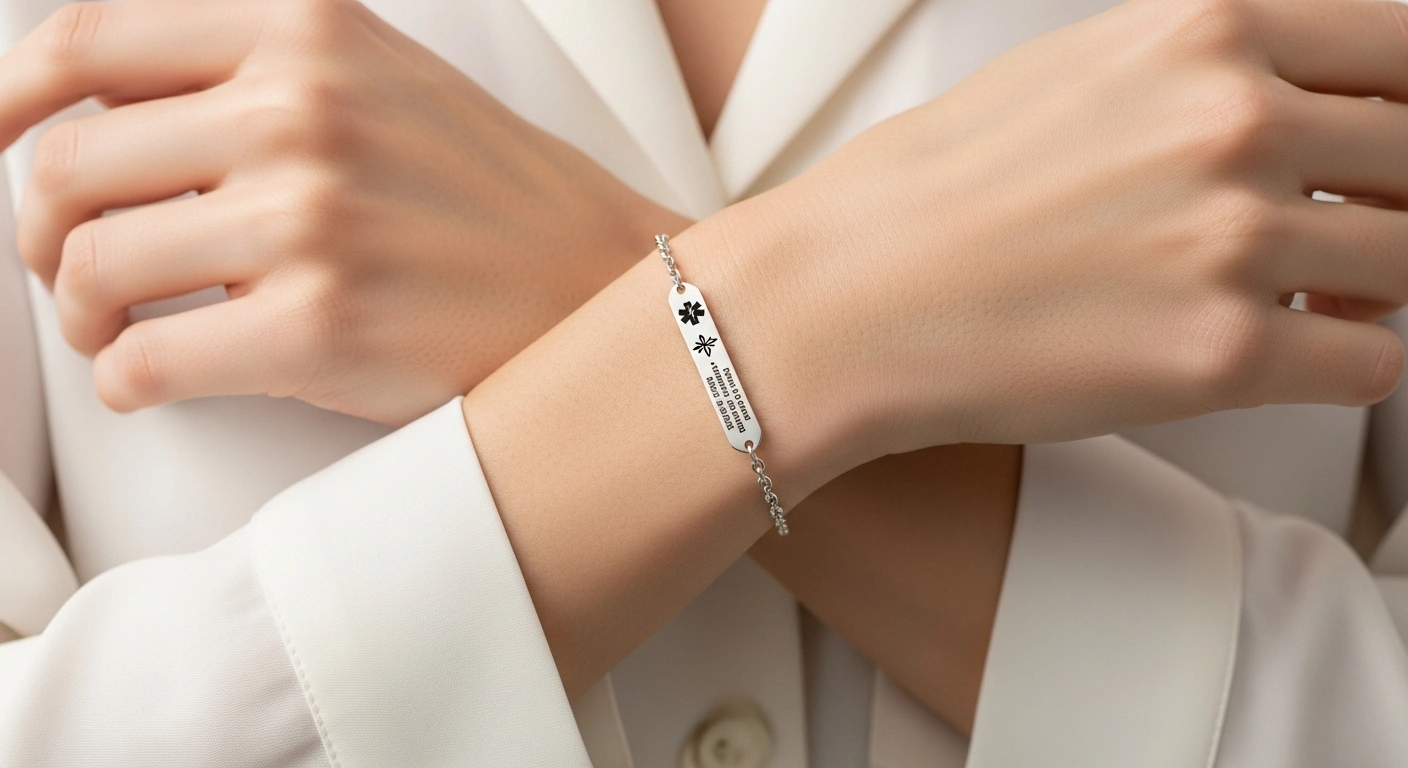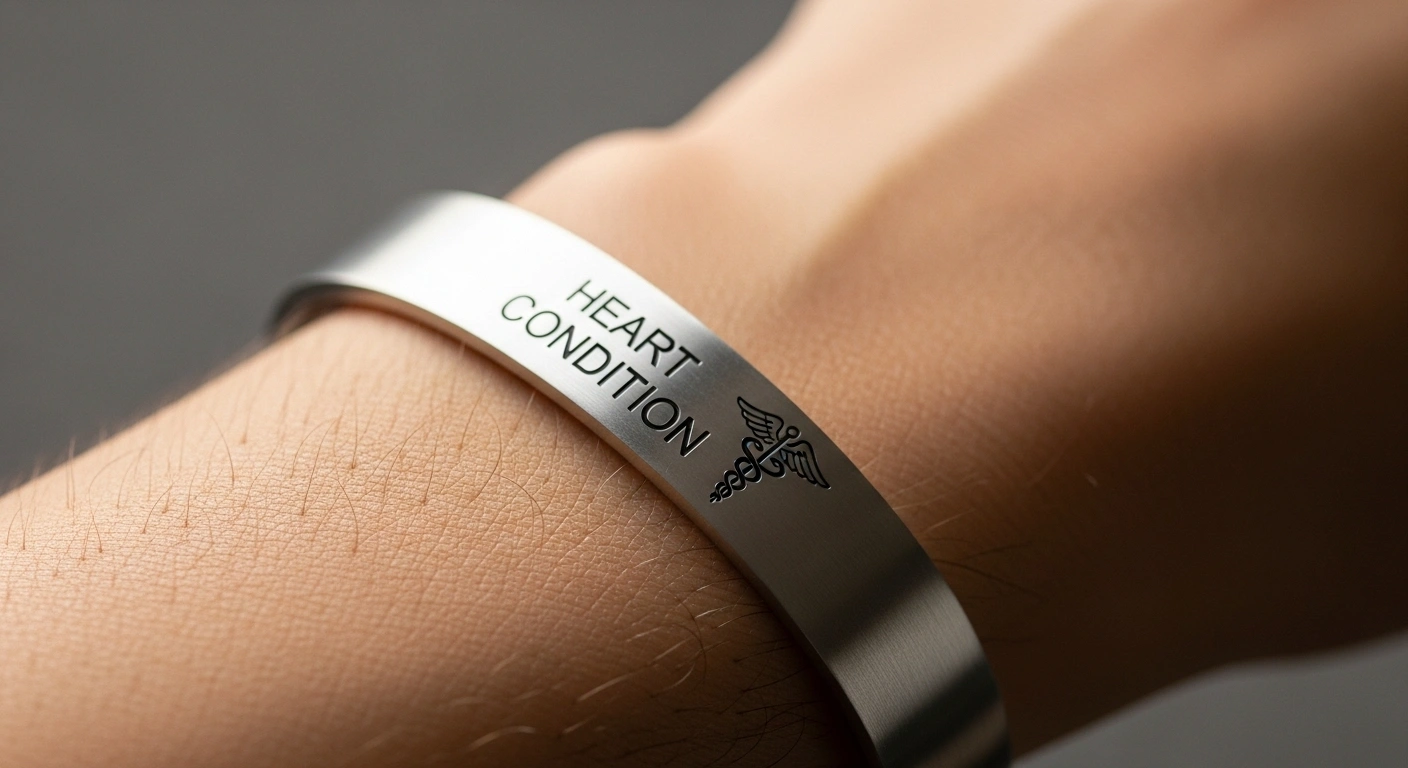
What Information to Include on a Medical Alert Bracelet: The Complete Engraving Guide
July 14, 2020

Why the Information on Your Medical Alert Bracelet Matters More Than You Think
When emergency responders arrive at a medical incident, they make treatment decisions within seconds. Research published in Prehospital Emergency Care (2018) found that paramedics who identified a medical alert bracelet during initial assessment reported that it directly influenced treatment decisions in 25% of cases. The bracelet’s job is simple: communicate the most critical health information when you cannot. Getting the information right — and keeping it current — is what makes the difference between a bracelet that helps and one that does not.
This complete guide covers what to include, how to prioritise, and how to format your medical alert bracelet information for maximum effectiveness.
What Emergency Responders Actually Look For
Paramedics and emergency room staff are trained to extract information from medical bracelets quickly. They look for:
- Life-threatening allergies — particularly to medications they might administer
- Primary medical condition — especially those that affect consciousness, breathing, or cardiac function
- Implanted devices — pacemakers, ICDs, cochlear implants (affect safe use of equipment)
- Critical medications — particularly blood thinners, insulin, or steroids
- Emergency contact (ICE) — someone who can provide additional medical history
Everything else is secondary. The bracelet is not a comprehensive medical record — it is a rapid-alert tool.
Priority 1: Life-Threatening Allergies
If you have a severe allergy — especially to a medication, latex, or food — this must appear first on your bracelet. Drug allergies are particularly critical because paramedics and nurses may administer common medications (antibiotics, anaesthetics, pain relief) as standard treatment. Without knowledge of your allergy, a routine treatment could cause a life-threatening reaction.
How to Format Allergy Information
- PENICILLIN ALLGY
- LATEX ALLGY
- NUT ALLERGY / ANAPHYLAXIS
- NSAID ALLGY (aspirin/ibuprofen)
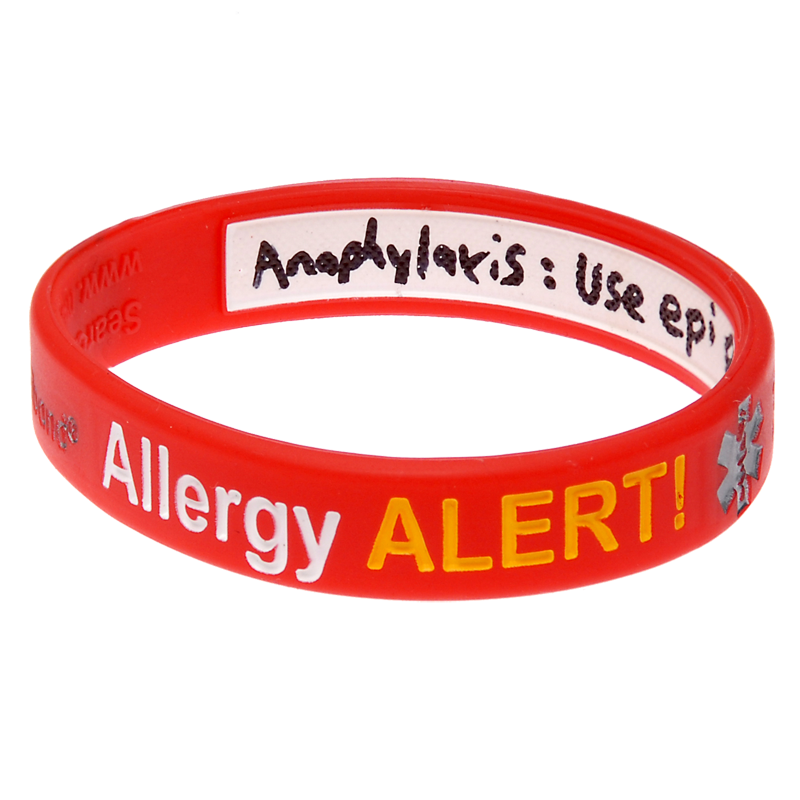
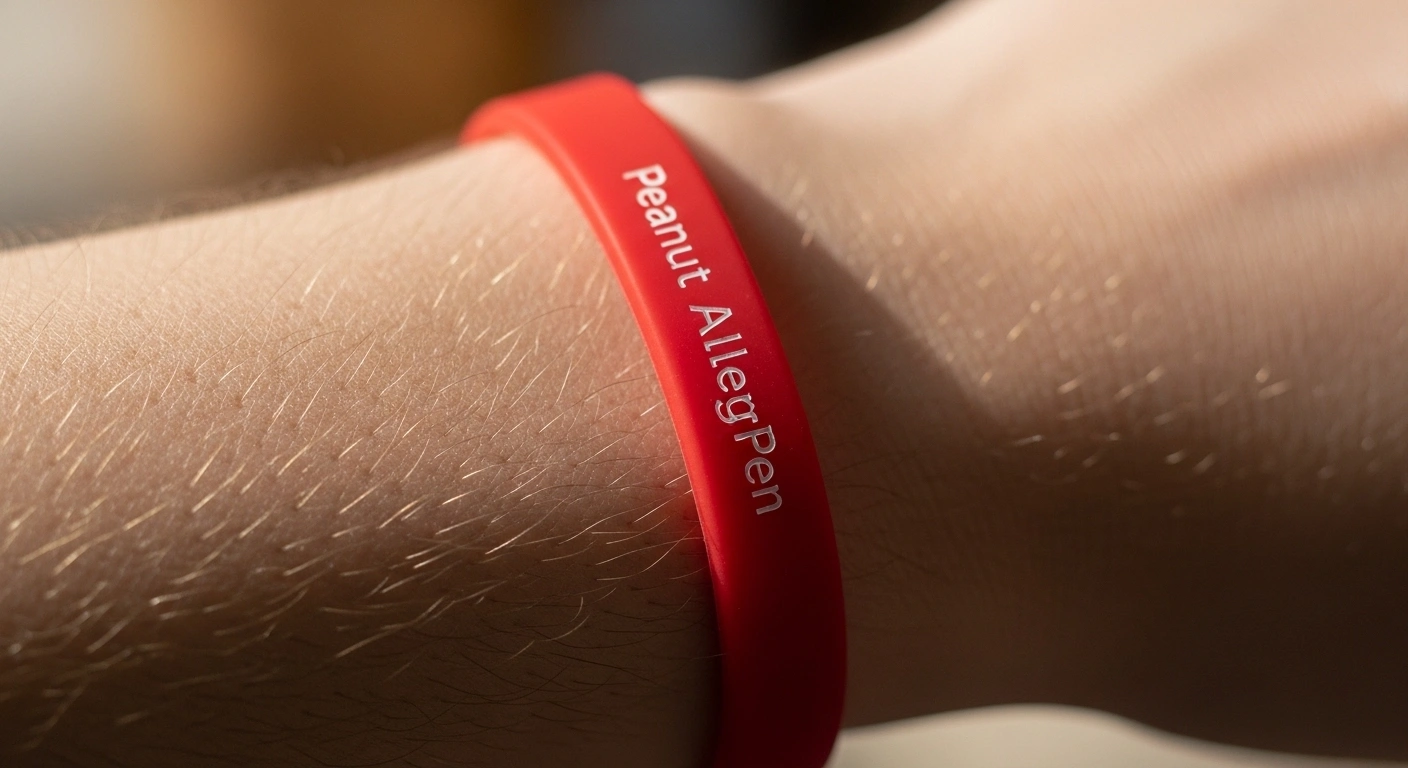
If you carry an EpiPen, add “USE EPI PEN” — this cues responders immediately and tells them treatment is available.
Priority 2: Your Primary Medical Condition
State your primary condition clearly. For most conditions, the full word fits on a modern medical bracelet:
- EPILEPSY or SEIZURE DISORDER
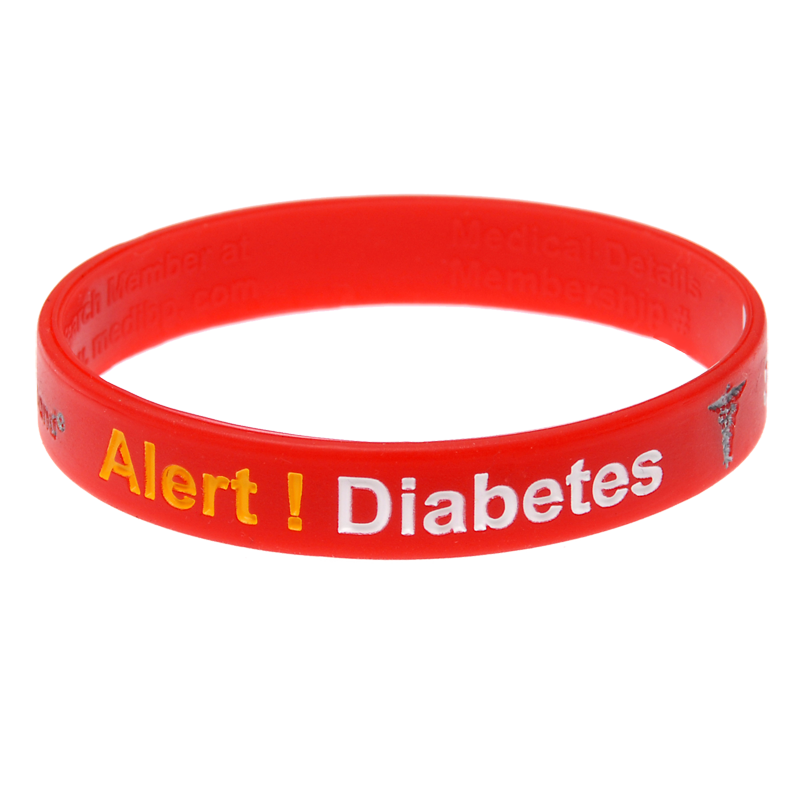
- DIABETES TYPE 1 or DIABETES TYPE 2
- ASTHMA
- CARDIAC PATIENT
- HAEMOPHILIA
For epilepsy, consider adding a brief instruction: “DO NOT RESTRAIN” is particularly valuable if you experience tonic-clonic seizures. For diabetes, consider whether INSULIN DEPENDENT adds important context.
Priority 3: Implanted Devices That Affect Treatment
Certain devices can be damaged or made unsafe by standard emergency procedures:
- PACEMAKER — affects placement of AED pads; responders should avoid positioning directly over the device
- ICD (Implantable Cardioverter-Defibrillator) — similar considerations
- NO MRI — essential for any metal implant, cochlear implant, or some drug delivery devices
- NO BP L ARM — important post-mastectomy or after arteriovenous fistula placement
Priority 4: Critical Medications
You cannot list every medication, but these classes should appear on your bracelet because they fundamentally change how treatment is approached:
- WARFARIN or BLOOD THINNERS — affects bleeding risk and surgical decisions
- INSULIN DEPENDENT — affects glucose management in ICU or post-surgery
- STEROID DEPENDENT — critical for anaesthesia planning
- USE EPI PEN — confirms EpiPen is prescribed and should be used
Using Both Sides Effectively
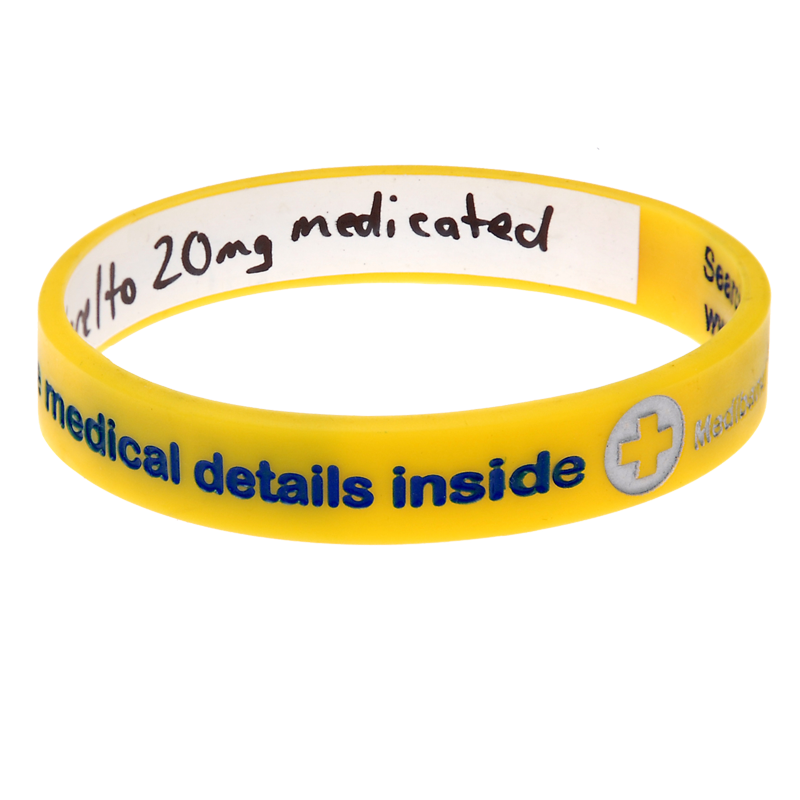
Reversible write-on bracelets offer two surfaces, which doubles your available information space. A common and effective layout is:
- Front: Primary condition + most critical allergy + EpiPen if required
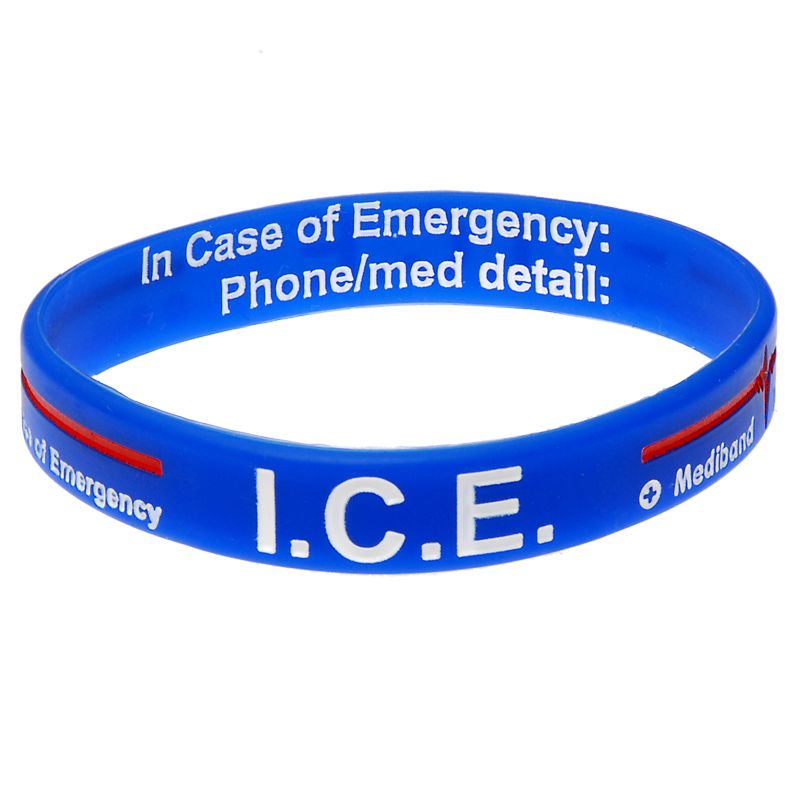
- Back: ICE contact name and phone number + secondary condition or medication
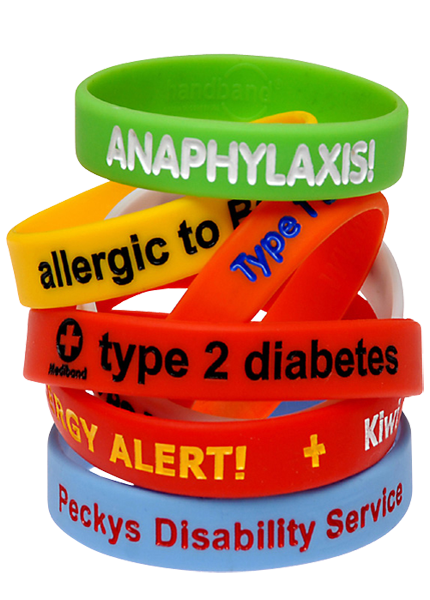
Our write-on medical ID bracelets are particularly suited to people whose conditions or medications change regularly, as the information can be updated without re-engraving.
What NOT to Include
Avoid cluttering your bracelet with information that does not affect emergency treatment:
- Full medication list (use a wallet card for this)
- GP name or clinic address (irrelevant in an emergency)
- Dietary preferences or non-medical lifestyle information
- Conditions that do not affect emergency treatment decisions
For comprehensive medical history, pair your bracelet with an emergency medical wallet card that can hold much more detail. Combine both for layered protection: quick wrist-check data plus full backup information in your wallet.
Find the Right Medical ID Bracelet for Your Needs
Write-on, pre-engraved, or custom — we have every style covered.

The Right Information, Clearly Displayed, Could Save Your Life
A medical alert bracelet is only as good as the information it carries. Use this guide to identify your priority information, format it clearly, and choose a bracelet that displays it effectively. Review it regularly to keep it current.
Browse our full range of medical alert bracelets including write-on styles for flexible information management and wallet cards for full medical history backup.
Frequently Asked Questions
How often should I update the information on my medical alert bracelet?
Review your bracelet information at every medication change, after any new diagnosis, and at least once per year as part of a routine check. If you use a write-on reversible bracelet, updating takes seconds. For engraved bracelets, consider whether any change to your conditions or medications is significant enough to warrant a new bracelet. Outdated information can be as problematic as no information at all.
Should my child have a medical alert bracelet with their name on it?
A child's name on a medical alert bracelet is optional and depends on your assessment of the risk versus benefit. In a medical emergency, a name helps responders address the child and contact family, but the primary value is medical information. Most parents include the child's first name, condition, and critical allergy. Avoid including the home address or other information that could be misused.
Is engraved or write-on better for a medical alert bracelet?
Both serve the same purpose. Engraved bracelets are more durable and permanent — ideal if your conditions and medications are stable. Write-on reversible bracelets are better if your information changes regularly or if you want to use both sides for more detail. Many people with complex or changing conditions prefer write-on; those with stable, well-defined conditions often prefer engraved for its durability and formal appearance.
Can I wear a medical alert bracelet during surgery or medical procedures?
Generally, you should inform medical staff of your conditions and medications before any procedure rather than relying solely on the bracelet. However, for planned surgery, your bracelet should remain on until you are in the operating theatre, and staff should note its information. For MRI, all jewellery including medical ID bracelets must be removed — this makes pre-procedure verbal disclosure of all conditions and devices especially important.

Share on Facebook

Share on X

Share on Pinterest
Comment(s)
Recent Posts

The Risk Of Not Wearing An Allergy Medical Alert Bracelet
March 23, 2026