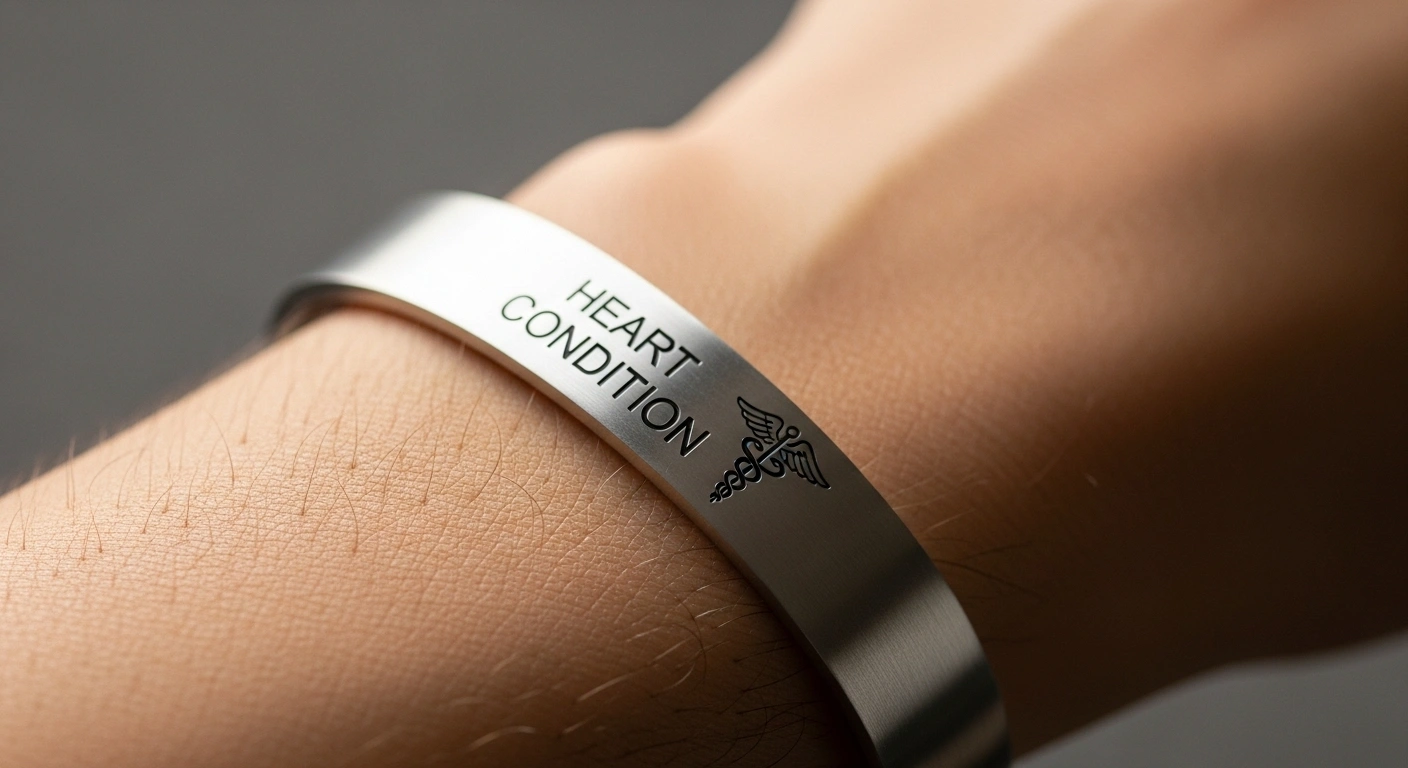
Family Health Emergency Preparedness: How to Protect Your Loved Ones
July 14, 2020

Why Most Families Are Underprepared for Health Emergencies
A report from the International Federation of Red Cross and Red Crescent Societies (2022) found that fewer than 20% of households in high-income countries have a documented emergency plan, despite the fact that medical emergencies are the most common type of household crisis. Heart attacks, severe allergic reactions, seizures, accidents, and sudden illness can happen without warning. The families who respond most effectively are the ones who planned before the emergency occurred.
This guide covers the essential steps to building a family health emergency preparedness system — one that protects every member of your household, from young children to elderly relatives.
Step 1: Create a Family Medical Information File
Every household should maintain a central medical information file — physical or digital — that can be accessed quickly in an emergency. This file should include:
- Full name, date of birth, and blood type for each family member
- Chronic conditions and relevant history
- Current medications with doses and frequency
- Known allergies (especially drug and food allergies)
- Immunisation records
- Primary doctor and specialist contact details
- Health insurance information
Store a copy at home in an accessible location and consider keeping a digital copy in a secure cloud folder that trusted family members can access. Update the file whenever medications or conditions change.
Step 2: Establish ICE Contacts for Every Family Member
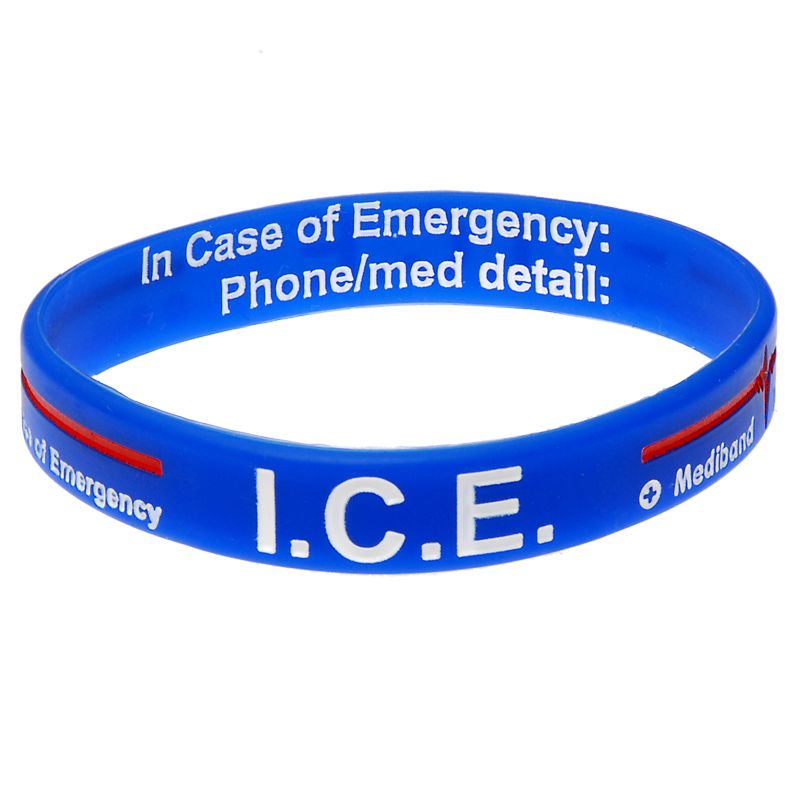
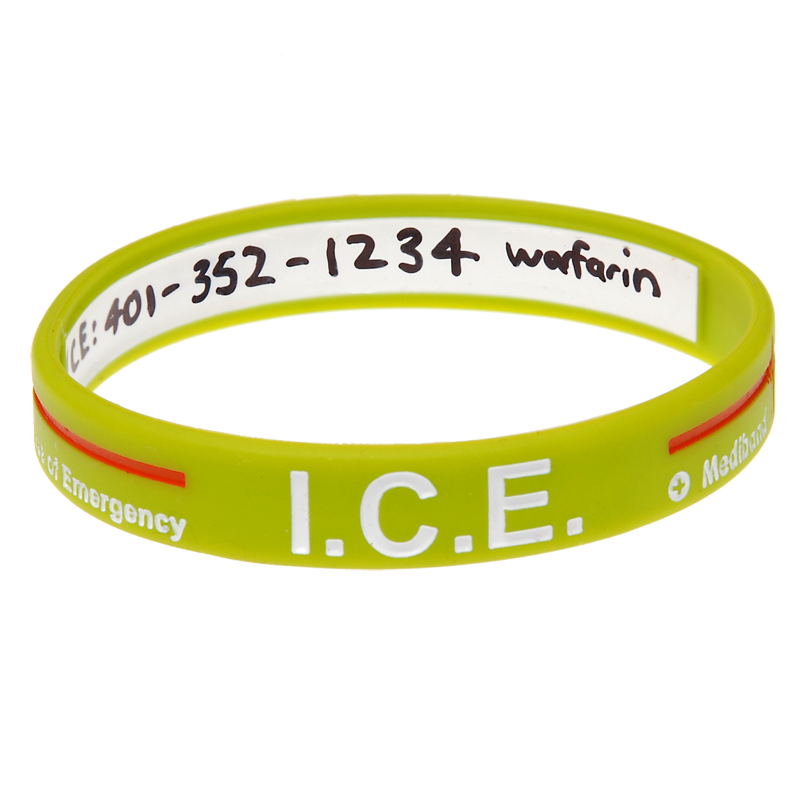
ICE — In Case of Emergency — is a universally recognised protocol used by paramedics and emergency room staff. When someone is found incapacitated, responders check for an ICE contact on mobile phones and medical ID bracelets.
How to Set Up ICE Properly
For each family member:
- Add “ICE — [Contact Name]” to their phone contacts
- Ensure the ICE contact knows they are listed and understands the person’s medical needs
- For children, elderly relatives, or those with conditions that affect consciousness, add an ICE bracelet that responders can read without needing to unlock a phone
A reversible ICE bracelet lets you write the contact name and number directly on the band, so the information is always visible even when the person cannot communicate.
Step 3: Prepare a Home Emergency Medical Kit
A well-stocked home emergency kit reduces response time in a health crisis. The World Health Organization recommends that every household have access to basic first aid supplies. Your kit should include:
- Adhesive bandages in multiple sizes and sterile gauze
- Antiseptic wipes and antibiotic ointment
- Thermometer (digital)
- Scissors, tweezers, and disposable gloves
- Prescribed emergency medications (e.g. EpiPens, GTN spray, rescue inhalers)
- A current list of all household medications
- Basic OTC medications (pain relief, antihistamine)
Keep prescribed emergency medications — especially those for anaphylaxis, asthma, or cardiac events — in a known, accessible location and check expiry dates twice a year.
Step 4: Ensure Medical ID for Every High-Risk Family Member
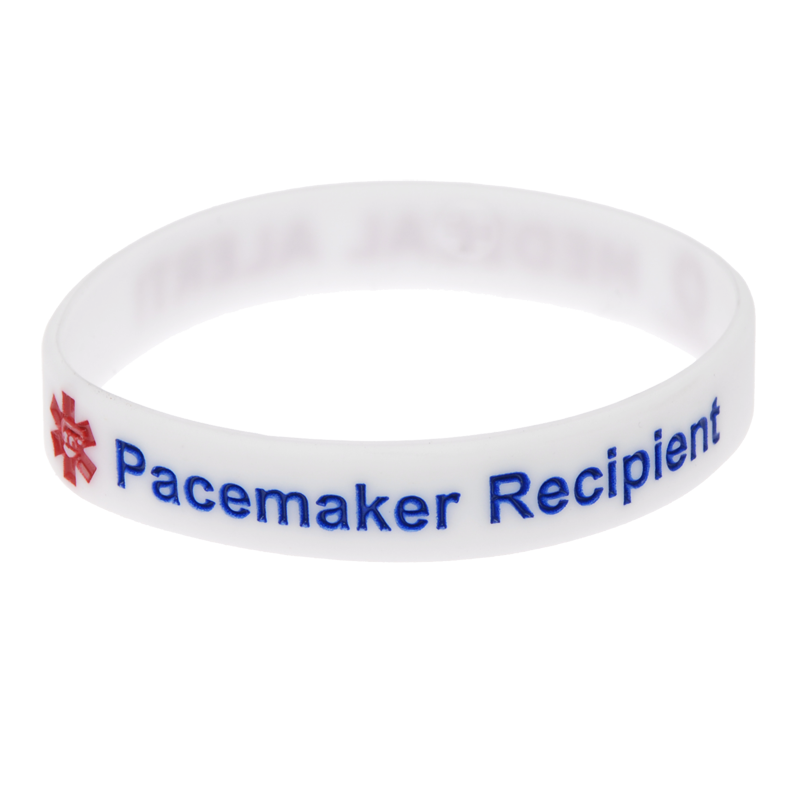
According to the Medic Alert Foundation, emergency responders check for a medical ID bracelet as part of standard patient assessment protocol. For family members with chronic conditions, severe allergies, or devices like pacemakers, a medical alert bracelet is one of the most important safety tools available.
Medical ID is critical for anyone with:
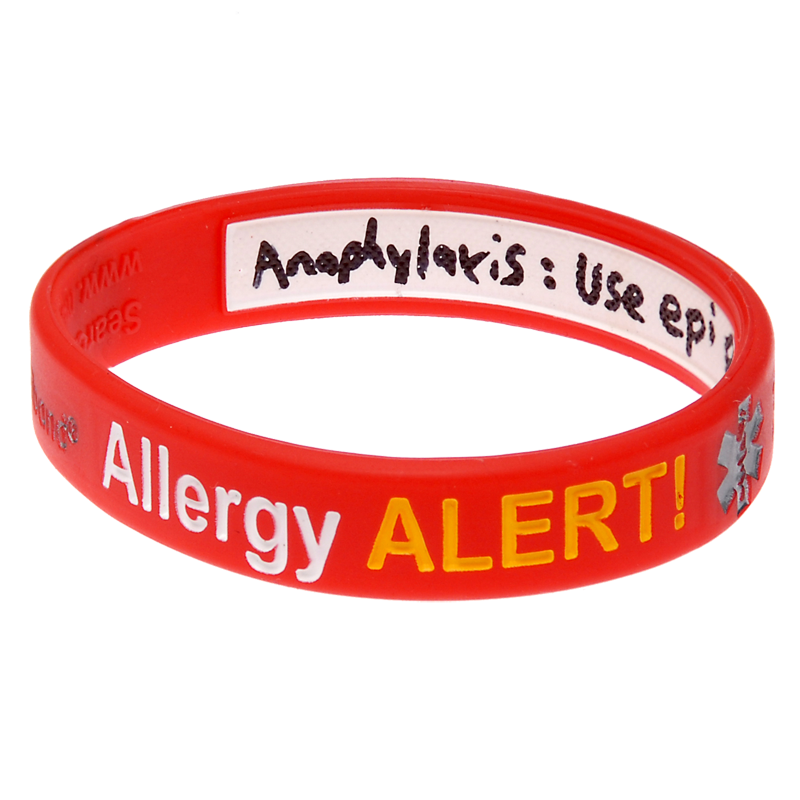
- Severe food or drug allergies (anaphylaxis risk)
- Epilepsy or seizure disorders
- Type 1 or Type 2 diabetes
- Heart conditions, pacemakers, or stents
- Dementia or cognitive impairments
- Children with rare or complex conditions
Explore our full range of medical alert bracelets, including styles for children, adults, and active users.
Step 5: Know When to Call Emergency Services
Many families delay calling emergency services because they are unsure whether the situation is serious enough. Research published in Emergency Medicine Journal (2020) found that delays in calling emergency services increase mortality risk by up to 23% in time-critical conditions like cardiac arrest, stroke, and anaphylaxis.
Call Emergency Services Immediately If You See
- Loss of consciousness or unresponsiveness
- Difficulty breathing or no breathing
- Chest pain lasting more than a few minutes
- Signs of stroke: facial drooping, arm weakness, speech difficulty
- Severe allergic reaction (hives, swelling, breathing difficulty)
- Prolonged or multiple seizures
- Severe bleeding that cannot be controlled
Step 6: Learn Basic First Aid and CPR
First aid training dramatically improves outcomes in medical emergencies. The American Heart Association estimates that bystander CPR doubles or triples survival rates for cardiac arrest victims. Most community centres, workplaces, and health organisations offer certified first aid and CPR courses that take as little as one day.
At minimum, every household should have at least one adult who is trained in:
- CPR (including how to use an AED defibrillator)
- Anaphylaxis response (including EpiPen administration)
- Seizure response
- Choking management (Heimlich manoeuvre)
Be Ready for Any Emergency — Start with a Medical ID
ICE contacts, allergy alerts, and medical conditions on your wrist.
Preparedness Is the Best Protection
No family can predict a health emergency. But every family can be better prepared. A medical information file, ICE contacts, a home first aid kit, basic training, and medical ID bracelets for high-risk members form a practical, affordable safety system that works when it matters most.
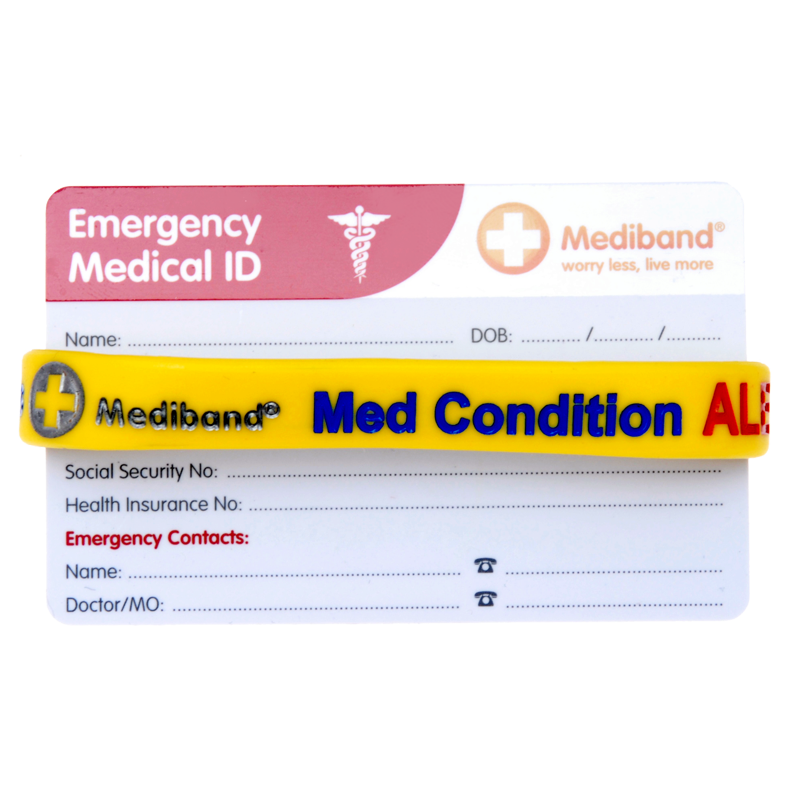
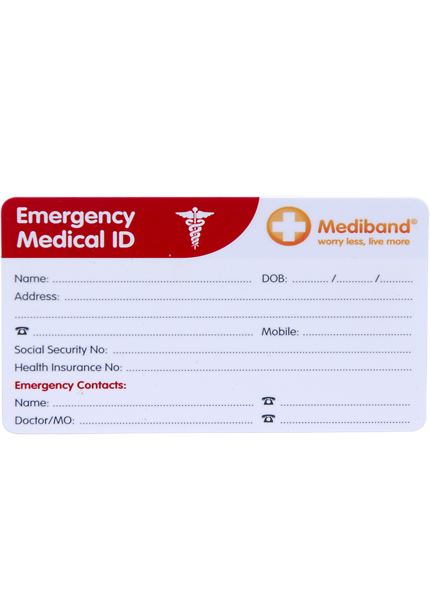
Browse our range of medical alert bracelets and medical wallet cards to equip your family today.
Frequently Asked Questions
What should be in a family health emergency plan?
A family health emergency plan should include a medical information file for each member (conditions, medications, allergies), ICE contacts set up on phones and bracelets, a stocked home first aid kit, a list of local emergency services numbers, and at least one trained first aider in the household. Review and update the plan every six months or when health conditions change.
At what age should children wear a medical ID bracelet?
Children with chronic conditions, severe allergies, or conditions that affect consciousness should wear a medical ID bracelet as soon as they are old enough to have it secured safely — often from infancy for high-risk conditions. Mediband offers adjustable and child-friendly styles. A bracelet becomes especially important when children start school or activities without parents present.
How do I make sure my family emergency kit stays up to date?
Set a calendar reminder every six months to review and update your kit. Check expiry dates on medications and first aid supplies, update the household medical information file if conditions or medications have changed, and verify that ICE contacts and phone numbers are still current. Link the review to a regular event like a birthday or seasonal change to make it routine.
What is the difference between a medical wallet card and a medical ID bracelet?
A medical ID bracelet is always visible on the wrist, which is where emergency responders check first. A medical wallet card carries more detailed information but may be missed if the person is not checked thoroughly. For maximum protection, use both: a bracelet for immediate critical information and a wallet card for fuller medical history. Some Mediband products include both formats together.

Share on Facebook

Share on X

Share on Pinterest
Comment(s)
Recent Posts
The Risk Of Not Wearing An Allergy Medical Alert Bracelet
March 23, 2026