Are Stick on Thermometers Accurate? Pros, Cons, and Mor
February 23, 2026

You've probably seen them in pharmacy aisles or tucked into a first aid kit — those small, thin strips that stick to the forehead and change color based on body temperature. At first glance, they seem almost too simple to be useful. But over the last decade or so, stick-on thermometers have quietly become a go-to option for parents, caregivers, and even some healthcare settings. The question that keeps coming up, though, is a fair one: are they actually reliable?
This article breaks down exactly how these devices work, how accurate they really are, and what situations they're best suited for — so you can decide whether they belong in your medicine cabinet.
What Is a Stick on Thermometer?
A stick-on thermometer is a flat, flexible strip — usually made from liquid crystal or similar heat-sensitive material — that adheres to the skin and displays a temperature reading based on color changes. Unlike a standard digital thermometer that measures core body temperature, these strips measure surface skin temperature, which is then used to estimate internal temperature.
The strips contain thermochromic liquid crystals that react to heat. As the temperature of the skin changes, the crystals shift color, and the strip displays a reading — typically through a numbered scale where one number lights up more clearly than the others. Most are designed for single use, though some reusable versions exist.
There are a few different types worth knowing about:
- Forehead strip thermometers — the most common kind, applied directly to the forehead skin
- Underarm adhesive thermometers — less common, used primarily in clinical or neonatal settings
- Multi-use reusable strips — similar in design but made with more durable materials for repeated use
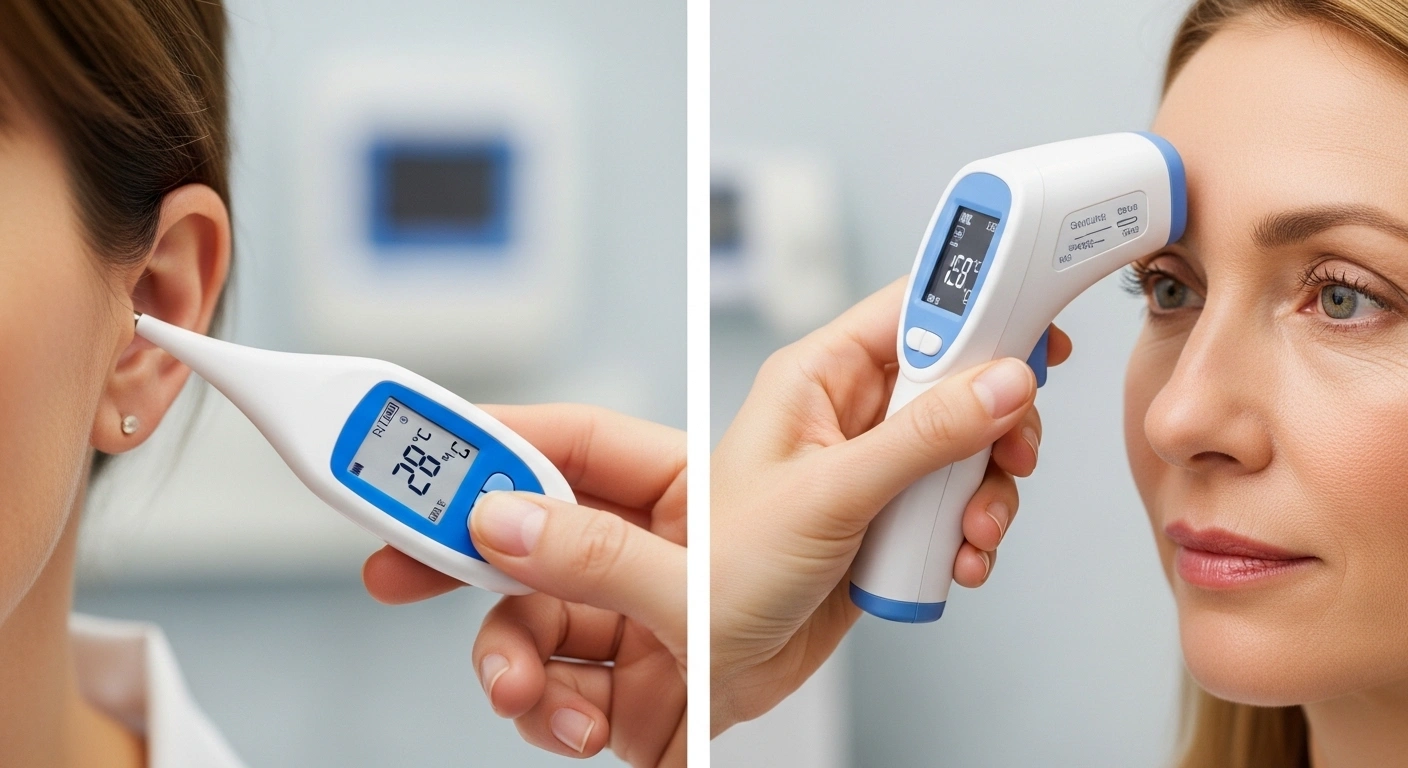
Using a forehead stick-on thermometer is about as straightforward as it gets. The strip is pressed firmly against dry skin on the forehead, held in place for around 15 seconds, and then read by looking at which color or number is most clearly displayed. Results are immediate, which is part of why they've grown so popular with parents managing sick children at home.
Are Stick-on Thermometers Accurate?
This is the core question, and the answer is: it depends on what you're using them for.
In general use, a stick-on thermometer can give a reasonable indication of whether someone has an elevated temperature. They're considered screening tools, not diagnostic ones. That means they're good for a quick check — "does this child feel warmer than normal?" — but they're not designed to replace a clinical thermometer when precision matters.
Be Prepared for Any Medical Emergency
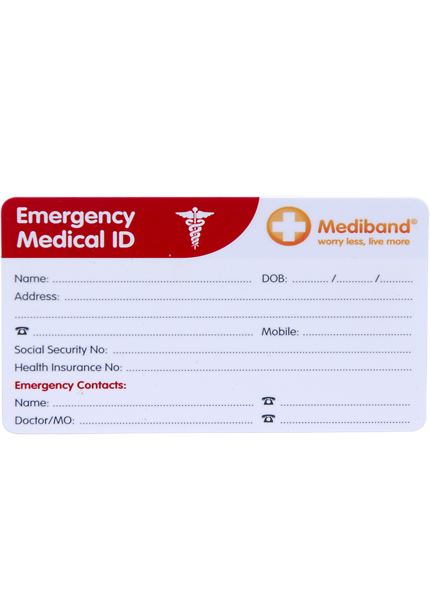
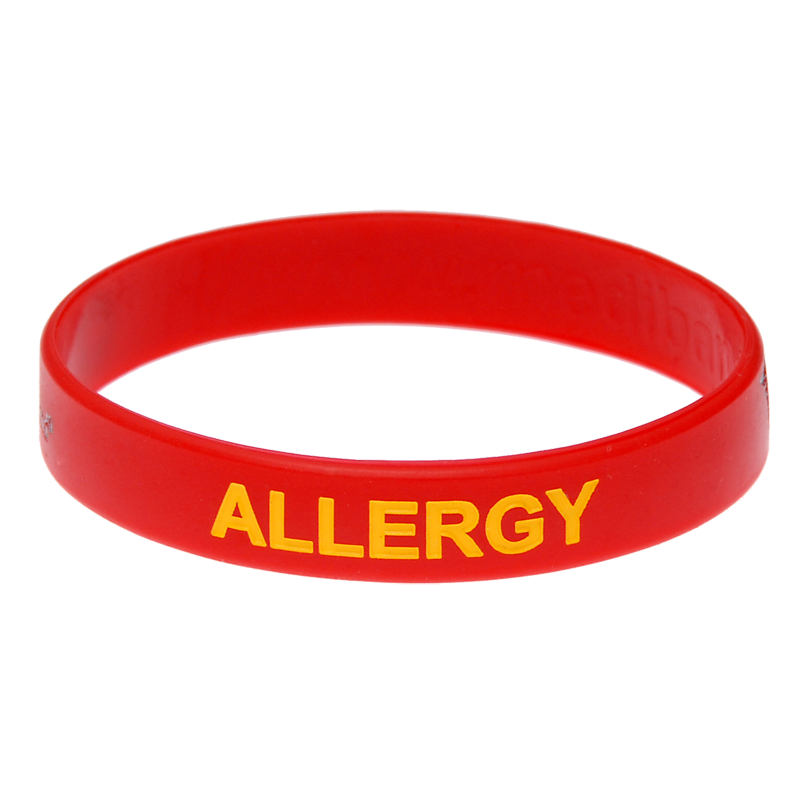
Temperature monitoring is one part of health management — make sure your medical conditions are always visible with a medical alert bracelet.
How Accurate Are Forehead Stick-on Thermometers?
The forehead stick-on thermometer has specifically been studied in pediatric contexts. One real, peer-reviewed study published on PubMed — "A comparative study on accuracy of liquid crystal forehead, digital electronic axillary, infrared tympanic with glass-mercury rectal thermometer in infants and young children" — examined 200 children aged 0–48 months and found that liquid crystal forehead thermometers differed from rectal temperature by at least 0.5°C in over 33% of subjects, and by at least 1°C in 22% of subjects.
The study concluded that forehead thermometry had the poorest performance among the devices tested and was not a suitable substitute for a rectal thermometer in assessing fever in infants and young children.
That said, in everyday home settings — where you're not making critical medical decisions but simply trying to gauge how a child is feeling — the forehead strip can be perfectly adequate for that purpose.
Factors That Affect Accuracy
Several things can throw off the reading on a stick thermometer:
- Sweating or moisture on the skin — even light perspiration can cool the skin surface and produce a lower-than-actual reading
- Room temperature extremes — if someone has just come in from cold weather, the skin may read cooler than the body's actual temperature
- Direct sunlight or heat sources nearby — these can cause the strip to read higher than accurate
- Hair or clothing covering the strip — interfering with proper contact and ambient air flow
- Improper placement — if the strip isn't flat against the skin, the reading will be inconsistent
Pros of Using Stick-on Thermometers
There's a reason these strips have stayed on shelves for years. They genuinely have a place in certain situations.
Non-Invasive and Easy to Use
No insertion, no discomfort, no technique required. Almost anyone can apply a stick-on thermometer correctly on the first try, which matters when dealing with a cranky, sick toddler at 2 a.m.
Quick Results and Comfort for Children
Getting a temperature reading from a squirming child has always been a challenge. Traditional oral or rectal thermometers require cooperation and stillness. A forehead strip simply sticks on, and the result appears within seconds. For children who have anxiety around medical devices, this can make a stressful situation much calmer.
Portability and Hygiene
- Travel-friendly — they're thin, lightweight, and take up almost no space in a bag or kit
- Disposable design — single-use strips eliminate the need for cleaning or sterilization between uses
- Low contamination risk — because they're used once and discarded, there's no cross-contamination concern
Cons of Using Stick-on Thermometers
No tool is without its drawbacks, and the stick-on thermometer has a few worth considering seriously.
Accuracy Limitations
As covered above, the margin of error on these strips is higher than that of digital or mercury thermometers. They measure skin surface temperature, not core body temperature, which means the reading is always an estimation. In situations where an accurate temperature reading is medically necessary, these strips should be seen as a starting point rather than a final answer.
Short-Term Use and Cost vs. Durability
Most strips are single-use only. If you need to monitor temperature over several hours, you'll go through multiple strips. Over time, that adds up — especially compared to a digital thermometer that can last years with a simple battery change. For frequent monitoring, the cost-per-reading becomes less economical.
Potential for Misreading
The color-based display can be difficult to interpret in low light or for anyone with certain types of color vision differences. The numbers can also look ambiguous when two are partially lit at the same time. This room for human interpretation error is something digital thermometers eliminate.
Limited to Surface Reading
The forehead stick-on thermometer only reads what the skin is doing — not what's happening internally. During the early stages of a fever, or when circulation is reduced, the skin may not yet reflect the body's true temperature. This can lead to missed or delayed detection in some cases.
Final Thoughts
Stick-on thermometers serve a specific, practical purpose — and when used within that purpose, they do their job reasonably well. They're not designed to compete with clinical-grade tools, and they shouldn't be treated as such. What they offer is speed, simplicity, and comfort, especially in household settings with young children.
The forehead stick-on thermometer is most useful as a screening device: a quick first check to see whether a more thorough measurement is needed. For ongoing monitoring or situations requiring clinical precision, a digital thermometer remains the more reliable choice.
Understanding the limitations of a stick-on thermometer isn't a reason to dismiss it — it's a reason to use it wisely. Knowing what any tool can and can't do is what makes it actually useful.
Frequently Asked Questions
How accurate are stick-on forehead thermometers compared to digital thermometers?
Stick-on thermometers measure skin surface temperature, which is generally 0.5 to 1 degree Celsius lower than core body temperature. Digital oral or ear thermometers provide more precise readings. Stick-on strips are best for quick screening and continuous monitoring, but should be confirmed with a digital thermometer if you suspect a high fever.
Can stick-on thermometers detect a fever reliably?
Stick-on thermometers can indicate when a temperature is elevated, but they are not precise enough to give an exact reading. They are useful as a first check or for overnight monitoring of children. If the strip shows an elevated colour, follow up with a digital thermometer to get an accurate number for your doctor.
Are stick-on thermometers safe for newborns?
Yes, stick-on thermometers are non-invasive and generally safe for newborns and infants. They do not require insertion and cause no discomfort. However, for newborns under three months, the Royal Children Hospital Melbourne recommends using a digital thermometer for accurate readings, as even small temperature changes can be clinically significant.
How do you read a stick-on thermometer correctly?
Place the strip on a clean, dry forehead and wait 15 to 30 seconds. The coloured panels will change based on skin temperature. Read the temperature indicated by the last green or highlighted panel. Ensure the strip is fully adhered with no air gaps, and avoid reading immediately after physical activity or bathing.
How long can you leave a stick-on thermometer on?
Most stick-on thermometer strips can remain on the forehead for up to 48 hours of continuous monitoring. They are lightweight and comfortable enough for overnight use on children. Replace the strip if it begins to peel, loses adhesion, or if the colour indicators no longer respond clearly to temperature changes.

Share on Facebook

Share on X

Share on Pinterest
Comment(s)
Recent Posts
The Risk Of Not Wearing An Allergy Medical Alert Bracelet
March 23, 2026