Why Allergy Experts Recommend Mediband Allergy Alert Bracelets
October 18, 2010
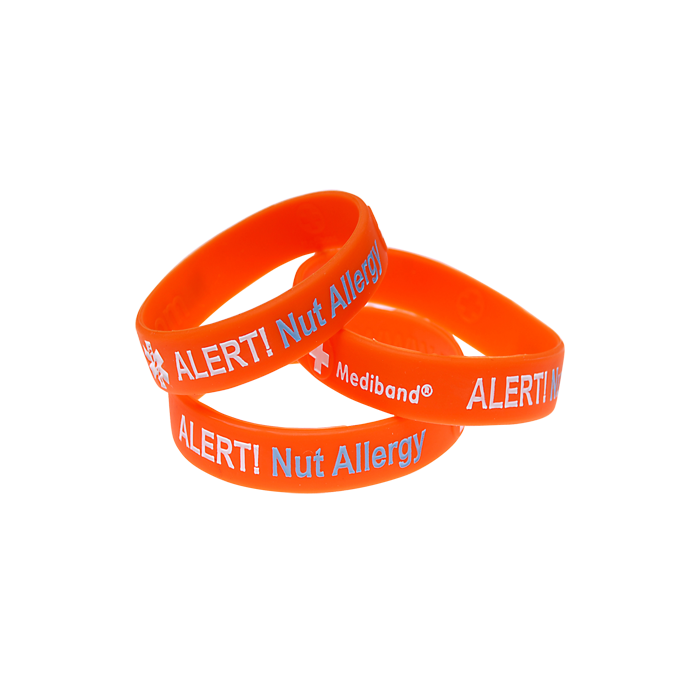
Australia has the highest rate of food allergy in the world. According to the Murdoch Children's Research Institute, 1 in 10 Australian babies now has a confirmed food allergy — and hospital admissions for food-triggered anaphylaxis increased more than nine-fold between 1998–99 and 2018–19 (AIHW). In a severe allergic reaction, seconds matter. An allergy alert bracelet ensures that paramedics, teachers, coaches, and bystanders know exactly what to avoid — even if you can’t speak for yourself.
Australia’s Allergy Crisis — Why Medical ID Matters More Than Ever
The scale of allergic disease in Australia is significant. According to the 2025 “Costly Reactions” report by ASCIA and Deloitte, 8.2 million Australians now live with some form of allergic disease — up from 4.1 million in 2007. That is nearly one in three Australians. The total economic burden has climbed to $18.9 billion per year, including healthcare costs and lost productivity.
Food allergies alone affect 1 in 10 babies, 1 in 20 teenagers, and 1 in 50 adults. The most common triggers include peanuts, tree nuts, cow’s milk, egg, wheat, soy, fish, and shellfish. Drug allergies are also widespread — approximately 10% of the general population reports a penicillin allergy, making it one of the most commonly documented drug allergies in Australian hospital records.
In this environment, a medical alert bracelet is not just a precaution — it is a communication tool that can prevent a life-threatening mistake when its wearer cannot speak.
What Is an Allergy Alert Bracelet and How Does It Work?
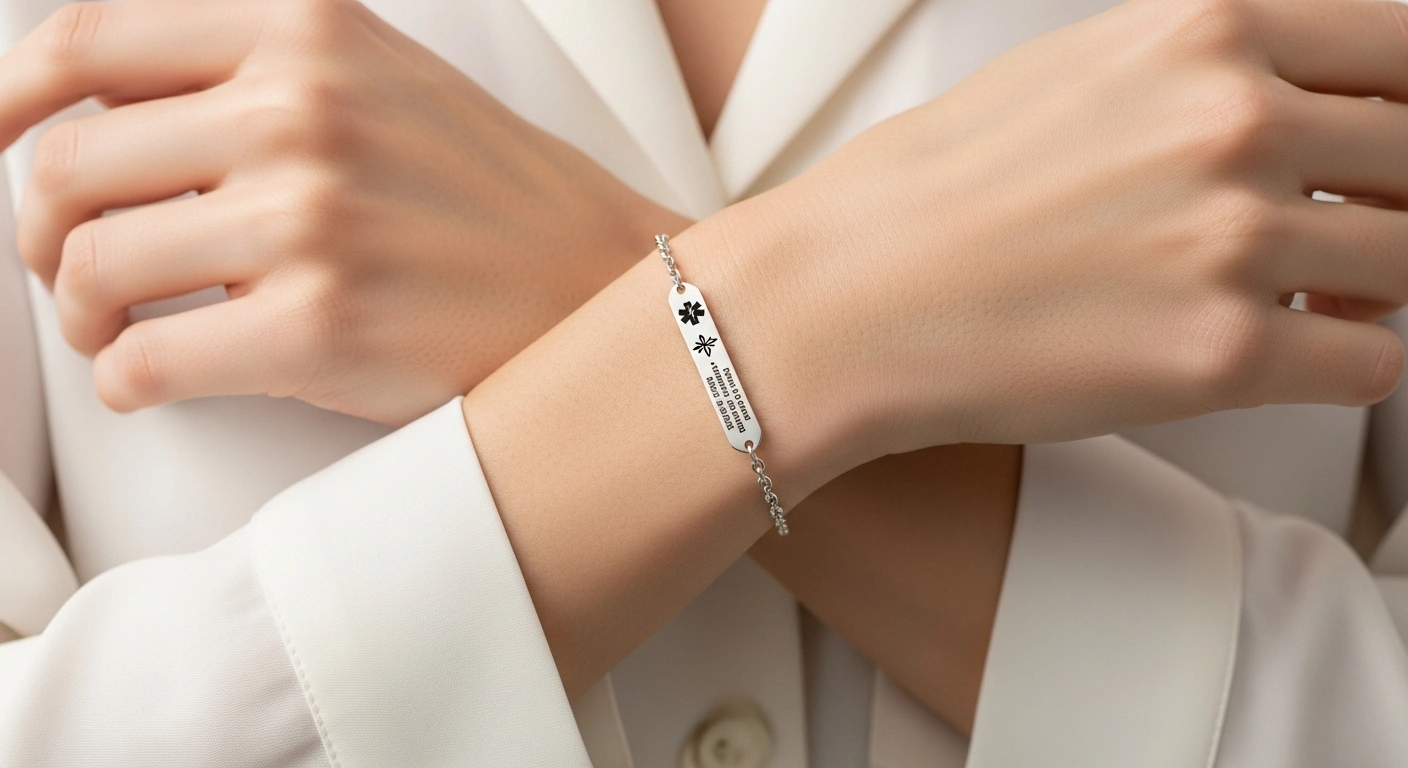
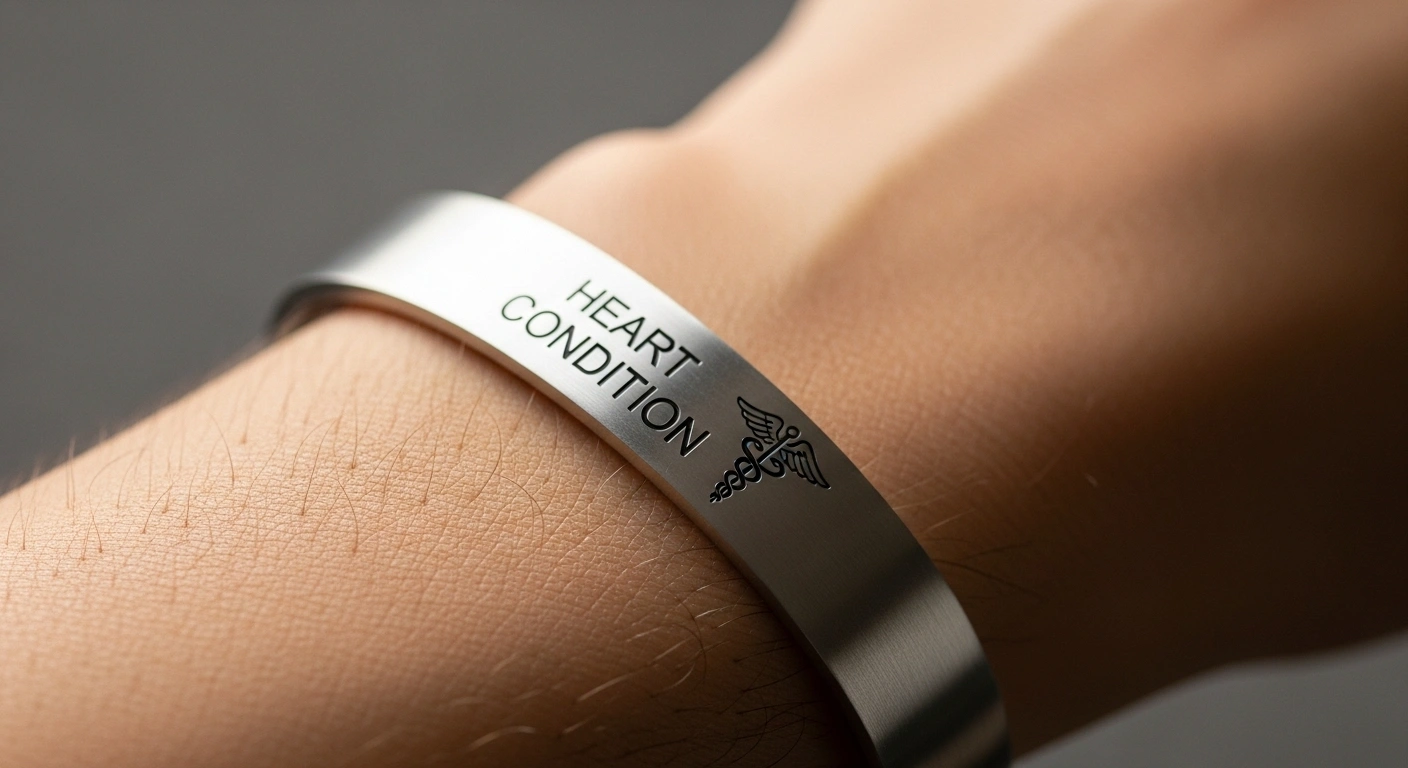
An allergy alert bracelet is a wearable medical ID that clearly displays your allergy or allergies in a format that emergency responders, healthcare professionals, and bystanders can instantly read. Unlike a smartphone or wallet card, it is always visible, waterproof, and requires no battery.
How Emergency Responders Use Medical IDs
When paramedics arrive at an emergency, they are trained to check the patient’s wrist for a medical alert bracelet within the first 30 seconds of assessment. In the event of anaphylaxis — a rapid, life-threatening allergic reaction — this information allows them to administer the correct treatment immediately: in most cases, adrenaline (epinephrine) and avoidance of the triggering substance.
For patients admitted to hospital, an allergy bracelet also flags the allergy to nurses and clinicians before any medication is administered. Penicillin allergy is especially critical in surgical and dental settings, where antibiotics are commonly given without a full patient history review.
What Information Should Your Allergy Bracelet Display?
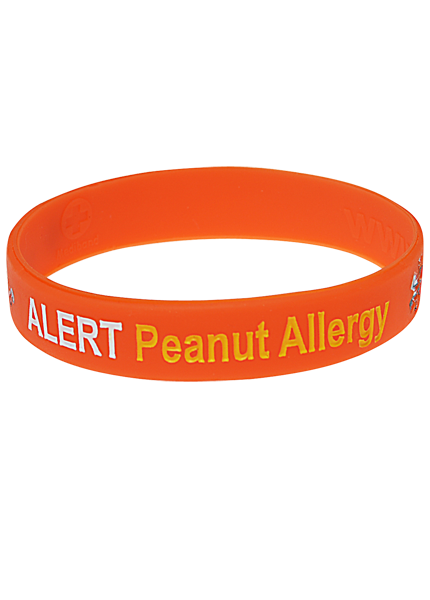
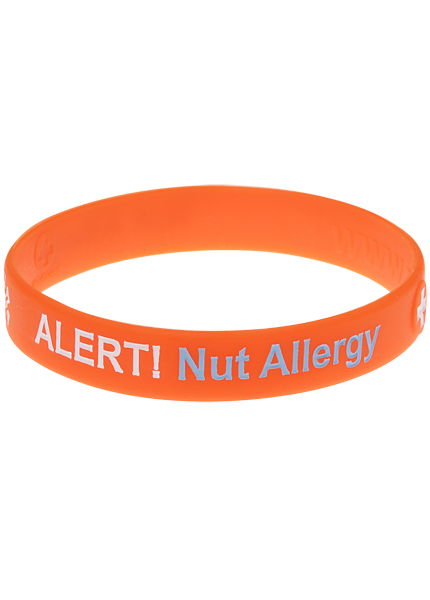
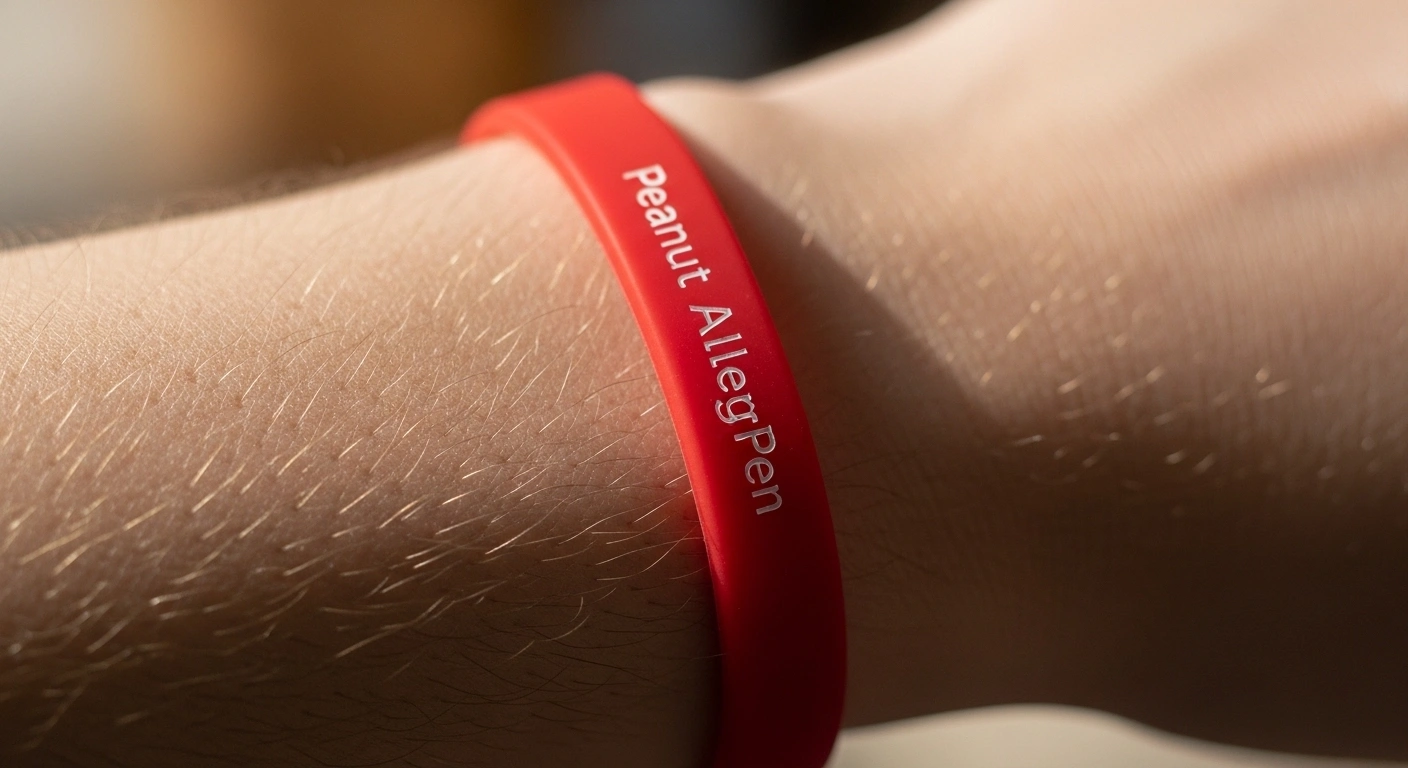
Your bracelet should clearly show your primary allergy or allergies (for example, “Peanut Allergy” or “Penicillin Allergy”), whether you carry an adrenaline auto-injector such as an EpiPen, and — especially for children — an emergency contact number. Keep the text concise: emergency responders need to read it at a glance, often in low light or under pressure.
Shop Allergy Medical Alert Bracelets
Wear it every day — give emergency responders the information they need, instantly.


The Allergy Essex Story — Real Families, Real Need
The value of allergy medical ID has been recognised beyond Australia’s borders too. In the UK, Colchester-based Allergy Essex became one of the first UK retailers to stock Mediband medical alert bracelets after founder Michelle Merrett experienced the need firsthand.
Michelle suffers from a penicillin allergy herself, and two of her three children also live with allergies. Her youngest son was diagnosed with allergies to cow’s milk protein and house dust mites at just 16 months old, after suffering constant throat infections and digestive upsets.
“I constantly wear a Mediband, as do my two sons. My eldest son is now at the age where he is going out with his friends more frequently and the Mediband provides us with peace of mind that he can communicate his allergies to people around him at all times. Selling Medibands on our site makes perfect sense as it is an essential product for anyone with an allergy — and that’s exactly who our customers and supporters are.”
— Michelle Merrett, Allergy Essex
Allergy Essex went on to stock a full range of allergy-free foods alongside Mediband’s medical IDs — a natural pairing for a business built around supporting families living with food allergies and intolerances.
Who Needs an Allergy Medical Alert Bracelet?
Anaphylaxis and Severe Food Allergies
Anyone at risk of anaphylaxis should wear a medical alert bracelet at all times. Allergy & Anaphylaxis Australia and ASCIA (the Australasian Society of Clinical Immunology and Allergy) both recommend medical ID jewellery for anyone with a known anaphylaxis risk.
Anaphylaxis can develop within minutes of exposure to a trigger. In an emergency where the patient is unconscious or unable to communicate, the bracelet becomes the only way for first responders to understand what is happening and administer adrenaline correctly. Common food allergies requiring a bracelet include peanut, tree nut, egg, milk, wheat, fish, and shellfish.
Drug and Penicillin Allergies
A penicillin allergy bracelet is particularly important in any medical setting. If allergy information is not on file when a patient presents to an emergency department or undergoes a procedure, clinicians must make treatment decisions without critical context. Wearing a penicillin allergy medical ID ensures this information is always available — even when medical records are not. The same principle applies to drug allergies involving ibuprofen, morphine, codeine, aspirin, or latex.
Children at School and Play
Food allergies are especially common in children, and school environments present a real risk of accidental exposure. A medical alert bracelet worn by a child communicates their allergy to teachers, coaches, and other adults instantly — without relying on paperwork, verbal communication, or the child themselves explaining in a stressful moment.
Mediband’s silicone bracelets are available in children’s sizes, are waterproof, and are designed for comfortable wear during sport, swimming, and everyday activity.
Why an EpiPen Alone Is Not Enough
Many people with severe allergies carry an adrenaline auto-injector (EpiPen or Anapen) and feel that this alone is sufficient protection. But consider this: you experience a severe reaction, lose consciousness, and cannot speak. Bystanders — or even paramedics arriving on scene — may not know where your EpiPen is stored, what you are allergic to, or whether to administer it.
An EpiPen alert bracelet solves this immediately. It identifies the allergy, signals that you carry an adrenaline device, and gives responders the confidence to act quickly. The two work together — the bracelet communicates the risk, the EpiPen provides the treatment.
What to Write on Your Allergy Alert Bracelet
Listing Your Allergens Clearly
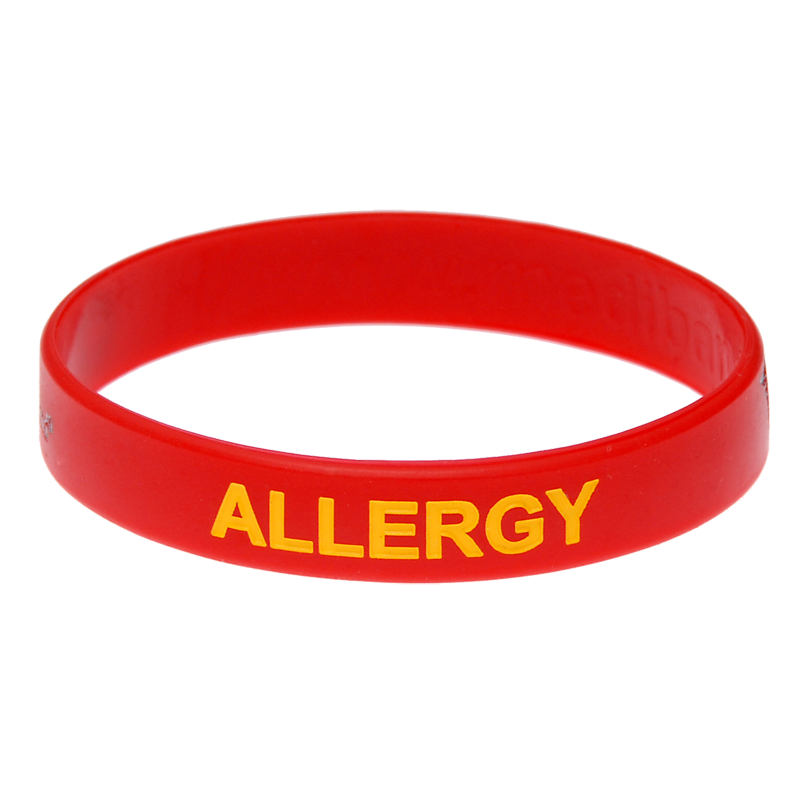
Use simple, unambiguous language that anyone can read under pressure. Write “Peanut Allergy” rather than the generic “nut allergy”, and be specific: “Penicillin Allergy” rather than “antibiotic allergy”. If you have multiple allergies that cannot fit on a single bracelet, a Mediband wallet card works as a companion — listing all known allergies in full detail.
Including Emergency and Medication Information
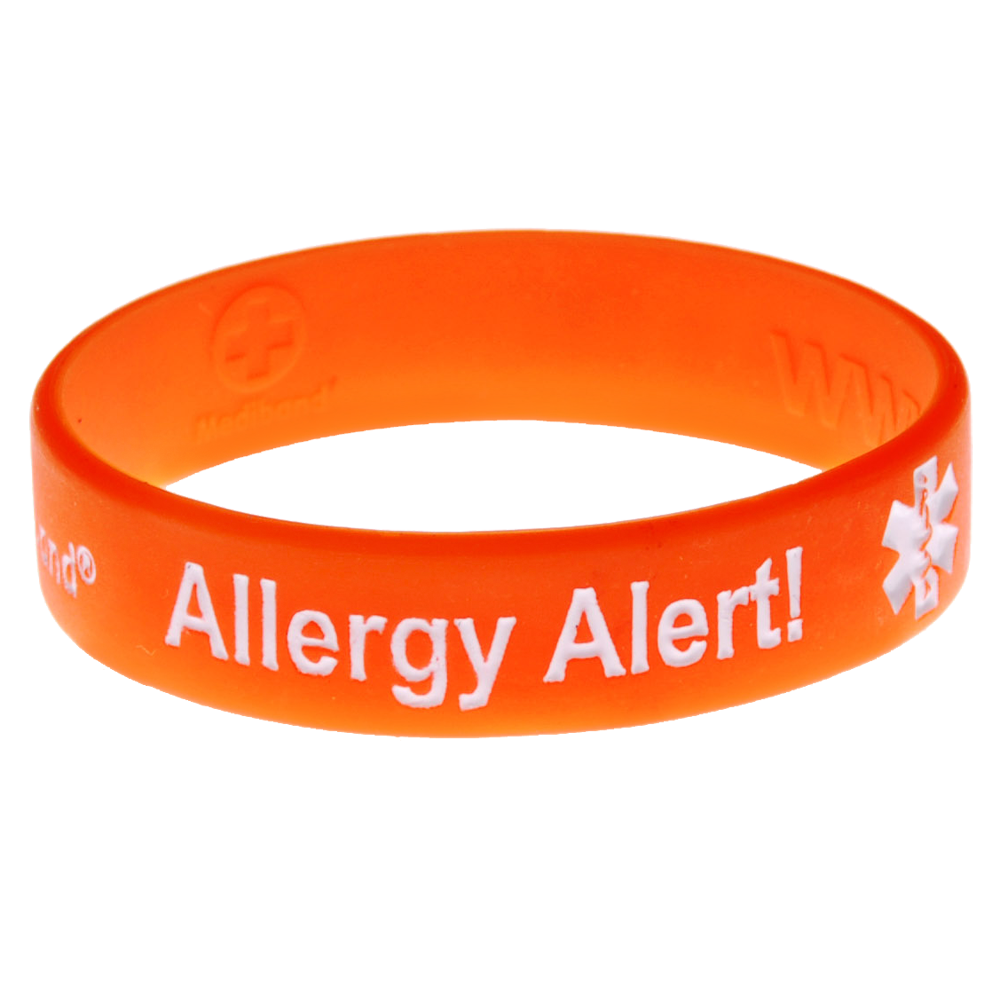
Where space allows, add “EpiPen Carrier” if you are at risk of anaphylaxis, an emergency contact name and number (especially for children), and any relevant secondary condition such as asthma. Standard Mediband bracelets display allergy text on one or both sides of the silicone band. Reversible designs allow two conditions or additional detail to be shown, giving emergency responders everything they need in a single glance.
Frequently Asked Questions
Do allergy alert bracelets actually work in emergencies?
Yes. Emergency responders are trained to check the wrist for a medical alert bracelet within the first 30 seconds of patient assessment. In anaphylaxis cases, the bracelet identifies the allergen and signals whether an adrenaline device should be used — enabling faster, more accurate treatment when the patient cannot communicate.
Should I wear an allergy bracelet if I already carry an EpiPen?
Yes — the two work together. If you collapse or lose consciousness, bystanders and paramedics need to know about your allergy and your EpiPen before they can help you. An allergy alert bracelet communicates this instantly, without relying on anyone searching your bag or pockets under pressure.
Can children wear allergy alert bracelets?
Yes. Mediband silicone bracelets come in children’s sizes and are waterproof, latex-free, and safe for everyday wear including sport and swimming. They are strongly recommended for children with food allergies, anaphylaxis risk, or drug allergies, so teachers, coaches, and carers can respond correctly in an emergency.
What is the difference between a food allergy bracelet and a penicillin allergy bracelet?
The text differs, but the purpose is the same: to stop a clinician or responder administering a substance the patient cannot tolerate. A food allergy bracelet warns of dietary triggers such as peanuts or tree nuts. A penicillin allergy bracelet is especially important in hospital, surgical, and dental settings where antibiotics are routinely prescribed without a full patient history.
What should I write on an allergy medical ID bracelet?
Write your specific allergen (e.g. “Peanut Allergy”, “Penicillin Allergy”), whether you carry an EpiPen if relevant, and an emergency contact number for children. Be specific and keep the text concise — emergency responders need to read it fast. For multiple allergies, pair your bracelet with a Mediband wallet card for the full detail.
Shop Allergy Medical Alert Bracelets
Don’t wait for an emergency to plan for one. Browse Mediband’s full range of allergy alert bracelets — designed for adults, children, and every specific allergy type.
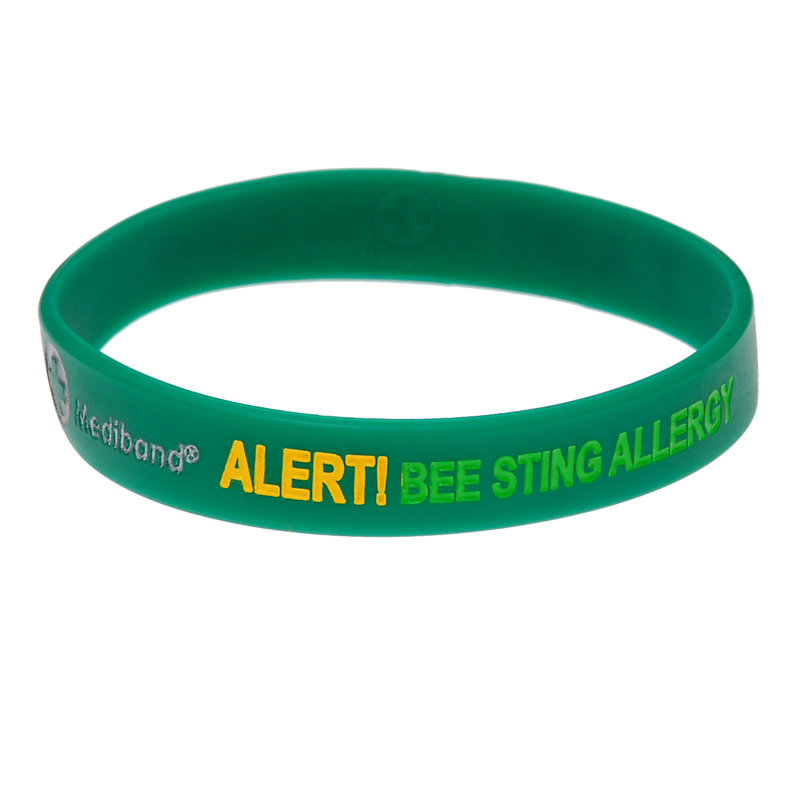
Also Available: Bee Sting Allergy Bracelet
For insect venom allergy and anaphylaxis risk — essential for outdoor activities.

Share on Facebook

Share on X

Share on Pinterest
Comment(s)
Recent Posts
The Risk Of Not Wearing An Allergy Medical Alert Bracelet
March 23, 2026