
Medical Alert Bracelets: How They Keep You and Loved Ones Safe

Why a Medical Alert Bracelet Matters for Every Family
Medical emergencies don't pick a convenient time. Heart attacks, severe allergic reactions, seizures, diabetic emergencies, and falls happen on ordinary mornings — at work, on the school run, in the supermarket, on holiday. In those first critical minutes, the right information often decides whether a person gets the right treatment or the wrong one.
That's the simple, life-saving role of a medical alert bracelet. It speaks for you when you can't speak for yourself — and reaches first responders, doctors, and bystanders who otherwise wouldn't know what to do. According to a survey of paramedics, more than 95% check for a medical ID on an unconscious patient as part of their assessment.
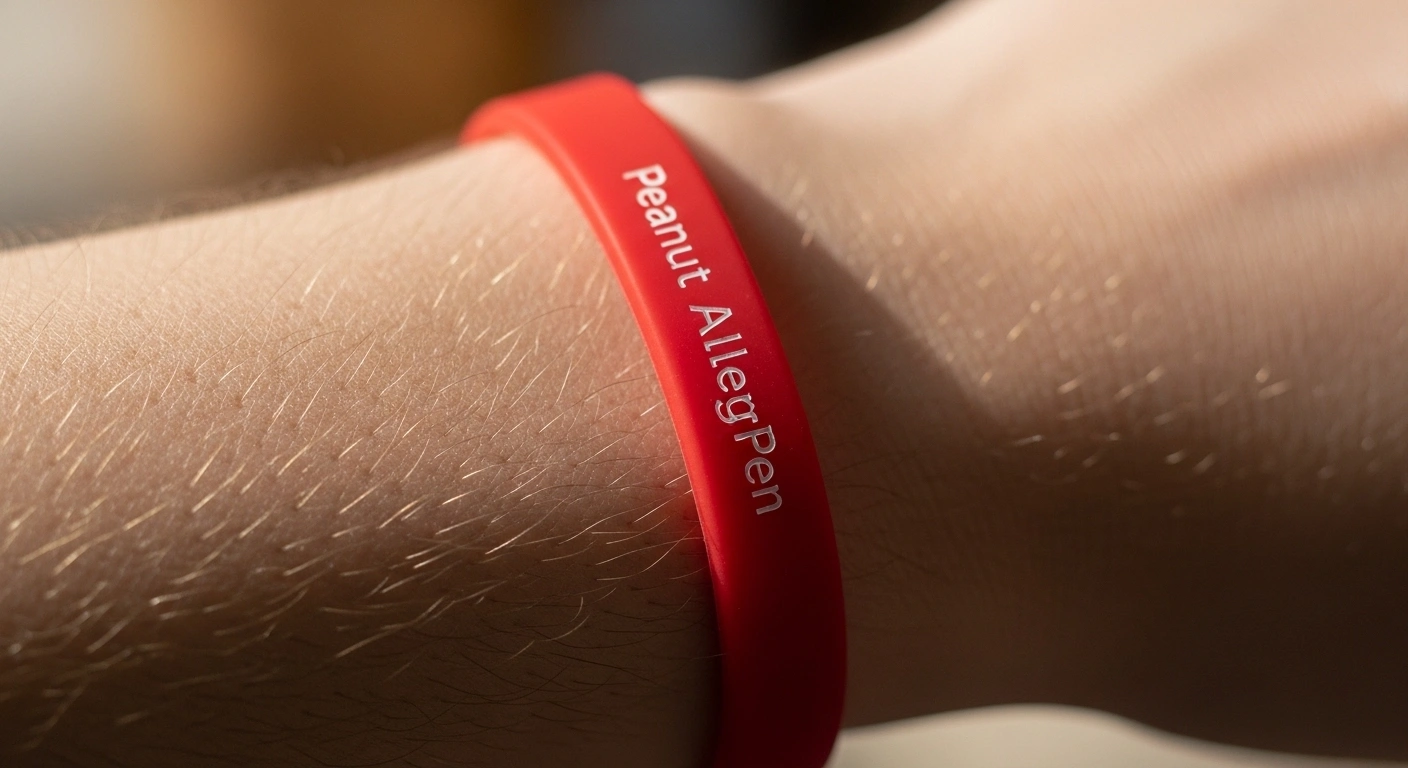
Who Should Wear a Medical Alert Bracelet?
Most people think medical alert bracelets are only for the very ill or the very elderly. They're not. Anyone whose treatment, diagnosis, or care could be affected by an emergency belongs in this list:
- People with chronic conditions — diabetes, epilepsy, asthma, heart disease, autoimmune disorders, kidney disease.
- Anyone with severe allergies — peanuts, shellfish, bee stings, penicillin, latex, contrast dye.
- People on critical medications — blood thinners (warfarin, Xarelto, Eliquis), insulin, immunosuppressants, beta-blockers.
- Older adults at risk of falls or memory loss — dementia, Alzheimer's, Parkinson's, recent stroke.
- Children with allergies, asthma, epilepsy, autism, or rare conditions.
- Athletes and outdoor enthusiasts — anyone whose sport puts them out of regular reach of family or carers.
What If My Condition Feels "Not Serious Enough"?
If a hospital would want to know about it before treatment, it's serious enough. A latent allergy, a history of complex surgery, a pacemaker, or a single critical medication can all change clinical decisions in an emergency.
Shop Medical Alert Bracelets
Trusted bracelets, IDs, and wallet cards that keep you and the people you love safe.
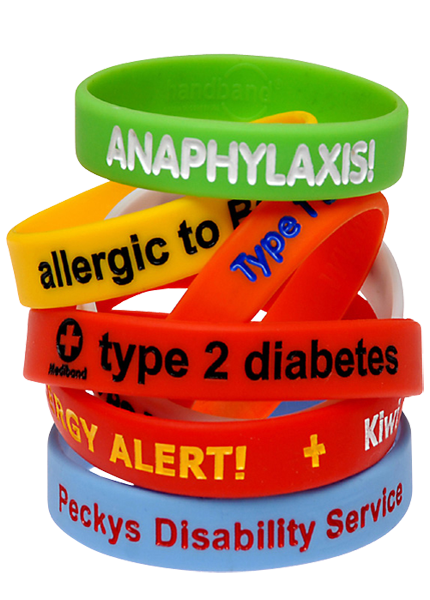
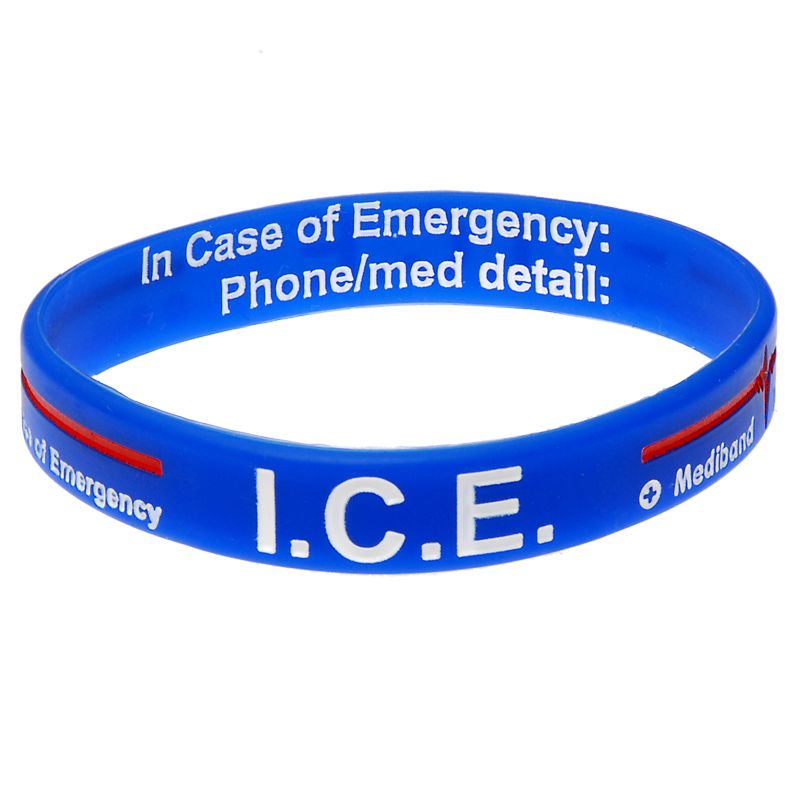
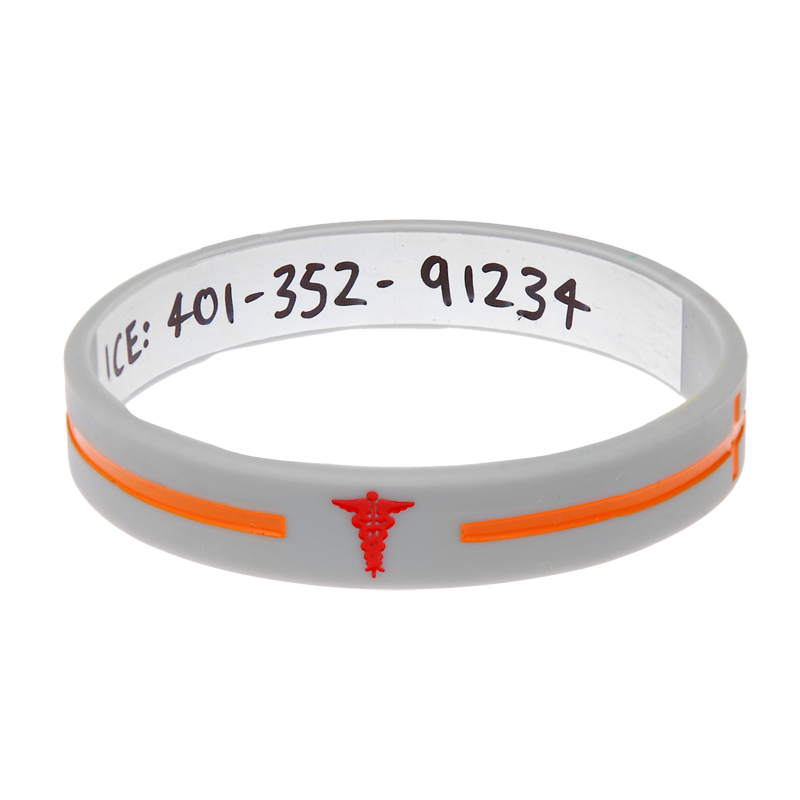
What Information Goes on a Medical Alert Bracelet
Less is more. First responders need to read the band in seconds, not minutes. The five priority items, in order:
- Primary medical condition — the diagnosis that most affects treatment.
- Critical medication or allergy — what NOT to give, or what to keep giving.
- Emergency contact phone number — pick someone who's almost always reachable.
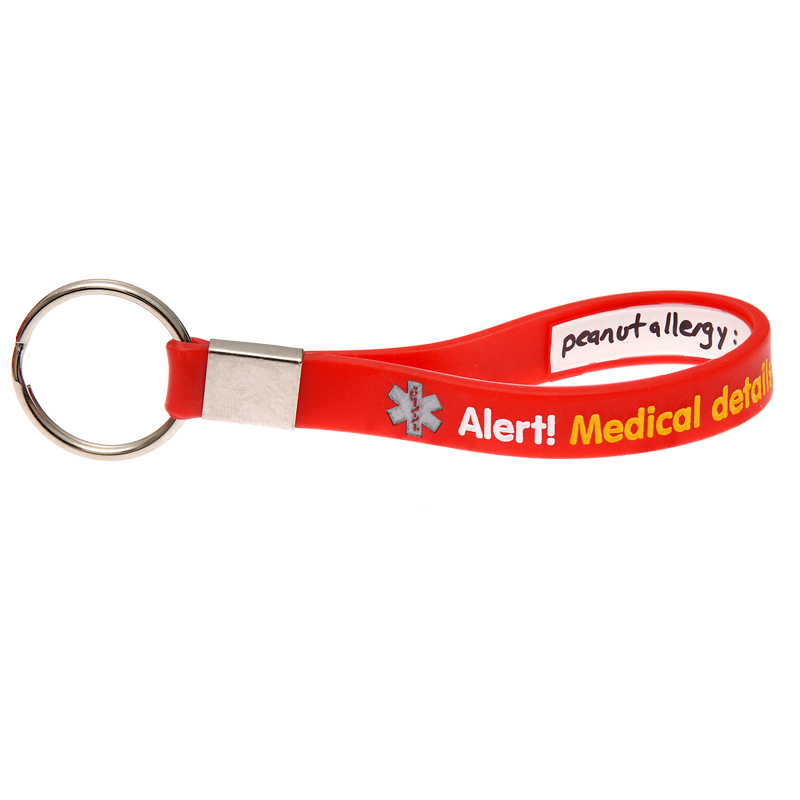
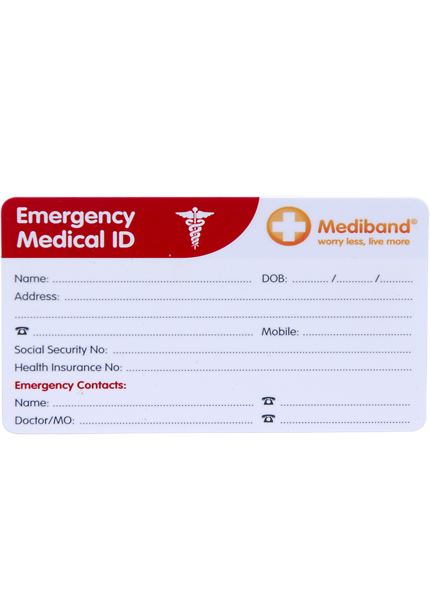
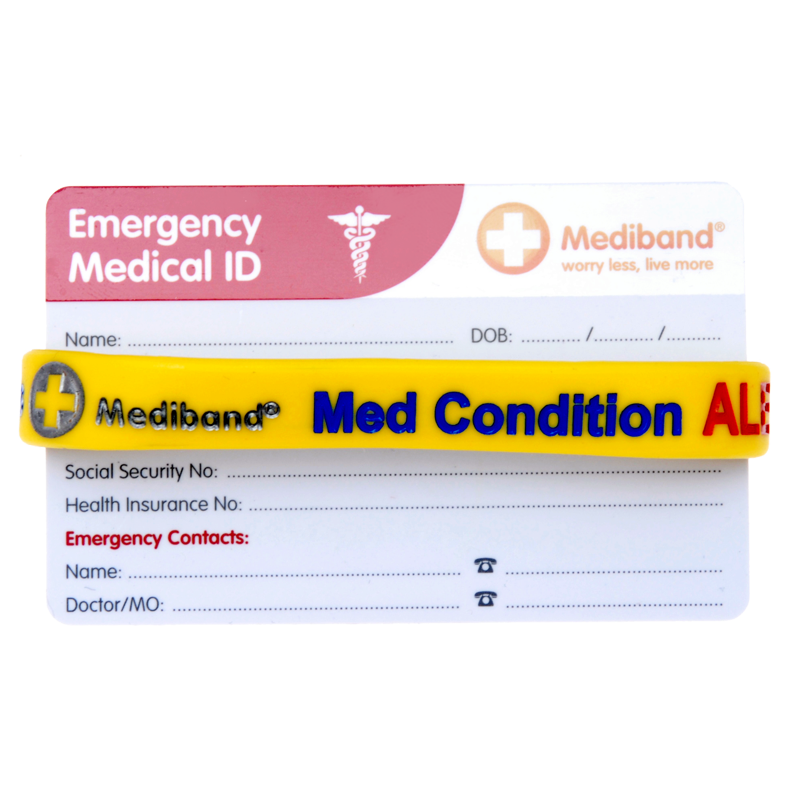
- "See wallet card" — if there's a longer history they can pull from your bag.
- Implant/device info — pacemaker, stent, port, insulin pump, if relevant.
Think like a first responder reading at arm's length: keep print large, keep words plain, and skip the medical jargon when there's a clearer everyday word.
Choosing the Right Style for Daily Wear
The best medical alert bracelet is the one your loved one will actually keep on. Not all designs work for all people — comfort, looks, and habits matter as much as engraving.
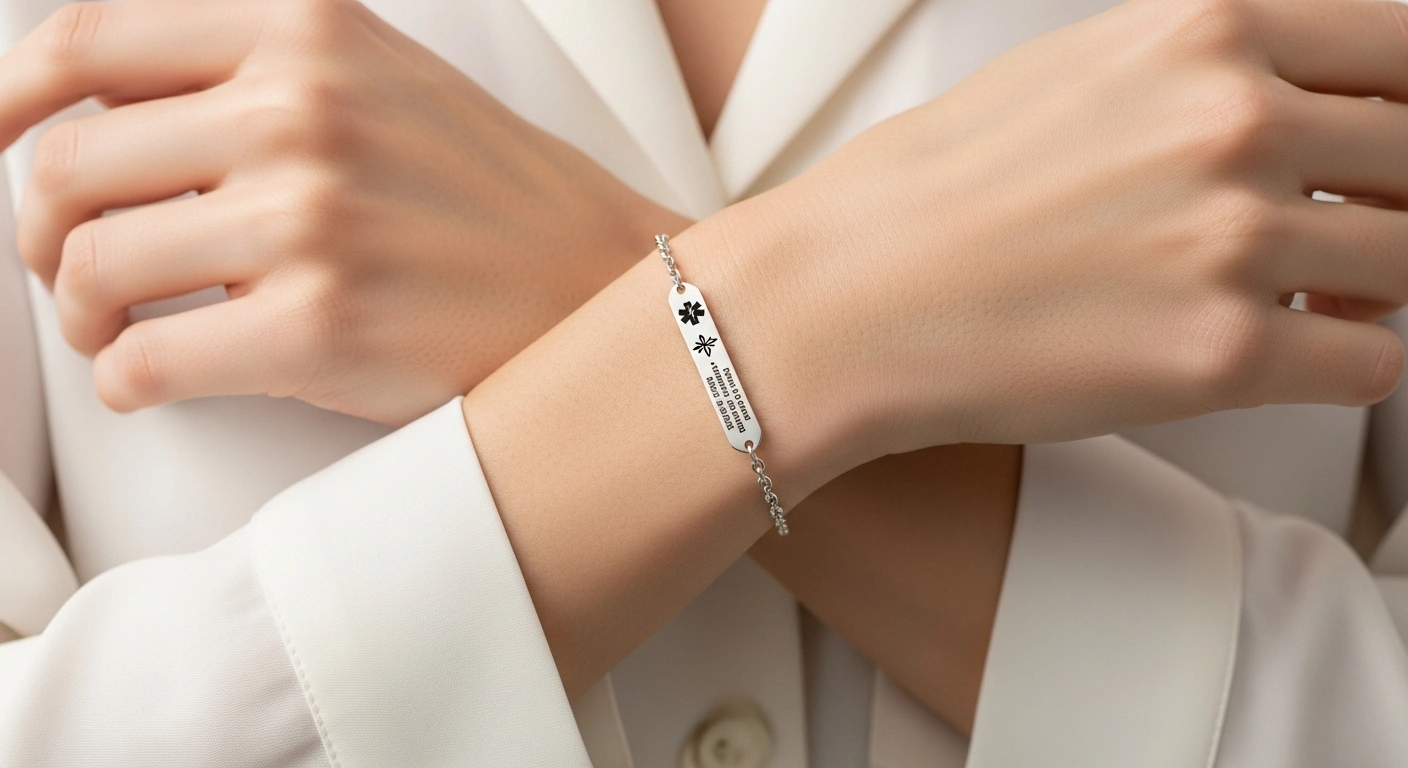
Stainless Steel and Engraved Metal
Polished, professional, durable. Ideal for adults who want a permanent ID that doesn't look "medical." Engraving is sharp and stays legible for years. Best for stable medical histories that don't change often.
Silicone Write-On
Soft, flexible, waterproof, easy to update. Best for kids, athletes, and people whose medications change frequently. Cost-friendly, replaceable, and the most colour-coded option for visibility.
Reversible / Designer Bracelets
For people who want a stylish look on one side and an alert on the other. The wearer can flip it discreetly when not in a clinical setting. Great for teens, working adults, and anyone who feels self-conscious about wearing an ID.
Key Chains and Wallet Cards
For people who genuinely won't wear jewellery. A clipped key chain stays with everyday items; a wallet card travels in a purse alongside ID and credit cards. Less ideal in true emergencies (a wrist is checked first), but better than nothing.
How to Help an Older Parent or Spouse Wear One
Convincing an older relative to wear a medical alert isn't always easy — they may feel it labels them as "old" or "sick." A few tactics that work:
- Frame it as protection, not labelling — "this lets the ambulance team look after you the way I would."
- Pick a design they'd choose anyway — silver, leather, designer, or rose gold rather than clinical.
- Pair it with another routine — wear it like a watch; put it on at the same time every morning.
- Add a wallet card too — for people who insist they "won't wear jewellery."
- Tell a real story — share a paramedic's account or a news clipping where an ID changed an outcome.
What to Look for When Buying
According to HealthDirect's first-aid guidance, a medical alert ID should be visible, durable, and accurate to the wearer's current condition. Beyond that, look for:
- A reputable brand with replaceable parts and a warranty
- Engraving (or write-on labels) tested to last in pool water and sunlight
- Emergency-services-recognised symbols (the Star of Life, snake-and-staff)
- Sizing that won't slip off a thin wrist or pinch a swollen one
- Updateable info — life changes, and so should the band
Frequently Asked Questions
Do I really need a medical alert bracelet if I'm generally healthy?
If you take any prescription medication, have any known allergy, or have ever had surgery requiring an implant, the answer is yes. Bracelets are about emergencies — and emergencies happen to healthy people too. A simple "Penicillin Allergy" or "Pacemaker" alert can change which drugs a paramedic uses on the spot.
How often should I update the information on my bracelet?
Review every six months and after any major change — a new medication, a new diagnosis, a switched emergency contact. Write-on bands are easy to refresh; engraved bands can be re-engraved or replaced inexpensively. The worst case is an outdated ID telling responders the wrong thing.
Will an emergency room or paramedic actually look at it?
Yes — paramedics are trained to check the wrists, neck, and pockets of an unresponsive patient before treatment. Hospitals often photograph or transcribe the bracelet on arrival. The Star of Life and snake-and-staff symbols are widely recognised among emergency services worldwide.
Can my whole family wear them, or is it more of a one-person thing?
Medical IDs work even better as a family standard. Spouses, kids, parents, and grandparents all benefit from a clear, visible alert in an emergency. Many families pick matching styles or colours so every member knows where the bracelets live and why they matter.
What if my loved one refuses to wear one?
Try a different format: a key chain, a watch-band insert, a wallet card, or a tag clipped to a backpack or handbag. Lead by example by wearing one yourself. And keep the conversation gentle — a refusal often softens after a near-miss or a friend's emergency.
May 04, 2026
2

Share on Facebook

Share on X

Share on Pinterest
Recent Posts

Were you after a particular band?
If you were after particular band, have a look at our website www.mediband.com and it will provide you with the price of each specific band.
If there wasn't the specific bands you are after, you can also customise your own by visiting the following link: https://www.mediband.com/au/custom-designs/
Let me know if you have any other questions.
Regards,
Christy