How To Find A Medical Alert Bracelet Women's Styles That Last
March 20, 2026
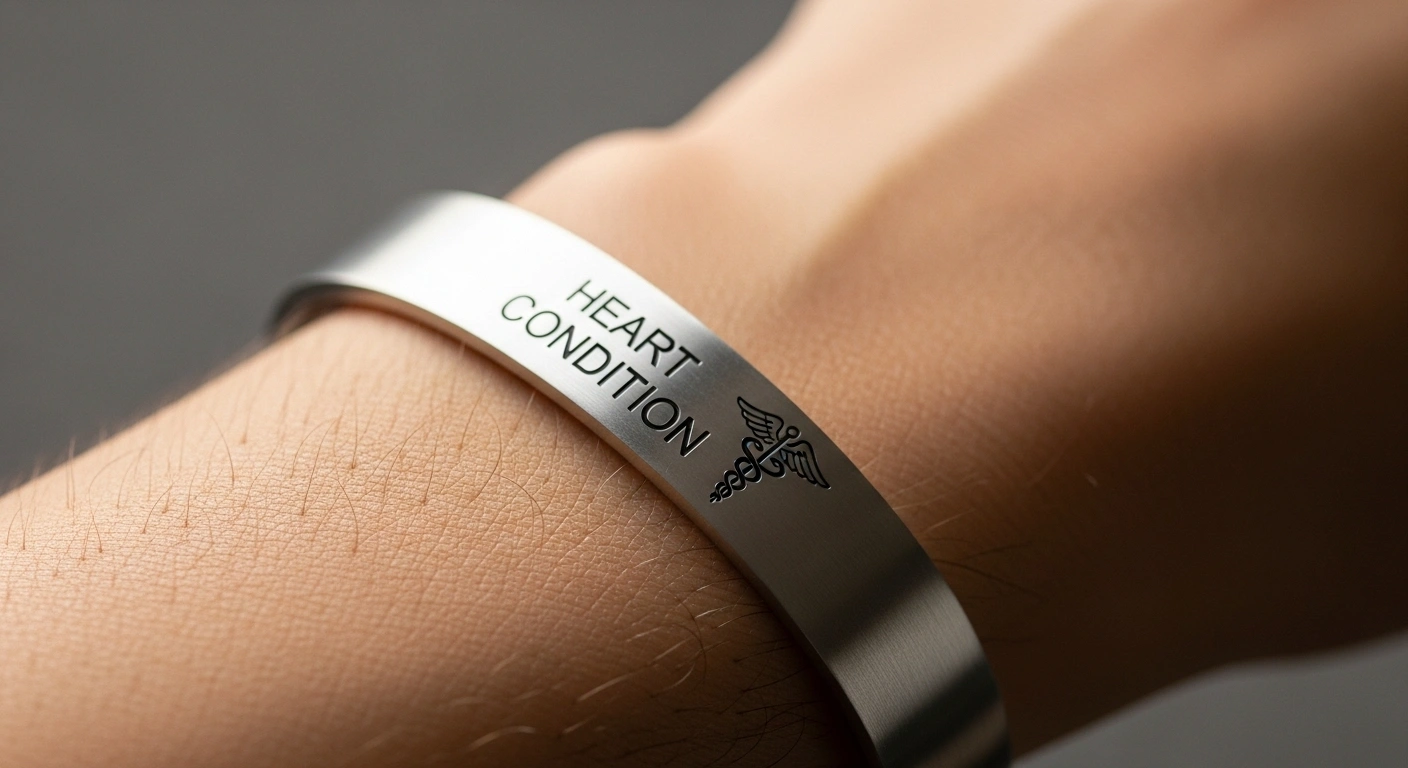
The best medical alert bracelet women's styles are those made from surgical-grade stainless steel or titanium, feature deep laser engraving that won't fade, and are comfortable enough to wear every single day without irritation. Look for a secure clasp, a legible font size on the engraving plate, and a design that won't come off - because a bracelet that stays on the wrist is the only one that can actually help in an emergency.
Most people spend a lot of time choosing the right condition to engrave, the right medical professional to consult, and the right emergency contact to list. But all of that careful planning falls apart the moment the bracelet gets tossed in a drawer because it is uncomfortable, scratched up, or the engraving has worn down to almost nothing.
Choosing a medical alert bracelet in a women's style is not just about picking something that looks good on a wrist. It is a decision that directly affects emergency readiness. First responders are trained to check for medical ID jewelry, and a bracelet that is worn consistently and clearly readable can genuinely change the outcome of a medical event.
What "That Last" Really Means For Daily Wear
When it comes to medical alert bracelets for women, the phrase "styles that last" means something very specific. It is not about whether the bracelet stays in fashion - it is about whether the bracelet continues to do its job, day after day, month after month, in real-life conditions.
Continuous Use Without Damage
A bracelet worn every day takes a beating. It goes through handwashing, sweat, sunscreen, soap, swimming, and contact with hard surfaces. Materials matter enormously here. Surgical-grade stainless steel (specifically 316L) and titanium are the two most reliable choices because they resist corrosion, hold their shape under pressure, and do not cause skin reactions in most people.
Silicone bands are also popular because they are soft and flexible, but cheaper silicone can crack or discolor over time, especially with frequent washing. If going the silicone route, look for medical-grade silicone with a reinforced strap. Gold-plated options tend to look appealing, but plating wears away with daily use, exposing base metals that can cause reactions and making the bracelet look worn within months.
Long-Term Readability Of Medical Information
The information on the bracelet has to be readable in a stressful, low-light emergency setting. This is non-negotiable. Deep laser engraving into solid metal is the gold standard because it cannot be rubbed off, washed away, or worn down with time. Printed text and surface-etched engravings look fine in the store but degrade quickly.
Some people opt for medical ID bracelets for women that include a QR code feature, allowing a first responder to access a full medical record online. According to American Medical ID, information is laser-engraved in their USA-based facility and designed to remain clearly readable. That said, QR codes should always supplement - never replace - physical engraving, since many emergencies do not allow time to scan a device.
Comfort That Encourages Consistent Use
A bracelet that does not get worn offers zero protection. Comfort is directly tied to compliance, and that matters more than any other feature. Weight, width, clasp type, and fit all influence whether a bracelet stays on or ends up on the nightstand.
This point is backed by real data. A 2026 study published in Discover Public Health examined wearable device adoption among 352 older adults in Northern Portugal. While 74.4% of participants expressed interest in wearing health monitoring devices, discomfort was the most cited barrier at 62.7%, followed by device size at 32.7% and heaviness at 31.1%. The message for anyone choosing a medical alert bracelet, women's style, is simple: comfort drives consistent wear, and consistent wear is what saves lives.
Balancing Style With Medical Function
There is a real tension when shopping for women's medic alert bracelets - the desire for something that looks attractive versus the need for something that works when it counts. The good news is that modern medical ID design has come a long way, and there is genuine middle ground.
Jewelry-Like Designs That Encourage Daily Wear
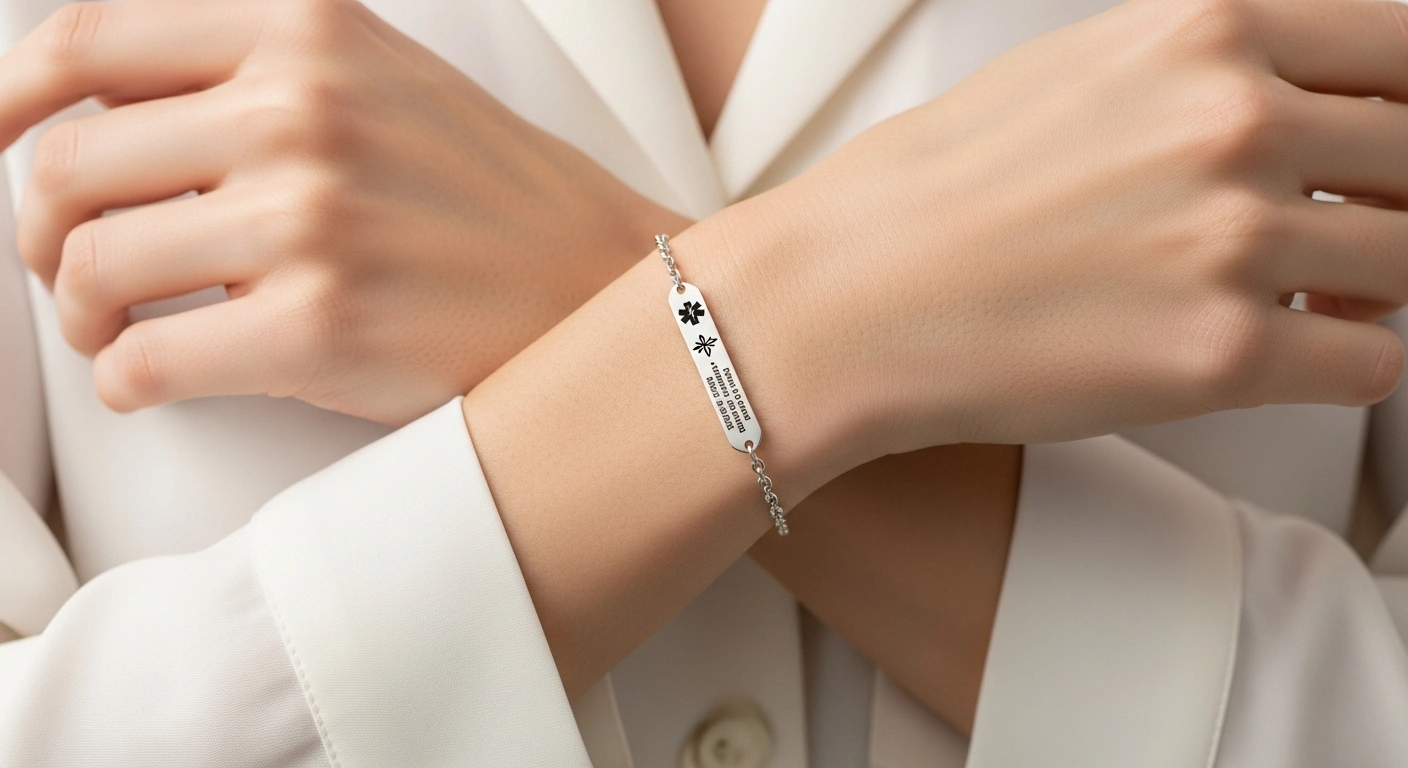
Several respected medical ID brands now produce bracelets that genuinely look like fine jewelry. Sterling silver link chains, beaded styles, and slim rope bracelets with subtle engraved plates have replaced the chunky, institutional look that put many women off wearing medical IDs for years.
This is not just a cosmetic upgrade - it is a safety improvement. When a bracelet looks like something a person would naturally wear every day, wear rates increase. If women's medic alert bracelets resemble fashion jewelry, the decision to put them on each morning becomes automatic rather than a reluctant afterthought.
Visibility Of Medical Information
The medical symbol - a staff with a snake, known as the caduceus - should appear clearly on the front-facing side of the bracelet so that emergency personnel recognize it as a medical ID at a glance. As Lauren's Hope Medical IDs note, emergency responders use a medical alert bracelet to quickly determine a patient's condition, and that recognition depends entirely on the symbol being visible and the engraving being readable without delay.
The engraving itself should appear on the inside face or back of the plate, where it is protected from scratches, while still being easily readable when the bracelet is turned over.
Choosing Between Minimalist And Statement Styles
Minimalist styles - thin bands, slim plates, simple clasps - tend to be more comfortable for all-day wear, are less likely to snag on clothing, and suit professional settings well. Statement styles with beading, wider cuffs, or decorative chains may be preferable for casual or social settings and can feel more like a personal accessory.
The right choice depends entirely on lifestyle. Someone who works in healthcare, food service, or another hands-on job may prefer something streamlined and snag-free. Someone who primarily needs the bracelet for social outings or travel might prioritize something that feels stylish and intentional.
Engraving Quality And Information Placement
Engraving is the core function of any medical alert bracelet for women, and it deserves far more attention than most buyers give it at the point of purchase.
Deep Engraving Vs Printed Text
Deep laser engraving cuts into the metal surface, creating grooves that hold their definition for years, even with constant wear. Printed text and surface-level etching, on the other hand, can fade within months. When comparing options, ask the manufacturer about the engraving method. If the answer is not laser engraving into solid metal, look elsewhere.
Some brands offer enamel fill in their engravings - a color applied inside the cut lines to improve contrast and readability. This is a good feature as long as quality paint or resin is used. Cheaper fill materials can chip or fade, which can obscure what was engraved.
What Information Should Be Prioritized
Emergency responders are primarily looking for three categories of information:
- Primary medical condition (e.g., Type 1 Diabetes, Epilepsy, Anaphylaxis to Penicillin)
- Current medications that could affect emergency treatment (e.g., blood thinners, insulin)
- Emergency contact number and any critical treatment instruction (e.g., No NSAIDs, Carry EpiPen)
This guidance aligns with what Road ID's medical bracelet guide recommends: including name, medical conditions, medications, and emergency contacts - prioritizing whatever a medical professional would need to know urgently. Common abbreviations are widely recognized in the medical community - for example, T1D for Type 1 Diabetes, NKDA for No Known Drug Allergies, and HTN for hypertension.
Font Size And Readability
Font size matters just as much as engraving depth. A plate engraved with too many small characters becomes difficult to read under pressure. A good rule of thumb is to prioritize essential information and allow for a font size that is clearly legible without magnification. When customizing an order, preview the text layout before confirming if that option is available.
Common Mistakes When Choosing Medical Alert Bracelets For Women
Even well-intentioned buyers make avoidable errors when shopping for a medical ID. Understanding these mistakes before purchasing saves time, money, and - more importantly - helps avoid ending up with a bracelet that fails when it is needed most.
Prioritizing Style Over Function
This is the most common mistake. Many buyers fall in love with a design before checking the engraving capacity, material quality, or readability of the medical symbol. A beautiful bracelet that has a tiny engraving plate, uses printed text, or hides the medical symbol in a decorative design is essentially useless in an emergency.
A well-chosen medical alert bracelet, women's style, should satisfy both requirements - it should look good enough to wear daily and function clearly enough to communicate critical information to emergency responders.
Choosing Low-Quality Materials
The market is flooded with cheap options. A caregiver-tested review by The Senior List noted directly that overly advanced technology or uncomfortable design led users to abandon wearing their devices entirely - underscoring the need to select something built to last and easy to wear. Low-quality metals corrode, cause skin reactions, and degrade quickly. The following materials are worth investing in for durable medical alert bracelets for women:
- 316L Surgical-grade stainless steel - highly durable, corrosion-resistant, and affordable for daily wear
- Titanium - lightweight, extremely strong, hypoallergenic, and very long-lasting
- Sterling silver or solid gold - premium options that hold up well and double as fine jewelry
Avoid gold-plated, brass, or nickel-containing alloys for all-day wear. These materials degrade, trigger skin reactions, and do not justify even their lower price.
Ignoring Fit And Adjustability
A bracelet that is too loose can slide off during an emergency, and a bracelet that is too tight causes discomfort that discourages wear. Most women's medic alert bracelets come in a range of sizes, and many include adjustable links or multiple clasp positions.
When ordering online, measure the wrist and add roughly 0.5 to 1 inch for a comfortable fit. For those with fluctuating wrist size due to swelling from conditions like lymphedema or arthritis, an adjustable style with a lobster clasp or a stretchy silicone band offers the most consistent fit.
The Bottom Line
A medical alert bracelet for women has to earn its place on the wrist every single day. That means getting the materials right, ensuring the engraving is deep and clear, choosing a size and style that suits a real daily routine, and understanding exactly what information belongs on the plate.
The best medical alert bracelets for women are not the most expensive ones or the most ornate ones - they are the ones that get worn consistently, communicate the right information clearly, and hold up through years of real-life use. When those three things come together, a bracelet stops being an accessory and becomes something genuinely life-saving.

Share on Facebook

Share on X

Share on Pinterest
Comment(s)
Recent Posts
The Risk Of Not Wearing An Allergy Medical Alert Bracelet
March 23, 2026