
When Seconds Count: A Heart Condition Medical Alert Bracelet Helps
March 20, 2026
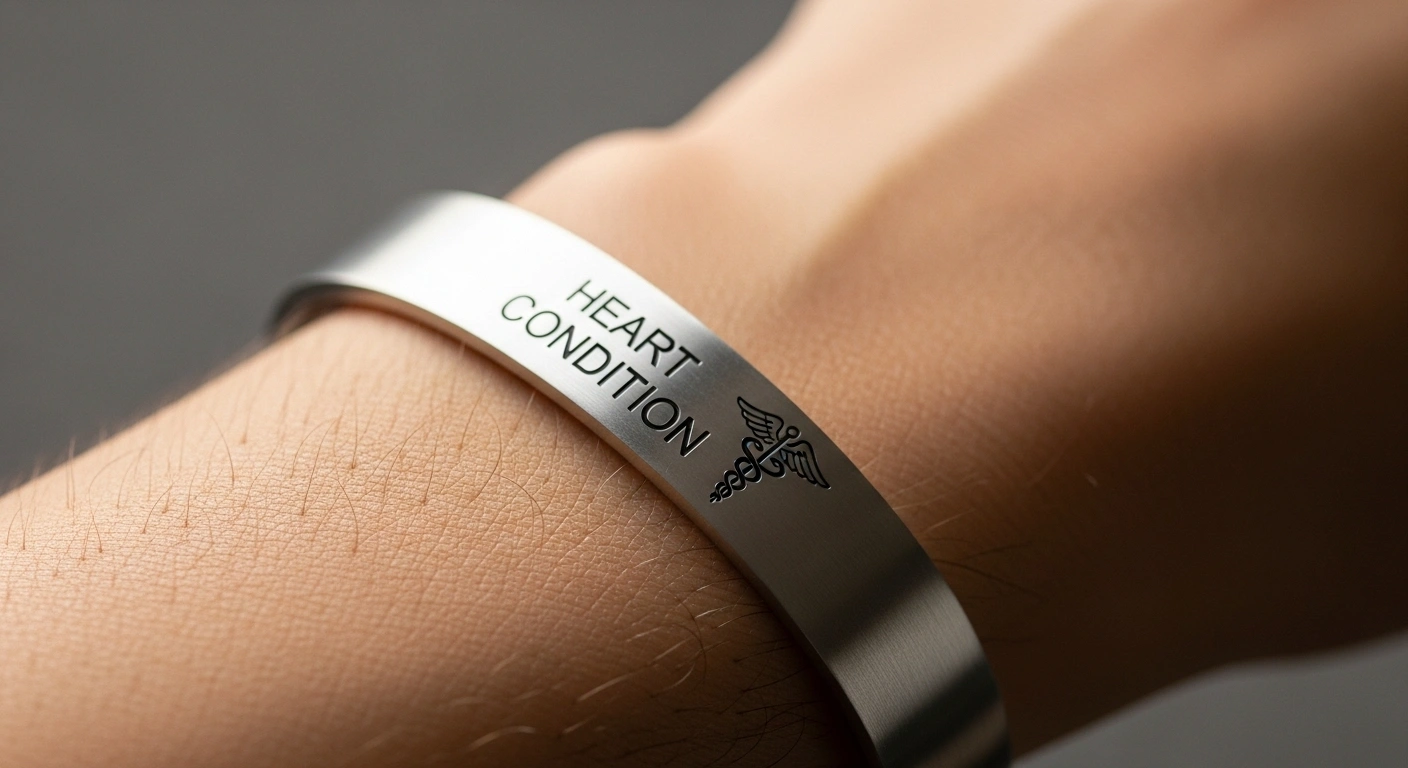
A heart condition medical alert bracelet gives first responders the critical information they need at the exact moment it matters most - when a patient can no longer speak for themselves. By displaying key details like diagnosis, medications, implanted devices, and drug sensitivities directly on the wrist, these bracelets help emergency teams act faster, avoid dangerous mistakes, and deliver the right treatment without delay. For anyone living with a serious cardiac condition, wearing one is one of the most practical and potentially life-saving decisions they can make.
Cardiac events do not wait for a convenient moment. They happen in grocery store aisles, during morning walks, at family dinners - and more often than people expect, the person in the middle of one cannot communicate their diagnosis, medications, or implanted devices. That silence can cost precious minutes. In cardiac care, minutes are everything.
This article walks through how a heart condition medical alert bracelet improves emergency response, which cardiac conditions make these bracelets especially important, and what makes one truly effective when the pressure is on.
1) What Happens In The First Minutes Of A Cardiac Emergency
The first few minutes of a cardiac emergency are both the most chaotic and the most consequential. Paramedics and EMTs arrive on scene with limited context, often dealing with a patient who is unconscious, confused, or physically unable to answer questions. Every second spent gathering basic medical history is a second not spent treating the problem.
The Critical Window For Intervention
Survival rates from out-of-hospital cardiac arrest drop by at least 10% per minute without CPR - making early, informed intervention non-negotiable. A patient on blood thinners requires a completely different approach than someone without anticoagulant therapy. A person with a pacemaker cannot be treated the same way as someone without a cardiac device. These distinctions are the difference between effective treatment and a serious complication.
Why Information Gaps Slow Down Care
When first responders lack a patient's medical history, they default to the most cautious - and often slowest - course of action. Tests get run that could have been skipped. Medications that could help get held back over unknown contraindications. Interventions that are unsafe for that particular patient may be attempted. Missing information in an emergency is a direct threat to patient safety.
Where Medical Alert Bracelets Fit In
A heart condition medical alert bracelet fills that gap directly. It is not a backup plan - it is front-line communication. According to a survey of emergency medical professionals conducted by Lauren's Hope, over 95% of respondents agreed that medical alert jewelry can help improve patient outcomes, and 87% agreed it can speed up treatment. First responders are specifically trained to look at the wrists and neck of unresponsive patients within the first 30 to 60 seconds of arrival.
That training matters. It means the bracelet will be seen. It means the information will be used.
2) Cardiac Conditions Where Identification Changes Treatment
Not every medical condition requires the same level of identification. But for many cardiac conditions, knowing the diagnosis before treatment begins is not just helpful - it is clinically necessary.
Arrhythmias And Irregular Heart Rhythms
Arrhythmias - from atrial fibrillation to ventricular tachycardia to SVT - often come with medications like beta-blockers, antiarrhythmics, or anticoagulants that directly affect what a paramedic can safely give. Medical alert bracelets for heart conditions let responders see this at a glance. Giving the wrong antiarrhythmic to someone already on one can worsen the rhythm event - knowing what a patient takes narrows the treatment decision immediately.
Coronary Artery Disease And Prior Cardiac Events
A patient with a history of heart attacks has a very different risk profile than someone experiencing chest pain for the first time. Medical alert bracelets heart conditions entries can note prior MI, current medications like aspirin or nitroglycerin, and known allergies to contrast dyes or thrombolytics - the kind of front-loaded context that reshapes an entire treatment plan in the field.
Pacemakers, Stents, And Cardiac Devices
A pacemaker or ICD affects how a patient can be defibrillated, scanned, or treated with electrical interventions. The American Heart Association specifically recommends that device patients wear a medical ID so emergency personnel know before ordering diagnostics that could interfere. A coronary stent is equally important to flag - it signals the team to consider re-stenosis and prepare for fast-tracked intervention.
Patients With Multiple Conditions
Many cardiac patients live with more than one condition at once - atrial fibrillation alongside diabetes, or a prior stroke alongside heart failure. A medical alert bracelet for multiple conditions handles this by listing diagnoses, medications, and allergies in order of priority. For patients with particularly complex histories, QR code IDs link directly to a full digital health profile, giving responders far more detail than any engraved plate can hold.
3) How A Heart Condition Medical Alert Bracelet Speeds Emergency Response
Speed in emergencies is not just about how fast the ambulance arrives. It is about how fast the right decisions get made once the team is on scene. A heart condition medical alert bracelet works on multiple layers of that decision chain.
Immediate Recognition By First Responders
First responders check wrists and neck within the first minute - not after stabilization. A clearly visible medical ID immediately tells the team that documented history is available. It is faster than calling a hospital, faster than unlocking a phone, and far more reliable than hoping a bystander knows the patient's background. No signal, no password - always readable, always there.
Faster Decision-Making Under Pressure
Paramedics working a cardiac scene are processing a lot of information simultaneously. Having a bracelet that confirms a patient's diagnosis, lists their primary medications, and flags known allergies removes several decision branches at once. Instead of working from scratch, the team works from a known starting point.
A study published in the National Library of Medicine, as referenced by Alert Me Bands, found that an overwhelming majority of first responders - 99% of those surveyed - were aware of emergency identification programs and acknowledged the importance of patients carrying some form of medical identification. Regular checking of these bracelets was found to significantly improve decision-making and awareness of underlying conditions.
Preventing Dangerous Assumptions
Without a medical ID, first responders fill information gaps with assumptions - and in cardiac care, a wrong assumption can mean the wrong medication, the wrong procedure, or a dangerous delay. Medical condition alert bracelets actively prevent this: a confused patient does not get mistaken for intoxicated, a device patient does not receive an incompatible intervention, and a patient with a drug allergy does not receive the very medication that could harm them.
4) Visibility And Recognition In Emergency Protocols
Having the right information on a bracelet is only part of the equation. That bracelet also needs to be seen, read, and understood under real-world emergency conditions - which are rarely calm or well-lit.
Why Wrist Placement Is Critical
The wrist is the first place trained responders look - accessible, rarely covered, visible even when a patient is lying down. Necklaces can slip under clothing during resuscitation. Wallets get left behind. Phones need unlocking. The wrist is the most consistently accessible location for medical identification, which is exactly why EMTs and paramedics check it first.
Standard Medical Symbols And Formatting
The Rod of Asclepius signals to responders that the bracelet is not decorative - it prompts closer examination. Without it, a stylish bracelet can be completely missed. The American College of Emergency Physicians recommends listing information in order of priority: diagnosis first, medications second, and allergies third. A well-formatted medical alert bracelet for heart conditions entry puts the cardiac diagnosis front and center.
Ensuring Information Is Readable Under Stress
Readability is not just about font size. It is about contrast, engraving depth, and how much information is packed into a small space. A bracelet covered in tiny text across multiple lines is harder to process in a high-stress environment than one with three clear, well-spaced lines of key information.
What makes a medical alert bracelet readable in an emergency:
- Deep, high-contrast engraving on a light-colored plate - avoid polished silver on silver backgrounds
- Standard medical abbreviations (e.g., AF for atrial fibrillation, HTN for hypertension) that trained responders will immediately recognize
- A maximum of three to five lines, listed in clinical priority order - diagnosis first, medications second, allergies third
- Clean, uncluttered design that is clearly different from standard fashion jewelry at a glance
- A recognizable medical emblem that signals the bracelet's purpose before a word is read
What Research Tells Us About Medical ID Effectiveness
A study published in the National Library of Medicine found that 99% of first responders were aware of emergency identification programs and strongly supported their use, recognizing that visible patient identification directly shapes clinical decisions in the field. A 2020 systematic review in the journal Resuscitation reinforced this, noting that in out-of-hospital cardiac arrest, any factor slowing initial assessment directly reduces survival odds.
A survey by Lauren's Hope of over 700 emergency medical professionals found that 87% agreed medical alert jewelry speeds up treatment, and over 80% confirmed custom-engraved bracelets are the most effective format. The ID needs to look unmistakably medical - not decorative - to get noticed in those first critical moments.
What To Include On A Cardiac Medical Alert Bracelet
For heart conditions, the most important details to include are:
- Primary cardiac diagnosis (e.g., Atrial Fibrillation, CHF, Post-MI, Hypertrophic Cardiomyopathy)
- Implanted devices - pacemaker, ICD, LVAD, or coronary stent
- Critical medications - blood thinners (warfarin, Eliquis), beta-blockers, antiarrhythmics
- Known drug allergies - especially to medications commonly used in cardiac emergencies
- Emergency contact name and phone number - ideally someone with knowledge of the patient's full medical history
For patients managing multiple conditions - such as heart disease alongside diabetes, kidney disease, or a blood disorder - a medical alert bracelet for multiple conditions or a QR-code linked bracelet provides the most complete picture without sacrificing the clarity of the engraved ID.
Who Benefits Most From Wearing A Cardiac Medical Alert Bracelet
A medical condition alert bracelet is especially important for anyone who:
- Has a diagnosed heart condition and lives alone or spends time in public spaces without a companion who knows their history
- Takes anticoagulants, antiarrhythmics, or other cardiac medications that affect emergency treatment decisions
- Has an implanted device such as a pacemaker, ICD, or coronary stent
- Has a known allergy to a medication commonly used in cardiac emergencies
- Has experienced a prior cardiac event, and whose current health status may not be apparent from observation alone
Final Thoughts: A Small Investment With Significant Stakes
In cardiac emergencies, time and clarity determine outcomes. A heart condition medical alert bracelet acts as an immediate, silent communicator - one that works even when the patient cannot. It removes the barriers that slow care down: the information gaps, the dangerous assumptions, the hesitation before administering a medication or ordering a scan.
Whether managing one diagnosis or relying on a medical alert bracelet for multiple conditions, the principle is the same: clear, wrist-worn medical identification is one of the simplest tools available - and in the right moment, one of the most powerful.

Share on Facebook

Share on X

Share on Pinterest
Comment(s)
Recent Posts

The Risk Of Not Wearing An Allergy Medical Alert Bracelet
March 23, 2026