

Autism Spectrum Disorder (ASD) now affects roughly 1 in 40 Australian children — a prevalence rate that has climbed steadily over the past decade as diagnostic awareness has improved. For parents, a diagnosis can feel like the ground shifts. But thousands of families before you have walked this road, and the picture for autistic kids today is dramatically better than it was even 10 years ago: earlier diagnoses, stronger therapies, better school accommodations, and tools (like the medical alert bracelet) that keep kids safer every day.
This 2026 parent guide pulls together what current research and Australian autism organisations agree on — what autism is, how to spot it early, what therapies help, and the simple safety step every autism family should take.
What Is Autism Spectrum Disorder?
ASD is a lifelong neurodevelopmental condition — meaning it reflects a difference in how the brain develops, not an illness that can be "cured." The Mayo Clinic describes it as disruptions in brain function that affect how a person:
- Communicates (both verbally and non-verbally)
- Interacts socially with others
- Experiences sensory information (sights, sounds, textures, smells)
- Responds to change and routine
ASD isn't one thing — it's a spectrum. Some children use language fluently and excel academically; others communicate with pictures, gestures or assistive tech. Some can live fully independently; others need daily support. Every autistic child has a unique combination of strengths and challenges.

What Causes Autism?
Scientists don't know the full answer yet, but the current evidence points to a combination of genetic and environmental factors. Autism tends to run in families — siblings of autistic children are far more likely to also be autistic than the general population. Specific gene variants have been identified, and research into prenatal and early-life factors continues.
What we know for certain is what does not cause autism: vaccines do not cause autism. Parenting style does not cause autism. This has been studied exhaustively, and the answer is consistent.
Recommended for you
Products related to this article
Hand-picked to go with what you just read.
The Autism Spectrum — What the Terminology Means
Older diagnoses are now grouped under the single umbrella of ASD. Historically, clinicians used labels like:
- Asperger's Syndrome — typically used for people with strong language skills but social communication differences. No longer a separate diagnosis in Australia since 2013 (absorbed into ASD Level 1).
- Pervasive Developmental Disorder — Not Otherwise Specified (PDD-NOS) — a legacy "catch-all" diagnosis.
- Autistic Disorder — historic name for classical autism.
- Childhood Disintegrative Disorder — rare form with regression after typical development.
Today, clinicians describe ASD by severity level (Level 1, 2 or 3) based on how much daily support a person needs. Rett's Syndrome — once grouped with autism — is now classified separately because it's caused by a specific genetic mutation (MECP2).
Early Signs of Autism in Children
Autism signs typically emerge between 12 and 36 months, though some families notice differences earlier. HealthDirect Australia lists key indicators parents and early educators watch for:
- Limited or no response to their own name by 12 months
- Not pointing to show interest by 14 months
- Avoiding or limited eye contact
- Delayed or repetitive (echolalia) speech
- Repetitive body movements — flapping, rocking, spinning
- Strong preference for solitary play
- Avoidance of physical contact, or the opposite — seeking deep pressure
- Difficulty reading others' emotions or facial expressions
- Strong need for routine; distress at minor changes
- Unusual reactions to sensory input — covering ears, squinting at lights, refusing certain textures

Any single sign in isolation means little — plenty of non-autistic children avoid eye contact or line up toys. Diagnosis needs a trained paediatrician, psychologist or multidisciplinary team. But if you're seeing clusters of these signs, ask for a referral. In Australia, families can self-refer to paediatricians and many clinics accept the M-CHAT-R screening questionnaire as a first step.
Co-occurring Conditions Parents Should Know About
Alongside the core autism traits, many autistic children experience one or more co-occurring conditions:
- Attention Deficit Hyperactivity Disorder (ADHD) — diagnosed in up to 40% of autistic kids
- Anxiety disorders — particularly social anxiety and separation anxiety
- Epilepsy and seizure disorders — roughly 20–30% of autistic people
- Sleep disorders — very common; impacts the whole family
- Gastrointestinal issues — constipation, reflux, restricted eating
- Sensory processing differences — can make everyday environments overwhelming
- Challenging behaviours — meltdowns, tantrums, self-injury, aggression — often a response to overload or communication breakdown
These co-occurring conditions are why a single written diagnosis only tells part of the story. They're also a big reason medical alert IDs matter — if your child also has epilepsy or a severe allergy, emergency responders need to know.
Evidence-Based Autism Therapies
Raising Children Network groups autism interventions into a handful of evidence-based families. There is no "one right therapy" — the right blend depends on your child's age, profile and goals.

Applied Behaviour Analysis (ABA)
The most heavily researched autism therapy. ABA breaks skills into small steps and uses positive reinforcement to teach communication, social skills, self-care and school-readiness. Modern "naturalistic" ABA is play-based and neurodiversity-affirming.
Speech and Language Therapy
Builds expressive language, receptive language, social communication, and (for non-verbal kids) alternative communication systems like PECS (picture exchange), Key Word Sign, or AAC apps on a tablet.
Occupational Therapy
Targets sensory regulation, fine motor skills, self-care (dressing, toileting, mealtimes) and executive function — the everyday life skills that support independence.
Sensory Integration Therapy
For children who are hyper- or hypo-sensitive to sensory input. Techniques help the nervous system process sights, sounds, smells and textures with less distress.
Developmental and Social Interventions
Approaches like DIR/Floortime, Relationship Development Intervention (RDI) and parent-mediated therapy focus on building back-and-forth connection, shared attention and emotional reading.
Medications
There is no medication for autism itself. But co-occurring conditions like ADHD, epilepsy, severe anxiety and sleep disorders often respond well to specific medications prescribed by a paediatrician or psychiatrist.
Why a Medical Alert Bracelet Is Essential for Autistic Children
An autistic child in an emergency — a car accident, a seizure, a meltdown at a shopping centre, wandering away during an outing — faces a unique combination of risks:
- Communication gaps. Non-verbal or partially-verbal kids can't explain what's wrong.
- Meltdown vs. behavioural issue. Strangers often misread autism as rudeness, intoxication or aggression.
- Wandering (elopement). Roughly half of autistic kids attempt to wander from safe spaces. This is a top cause of injury and death in the community.
- Sensory trauma. Flashing lights, loud sirens and physical restraint can escalate a crisis fast.
- Co-occurring epilepsy or allergies. Hidden medical risks amplify every emergency.
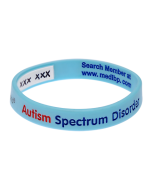
A Mediband autism alert bracelet puts the essential facts on your child's wrist: name, autism diagnosis, any co-occurring conditions (like epilepsy), an emergency contact, and optional notes like "non-verbal" or "may wander." Paramedics, police, teachers and shopping-centre security are all trained to check the wrist and scan for a medical ID — it's often the first thing they look for.
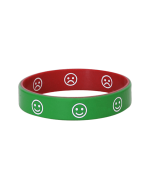
An emotion bracelet is a related tool some autism OTs recommend — it lets your child point to how they're feeling (happy, frustrated, scared, overwhelmed) when words are hard, helping avoid meltdowns before they escalate.
Parent Action Plan — Your First 6 Months After Diagnosis
- Get written copies of the diagnostic report. You'll need it for NDIS, school, therapies and insurers.
- Apply for NDIS (under 7 uses the Early Childhood Early Intervention pathway; 7+ is the standard NDIS process).
- Connect with an Autism Association. Autism Spectrum Australia (Aspect), Amaze Victoria, Autism Queensland and state bodies all offer free family supports and parent programs.
- Start with OT and speech. Book the first appointment within 2–4 weeks of diagnosis; waitlists are long.
- Fit a medical alert bracelet. Cheapest, fastest, highest-leverage safety tool you can buy. Update it when co-occurring diagnoses are added.
- Build a "circle of support" card. Include your paediatrician, therapists, school contact and after-hours support — so grandparents and babysitters know who to call.
A Final Note for New Autism Parents
You are going to hear a lot of conflicting advice — from well-meaning relatives, from the internet, from other parents. Take what helps, leave what doesn't. Lean on the evidence-based Australian organisations, surround yourself with other autism families, and remember that your autistic child is still the same child you loved yesterday. The diagnosis is a map, not a verdict.
Fit a Mediband. Fight for the NDIS plan. Celebrate the small wins. And give yourself the same patience and grace you give your child. Worry less. Live more.
Frequently Asked Questions
What is Autism Spectrum Disorder (ASD)?
ASD is a lifelong neurodevelopmental condition that affects how a person communicates, interacts socially and experiences the world. It presents on a spectrum — from people who need daily support, to people who live independently. ASD is diagnosed in childhood and affects roughly 1 in 40 Australian children.
What are the early signs of autism in a young child?
Signs can appear by 12–18 months and include: limited eye contact, not responding to their name, delayed or repetitive speech, a strong need for routine, avoidance of physical contact, and repetitive body movements (flapping, rocking). No single sign confirms autism — only a paediatrician or registered clinician can diagnose ASD.
Is there a cure for autism?
No. Autism is not an illness — it's a different way the brain develops, and there is no cure. Early intervention and evidence-based therapies (ABA, speech, occupational, sensory integration) help autistic children build skills, reduce challenging behaviours and live happier, fuller lives.
Why does my autistic child need a medical alert bracelet?
Autistic children — especially non-verbal or easily overwhelmed kids — can struggle to communicate in an emergency, with an unfamiliar adult, or during a meltdown. A medical ID bracelet shares the critical facts (name, diagnosis, emergency contact) in seconds, so paramedics, teachers and bystanders can respond with the right approach.
What should we engrave on an autism medical ID?
Keep it short: "Autism — non-verbal", "Autism — may wander", or "Autism — sensory sensitive", plus the child's first name and a parent's emergency number. Add co-occurring conditions like epilepsy or severe allergies if relevant. Write-on silicone Medibands let you update details as your child grows.
Written by
Founder, Mediband
Founder of Mediband; over 20 years providing medical IDs worldwide.
← Previous
5 Ways to Stay Sun Safe This Summer: An Australian Family's Guide (2026)
Next →
How to Prevent Dangerous Allergies in Young Children (Parent's Guide)
Comment(s)