
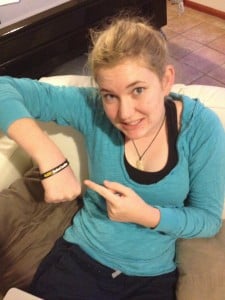
 Hannah Kean from Coffs Harbour was 21 when she ate a microwaved packet of macaroni cheese and woke up minutes later mid-anaphylactic shock. It was the diagnostic moment for a lifetime of mysterious illness — an undiagnosed, life-threatening allergy to iodine, crustaceans and fish that had been waiting since childhood. Over the next seven years Hannah suffered between 30 and 40 anaphylactic episodes. A silicone Mediband medical bracelet that cost her less than $10 has, by her own count, saved her life four times.
This 2026 update revisits Hannah’s story and turns it into a practical guide for any Australian living with a severe allergy, Muckle-Wells Syndrome, type 1 diabetes, epilepsy or any condition where the first 15 seconds of an emergency depend on someone else knowing what to do.
Hannah’s diagnosis — the macaroni-cheese moment
Anaphylactic reactions to processed foods produced on shared manufacturing equipment are not rare. The Australasian Society of Clinical Immunology and Allergy (ASCIA) notes that even trace cross-contamination — below the “may contain” label threshold — can trigger severe reactions in sensitised individuals. For Hannah, the reasonable explanation was that her macaroni cheese had been produced on equipment shared with seafood.
From that moment, three lifelong allergens were locked in:
- Iodine
- Crustaceans (shrimp, prawns, lobster, crab)
- All types of fish
In her early 20s she experienced 30 to 40 anaphylactic episodes — each one a 999-call event. Anaphylactic shock can kill within minutes if untreated. The Australian Bureau of Statistics reports an average of 9 anaphylaxis deaths per year, with food the dominant trigger.
The second diagnosis — Muckle-Wells Syndrome
At the same time as the anaphylaxis diagnosis, Hannah began losing her hearing. Years later her rheumatologist made the second life-changing diagnosis: Muckle-Wells Syndrome (MWS), a rare hereditary auto-inflammatory disease in the cryopyrin-associated periodic syndromes (CAPS) family. By 2026 Hannah is 99.98 % deaf.
Muckle-Wells is caused by mutations in the NLRP3 gene. Patients experience episodes of fever, hives, joint pain, conjunctivitis, and progressive sensorineural hearing loss. It is treatable with biologic therapies that block interleukin-1, but it cannot be cured.
For Hannah, the combination of deafness + anaphylaxis + living alone is a genuine emergency-management challenge. She cannot easily call for help during an attack — her throat swells, she cannot speak, and she cannot hear responses on the phone.
Why a $10 silicone medical bracelet was the right answer
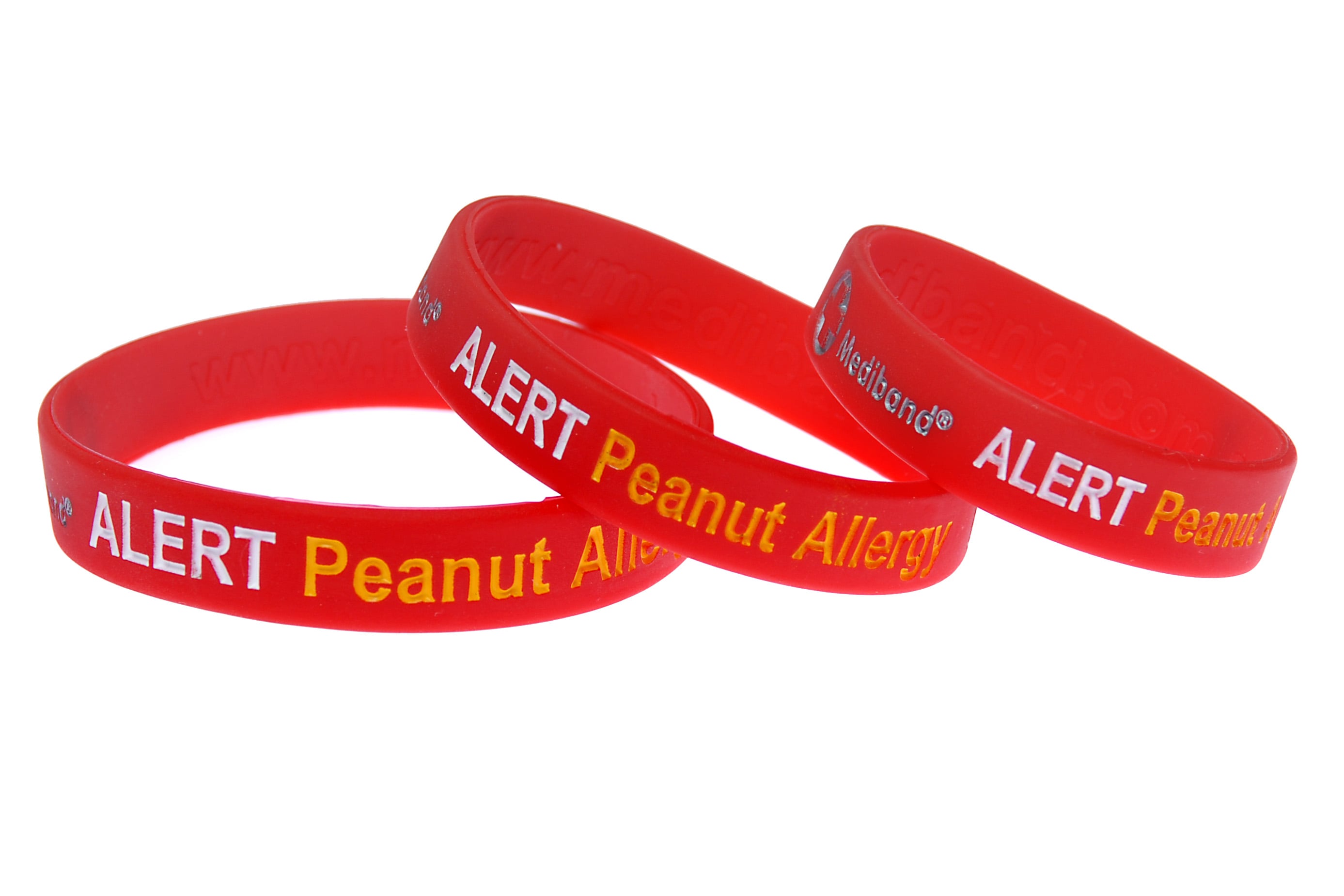
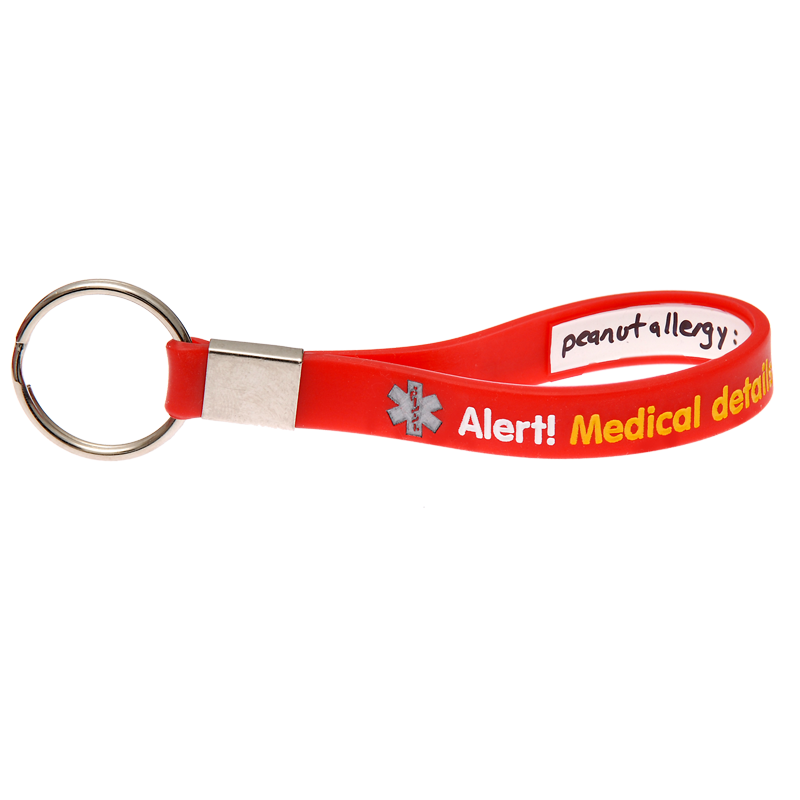
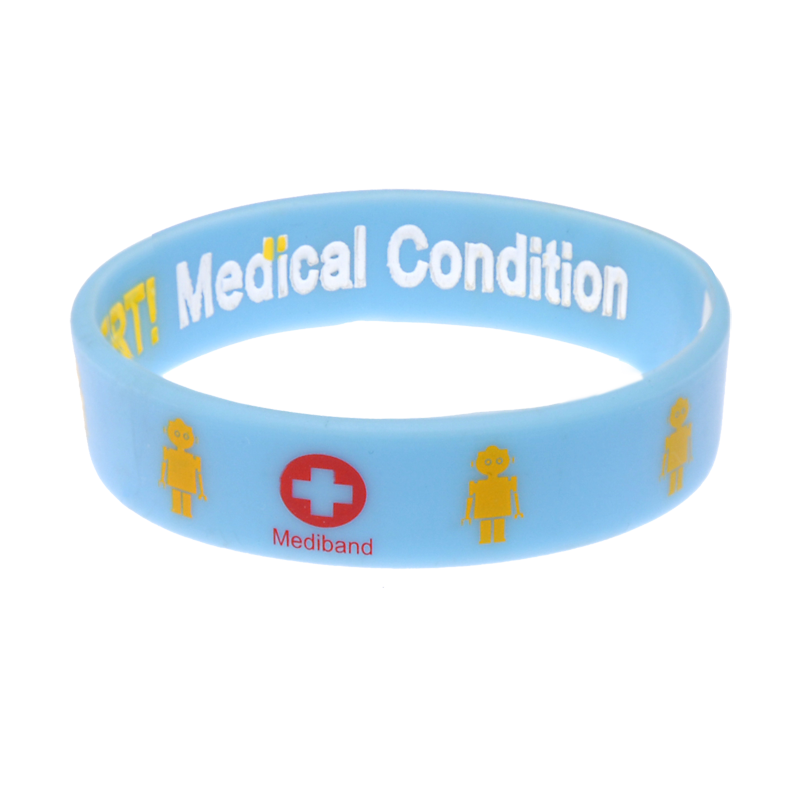
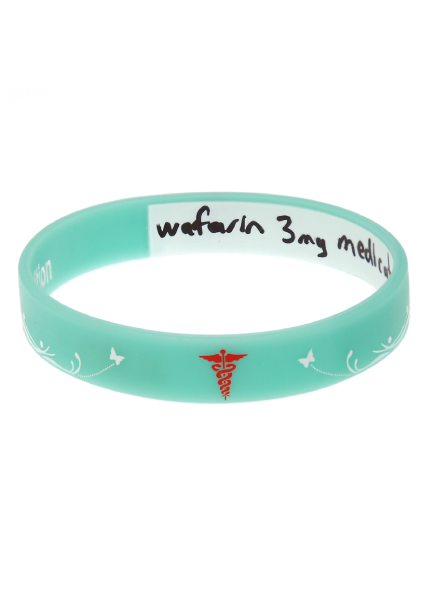
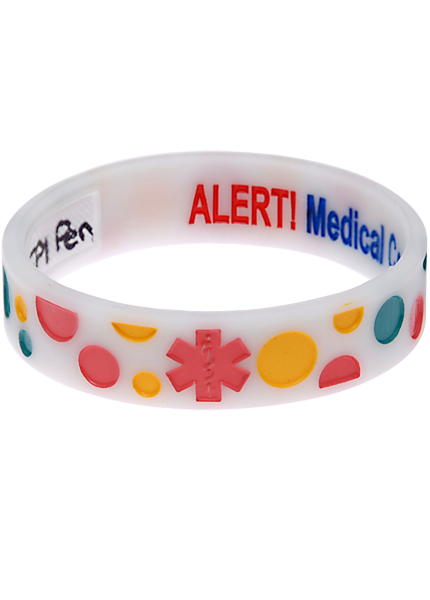
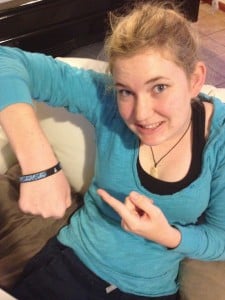 Hannah’s immunologist recommended a medical alert bracelet in 2007. The traditional metal versions ran AUD $200+ — out of reach for a student. The silicone Mediband medical bracelet cost less than $10 and could be permanently laser-engraved with her allergies, condition, and emergency contact.
Four episodes since then have ended differently than they would have without it:
- Paramedics arriving at an unconscious patient could read “ANAPHYLAXIS — fish, iodine, crustaceans” on her wrist within seconds.
- Emergency-department triage staff were warned before administering medications.
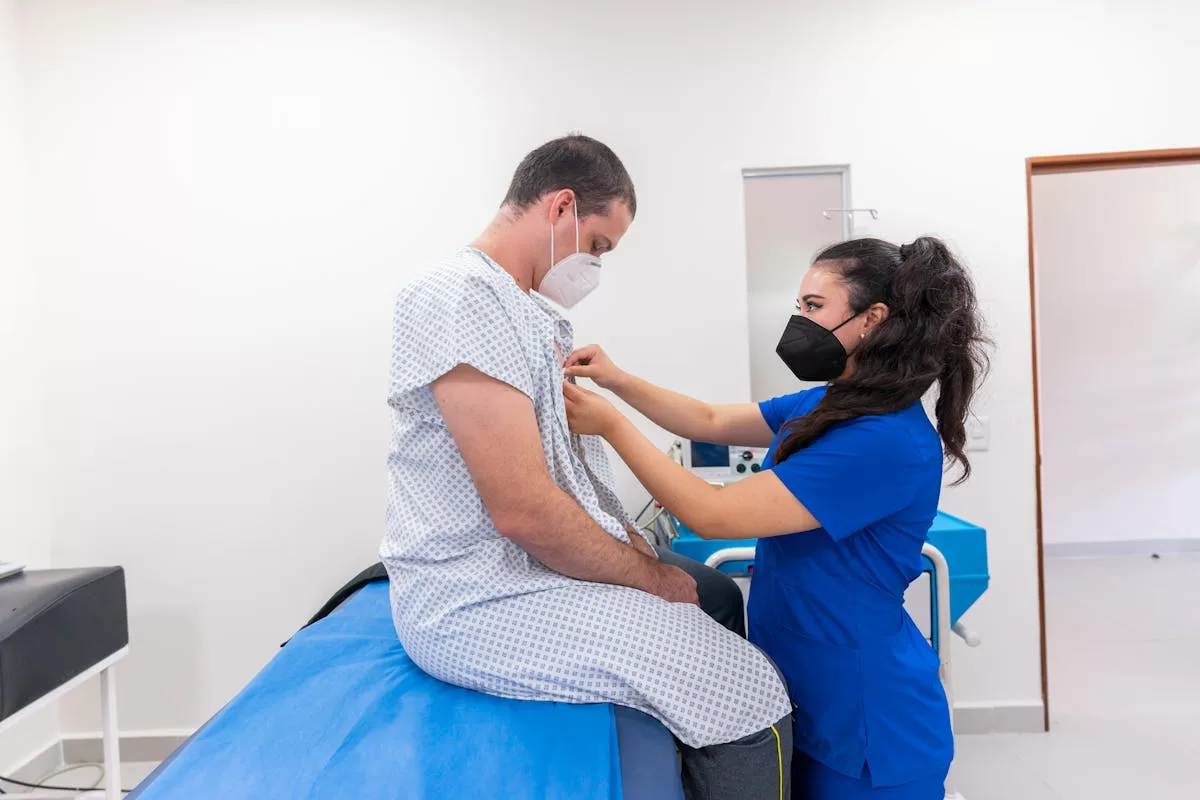
- Radiologists checked the bracelet before injecting contrast media for MRI and CT scans — iodine-based contrast would have triggered immediate anaphylaxis.
- Nurses on inpatient wards used the bracelet as a constant visible flag during multi-week hospital admissions for Muckle-Wells flares.
Hannah wears hers 24/7. “If I ever become unconscious or unable to speak, they will communicate my health issues for me,” she says.
Protect yourself or someone you love — Mediband medical ID
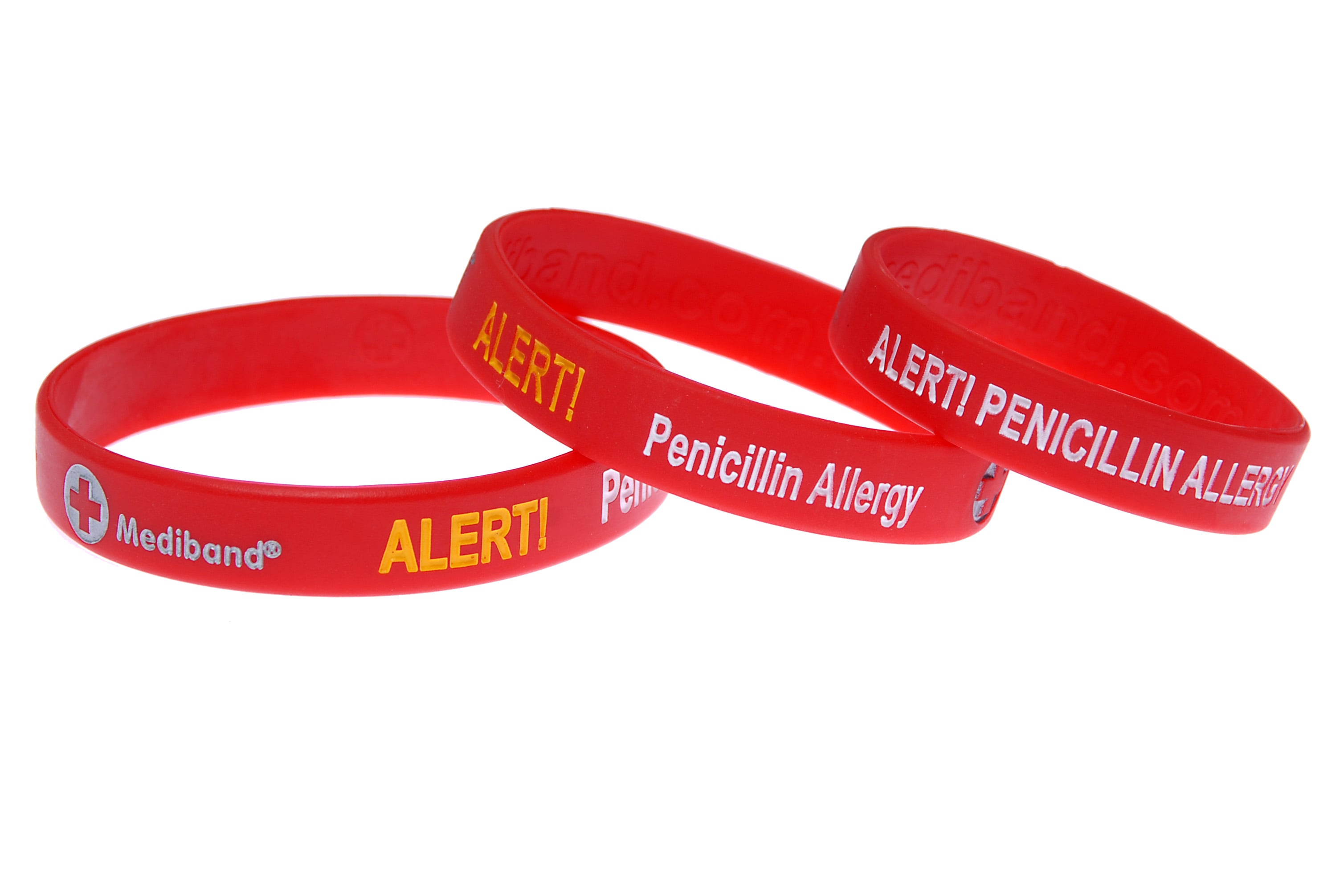
If you, your child or a family member lives with anaphylaxis, type 1 diabetes, epilepsy, asthma or another life-threatening condition, a discreet medical ID bracelet costs less than dinner and gives first responders the 15 seconds of context that can save a life.
What anaphylaxis actually does to the body
Anaphylaxis is a severe, life-threatening, type-I hypersensitivity reaction. Within minutes of exposure, the immune system releases massive quantities of histamine, prostaglandins and leukotrienes. Blood vessels dilate, blood pressure crashes, airway smooth muscle constricts, and laryngeal tissues swell. Without treatment with intramuscular adrenaline within the first 30 minutes, the patient can die from respiratory failure or cardiogenic shock.
The pillars of treatment are:
- IM adrenaline (epinephrine) — the only first-line treatment. Australian patients at risk should carry an EpiPen.
- Position — lie flat, legs elevated, do not stand.
- Call 000.
- Repeat adrenaline if no response after 5 minutes.
Common Australian triggers
According to ASCIA, the most common anaphylaxis triggers in Australia are:
- Peanuts and tree nuts
- Cow’s milk and eggs (children)
- Shellfish and fish
- Bee, wasp and ant stings
- Antibiotics (most commonly penicillins)
- Latex
- Iodine-based contrast media (medical imaging)
Why deafness amplifies the risk — and the case for a visible ID
Hannah’s deafness made the bracelet not just useful, but essential. She cannot call 000 by voice. She cannot hear paramedic instructions. She lives alone. In the gap between an attack starting and someone arriving, the wrist-worn bracelet is her voice.
For any Australian with a hearing impairment + anaphylaxis (or any life-threatening condition), the medical ID is the single most important purchase you can make outside of an EpiPen.
What to engrave on a medical ID for anaphylaxis
The ASCIA Anaphylaxis Action Plan template guides Australian medical IDs. A well-engraved bracelet should carry:
- Condition name — ANAPHYLAXIS
- Trigger(s) — nuts, fish, penicillin, latex, iodine, bee stings
- Treatment — EpiPen 0.3 mg IM, call 000
- Emergency contact name + phone
- Comorbidities — asthma, heart condition, deafness, kidney disease
Mediband bracelets are permanently laser-engraved, so the text cannot rub off in the shower or after a year of wear.
Cost matters: $10 vs $200
One of the quiet barriers to wearing medical ID is cost. The traditional metal versions sold by jewellers and pharmacy chains are $150–$300. For students, retirees, and families with multiple at-risk members, that adds up fast. Mediband silicone bracelets are designed to remove that barrier — under $10, swim and sport safe, replace easily if lost.
Other conditions where a visible medical ID matters
Anaphylaxis is the most dramatic case, but a medical ID is recommended by Australian peak bodies for:
- Diabetes Australia — type 1 + insulin-dependent type 2 diabetes
- Epilepsy Foundation — all forms of epilepsy
- Asthma — especially severe or exercise-induced
- Heart conditions — arrhythmias, anticoagulant use
- Rare diseases — like Muckle-Wells, lupus, mastocytosis, hereditary angioedema
- Cognitive conditions — autism, dementia, intellectual disability where the patient may not be able to speak
The 30-second test: would someone know what to do?
If you collapsed today on Pitt Street in Sydney, would the bystander who reached you in the first 30 seconds know:
- What condition you have?
- What medication you take?
- Who to call?
- What NOT to do (e.g. give CPR to a DNR patient, food to an unconscious diabetic, water to a swelling airway)?
If not, you need a medical ID. The bracelet is the answer to all four questions in under three seconds.
Hannah’s message to other Australians
“My Mediband medical bracelet is so durable and long lasting and I make sure I wear them 24/7. They give me peace of mind knowing that if I ever become unconscious or unable to speak they will communicate my health issues for me.” — Hannah Kean, Coffs Harbour
Where to start
If you, your child, or someone you love lives with anaphylaxis or another life-threatening condition:
- See your immunologist or GP and confirm the diagnosis + trigger list.
- Get an ASCIA Anaphylaxis Action Plan in writing.
- Carry an EpiPen, and keep a second one at school/work.
- Order a Mediband medical ID bracelet engraved with your condition.
- Inform your school, employer, gym, and close friends about your action plan.
For parents of newly-diagnosed children
Receiving an anaphylaxis diagnosis for your child is one of the harder parenting moments. Allergy & Anaphylaxis Australia runs free parent webinars, school-based education programs, and an EpiPen training network. Kids respond well to ownership — choosing the colour of their medical ID bracelet, learning to recognise their own early symptoms, and being proud of their EpiPen rather than embarrassed by it.
Frequently asked questions
Can a silicone medical bracelet really save a life?
Yes. Hannah Kean credits her Mediband with four life-saving interventions — paramedics reading the engraving, ED staff checking before medication administration, and radiologists avoiding iodine-based contrast media that would have triggered anaphylaxis. The bracelet is the first thing first responders look for.
What should I engrave on a medical ID for anaphylaxis?
At minimum: the word ANAPHYLAXIS, the trigger(s) (e.g. nuts, fish, penicillin), the treatment (EpiPen 0.3mg IM, call 000) and an emergency contact phone. Add comorbidities like asthma or heart conditions if relevant.
Is Muckle-Wells Syndrome treatable?
Yes. Muckle-Wells is treated with biologic medications that block interleukin-1 (anakinra, canakinumab, rilonacept). These suppress the inflammatory episodes but cannot reverse damage already done — including the progressive hearing loss that affects most patients.
What is the difference between silicone and metal medical bracelets?
Silicone bracelets are waterproof, swim and sport safe, cost under $10, and can be replaced if lost. Metal bracelets are more formal in appearance, more expensive ($150-300+), and can be uncomfortable in heat or during exercise. For everyday wear, silicone wins on practicality.
Should children with allergies wear medical IDs?
Yes — Allergy & Anaphylaxis Australia, ASCIA and the Royal Australian College of GPs all recommend visible medical ID for children with severe allergies. Teachers, coaches and school nurses can identify the child’s condition in seconds, even if the child is too distressed to speak.
Does a medical ID replace an EpiPen?
No. The EpiPen is the life-saving treatment for anaphylaxis. The medical ID is the communication tool that ensures bystanders, paramedics and ED staff know to use it (and know what NOT to give). They work together — never one without the other.
How long does a silicone Mediband last?
The engraving is laser-etched directly into the silicone, so it doesn’t fade. The band itself lasts years of daily wear including showering, swimming and exercise. Mediband customers typically replace theirs every 2-3 years for cosmetic reasons rather than failure.
References
- ASCIA — Anaphylaxis information allergy.org.au
- Allergy & Anaphylaxis Australia allergyfacts.org.au
- Diabetes Australia diabetesaustralia.com.au
- Epilepsy Foundation epilepsy.org.au
- Royal Australian College of General Practitioners racgp.org.au
- Australian Bureau of Statistics — Causes of Death
- Heart Foundation Australia heartfoundation.org.au

Written by
Founder, Mediband
Founder of Mediband; over 20 years providing medical IDs worldwide.



Great work Mediband and Hannah.