
By Michael Randall, Founder, Mediband · Updated 13 June 2026 · 9 min read
"My Mediband saved my daughter's life" — every email that starts that way arrives the same week as one that doesn't. The difference is rarely the diagnosis. The difference is whether the paramedic, teacher or stranger saw the bracelet in the first five seconds and treated the right condition immediately.
This guide collects real Australian customer stories from 2009 onwards, distils what the bracelet actually does at the scene, and shows you exactly what to write on yours so the same outcome is available to your family.
Why five seconds of bracelet visibility changes outcomes
The Australian Resuscitation Council trains paramedics, lifeguards and first-aid responders to perform a primary survey within the first 60 seconds of arrival. The wrist is one of the first places they look — visible identifying information cuts diagnostic time, prevents medication errors and accelerates the right specialist call.
Anaphylaxis, hypoglycaemia, seizure recovery and stroke all benefit from condition-specific treatment, and every minute of delay measurably worsens outcomes. The bracelet doesn't replace clinical assessment — it gives clinicians a head start.
5 real Australian stories — what changed when the bracelet was visible
1. The anaphylactic toddler at the swimming carnival
A Brisbane mum wrote about her daughter (age 4) collapsing within minutes of trying a friend's biscuit. The poolside parent supervising read "Anaphylaxis: peanuts — EpiPen in school bag" on the bracelet and administered the auto-injector before paramedics arrived. The child was conscious by the time the ambulance arrived.
2. The Type 1 diabetic teen at sport
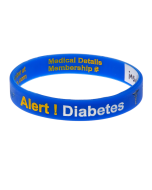
A Melbourne dad credits his son's "Type 1 Diabetes — Insulin pump" bracelet with paramedics testing blood glucose first when he collapsed mid-game. The hypo was reversed within 4 minutes; the alternative diagnosis (cardiac event) would have triggered a different treatment path.
3. The epilepsy seizure on a Sydney train
A 24-year-old man's seizure on an evening commute could easily have been mistaken for intoxication. The bracelet reading "Epilepsy — recovery position OK" prompted commuters to clear space and protect his head, and Transport NSW staff called the right kind of response. No hospital admission required.
4. The dementia disorientation episode at the shopping centre
An 82-year-old gentleman wandered from his daughter's car park visit. Centre security found him with "Dementia — please call carer" + a phone number on his Mediband. Daughter on the road in 6 minutes. No police involvement, no overnight stay.
5. The penicillin allergy in ED admission
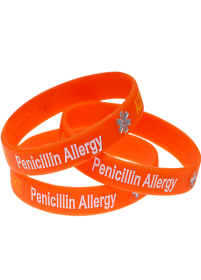
A motorbike accident victim arriving unconscious in Brisbane ED had "Penicillin allergy" on the bracelet. The trauma team avoided the standard prophylactic antibiotic and substituted clindamycin within the first 10 minutes. The patient woke up four hours later without an allergic reaction layered on top of trauma.

Recommended for you
Products related to this article
Hand-picked to go with what you just read.
What every life-saving bracelet has in common
Step 1: Headline diagnosis comes first
Paramedic reads the bracelet in 3-5 seconds. They need the diagnosis on the first glance, not buried after "John Smith DOB 1985…". Lead with "Anaphylaxis", "Type 1 Diabetes", "Severe asthma", "Epilepsy" or whatever the headline is.
Step 2: Key medication or treatment cue
"EpiPen prescribed", "Insulin pump", "Inhaler in bag", "Recovery position OK", "Blood thinner — Warfarin". One word that tells the responder what to look for or how to position.
Step 3: Emergency contact
A mobile number first responders can call from the scene. Use the carer who has the kid's GP details, the medication list, and time to talk.
Step 4: Make it visible
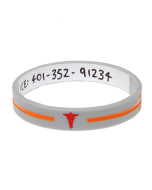
Wrist always — paramedics check there first. Reversible write-on bracelets keep the text on the inside so it doesn't dominate the wearer's look, but flips for emergencies. Ankle bands or pram tags for babies under 12 months.
Step 5: Refresh quarterly
Re-read every band every three months. Update text immediately after any diagnosis change, medication change or phone-number change.
Write-on patterns paramedics consistently call out as helpful
Anaphylaxis
- "Anaphylaxis: peanuts — EpiPen prescribed"
- Parent mobile
Diabetes
- "Type 1 Diabetes — Insulin pump" or "Type 2 Diabetes — Insulin dependent"
- Carer mobile + endocrinologist
Epilepsy
- "Epilepsy — recovery position OK"
- Carer mobile
Dementia
- "Dementia — please call carer"
- Primary carer mobile
Penicillin / sulfa allergy
- "Penicillin allergy — alternative needed"
- GP + emergency contact
Australian organisations that train on medical-ID protocol
- Australian Resuscitation Council — primary survey training for first responders
- Allergy & Anaphylaxis Australia — ASCIA anaphylaxis action plans
- Diabetes Australia — NDSS subsidies + hypo management
- Epilepsy Action Australia — seizure first-aid training
- Dementia Australia — carer support + lost-wanderer plans
- State ambulance services — Ambulance Victoria, NSW Ambulance, QAS, ACT Ambulance and others

One bracelet, one outcome change at a time
You don't write a Mediband customer story to brag about a $30 bracelet — you write it because something that could've been a tragedy became a thank-you instead. Fit a medical ID on every family member who needs one tonight; eighty years from now, every paramedic on your wrist will have done their job.
Frequently Asked Questions
Quick answers from the Mediband team
Has wearing a Mediband bracelet actually saved Australian lives?
Yes — Mediband has tracked customer-shared stories since 2009 documenting anaphylaxis, hypoglycaemia, seizure, dementia disorientation and allergy-medication outcomes where the visible bracelet changed the response. The bracelet doesn't replace medical care; it gives clinicians the head start that lets the right care happen faster.
What's the single most important thing to write on a medical ID?
The headline diagnosis. Lead with 'Anaphylaxis', 'Type 1 Diabetes', 'Severe asthma' or 'Epilepsy' — whatever the condition is. Paramedics read in 3-5 seconds; bury the diagnosis behind a name and you waste their primary-survey window.
How quickly do Australian paramedics check the wrist for a medical ID?
The Australian Resuscitation Council trains the primary survey within the first 60 seconds. Visible medical IDs on the wrist, neck or ankle are checked as part of that initial assessment.
Should you wear a medical ID if you've never had an emergency?
Yes — for anyone with a diagnosed allergy, chronic condition, regular medication or seizure history. The bracelet is insurance: cheap, ever-present and only needed when the worst happens.
What if my Mediband bracelet text wears off or fades?
Wipe with isopropyl alcohol and rewrite with a fine-tip permanent marker. Replace the band entirely every 3-5 years (silicone lifespan) or sooner if cracked or sun-bleached.
Are stainless-steel medical IDs better than write-on silicone?
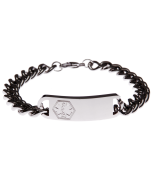
Each has a role. SS dog tags and bracelets are permanent (engraved) and last 10+ years — best for stable lifetime conditions. Write-on silicone is updateable — best for kids growing into new diagnoses or changing medications.
Can I share my Mediband story with the team?
Yes — email your story to Mediband customer service. With permission, some stories help other families understand the value of a visible medical ID.

Written by
Founder, Mediband
Founder of Mediband; over 20 years providing medical IDs worldwide.
← Previous
Australian Health News: 6 Updates Shaping Family Care
Next →
Emergency Department Waiting Times: Australian Guide
Comment(s)