Why Wearable Tech Is Reshaping Medical ID
For decades, the medical ID was a simple piece of engraved metal worn on the wrist. It worked — and still does — because it solves the same problem every emergency creates: a person who can't speak for themselves, surrounded by responders who need to act fast. But the way wearable technology has exploded over the last ten years means the medical ID landscape now sits alongside smartwatches, fitness trackers, NFC tags, e-fabrics, and biosensors. The information loop between wearer and responder is becoming richer, faster, and more intelligent.
That doesn't mean traditional bracelets are going away. It means people now have more options for how their critical information is carried and read. The smart wearer mixes proven, low-tech IDs (so a paramedic can read it without a phone) with modern, connected layers (so paramedics with a phone can pull a full digital profile in seconds).
How Smartwatches Are Changing the Medical ID Picture
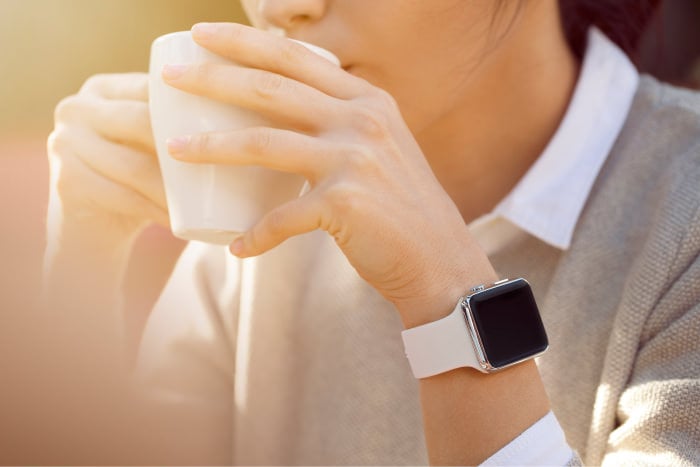
Most modern smartwatches now ship with a "Medical ID" feature: Apple Watch, Samsung Galaxy Watch, Fitbit Sense, and Garmin all support emergency profiles that are accessible without unlocking the device. Anyone (a paramedic, a stranger, a family member) can swipe the screen to see your name, conditions, allergies, and contacts — even if the watch is locked.
Apple Medical ID
Stored in the Health app, viewable by sliding the lock screen "Emergency" option. Includes name, DOB, conditions, medications, allergies, blood type, and emergency contacts. Calls 911 (or local equivalent) automatically share the profile with dispatch.
Samsung Galaxy Watch SOS
Triple-press of the side button triggers an SOS alert that sends location and pre-filled medical info to emergency contacts and authorities. Customisable medical info screen.
Fitbit and Garmin
Both support emergency contact and ID storage; Fitbit Sense includes ECG and skin-temperature sensors that can flag potential health events in real-time, prompting users to seek care before an emergency develops.
Recommended for you
Products related to this article
Hand-picked to go with what you just read.
NFC Tags, QR Codes and the Linked Profile
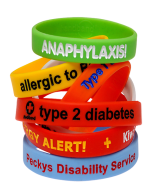
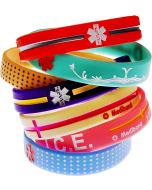
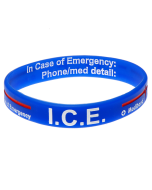
Beyond smartwatches, an entire ecosystem of NFC and QR-coded medical ID products has emerged. The bracelet looks normal — silicone, leather, stainless steel, designer — but contains a chip or scannable code that links to an online profile when tapped or scanned with any phone.
The advantages are significant:
- Far more information than engraving — full medical history, current medications, recent test results, advance care directives, scanned documents.
- Updateable in real-time — change a medication and the profile updates instantly without re-engraving.
- Multiple emergency contacts — primary, secondary, GP, specialist all reachable from one tap.
- Multilingual — the same profile can present in English, Mandarin, Spanish, Arabic for international wearers and travelers.
The trade-off: a paramedic without a phone can't read it. That's why the gold-standard wearable medical ID combines BOTH — engraved essentials that anyone can read at arm's length, plus a QR/NFC pointer that opens the full profile when tech is available.
E-Fabrics and Biosensors — The Next Wave
The frontier of wearable medical tech is moving beyond accessories into clothing itself. E-fabrics weave conductive threads and sensors directly into shirts, socks, and undergarments to monitor heart rate, breathing, posture, glucose, and even seizure precursors. For people with chronic conditions, this means continuous, passive health monitoring without an extra device on the wrist.
According to the World Health Organization, digital health and connected wearables are central to the next generation of patient safety strategy globally — particularly for chronic disease management, elderly safety, and remote/rural care.
Choosing the Right Mix for You
For most people, the right wearable medical ID strategy is layered rather than single-tech. Consider:
If You Wear a Smartwatch Daily
Set up the built-in Medical ID profile (Apple Health, Samsung Health). Pair it with an engraved silicone or stainless steel bracelet that flags the condition for paramedics — many of whom check the wrist before reaching for a phone.
If You Travel Frequently
QR-coded bands plus a wallet card make sense — they translate across languages and healthcare systems. Engrave your name and the most critical alert (anticoagulant, allergy, implant) so the language barrier doesn't slow response.
If You Have a Chronic Condition
NFC bracelets that link to a comprehensive profile work especially well — emergency teams get a full picture rather than scattered fragments. Pair with a traditional bracelet for redundancy.
If You're Buying for Older Family Members
Keep tech simple. Smartwatch fall-detection is excellent, but pair with an engraved bracelet that survives without battery, app, or signal. Older patients in hospital settings often have phones taken from them — the bracelet stays on.
Limitations and Things to Watch For
Wearable tech is powerful but not infallible. Common gaps:
- Battery dependence — a smartwatch with no charge is no help in an emergency.
- App permissions and privacy — review who can see your medical data and how the platform handles security breaches.
- Connectivity — NFC and QR codes need a working phone; no signal or no phone means no profile access.
- Outdated profiles — set a calendar reminder every six months to update medications, contacts, and conditions.
- Wrong-platform pairing — make sure your emergency contacts know how to access your watch's medical ID and that family knows your QR profile login if you become unable to.
Belt-and-braces remains the safest approach: engraved metal or silicone for the universal, no-tech-needed read, plus a connected layer (smartwatch or QR bracelet) for the deeper digital profile.
Frequently Asked Questions
Will a smartwatch replace a traditional medical alert bracelet?
Not entirely — and probably never. A smartwatch is excellent for storing detailed medical information and triggering SOS, but it depends on charge, signal, and the responder having a phone. A traditional engraved bracelet works without batteries, internet, or technology. Most wearable-tech experts recommend both, layered together.
How do paramedics access my smartwatch's medical ID?
Most major smartwatches have a swipe-up "Emergency" option on the lock screen that displays the medical profile without unlocking. Apple Watch and iPhone Medical ID, Samsung Galaxy SOS, and Fitbit emergency profiles are all designed for this — a paramedic can view your conditions, medications, and emergency contacts in seconds.
Are NFC and QR-coded medical bracelets safe and private?
Reputable platforms encrypt data and only display the information you choose to make publicly visible. The full profile typically requires a separate login. Always read the privacy policy before signing up, and review what fields are visible without authentication. Avoid platforms that don't offer two-tier access.
What about e-fabrics and biosensor clothing — are they ready for everyday use?
Several products are commercially available — heart-monitoring shirts, glucose-monitoring patches, posture-correction wearables — but most are still niche. The technology is advancing fast, and within the next five years e-fabrics are expected to become mainstream for chronic-disease management. For now, they complement rather than replace traditional medical IDs.
How often should I update my digital medical profile?
Every six months at minimum, and immediately after any medication change, new diagnosis, change of GP, or change of emergency contact. An out-of-date digital profile is more dangerous than no profile at all — first responders may follow stale instructions. Make it part of your routine review with your doctor.
Is There a Medic Alert Watch?
Many people search for a medic alert watch — and smartwatches do offer lock-screen medical ID features worth setting up. The limitation: responders may not find or unlock them quickly, and batteries die. That is why paramedics still look for a physical ID first. A practical setup is your smartwatch for daily health tracking plus an engraved medical alert bracelet on the other wrist — visible, waterproof and always on.

Written by
Founder, Mediband
Founder of Mediband; over 20 years providing medical IDs worldwide.
← Previous
Preventative Care: How Smart Health Habits Improve Your Life
Next →
Active Life with a Medical Condition: 5 Practical Ways to Keep Going
Comment(s)