A long-time Mediband customer rode roughly 850km across Spain’s Camino de Santiago on anticoagulants — and never took his medical alert bracelet off. Here is why a band that speaks the local language mattered so much on the trail.
The short version: Ron spent several weeks mountain-biking the Camino de Santiago carrying a custom Mediband printed in Spanish — Atención, Anticoagulantes (“Warning, blood thinners”). Out of phone range and far from anyone who speaks English, a bracelet in the local language tells the first stranger who reaches you what matters, in seconds. If you take a regular medication and travel, a bilingual medical alert bracelet is one of the simplest safety steps you can take.
Please note: this article is general information, not medical advice, and is not a substitute for care from your own doctor. Speak to your GP before travelling on any medication. In an emergency call your local emergency number — 112 across Europe, 000 in Australia.
Designed in Australia
4.9★ verified customer rating
Custom bilingual options
Worn on the Camino
Ron’s ride: 850km across Spain
In late spring, Ron set off to ride the Camino de Santiago by mountain bike — the historic pilgrim route that crosses northern Spain. He is on anticoagulants (blood thinners), the kind of everyday medication most people never think twice about at home. On a bike, in a foreign country, hundreds of kilometres from home, the maths changes.
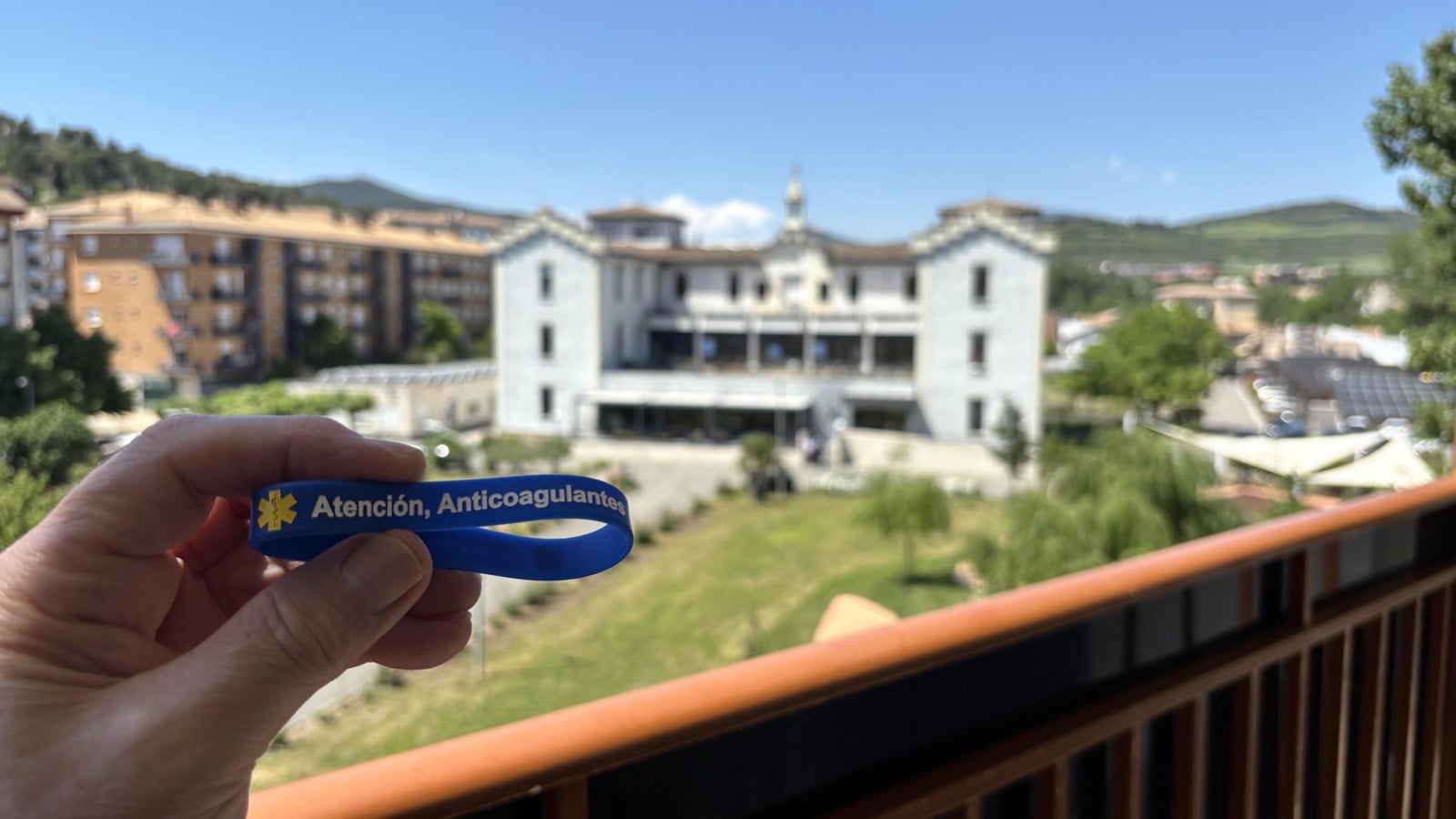
Ron wrote to us from Estella, a town on the route, still weeks into the ride. His message was short: “I keep my band on all the time I’m in Spain.” He sent two photos — one at the famous iron pilgrim monument on the ridge, and one of his blue Mediband held up against the rooftops of Estella.

The reason the band goes everywhere with him is simple. On a remote stretch of trail, if something goes wrong, the person who finds you probably will not know your history, may not speak your language, and cannot ask. A blood thinner changes how paramedics treat a fall or a bleed. The band answers the first question before it is asked.
“I keep my band on all the time I’m in Spain.” — Ron, Mediband customer
Do you need a medical alert bracelet when travelling overseas?
If you take a regular medication, manage a chronic condition, or have an allergy, a medical alert bracelet is worth wearing when you travel — often more than at home. Away from your usual doctors, medical records and language, a band worn on the wrist is the one piece of information that stays with you and is found fast. It is not a legal requirement, but for anticoagulants, diabetes, epilepsy, severe allergies and heart conditions it is a small, reliable safeguard.
Why a bracelet in the local language matters
This is what made Ron’s band a custom bilingual Mediband rather than a standard one. His reads Atención, Anticoagulantes — the warning printed in Spanish, so the first Spanish-speaking stranger, first responder or hospital nurse understands it instantly. No app, no phone signal, no translation needed.
Bilingual medical IDs — your details in English plus the language of the country you are visiting — are one of the most practical things a traveller with a condition can carry. It is the same idea whether you are cycling the Camino, hiking in Japan or on a cruise: the band should be readable by the people most likely to reach you first.
What to put on a travel medical ID
Keep it short and readable. A band has limited space, so lead with what a stranger needs in the first five seconds.
| At home | Travelling overseas |
|---|---|
| Condition or medication in English | The key warning in English and the local language |
| Local emergency contact | A contact number with the international dialling code |
| Familiar hospitals and doctors nearby | Blood type or allergy flag, since your records are not on hand |
| You can explain it yourself | Assume you cannot — the band has to speak for you |
Personalisation note: a printed alert band carries a fixed message. If you need your name, exact medication, dose or an emergency contact added — or a second language — that is made to order through Custom ID, where you choose the wording.
How does a medical alert bracelet help if you don’t speak the language?
It does the talking. A clearly printed band with the internationally recognised medical Star of Life and a plain warning — in the local language — is understood by ambulance crews and hospital staff almost anywhere. That is the whole point of Ron’s band: on a quiet stretch of Spanish trail, it says blood thinners to a paramedic who has never met him and does not speak English.
Designed in Australia
Bilingual custom printing
Trusted by travellers
Frequently asked questions
Should I wear a medical alert bracelet when travelling?
If you take a regular medication, have a chronic condition or a serious allergy, yes. Travelling puts you away from your own doctors, records and language, so a band that stays on your wrist and is read quickly is a simple, reliable safeguard. Talk to your GP about travelling on your medication as well.
Can I get a Mediband printed in another language?
Yes. Bilingual bands — your warning in English plus the local language — are made to order through Custom ID. Ron’s band was printed in Spanish for his ride across the Camino.
What should an anticoagulant band say?
Keep it brief and clear — a short warning that you are on blood thinners is the priority, because it changes how a fall or a bleed is treated. If travelling, add the local-language version. For a name, exact medication or contact number, use a made-to-order Custom ID band.
Is a medical alert bracelet a substitute for seeing a doctor?
No. A medical alert bracelet shares critical information in an emergency, but it does not replace medical care. Speak to your GP before you travel, and in an emergency call the local emergency number — 112 in Europe, 000 in Australia.
With thanks to Ron for sharing his photos and story, used with permission and first name only. This article is general information and not medical advice; it is not a substitute for care from a qualified health professional. Talk to your GP about travelling with your condition or medication, and in an emergency call your local emergency number — 112 across Europe, 000 in Australia.

Written by
Founder, Mediband
Founder of Mediband; over 20 years providing medical IDs worldwide.
← Previous
Kids' medical ID bracelets: a parent's guide
Next →
Sunflower Lanyards in Australia: What They Mean & How to Get One
Comment(s)