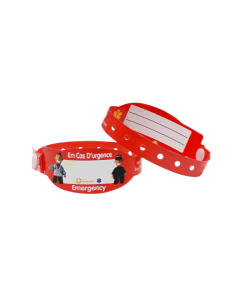
Kids Medical Alert Bracelets
Soft silicone medical alert bracelets designed for active kids. Mediband's children's range carries a child's most critical medical information — allergies, asthma, diabetes, autism, epilepsy, anaphylaxis — in a comfortable, waterproof band that survives school, sport, swimming and sleep. Engraved or write-on, designed in Australia, trusted by parents, paramedics and school nurses since 2008.
Kids ID bracelets & write-on ID bands
Parents search for these under many names — a kids ID bracelet, an ID bracelet for kids, a children's wristband, or a medical alert bracelet. They all do the same job: they put your child's name, condition and an emergency contact where a teacher, coach or paramedic can find it fast. Choose engraved bands for permanent information (a lifelong allergy, type 1 diabetes) or write-on / wipeable ID bands for details that change — school camps, day trips, or a newborn, infant or toddler whose contact details you want to update easily. Browse the full medical alert bracelet range or stay in the children's collection below.
Why every child with a medical condition needs an alert bracelet
Children can't always speak for themselves in an emergency. A panicked teacher, a coach across a sports field, a paramedic arriving at the scene of an accident — none of them know your child's medical history unless it's right there on the wrist. A visible medical alert bracelet shaves precious minutes off emergency treatment time. According to paramedic protocol, the wrist is checked within the first 30 seconds of any patient assessment.
Australian, US, UK and EU emergency services all train responders to scan for medical jewellery. For a child with a food allergy, asthma, diabetes or any condition that affects emergency treatment decisions, a bracelet is the single most cost-effective safety device a parent can buy.
Conditions that need a medical alert bracelet
Food and drug allergies
Peanut, tree nut, shellfish, dairy, egg, sesame, soy, gluten — any allergy serious enough for an EpiPen prescription should also come with a bracelet. Same applies to drug allergies (penicillin, sulfa, NSAIDs). For multi-allergy kids, engrave "Multi-Allergy" plus an instruction to check the wallet card or app.
Asthma
Severe asthma — particularly exercise-induced — needs a visible alert so a coach or first responder knows to look for a puffer and act fast on rapid breathing or wheezing.
Diabetes (Type 1 and Type 2)
Children with diabetes can suffer hypoglycaemic events with no warning. A bracelet engraved "Type 1 Diabetes" prompts paramedics to administer glucose immediately, not insulin — a life-saving distinction.
Autism and special needs
For non-verbal children or kids who may wander, a bracelet with "Autism — Non-Verbal" and a parent contact number is critical. Many councils, theme parks and major events now use medical alert bracelets as their primary lost-child protocol.
Epilepsy and seizure disorders
An engraved alert tells bystanders not to put anything in the mouth, to time the seizure, and to call emergency services if it lasts more than 5 minutes. Lifesaving information for any teacher or coach.
Heart conditions, anticoagulants and rare conditions
Congenital heart conditions, blood-thinner medications, mitochondrial disorders, immune deficiencies — anything that changes emergency treatment decisions belongs on the bracelet.
Choosing the right size for your child
Kids' wrists range from roughly 130 mm (age 3) to 165 mm (age 12). Most parents start with Small (130–145 mm) for ages 3–6, Medium (145–160 mm) for ages 7–11, and Large for older kids transitioning to an adult bracelet. A snug-but-not-tight fit prevents the band from slipping off during play.
| Size | Age (guide) | Wrist |
|---|---|---|
| Small | 3–6 years | 130–145 mm |
| Medium | 7–11 years | 145–160 mm |
| Large | 12+ years | 160–165 mm+ |
What to engrave on a kids' medical bracelet
- The condition — specific (e.g. "Peanut Allergy" not just "Allergy")
- "Anaphylaxis" if an EpiPen has been prescribed
- Child's first name — paramedics use names to calm children
- Parent or carer mobile number — international format if travelling
- Critical medication if relevant (e.g. "Insulin Dependent")
Keep the message short enough that a paramedic can absorb it in 3-5 seconds. Engraving extra detail wastes the critical first response window.
Material safety: hypoallergenic silicone
Mediband kids' bracelets are made from 100% medical-grade silicone — latex-free, BPA-free, phthalate-free, and tested against Australian, EU and US toy-safety standards. Safe for daily wear on sensitive skin from age 3 upwards. Dishwasher-safe, swimming-pool-safe, sweat-resistant, and built to survive several years of normal child use.
Write-on vs engraved: which is right for your child?
Engraved bracelets are best when the medical information is permanent (e.g. lifelong allergies, type 1 diabetes). Crisp laser engraving, designed to last the life of the band.
Write-on / wipeable bracelets suit changing information — overnight school camps, day trips, sports events, or kids whose phone numbers change frequently. Information stays put under water but can be wiped off and updated when needed.
School, sport and travel safety
Australian and US schools now expect a medical alert bracelet for any child with a documented health condition under their anaphylaxis or diabetes management policies. Most major airlines (Qantas, Virgin Australia, Air New Zealand, British Airways, United, Air Canada) accommodate special-needs and allergic flyers — but only when staff can quickly verify the condition. A visible bracelet does that instantly.
Caring for a kids' medical alert bracelet
Wash weekly with warm soapy water. Avoid bleach, harsh solvents and prolonged direct sunlight to preserve the silicone. Check the band weekly for cracks or worn engraving — replace when text becomes hard to read at arm's length. Expected lifespan with normal wear: 3-5 years.
Why parents choose Mediband for their kids
- Soft, comfortable, kid-friendly silicone — won't pinch or irritate active skin
- Bright designs and patterns children actually want to wear
- Permanent laser engraving that survives swimming, sport and school
- NDIS-registered supplier for Australian families
- Trusted by school nurses, paramedics and allergy specialists since 2008
- Free shipping on bracelet orders worldwide
Related medical ID for children
Shop by condition or style: kids allergy bracelets, diabetes bracelets, epilepsy bracelets, growing-up healthy packs and travel bands. Or see the full medical alert bracelet range.
Kids medical alert bracelet FAQs
What age can a child wear a medical alert bracelet?
Mediband silicone bands suit children from around age 3 upwards, with sizes for toddlers through to teens. For a newborn or infant, a soft write-on ID band is often more practical — choose a snug size that can't slip over the hand.
Is this an ID bracelet or a medical alert bracelet?
Both. A kids ID bracelet carries your child's name and an emergency contact; a medical alert bracelet adds the condition (allergy, asthma, diabetes, epilepsy) that changes how responders treat them. Every Mediband kids band does either — engrave as much or as little as you need.
Do you have allergy bracelets for kids?
Yes. Engrave the specific allergy (for example “Peanut Allergy” or “Anaphylaxis”) plus an emergency contact. For the full range see our allergy medical alert bracelets.
Are the bracelets waterproof for swimming and the shower?
Yes — they're waterproof medical-grade silicone that survives swimming, showering, sport and daily play, and the engraved text stays legible under water.
What should I engrave on my child's bracelet?
Keep it short: the condition (be specific — “Peanut Allergy” not just “Allergy”), “Anaphylaxis” if an auto-injector is prescribed, your child's first name, a parent mobile number, and any critical medication such as “Insulin Dependent”.
Engraved or write-on — which should I choose?
Choose engraved for permanent information (lifelong allergies, type 1 diabetes). Choose a write-on / wipeable ID band for details that change — school camps, day trips, or a young child whose contact number changes.
Are they safe for sensitive skin?
Yes — the silicone is latex-free, BPA-free and phthalate-free, made for daily wear on children's skin. If your child has a known skin allergy, check the material details before ordering.
How do I choose the right size?
Measure around your child's wrist and match it to the size chart above (Small 3–6 yrs, Medium 7–11 yrs, Large 12+). A snug-but-comfortable fit stops the band slipping off during play.
Do schools require a medical alert bracelet?
Many schools ask for visible medical ID for children with a documented condition under their anaphylaxis or diabetes management policy. A bracelet lets a teacher or first-aider identify the condition instantly.
Can it help if my child has autism or tends to wander?
Yes. A band engraved with “Autism — Non-Verbal” and a parent contact number helps carers, event staff and responders reunite a lost or non-verbal child quickly.
-
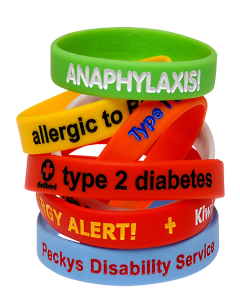
Bold Alert Signature Medical ID by Mediband
From As low as NZ$ 3.92 -
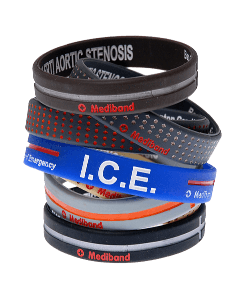
Reversible Signature Medical ID – Classic Style by Mediband
From As low as NZ$ 6.09 -
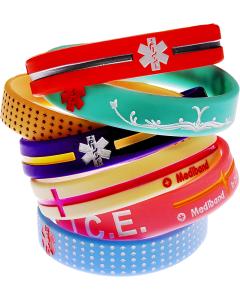
Reversible Signature Medical ID – Vivid Style by Mediband
From As low as NZ$ 6.09 -
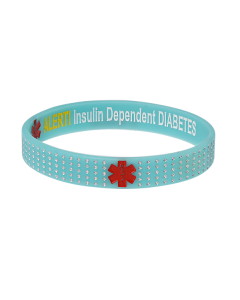
Designer Insulin Dependent Diabetes Turquoise Dots Medical Alert Bracelet
From As low as NZ$ 5.86 -
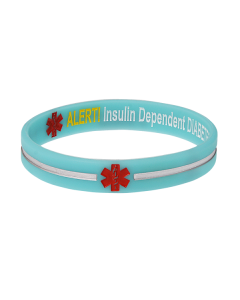
Designer Insulin Dependent Diabetes Turquoise Stripe Medical Alert Bracelet
From As low as NZ$ 5.86 -
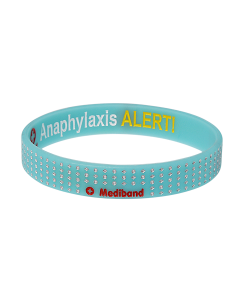
Designer Anaphylaxis Turquoise Dots Medical Alert Bracelet
From As low as NZ$ 5.86 -
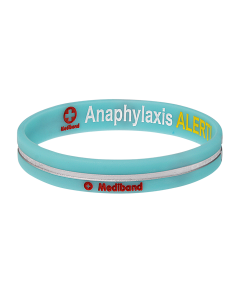
Designer Anaphylaxis Turquoise Stripe Medical Alert Bracelet
From As low as NZ$ 5.86 -
-
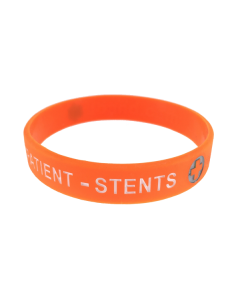
Cardiac Patient - Stents Alert Medical Bracelet
From As low as NZ$ 4.35 -
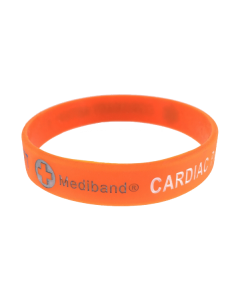
Cardiac Patient - Coronary Bypass Graft Alert Medical Bracelet
From As low as NZ$ 4.35 -
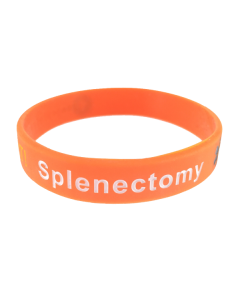
Splenectomy Spleen Alert Medical Bracelet
From As low as NZ$ 4.35 -