

What “DNR” means — and how a medical ID communicates a Not-For-Resuscitation decision
DNR (“Do Not Resuscitate”, also written NFR) is a documented decision that CPR should not be attempted. A medical ID helps make that wish visible in an emergency — alongside the paperwork that gives it legal effect.
Quick answer
DNR stands for “Do Not Resuscitate” (also written NFR, “Not For Resuscitation”). It is a documented medical decision that CPR should not be attempted if your heart or breathing stops. A medical ID can help communicate that wish in an emergency — but the ID itself is not the legal order; the decision lives in your medical record or advance care directive.
This page is general information, not medical or legal advice. Speak with your GP or treating team about a DNR/NFR decision, and about advance care planning (Advance Care Planning Australia: 1300 208 582). In an emergency, call 000.
Designed in Australia
22+ years, since 2004
4.9★ verified customer rating
What does DNR mean?
DNR means “Do Not Resuscitate”. It is a decision, made with your treating team, that cardiopulmonary resuscitation (CPR) should not be started if your heart stops or you stop breathing. It applies only to CPR — it does not mean you stop receiving other care, comfort or treatment. You may also see it written as NFR (Not For Resuscitation) or “No CPR”; the meaning is the same.
DNR, NFR and an Advance Care Directive: what is the difference?
These terms are related but not identical. In short: a DNR/NFR is a specific instruction about CPR; an advance care directive is a broader record of your wishes.
| Term | What it is |
|---|---|
| DNR / NFR | A documented medical decision that CPR should not be attempted. Recorded in your medical record by your treating team. |
| Advance Care Directive | A broader legal document recording your wishes and values for future care, including resuscitation. The rules and forms differ by state and territory. |
| Medical ID | A way to communicate that a decision exists and where to find it. It supports your documented wishes; it is not the order itself. |
Is a DNR bracelet legally binding in Australia?
On its own, no. A bracelet or engraving does not replace a documented DNR/NFR order or an advance care directive. Ambulance and hospital teams act on properly documented decisions, and the way those are recognised differs between states and territories. A medical ID’s job is to flag that a decision exists and point to where it is recorded, so the right people can find it quickly. Talk with your GP or treating team about documenting your wishes correctly for where you live.
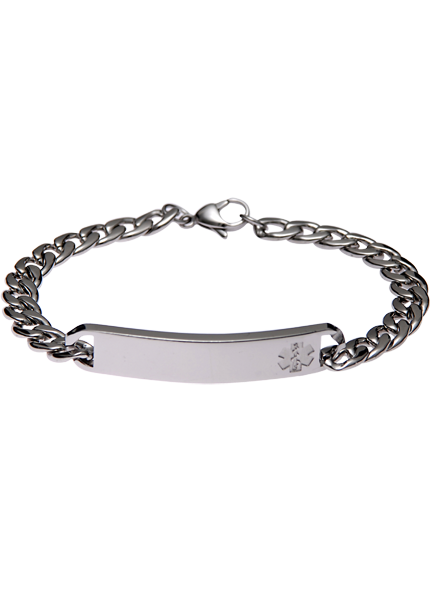
How a medical ID supports your wishes
Used alongside the right paperwork, a clear, current medical ID helps your wishes be seen at the moment they matter. People who choose to wear one often engrave:
- “DNR” or “NFR”, in line with their documented decision
- A pointer to where the order or advance care directive is held
- An emergency contact, and any other critical condition or medication
Not sure what the engraving shorthand means? See our medical ID abbreviations guide.
Who considers a DNR/NFR medical ID?
A documented DNR/NFR decision is made with a treating team on a case-by-case basis — it is not tied to a single age group or diagnosis. People who go on to wear a medical ID alongside that decision typically fall into a few groups:
- Older adults who have discussed resuscitation outcomes with their GP and formalised a decision.
- People with a terminal or life-limiting illness, often alongside palliative or hospice care.
- People with a serious chronic condition where CPR is unlikely to achieve a meaningful outcome, as assessed by their treating team.
- Carers and family members who want the decision to be visible quickly, without having to locate paperwork during an emergency.
In every case, the medical ID is a companion to the documented decision — not a substitute for having that conversation first.
Starting the conversation with your doctor and family
A DNR/NFR decision starts with a conversation, not with an engraving. Most people find it easier with a few starting points in mind:
- Ask your GP or treating specialist to explain what CPR would realistically involve for your specific health situation, and the likely outcomes.
- Ask what documentation applies where you live — requirements and forms differ by state and territory, so your GP or an advance care planning service is the right source, not a general guide.
- Talk to the people who are likely to be with you in an emergency (partner, adult children, carer) so the decision is not a surprise to them.
- Revisit the decision periodically — circumstances change, and so can your wishes.
Advance Care Planning Australia (1300 208 582) can help you find the right process and forms for your state or territory once you’ve had the initial conversation with your GP.
What to engrave on a DNR/NFR medical ID
Engraving space is limited, so most people prioritise the details that matter most in an emergency, in order:
- The instruction itself — “DNR” or “NFR”, matching the wording your treating team and documented order use.
- Where the order is held — e.g. your GP clinic or hospital, so paramedics know where to verify it.
- An emergency contact number for a partner, family member or carer.
- Any other condition or medication that would change how paramedics respond (allergies, pacemaker, anticoagulants).
A bracelet or necklace generally fits more text than a smaller pendant — if you’re unsure what will fit, our team can check the engraving layout with you before you order.
Common misconceptions about DNR/NFR medical IDs
Myth: DNR means no other treatment.
Fact: a DNR/NFR decision applies specifically to CPR. Pain relief, comfort care and other treatment continue as normal.
Myth: only elderly people have a DNR order.
Fact: it’s based on health circumstances and a documented decision with your treating team, at any adult age.
Myth: once decided, it can’t be changed.
Fact: you can discuss changing your decision with your treating team at any time.
Engraved medical IDs, designed in Australia
Discuss your DNR/NFR decision with your treating team, then choose an ID that communicates it clearly.
Browse medical alert braceletsFrequently asked questions
What does DNR mean?
DNR means “Do Not Resuscitate” — a documented decision, made with your treating team, that CPR should not be attempted if your heart or breathing stops. It applies to CPR only, not to other care. It is also written as NFR (Not For Resuscitation).
Is a DNR bracelet legally binding?
Not by itself. A bracelet communicates that a decision exists; the legal force comes from a documented DNR/NFR order or advance care directive, and recognition differs by state and territory. Speak with your GP or treating team about documenting your wishes.
What is the difference between DNR and an advance care directive?
A DNR/NFR is a specific instruction about CPR. An advance care directive is a broader legal document recording your wishes and values for future care, including resuscitation. The forms and rules differ by state and territory.
Who should consider a DNR/NFR medical ID?
People with a documented DNR/NFR decision made with their treating team — commonly older adults, people with a terminal or life-limiting illness, people with a serious chronic condition, or their carers and family members who want the decision visible quickly in an emergency.
What should I engrave on a DNR/NFR medical ID?
Most people prioritise the instruction itself (“DNR” or “NFR”), where the order is held (e.g. your GP or hospital), an emergency contact, and any other condition or medication that would change how paramedics respond.
Can I change my DNR/NFR decision later?
Yes. A DNR/NFR decision can be discussed and changed with your treating team at any time as your circumstances or wishes change.
This information is general in nature and is not medical or legal advice. Decisions about resuscitation should be made with your GP or treating team and documented correctly for your state or territory. For advance care planning support, contact Advance Care Planning Australia on 1300 208 582. In an emergency, call 000. Mediband makes medical ID bracelets, necklaces and wallet cards — Designed in Australia, trusted since 2004.
Ready to order? Shop our engraved DNR bracelet — discreet purple silicone with your details engraved.