Quick answer: choosing a medical ID for your child
A medical ID bracelet flags a child’s allergy, condition or medication to teachers, coaches and paramedics when you are not there to explain. For kids, a soft silicone band is usually the best pick — it is waterproof, comfortable, has no fiddly clasp, and is low-cost to replace as they grow. Put the condition, key medication and an emergency contact on it.
This is general information, not medical advice. It is not a substitute for care from a health professional. For advice about your child’s condition, speak with your GP; for allergy and anaphylaxis, see ASCIA (allergy.org.au) or call Healthdirect on 1800 022 222. In an emergency, call 000.
If your child has a health condition, one of the hardest parts of the school drop-off, the birthday party or the first sleepover is not being there to explain it. A medical ID bracelet does that for you — a small, always-on band that tells whoever is nearby what matters most. This guide covers whether your child needs one, why silicone suits kids, what to put on it, and how real Mediband families use them.
Designed in AustraliaNDIS-registeredWaterproof silicone
Does my child need a medical ID bracelet?
A medical ID helps any child whose condition might need to be recognised quickly by someone who does not know them. That commonly includes children with a food, drug or insect allergy or anaphylaxis, children with type 1 diabetes, epilepsy or a seizure disorder, children on the autism spectrum who may not communicate in an emergency, and children with asthma or a heart condition. If a teacher, first-aider or paramedic would need to know something about your child within seconds, a medical ID is worth having.
Why silicone is the best medical ID for kids
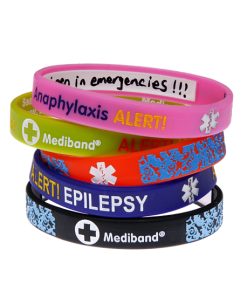
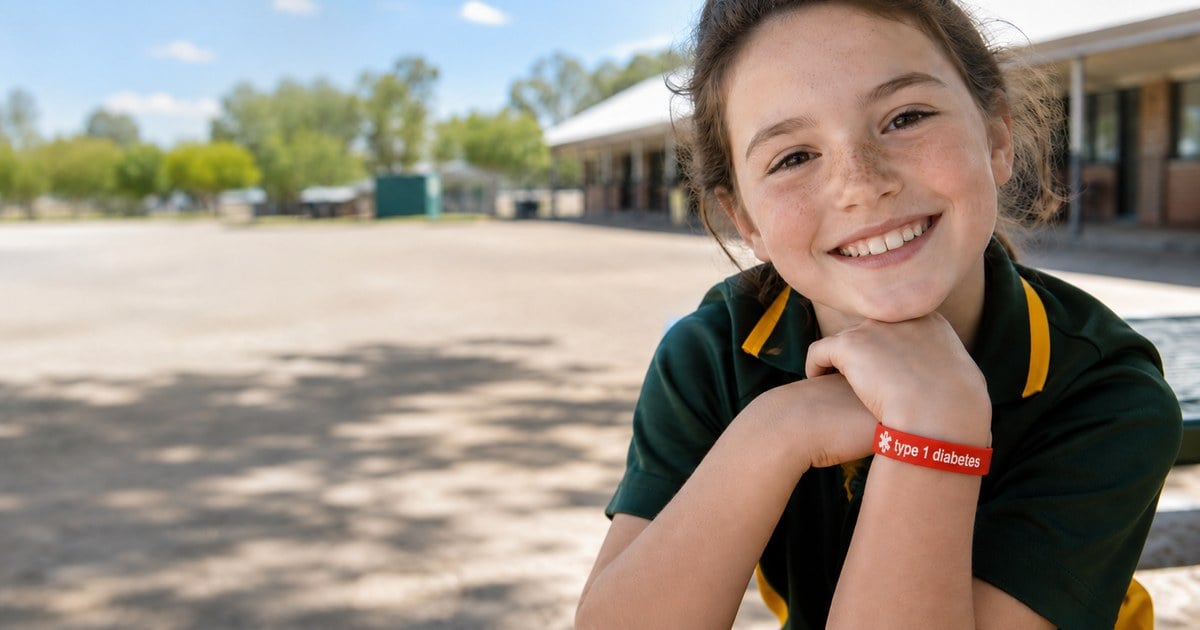
Kids are far more likely to keep a band on when they get to pick the colour. Mediband’s silicone range comes in bright, everyday colours, so the band feels like something your child wants to wear — not something clinical.
Soft silicone bands suit children because they are waterproof, comfortable to wear all day, have no clasp to break or lose, and cost little to replace as your child grows. Metal bracelets look smart but can be heavy, cold and fiddly for small wrists. Here is how the two compare for kids:
| For a child, consider | Silicone band | Metal bracelet |
|---|---|---|
| Comfort for small wrists | Soft, light, flexible | Firmer, heavier |
| Water, sport and swimming | Fully waterproof | Usually fine, but clasps can catch |
| Fastening | No clasp — slips or buckles on | Clasp can break or be lost |
| Replacing as they grow | Low-cost, easy to reorder | More expensive to resize or replace |
| Colours kids will actually wear | Bright colour choice | Limited |
Mediband’s silicone bands are soft, skin-friendly and designed in Australia. For a child who needs a specific name, medication or emergency contact on the band, a custom-engraved or custom-printed option is available from a low minimum, so you can order a small run and reorder when they grow.
Shop silicone medical ID braceletsWhat to put on a child’s medical ID bracelet
Keep it simple and readable: the child’s condition or allergy, any critical medication, and an emergency contact number. You do not need their full medical history — just what a stranger needs in the first minute. There are three ways to get that information onto the band:
| Band type | How it works | Best for |
|---|---|---|
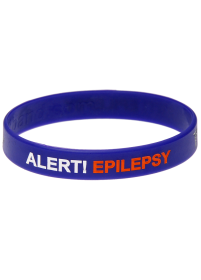
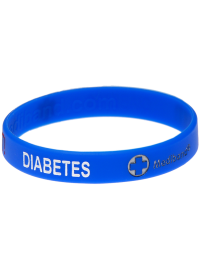
| Pre-printed | The condition is already printed on the band (for example a peanut allergy or diabetes band) | A common single condition you want flagged clearly |
| Write-on | You hand-write details on a write-on panel in permanent pen | Details that change, or a quick low-cost option |
| Custom-engraved or custom-printed | Made to order with your child’s name, condition, medication and contact | A personalised band with specific details |
Pre-printed bands have the condition set on them and cannot be changed, so if you need a name, exact medication or contact number added, choose a write-on band or a made-to-order Custom ID band.
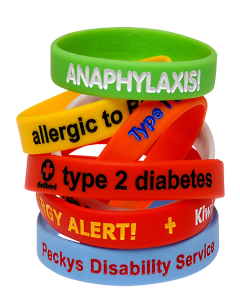
A made-to-order Custom ID band carries exactly what you choose — your child’s name, condition, medication and an emergency contact — in your choice of colour, from a low minimum so you can reorder as they grow.
Medical ID bracelets for school, sport and swimming
A waterproof silicone band stays on through the school day, sport, the pool and the shower, so it is there in the moment it is needed. For school, a clearly flagged allergy or condition band helps teachers and the school first-aider act quickly and supports your child’s anaphylaxis or health-care plan. Because silicone bands are inexpensive, many families keep a spare in the school bag and a second at home. Explore condition-specific bands for allergy and anaphylaxis, diabetes, epilepsy and autism.
The band sums up what might take a parent or teacher several minutes to convey, particularly under stress.— Sharon D., Mediband case study (parent of a child with a severe allergy)
What parents say about Mediband kids’ bands
Verified customer reviews from mediband.com:
My 4yr old son who has now been wearing the band for 2 weeks loves wearing the band which we bought for him to wear in readiness for kindergarten.— Suzy F., verified review, Allergy Alert write-on band
This is the 2nd batch of bracelets I have bought. The first batch of 5 lasted 5 years. This bracelet is the only bracelet my 17 year old will wear. I am glad it was still available 5 years later. They are practically indestructible.— Lauren H., verified review, Diabetes Insulin Dependent band
We have used this style of bracelet from Mediband for about 5 years now and find it perfect for our daughter. She can wear it 24/7 and we can rely on its quality and durability. Thank you.— Jaime O., verified review, Epilepsy Alert band
Needed these as my sons condition is not a ‘normal’ one. So glad I could get the customised to exactly what I needed. My son loves wearing it and it’s top quality.— Natasha S., verified review, Custom Colour Mediband
Getting the size and comfort right
Measure your child’s wrist with a soft tape or a strip of paper and check it against the size guide before ordering — a band should be snug enough not to slide off but loose enough to turn. Silicone bands are light and flexible, so most children forget they are wearing one within a day. Because kids grow, plan to check the fit every few months and reorder a larger size when needed.
Frequently asked questions
What type of medical ID is best for a young child?
For most children a soft silicone band works best: it is waterproof, comfortable, has no clasp to break, and is inexpensive to replace as they grow. A pre-printed band suits a single common condition; a custom or write-on band suits details like a name and emergency contact.
What should be written on a child’s medical ID bracelet?
Put the condition or allergy, any critical medication, and an emergency contact number. Keep it short and readable — a stranger only needs what matters in the first minute, not a full medical history.
Are silicone medical bands safe for kids to wear at school and swimming?
Yes. Silicone bands are waterproof and soft, so they can be worn through the school day, sport, the pool and the shower. Many families keep a spare in the school bag as well.
Can I put my child’s name and my phone number on the band?
Yes, with a made-to-order Custom ID band or a write-on band. Pre-printed condition bands show a set message and cannot be changed, so choose a custom or write-on option if you need personal details added.
How do I choose the right size for my child?
Measure the wrist with a soft tape or a paper strip and compare it to the size guide. Aim for snug but able to turn, and re-check the fit every few months as your child grows.
Silicone medical ID bracelets
Soft, waterproof bands in a range of colours — pre-printed, write-on and custom options.
Shop the silicone rangeCustom ID bands
Made to order with your child’s name, condition, medication and emergency contact.
Design a Custom IDRelated guides: what to engrave on a medical ID · allergy and anaphylaxis medical IDs · diabetes medical IDs
Sources
ASCIA (Australasian Society of Clinical Immunology and Allergy) — anaphylaxis and allergy resources: allergy.org.au
Healthdirect Australia — medical ID and child health: healthdirect.gov.au
Customer reviews quoted verbatim from verified reviews on mediband.com (allergy, diabetes, epilepsy and custom silicone bands).

Written by
Founder, Mediband
Founder of Mediband; over 20 years providing medical IDs worldwide.
← Previous
Recognising a hypo: low blood sugar signs and first aid
Next →
850km on the Camino, one medical alert bracelet: Ron’s anticoagulant story
Comment(s)