
Anapen vs EpiPen: a factual comparison of the two adrenaline autoinjectors
Anapen and EpiPen deliver the same medicine — adrenaline — but they are different devices used in different ways. Whichever one you are prescribed, a medical ID that names the allergy helps responders act fast.
Quick answer
Anapen and EpiPen are both adrenaline (epinephrine) autoinjectors used to treat anaphylaxis — a severe allergic reaction. They contain the same medicine, but they are different devices and are operated differently, so the technique is not interchangeable. The one you carry is the one your prescriber selected: carry it, learn how to use your device, and follow your ASCIA Action Plan. This page is a factual comparison and general information only — not medical advice.
What Anapen and EpiPen have in common
- Both deliver adrenaline (epinephrine) — the first-line medicine for anaphylaxis.
- Both are single-use autoinjectors given into the outer mid-thigh, and can be given through clothing.
- Both are prescription devices available in Australia, and both come in more than one strength based on weight.
- For both, the Australasian Society of Clinical Immunology and Allergy (ASCIA) publishes a device-specific Action Plan for Anaphylaxis and a how-to-give guide.
- After use, call 000 and ask for an ambulance — an autoinjector buys time, it is not a substitute for emergency care.
How Anapen and EpiPen differ

The most important practical difference is how each device is operated — the steps are not the same, which is why training on the specific device you carry matters.
| Feature | EpiPen | Anapen |
|---|---|---|
| Medicine | Adrenaline (epinephrine) | Adrenaline (epinephrine) |
| Strengths (by weight) | 150 mcg and 300 mcg | 150 mcg, 300 mcg and 500 mcg |
| How it is given | Remove the safety cap, then firmly jab the tip into the outer thigh and hold in place | Remove the needle shield and the safety cap, place the needle end on the outer thigh, then press the button and hold |
| Technique | No separate button — pressure triggers it | A separate button triggers it after the caps are removed |
| Storage | Below 25 °C, do not refrigerate, protect from light, replace by the expiry date | Below 25 °C, do not refrigerate, protect from light, replace by the expiry date |
| ASCIA resources | Device-specific Action Plan + how-to-give guide | Device-specific Action Plan + how-to-give guide |
Device steps above are a general summary based on ASCIA guidance. Always follow the instructions for your specific device and your personal ASCIA Action Plan.
An EpiPen and an Anapen are not used the same way. Knowing the technique for the device you actually carry matters more than knowing both.
What is the difference between Anapen and EpiPen?
They contain the same medicine — adrenaline — and treat the same emergency. The difference is the device: Anapen and EpiPen are made by different manufacturers, are operated with different steps, and Anapen is also available in a 500 mcg strength. Neither is "better" in general; the right device is the one your prescriber has chosen for you and that you are confident using. If your device changes, ask your pharmacist or prescriber to run you through the new technique and update your ASCIA Action Plan.
Designed in Australia•
NDIS-registered•
4.9★ verified customer rating•
Helping Australians stay safe since 2004
Carry a medical ID alongside your autoinjector
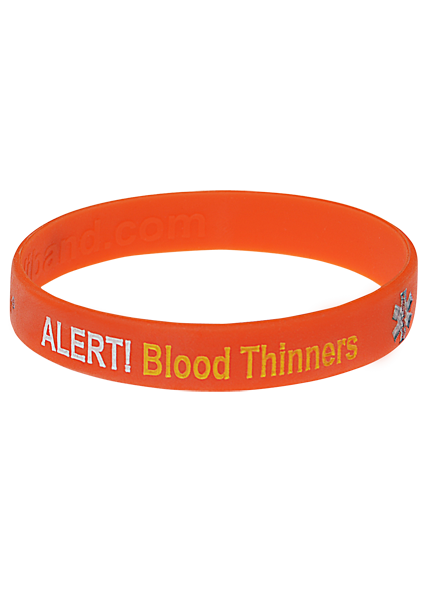
In an emergency, a responder needs to know two things quickly: that the person has a severe allergy, and that they carry adrenaline. A medical alert bracelet that names the allergy — and notes the autoinjector — does that even when the person can't speak. It works alongside the device, never instead of it.
- Anaphylaxis and allergy medical ID bracelets
- What to engrave: medical ID abbreviations (including ALLERGY and EpiPen/Anapen notes)
- How to measure your wrist for the right fit
- Do paramedics check a medical ID?
- Browse all medical alert bracelets
Anapen and EpiPen FAQs
Do Anapen and EpiPen contain the same medicine?
Yes. Both deliver adrenaline (also called epinephrine), the first-line treatment for anaphylaxis. The difference is the device and how it is operated, not the medicine.
What is the difference between Anapen and EpiPen?
They are made by different manufacturers and are operated with different steps; Anapen is also available in a 500 mcg strength. Both are given into the outer thigh. The right one for you is the device your prescriber selected and that you are trained to use.
Can I use one the same way as the other?
No — the techniques differ, so do not assume they are interchangeable. Learn the steps for the specific device you carry, using your ASCIA Action Plan and how-to-give guide, and ask your pharmacist if your device changes.
How should I store an adrenaline autoinjector?
Both are stored below 25 °C, away from light, and should not be refrigerated. Check the expiry date and replace the device before it expires. Follow the storage instructions supplied with your device.
Does a medical ID replace an autoinjector?
No. A medical ID flags the allergy and that adrenaline is carried, helping responders act quickly — but it works alongside the autoinjector, never instead of it.
About this guide. Mediband has designed engraved medical IDs in Australia since 2004 and is an NDIS-registered provider. This page is general, factual information and is not medical advice; it does not recommend one device over another. For how to recognise and treat anaphylaxis, and for device-specific instructions, follow your ASCIA Action Plan and the advice of your prescriber or pharmacist. "EpiPen" and "Anapen" are trademarks of their respective owners; Mediband is not affiliated with, endorsed by, or sponsored by those manufacturers.