Why Medical Alert Bracelets Matter — In One Paragraph
A medical alert bracelet is a small, wearable piece of jewellery that carries critical health information so first responders, doctors, and bystanders know exactly what to do in an emergency when the wearer can't speak for themselves. It tells responders what condition the wearer has, what medication they're on, what allergies must be avoided, and how to reach a family member who can confirm the rest. According to HealthDirect, accurate identification is one of the most important factors in early emergency care — and the bracelet does that job in seconds.
This guide answers the most common questions people ask before buying their first medical alert bracelet, and the questions long-time wearers wish they'd asked sooner.

Who Needs a Medical Alert Bracelet?
Anyone whose treatment, diagnosis, or care could be affected by an emergency. The conditions that most clearly warrant a bracelet:
- Chronic conditions — diabetes, epilepsy, asthma, heart disease, kidney disease, autoimmune disorders.
- Severe allergies — peanut, shellfish, bee sting, penicillin, contrast dye, latex.
- Critical medications — blood thinners (Warfarin, Eliquis), insulin, immunosuppressants, beta-blockers.
- Older adults — falls risk, dementia, recent surgery, complex medication routines.
- Children — allergies, asthma, epilepsy, autism, rare conditions.
- Athletes — anyone whose sport puts them out of regular reach of family or carers.
- Implant recipients — pacemakers, stents, ports, insulin pumps.
- Anyone with an advance care directive — DNR or specific care-wish documentation.
Recommended for you
Products related to this article
Hand-picked to go with what you just read.
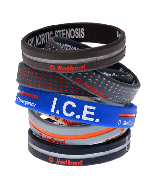
How Does a Medical Alert Bracelet Actually Work?
The mechanism is straightforward but powerful. The bracelet sits on the wrist (or neck, ankle, key chain — whatever works for the wearer) and carries engraved or written information about the wearer's medical condition. When an emergency happens:
- A responder, bystander, or family member notices the bracelet.
- They read the engraved alert — typically primary condition, critical medication, and emergency contact.
- They use that information to make immediate decisions: avoid wrong medications, deliver correct treatment, contact family.
- The wearer gets the right care faster, with less risk of dangerous mistakes.
The Star of Life and snake-and-staff symbols on the bracelet flag it as medical alert to anyone trained in emergency response. Paramedics worldwide are trained to check for these symbols in the first 30 seconds of arriving at any emergency.
What Should I Engrave on My Medical Alert Bracelet?
Less is more. First responders need to read the band in seconds, not minutes. The five priority fields, in order:
- Wearer's name — first name plus last name if there's space.
- Primary medical condition — "Type 1 Diabetic", "Anaphylaxis – Peanut", "Epilepsy".
- Critical medication or allergy — what NOT to give, or what's life-saving ("EpiPen", "No Aspirin", "Warfarin").
- Emergency contact phone number — answered 24/7 by family or carer.
- "See wallet card" — if you carry a fuller medical history elsewhere.
Skip information that doesn't help in an emergency: home address, full date of birth, sensitive history. Less crowding means faster reading.
What Are the Different Types of Medical Alert Bracelets?
Medical alert bracelets come in many forms, each suited to different wearers and situations:
Engraved Stainless Steel
Polished, durable, and dressy. Engraving stays sharp for years. Ideal for adults with stable chronic conditions and daily wear that includes sport, work, and formal occasions.
Silicone Write-On
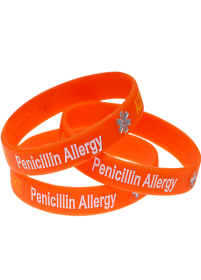
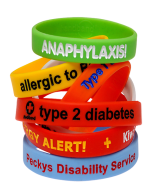
Soft, waterproof, and easy to update. Best for kids, athletes, and people whose medications or contact info change. Cost-friendly enough to replace seasonally as conditions evolve.
Designer Reversible
Stylish on one side, alert on the other. The wearer flips the band based on context — alert side out at the doctor or hospital, designer side out for daily life. Popular with teens, working professionals, and anyone who feels self-conscious.
Premium Materials
Rose gold, sterling silver, leather. For occasions when the band needs to look like jewellery first and a medical ID second. Ideal for adults attending events, formal dinners, or professional contexts.
QR-Coded and NFC Bands
Carry far more information than engraving alone — full medical history, current medications, scanned documents, advance care directives. Useful for international travel, complex conditions, and ultra-distance athletes.
Wallet Card Companions
For people who genuinely won't wear jewellery. A wallet card travels alongside ID and credit cards, carrying the same info. Less reliable in true emergencies (a wrist is checked first) but better than nothing.
How Much Does a Medical Alert Bracelet Cost?
Prices vary widely by material and complexity:
- Silicone write-on: typically the most affordable — entry-level family-friendly pricing.
- Engraved stainless steel: mid-range — durable, lasts a decade or more.
- Designer reversible: mid-to-upper range, depending on materials.
- Rose gold, sterling silver, premium leather: premium pricing for jewellery-grade pieces.
- QR-coded with subscription: bracelet plus annual fee for the digital profile platform.
Compared to even one avoided emergency mistake (wrong medication, wrong treatment, delayed recognition), the bracelet pays for itself many times over. Most wearers consider it the best-value medical purchase they make.
Can Children Wear Medical Alert Bracelets?
Absolutely — and they probably should, if they have any chronic condition or severe allergy. Soft silicone bands are ideal for kids. Tips for getting kids to wear theirs:
- Let your child pick the colour — ownership equals compliance.
- Tie it to a routine — wrist on with shoes, off with pyjamas.
- Pair with a story — "your superhero band" or "your safety bracelet".
- Keep a spare in the school bag — for the day they lose one or it breaks during play.
- Talk gently and age-appropriately — "if you ever feel funny and can't talk, this tells the helper what to do".
How Should I Care For and Maintain My Medical Alert Bracelet?
Daily care is mostly common sense, but a few habits extend the bracelet's life and keep the engraving readable:
- Clean weekly with mild soap and warm water. Avoid harsh chemicals.
- Rinse with fresh water after pool/sea swimming to prevent corrosion on metal links.
- Check engraving annually — replace or re-engrave if information changes (new medication, new contact).
- Replace silicone bands every 12-24 months — they wear with daily use; engraving fades.
- Inspect clasps — if a clasp is loose or rusty, replace before it breaks at the wrong moment.
- Update wallet card or QR profile — every six months as part of routine medical review.
Frequently Asked Questions
Will a medical alert bracelet really save my life in an emergency?
It dramatically improves the speed and accuracy of emergency care. Paramedics worldwide are trained to check for medical IDs in the first 30 seconds of any emergency. The bracelet tells them what NOT to do (wrong medications, wrong treatments) and what to do faster. In situations like diabetic hypoglycaemia, anaphylaxis, or anticoagulant therapy, that information often is the difference between right and wrong care.
What if I'm embarrassed to wear a medical alert bracelet?
Modern designs look like everyday jewellery. Designer reversible bracelets show a fashion side daily and flip to alert when needed. Stainless steel options look professional. Rose gold and sterling silver options pass for premium jewellery. Almost everyone who tries them reports that the embarrassment fades within weeks — replaced by the peace of mind they bring.
Should I update my bracelet when my medication changes?
Yes. An out-of-date bracelet that says the wrong thing is more dangerous than no bracelet at all. Plan to review at every six-monthly GP visit and after any major medication change. Write-on silicone bands are easiest to update. Engraved bands can be re-engraved or replaced inexpensively. QR-linked digital profiles update instantly.
What if I have multiple medical conditions?
Prioritise the alert that most changes emergency response — usually anticoagulants, severe allergies, or implants. Use a wallet card or QR-coded layer for the deeper detail. Some wearers use multiple bracelets for different settings — e.g. a daily-wear stainless steel and a sport-specific silicone — but a single well-engraved band plus wallet card covers most cases.
Can I shower, swim, and exercise with a medical alert bracelet?
Yes — choose the right material. Silicone and stainless steel are both fully waterproof, sweat-proof, and pool-safe. Avoid leather or fabric for water-heavy activities. Always rinse with fresh water after sea swimming to prevent corrosion. Quality bracelets are designed for 24/7 wear without needing to remove them.
What does DNR mean on a medical alert bracelet?
DNR stands for Do Not Resuscitate — a specific medical instruction, distinct from general alert conditions like allergies or diabetes. If you carry a DNR order, see our dedicated DNR bracelet guide for what it means and how to have it recognised.

Written by
Founder, Mediband
Founder of Mediband; over 20 years providing medical IDs worldwide.
← Previous
Medical Alert Bracelets To Help First Responders in Emergencies
Next →
Stay Safe — How a Medical Alert Bracelet Protects Your Family Every Day (2026)
4 Comment(s)
Elspeth Meumann
Jun 25, 2015 05:55
I need to get for my husband who has MS and is on blood thinners. Also for myself I am borderline diabetic and also allergic to sulphur. I find it rather difficult to get these as they are pricy and then we still have to pay and renew them yearly. Is this correct?
Michael Randall
Jun 29, 2015 20:54
Medibands can be purchased without a yearly fee. Mediband does have an optional online health records system at www.medibandplus.com. However, this is free for one year with a purchase of a mediband and then only $7 per year thereafter. Also for 12 months free access visit www.medibandplus.com/free. Hope this helps.
Colin owen
Mar 07, 2015 06:02
i have an alert bracelet when I was take I'll early on this year the paramedic asked what the why I wore a bracelet with a red flower on and the hospital staff asked what it represents ?????
Michael Randall
Mar 07, 2015 06:15
Hi Colin, which medical bracelet is it? Is it a mediband? Maybe you could post a photo of the flower, and we could try and help? regards, Michael