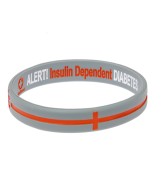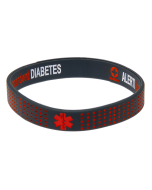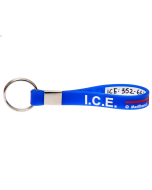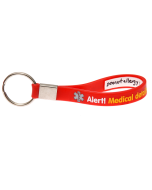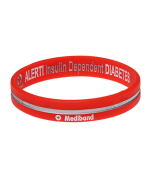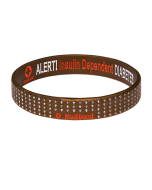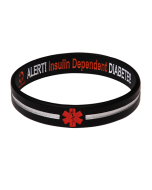
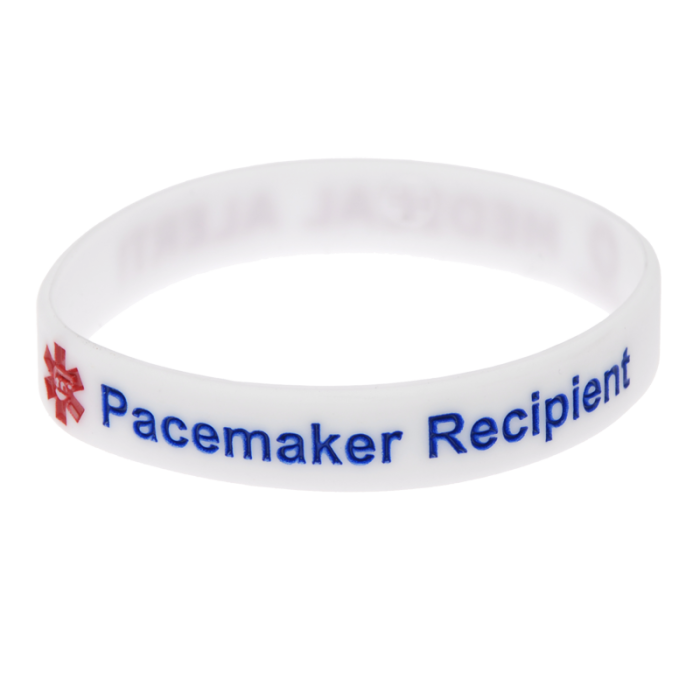
Pacemaker Recipient Medical Bracelet
£4.13
SKU
B2099


Enjoy life more knowing that you - or your loved one - can get immediate and appropriate treatment should something happen
| SKU | B2099 |
|---|---|
| Manufacturer | Mediband |
Pacemaker Recipient Medical Alert Bracelet
The Pacemaker Medical ID Bracelet is essential safety wear for anyone living with an implanted cardiac pacemaker or implantable cardioverter-defibrillator (ICD). In an emergency, paramedics and ED clinicians need to know in seconds that you have a pacemaker — it changes how chest compressions are performed, which medications are used, how MRI imaging is approached, and how external defibrillation is delivered.
Around 30,000 Australians have new pacemakers implanted each year. For every one of them, a visible medical ID bracelet is the difference between fast, correct emergency care and a potentially dangerous mistake.
Why a Visible Pacemaker Bracelet Matters
Pacemaker information changes multiple emergency decisions:
- External defibrillation — pads must avoid the pacemaker site to prevent damage
- MRI scanning — only MR-conditional pacemakers are safe; ED needs to know the device model
- Surgical electrocautery — bipolar preferred; pacemaker may need reprogramming
- Diathermy + radiation therapy — can damage or reprogram the device
- Lithotripsy + TENS units — contraindicated near the pacemaker
- Cardiac event — new arrhythmias need pacemaker interrogation
The bracelet bridges the gap between scene arrival and full clinical handover.
What to Engrave on a Pacemaker Bracelet
- "Pacemaker" or "ICD" (implantable defibrillator) — whichever applies
- Implant year — e.g. "PM 2023"
- MR status — "MR-conditional" if your device is MRI-safe
- Manufacturer model if space permits (Medtronic, Boston Scientific, Abbott, Biotronik)
- Your name + cardiologist's phone
Who Should Wear One
- Anyone with a single-chamber, dual-chamber or biventricular pacemaker
- Patients with an implantable cardioverter-defibrillator (ICD)
- Cardiac resynchronisation therapy (CRT) device recipients
- Leadless pacemaker (Micra) recipients
- Patients with implanted cardiac monitors (Reveal LINQ)
Living Safely with a Pacemaker
Common precautions explained:
- Airport security — carry your pacemaker card; metal detectors are usually fine but inform staff
- Mobile phones — keep at least 15cm from the device site (use opposite ear/pocket)
- Strong magnets — avoid prolonged exposure (motor windings, MRI rooms without medical clearance)
- High-voltage electrical equipment — avoid (some industrial settings)
- Sports — most contact sports are fine after healing; check with your cardiologist
How Paramedics Read the Bracelet
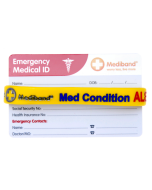
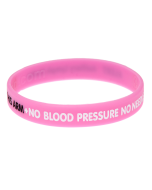
White silicone + Star of Life + "Pacemaker" text is instantly recognised by every Australian paramedic crew. They will position defibrillator pads correctly, avoid the device site for compressions, and pre-alert cardiology on the way to ED.
Care & Sizing
Medical-grade silicone, waterproof, MRI-safe, 4-5 year lifespan. S/M/L/XL.
Related Mediband Medical Alert Bracelets
Frequently Asked Questions
Quick answers from the Mediband team
What is a pacemaker bracelet?
A medical alert bracelet engraved with 'Pacemaker' (or 'ICD') that tells paramedics, ED clinicians and any healthcare worker the wearer has an implanted cardiac device. It guides decisions on defibrillation pad placement, MRI safety, surgical cautery and emergency cardiology consults.
Why do pacemaker patients need this on top of their pacemaker card?
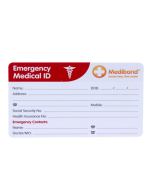
The card lives in your wallet; the bracelet lives on your wrist. In an emergency the bracelet is checked within 30 seconds of paramedic arrival — the wallet card may take 5-10 minutes to find, by which time critical decisions have already been made.
What's the difference between a pacemaker and an ICD?
A pacemaker prevents slow heartbeats; an ICD shocks dangerous fast arrhythmias. Both need a medical alert bracelet for the same reasons. Engrave the specific device type so emergency teams know what to expect.
Can I get an MRI with a pacemaker?
Only with an MR-conditional pacemaker, in an MRI suite with cardiologist clearance and pacemaker reprogramming for the scan. Engraving 'MR-conditional' on your bracelet speeds this up significantly. Older non-MR-conditional pacemakers are still a contraindication to standard MRI.
Does the bracelet interfere with the pacemaker?
No — silicone is electromagnetically inert and safe to wear 24/7 regardless of device location. Many pacemaker patients wear the bracelet on the opposite wrist for comfort, but either wrist is fine.
Related Products
Check items to add to the cart or