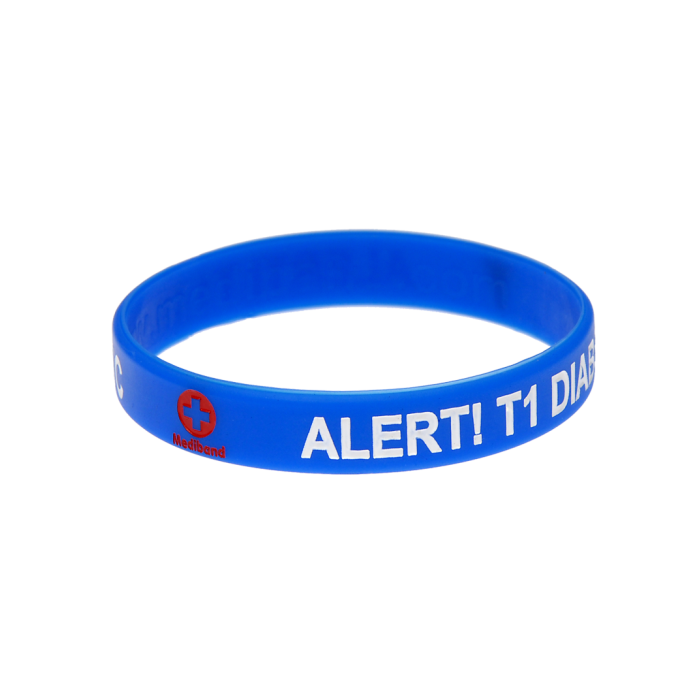
Type 1 Diabetes Medical Bracelet
£4.13
SKU
B1205
Secure checkout
VISA
Mastercard
Apple Pay
Google Pay
+5 more
Also accepted
AMEX
Afterpay
Zip
Klarna
PayPal
Enjoy life more knowing that you - or your loved one - can get immediate and appropriate treatment should something happen.
4.9 · 25 reviews
Since 2004
Looking for the full diabetes ID guide?
The Diabetes hub covers Type 1, Type 2 and pump users — engraving examples for hypo response, GLP-1 therapy, MDI and insulin pump settings, plus NDIS funding and the full Mediband diabetes product range.
Type 1 Diabetes Alert Medical ID Bracelet
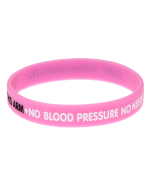
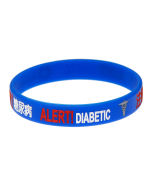
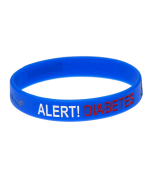
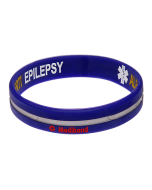
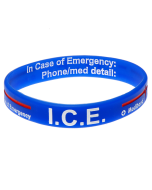
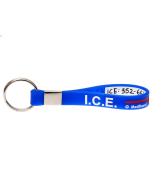
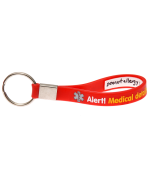
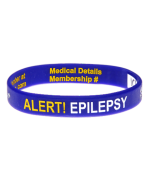
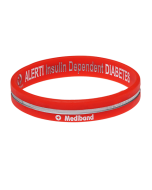
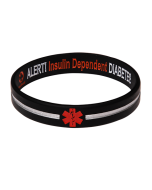
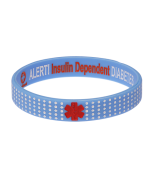
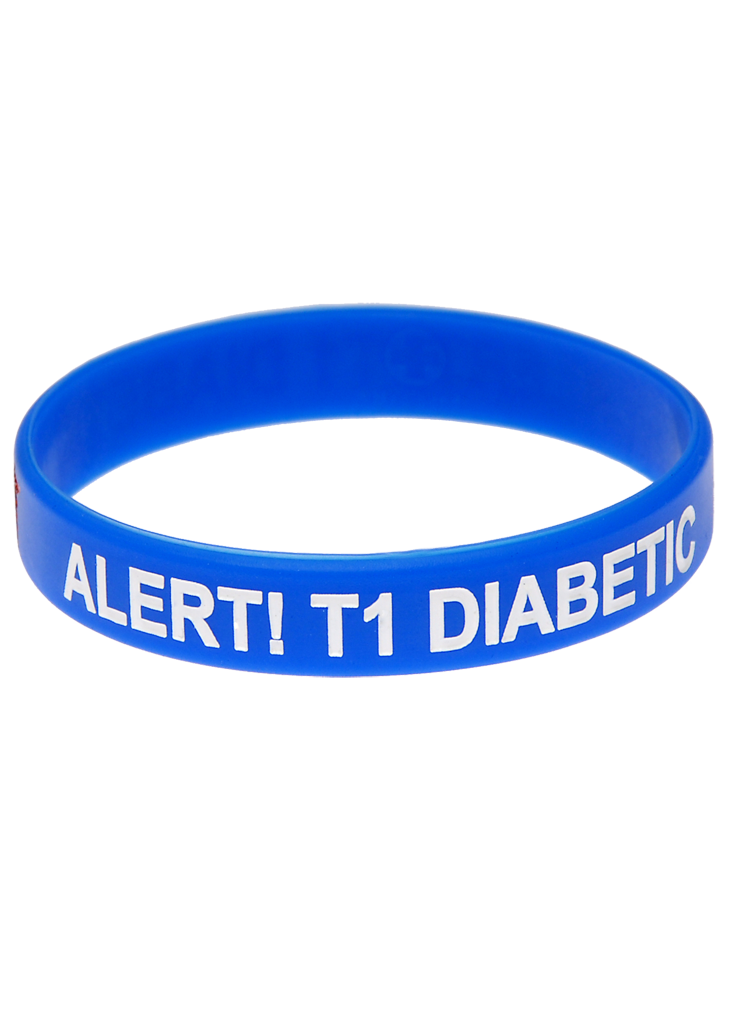
A pre-printed blue silicone band carrying a type 1 diabetes alert in white, with the Mediband and Star of Life marks. There is no clasp, nothing to unfasten and nothing to scan — a stranger, a colleague or a paramedic can read it from where they are standing.
The reason that matters is specific to type 1, and it is not really about the diabetes. It is about what a severe hypo looks like to someone who does not know you.
The misreading this band is designed to prevent
Healthdirect lists what happens as a hypo becomes severe: you may become confused, have slurred speech, behave strangely or look like you are drunk, have a seizure, or become unconscious.
Why that list is the whole argument
Read it again as a bystander would. Confused, slurred, unsteady, behaving oddly — that is a person a passer-by walks past, that a venue removes, that a well-meaning stranger decides is intoxicated rather than critically unwell. A blue band that says type 1 diabetes redirects that judgement in about a second, and what follows is a blood glucose check instead of a taxi home.
Healthdirect's guidance for a person who is drowsy or unconscious is to call triple zero (000) and ask for an ambulance, and to give glucagon if one is available and you know how to use it. None of that starts until somebody realises what they are looking at.
And the other direction
High blood glucose carries its own emergency in diabetic ketoacidosis, which can also end in collapse. Because both ends of the range can present as a person who cannot explain themselves, the useful thing to put on a wristband is not a number or a dose — it is the condition, so the first response is to check a blood glucose level.
Living with type 1
In type 1 diabetes the immune system destroys the insulin-producing beta cells in the pancreas, so the body can no longer make its own insulin. Insulin is what lets cells take up glucose for energy; without a replacement supply, glucose stays in the blood while the body goes without fuel.
Management means replacing that supply for life — by injection or by pump — and steering blood glucose toward a target range against food, exercise, illness, stress, sleep and hormones, all of which move it. It is relentless, and it is why both hypos and highs happen to people who are managing well. A medical ID is not an admission that anything has gone wrong; it is cover for the times when the arithmetic does not work out.
Which diabetes band fits your situation
We make several, and the right one depends on how you take insulin and how much detail a responder needs.
| Band | What it states | Choose it when |
|---|---|---|
| This band — type 1 alert | Type 1 diabetes | You want the diagnosis itself read at a glance |
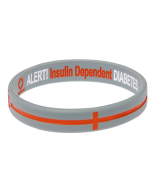
| Insulin dependent diabetes | Insulin dependence | The treatment matters more to a responder than the type |
| Diabetes on insulin pump | Pump in use | You wear a pump — staff need to know before they move or remove it |
| Write-on diabetes band | You add it | You want a contact number, a dose or hypo instructions on the band |
| Designer reversible band | Insulin dependence | You want it to read as jewellery on the days you need that |
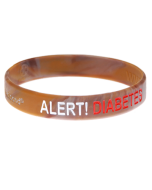
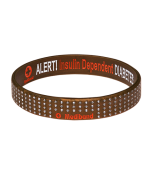
If you wear a pump, the pump band is usually the better primary choice — it answers a question theatre and imaging staff have to ask, and the type can go on a second band or a custom ID. Teenagers who will not wear blue tend to keep the camouflage version on, which beats a better band in a drawer. The full range, including engraving examples for hypo response and pump settings, is on the diabetes medical ID hub.
What this band does not do
The wording is moulded in and fixed. You cannot add a name, a phone number, an insulin type or a hypo plan to it. If you need any of that, use a write-on band or a made-to-order Mediband Custom ID in engraved steel or custom-printed silicone — and if you are unsure how to word it, our guide to medical ID abbreviations covers which shorthand clinicians actually read.
It also does not replace carrying hypo treatment, telling the people around you what to do, or keeping your record current. It buys recognition; everything else you have prepared is what uses the time.
Sizing, wear and care
Getting the fit right
Available in small, medium, large and extra large. Measure around the wrist and check our wrist measurement guide. Snug enough that it will not slide over the hand, loose enough to rotate and to slip a fingertip under. For a child, re-measure each year rather than assuming last year's band still fits.
Keeping it legible
Medical-grade silicone with no metal and no clasp, so it stays on in the shower and the pool and does not interfere with imaging. Wash with warm water and mild soap; rinse after chlorine, salt water or sunscreen; air dry. Replace it when the white infill has worn back far enough that the wording no longer reads at a glance — these are inexpensive precisely so that replacing one is not a decision.
For clinics, pharmacies and schools
Single bands can be ordered here. For a pharmacy counter, a diabetes educator's clinic, a school sick bay or a camp, tell us quantities and sizes and we will come back with pricing and a date.
Frequently asked questions
Should it say type 1 diabetes or insulin dependent?
Both work. “Insulin dependent” tells a responder what you are treated with, which is often the more immediately useful fact; the type tells them the underlying diagnosis. If you want both, wear one band and put the other wording on a custom ID.
Can I put my hypo plan or a phone number on it?
Not on this band — the wording is fixed. The write-on version has a panel for exactly that, and a custom engraved ID will hold more text permanently.
Can I wear it with a pump or a CGM?
Yes — it is a plain silicone band with no electronics and no metal, so it does not interfere with a pump, a sensor or their readings. If you wear a pump, consider the pump-specific band as well, since that is information staff need before handling the device.
Will it survive sport and swimming?
It is waterproof silicone with nothing to catch or corrode, so it stays on for training, games and the pool. That is a real advantage over a metal ID that gets taken off for sport and then forgotten.
Is it suitable for a child?
Yes, in the small size. For school, the band works alongside the management plan rather than instead of it — the plan is what staff follow, the band is what a relief teacher or a parent helper on an excursion can see without having read the file.
Do paramedics really check for these?
Checking wrists and neck for medical identification is part of a standard primary survey. We go through what that looks like in practice in do paramedics check medical ID.
Product specification
- Phrase 1: Alert! T1 Diabetes
- Phrase 2: Alert! T1 Diabetes
- Logo: Mediband and Star of Life
- Colour: Blue
- Colour infill: White, red and silver
- Material: Medical-grade silicone, no metal parts
- Sizes: Small, medium, large, extra large
SKU B1205Manufacturer Mediband
| SKU | B1205 |
|---|---|
| Manufacturer | Mediband |
Shipping
In-stock orders are dispatched the same business day when placed before 12pm AEST, Monday to Friday (excluding public holidays). Orders placed after 12pm AEST, or on weekends and public holidays, are dispatched the next business day.
Express, Regular and Courier delivery estimates are shown at checkout and apply from the dispatch date.
More information about shipment and delivery times can be found on our shipping page.
Returns & guarantee
100% Quality Guarantee. Your satisfaction is our priority. If there is a confirmed quality issue, return the item to us in its original condition and packaging within 14 days of receipt and we will issue a full refund (excluding the original delivery charge) or replace the item.
In-stock items may be exchanged for a different size or colour, provided they are returned as new, unworn and in their original packaging within 14 days of receipt.
Custom and made-to-order items are produced to your specification, so we do not accept returns or exchanges for change of mind, size or colour. Please check your size, colour, spelling and details carefully before ordering. First Aid Kits and Defibrillator Supplies also cannot be returned or exchanged except for a confirmed quality issue.
Please view terms and conditions for further information.
Loading reviews…
Complete your order