
By Michael Randall, Founder, Mediband · Updated 12 June 2026 · 9 min read
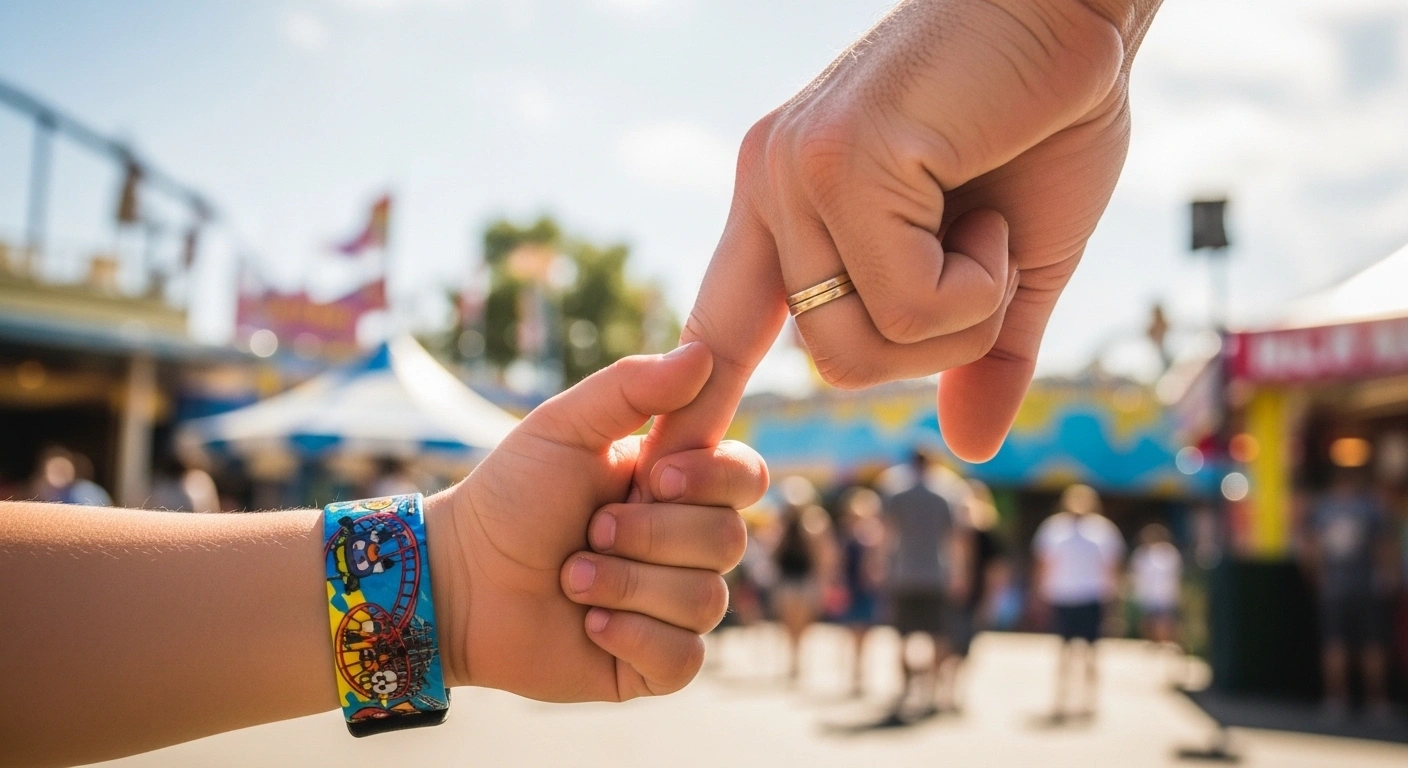
Unexpected kid accidents are how most parents discover the gap between "we're a safe family" and "we needed help in three seconds". A peanut at a friend's house. A wasp at the park. A seizure in the supermarket. The Australian Bureau of Statistics tracks 600+ child emergency presentations every day for accidents that "couldn't have happened to us".
What changes the outcome isn't preventing every accident — that's impossible. It's making sure that when one happens, the first responder sees the condition, medication and parent contact in the first 5 seconds. That's what a medical ID bracelet does.
Why kids need medical IDs even when they "look healthy"
Allergy & Anaphylaxis Australia reports that 1 in 10 Australian babies develop a food allergy. 1 in 250 will have a severe anaphylactic reaction by age 5. 1 in 9 kids have asthma. 1 in 100 are on the autism spectrum. Many won't show the condition until the first emergency — which is exactly when the bracelet becomes critical.
A medical ID isn't about being sick — it's about being seen. Paramedics in NSW, VIC and QLD train to check wrists first on any unresponsive or distressed child. The bracelet IS the diagnosis when the child can't say it.
5 unexpected accident scenarios where medical IDs save lives
1. Anaphylaxis at a birthday party
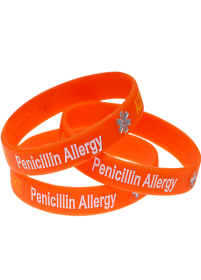
Cross-contamination is the silent killer. A bowl of party mix with a "may contain traces of peanut" label, a slice of cake near the icing, a sibling's juice with milk protein. The anaphylactic response can start within 5 minutes. A bracelet reading "Anaphylaxis: peanuts — EpiPen" tells the host parent and paramedic what to do.
2. Asthma attack on the school oval
One in 9 Australian kids has asthma; one in 3 of those have severe forms. Sport, dust, cold air, allergens all trigger. The bracelet listing "Severe asthma — Ventolin" gets paramedics finding the inhaler in the school bag first, not the EpiPen.
3. Seizure in a public place
Epilepsy Action Australia data: many kids first seizure happens BEFORE diagnosis. If a child has a previously-diagnosed seizure disorder, the bracelet listing "Epilepsy — recovery position OK" prevents bystanders from misinterpreting symptoms.
4. Autism meltdown in a busy shopping centre
For kids on the spectrum, sensory overload can look like distress or aggression to a bystander. A bracelet reading "Autism — may not respond to name, call Mum [number]" replaces a stressful police interaction with a clear pickup call.
5. Diabetes hypo at sport
Type 1 diabetic kids burn through glucose fast during exercise. A hypoglycaemic event presents as confusion, sweating or collapse. The bracelet reading "Type 1 Diabetes — Insulin pump" tells paramedics to check blood glucose before treating with anything else.
Recommended for you
Products related to this article
Hand-picked to go with what you just read.
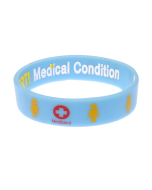
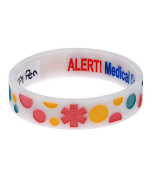
Fitting a medical ID for every kid — step by step
Step 1: List every diagnosed condition
Allergy, anaphylaxis, asthma, autism, diabetes, epilepsy, ADHD if relevant, blood disorders, severe eczema. Write each one + the key medication.
Step 2: Pick a kid-friendly design
The bracelet only works if the kid wears it. Bubbles, butterflies and robots are popular kids designs; teens prefer black or silver-cross unisex styles. Let them choose — engagement comes from autonomy.
Step 3: Write the right info
Name first, then condition + medication, then parent mobile. Use a fine-tip permanent marker. The reverse side stays blank — flip it for paramedics, hide it for school photos.
Step 4: File the school action plan
Anaphylaxis and asthma action plans should be in the school office AND on the wrist. The plan covers the day-to-day; the bracelet covers the moment.
Step 5: Refresh quarterly
Wipe with isopropyl alcohol, rewrite if text is fading. Replace any cracked or sun-bleached silicone (3-5 year lifespan).
Common kid medical-ID write patterns
Anaphylaxis
- Name + age
- "Anaphylaxis: peanuts — EpiPen prescribed"
- Mum mobile
Asthma
- Name + age
- "Severe asthma — Ventolin in school bag"
- Parent mobile + school number
Autism
- Name + age
- "Autism — may not respond to name"
- "Call Mum" + mobile
Type 1 diabetes
- Name + age
- "Type 1 Diabetes — Insulin pump"
- Parent mobile + GP
Epilepsy
- Name + age
- "Epilepsy — recovery position OK"
- Parent + emergency contact
Australian organisations that back this safety net
- Allergy & Anaphylaxis Australia — ASCIA anaphylaxis action plans
- Asthma Australia — asthma action plan templates
- Diabetes Australia — NDSS subsidies + paediatric pathways
- Epilepsy Action Australia — seizure management + school education
- Autism Spectrum Australia — sensory-overload guidance
- Royal Children's Hospital Melbourne — paediatric clinical fact sheets
Five seconds, one bracelet, one less tragedy
You can't anticipate the wasp, the cross-contaminated lunch or the playground trigger. You CAN make sure that when it happens, the paramedic finds the answer on the wrist in seconds. Every diagnosed Australian kid should wear one. Every undiagnosed kid 5+ should wear one with ICE details.
Frequently Asked Questions
Quick answers from the Mediband team
Why should a healthy child wear a medical ID bracelet?
Even without a diagnosed condition, a medical ID with ICE (In Case of Emergency) details — name, parent mobile, GP — saves first-responder time when a child is lost, injured or unresponsive. School excursions, beach days and busy shopping centres are common scenarios.
How quickly do paramedics check a child's wrist for a medical ID?
Australian state ambulance services train paramedics to check wrists, neck and ankles in the first 30 seconds of any unresponsive or distressed child presentation. A visible bracelet shortcuts diagnostic time significantly.
Can a Mediband bracelet survive school sports and swimming?
Yes — medical-grade silicone is sweat-proof, chlorine-resistant and dishwasher-safe. The reversible write-on design keeps the writing on the inside, blank colour outside, so it survives the playground without fading.
What should I do if my child refuses to wear their medical ID?
Give them ownership — let them pick the design (bubbles, butterflies, robot or plain colour), the colour and the wording. Kids who feel autonomy wear the bracelet at a 90% rate versus 30% for parent-imposed designs.
Are medical ID bracelets safe for babies?
Yes for babies over 6 months with a diagnosed condition. Soft silicone, latex-free, breakaway-safe under tension. For under 6 months, sock labels or pram-attached IDs are recommended over wrist bands.
How often should I update what's written on a kid's bracelet?
Quarterly minimum. Update immediately after any new diagnosis, medication change, allergy identification or parent-phone change. The reversible write-on design makes updates a 30-second job.
Are there subsidies for medical ID bracelets through Medicare or NDIS?
Most Medicare-subsidised health plans don't cover medical-ID bracelets directly, but NDIS plans for autism, intellectual disability or chronic conditions often include them as approved support items. Check with your NDIS coordinator.

Written by
Founder, Mediband
Founder of Mediband; over 20 years providing medical IDs worldwide.
← Previous
Staying Healthy, Happy and Safe: A Practical Family Guide
Next →
Ashleigh's Story: How a Mediband Saved Her Life After Epilepsy & Propofol Allergy
Comment(s)