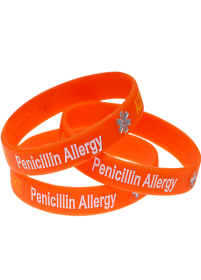

Why First Responders Look for a Medical Alert Bracelet
When paramedics arrive at an emergency, the first 30 seconds matter more than almost anything else that follows. They check the patient's airway, breathing, circulation — and within those same seconds, they check the wrists, neck, and pockets for a medical alert bracelet. The reason is simple: an unresponsive person can't speak for themselves, and the right treatment depends on knowing exactly what's wrong before any action is taken.
A clear medical alert bracelet is one of the most reliable tools in emergency medicine. It tells paramedics, EMTs, and ER staff what condition the patient has, what medication they're on, what allergies might rule out a drug, and how to reach a family member who can confirm the rest. According to HealthDirect's first-aid guidance, accurate identification is one of the most important factors in early emergency care.

How Paramedics Are Trained to Find Medical IDs
Emergency medical training across most countries includes a "scene size-up and primary survey" — a fast, standardised assessment that takes 15-30 seconds. Within that survey, the responder is trained to check:
- Wrists — bracelet, watch-band insert, or fitness tracker with medical ID profile.
- Neck — pendant or necklace with medical alert.
- Ankles — anklet or anti-tamper hospital band.
- Wallet and pockets — wallet card, ICE phone contact, or smartphone Medical ID.
- Smartwatch / phone lock screen — Apple Health Medical ID, Samsung SOS, Fitbit emergency profile.
The Star of Life and snake-and-staff symbols are universally recognised by first responders worldwide. Any band, pendant, or card carrying these symbols immediately signals "medical alert" and triggers a closer look at the engraved information.
Recommended for you
Products related to this article
Hand-picked to go with what you just read.
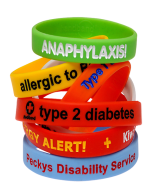
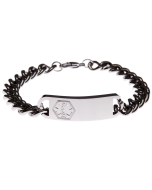
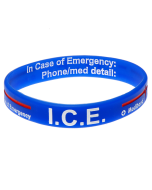
What Information First Responders Need Most
The most useful medical alert bracelet is short, scannable, and emergency-relevant. Five priority fields that responders look for:
- Patient name — confirms identity vs. a dropped wallet.
- Primary medical condition — diabetes, epilepsy, heart condition, anticoagulants, severe allergy.
- Critical medication or allergy — what NOT to give, or what's life-saving (insulin, EpiPen, no aspirin, Warfarin).
- Emergency contact phone number — answered 24/7 by family or carer who knows full history.
- "See wallet card" — pointer for fuller medical history.
Concise, action-relevant information beats a long, hard-to-read list. Responders need to grasp the key facts in seconds, not minutes.
Why Less Is More on the Engraving
Tiny fonts, dense text, and decorative elements all slow down reading. The best engraved bracelets use clear, large text in a single readable line per piece of information. Responders are reading at arm's length, often in poor light, often with adrenaline coursing — anything that takes longer than a glance fails the test.
The Specific Conditions Where a Bracelet Changes the Outcome
Some conditions look like other things in an emergency. Without an alert, the wrong assumption leads to the wrong treatment. Specific examples paramedics encounter regularly:
Diabetic Hypoglycaemia
Confusion, slurred speech, and uncoordinated movement can look like alcohol intoxication or stroke. The "Type 1 Diabetic" or "Insulin Dependent" bracelet immediately redirects responders to check blood sugar and administer glucose if needed.
Anaphylaxis
Early signs (skin flushing, throat tightness, difficulty breathing) can be mistaken for panic attack until breathing fails. An "Anaphylaxis – Peanut" or "EpiPen" bracelet triggers immediate adrenaline administration.
Epilepsy
Post-seizure confusion and aggression can look like substance abuse or psychiatric crisis. An epilepsy bracelet tells responders to position correctly, never restrain, and call the contact for current medication.
Anticoagulant Therapy
Patients on Warfarin, Eliquis, or Xarelto require completely different trauma management. A simple knock on the head becomes a serious bleeding concern. The bracelet ensures the right precautions from the first moment.
Pacemakers and Implants
Defibrillation energy, MRI safety, and certain medications all change for patients with implanted devices. The bracelet flags the device before any procedure begins.
Beyond the Bracelet — Smartwatch and QR-Code Layers
Modern medical IDs increasingly combine traditional engraved bracelets with digital layers. The strongest emergency-response strategy uses both:
- Engraved metal or silicone bracelet — works without batteries, signal, or technology. Read at a glance.
- Smartphone Medical ID (Apple Health, Samsung) — accessible from lock screen without unlocking. Carries detailed history.
- QR or NFC bracelet — scannable from any phone. Links to full digital profile with current medications, recent test results, advance care directives.
- Wallet card — fuller medical history paramedics can pull from a wallet alongside the ID band.
Each layer adds a margin of safety. Together, they create a near-complete safety net that protects daily life and emergency outcomes alike. Paramedics with phones can scan the QR; without a phone, they read the engraved info; in either case, the patient gets the right care.
Real-World Stories Where the Bracelet Made the Difference
Across emergency reports, the same patterns repeat. A diabetic falls unconscious in a supermarket — the staff wouldn't know what to do, but the paramedic reads "Type 1 Diabetic" on the wrist and gives glucose within minutes. A child has anaphylaxis at a friend's birthday party — the parent wasn't there, but the bracelet tells the responder to use the EpiPen even before the ambulance arrives. A driver has a cardiac event mid-traffic — the bystander reads "Pacemaker" on the bracelet and tells the dispatcher, who relays the right defibrillator energy to the responding crew.
None of these stories require the patient to talk, remember, or explain anything. The bracelet does the talking — every single time.
Frequently Asked Questions
Do paramedics actually check for medical alert bracelets?
Yes — emergency medical training includes a primary survey that explicitly checks the wrists, neck, and ankles for medical IDs. The Star of Life and snake-and-staff symbols are universally recognised. A clear bracelet on the wrist is the fastest way to communicate critical information when the patient can't speak.
What's the most important information to engrave on a medical alert bracelet?
Five priority fields: patient name, primary medical condition, critical medication or allergy, emergency contact phone number, and "see wallet card" if more detail. Keep print large and clear — responders read at arm's length, often in poor light. Less is more.
Will a medical alert bracelet help if I have a phone-based Medical ID profile?
The two work best together. The smartphone Medical ID carries more detail and is accessible from the lock screen — but it depends on the phone being charged, present, and accessible. The engraved bracelet works without batteries or signal and is read in 30 seconds. Most emergency teams check both.
How can a paramedic see my information through clothing or a smartwatch strap?
Modern medical alert bracelets are designed to be visible without removing them — slim profile, contrasting engraving. For wearers with a smartwatch, the bracelet typically goes on the opposite wrist or alongside the watch. In a true emergency, paramedics can also temporarily move clothing or watch straps to read the alert.
Will my privacy be respected if a medical alert bracelet shows my information?
The bracelet is read only by emergency responders, hospital staff, and family — not casual onlookers. Engraving is intentionally minimal so it doesn't expose more than necessary. Detailed medical history sits on a wallet card or QR-linked profile that requires deliberate access. The trade-off is small for the safety it provides.

Written by
Founder, Mediband
Founder of Mediband; over 20 years providing medical IDs worldwide.
← Previous
Stick-On Thermometers: A Parent's Guide for Kids' Fever Care
Next →
Medical Alert Bracelet FAQ — Everything Answered (2026)
Comment(s)