

Why Medical ID Wristbands Matter Beyond the Hospital Wristband
Walk into any hospital and you'll see them on every patient: the standard plastic ID wristband. It carries a name, a hospital number, and sometimes a colour code for allergy or fall risk. It's a remarkable, low-tech invention — and a quiet workhorse of patient safety. But a hospital admission band is just one form of medical ID. The principle of "wear your critical info on your wrist" extends well beyond the ward.
Medical ID wristbands serve people across hospitals, aged care, clinical trials, ambulance transfers, school excursions, sports events, and home life. The job is the same: tell anyone responsible for a person's care exactly what they need to know — quickly, reliably, and without depending on paperwork.

The Different Settings Where Medical ID Wristbands Are Used
Each environment has its own variant of the wristband, with its own purpose and design rules:
- Hospitals (admission ID bands) — issued at intake; carry name, DOB, hospital ID, and colour codes for allergies/falls/DNR.
- Aged care facilities — colour-coded bands for falls risk, dementia, and special-care residents, often paired with personal medical alert bands.
- Clinical trials and pharmaceutical research — participants wear study ID bands so site staff can confirm enrolment and track dosing safely.
- Ambulance and inter-hospital transfers — provide receiving teams immediate context about the patient's condition.
- Schools, camps, sport events — children and young athletes wear allergy or condition alerts during activities away from home.
- Personal everyday wear — adults with chronic conditions, allergies, or anticoagulant medication wear alerts for daily life.
Why Pharmaceutical and Clinical Trial Settings Use Wristbands
Clinical trials run on tight protocols. A participant's wristband identifies them inside the trial system, signals which arm of the study they're in (where appropriate), and supports correct dosing of investigational products. Beyond that, many trial participants also wear a personal medical alert band that flags any condition or medication a clinician outside the trial would need to know about — particularly when an emergency happens between visits.
Recommended for you
Products related to this article
Hand-picked to go with what you just read.
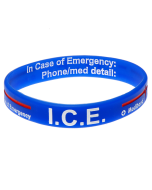
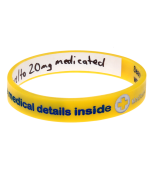
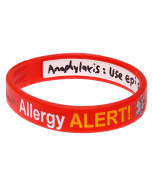
What Information Belongs on a Medical ID Wristband
The information depends on the setting — but the principles overlap. Whether for hospital admission, clinical trial enrolment, or daily community wear, a medical ID should answer the same question: "What does the next person reading this need to know to act correctly?"
Hospital Admission Bands
- Patient first and last name
- Date of birth
- Unique hospital identifier (URN, MRN, NHI)
- Allergy alerts (red band)
- Falls or DNR alerts (coloured/symbol bands)
Personal Medical Alert Bracelets
- Wearer's name
- Primary medical condition (e.g. "Type 1 Diabetic", "Anaphylaxis – Peanut")
- Critical medication or allergy ("Warfarin", "No Aspirin", "EpiPen")
- Emergency contact phone number
- "See wallet card" pointer if more detail is in a bag or purse
Clinical Trial Wristbands
- Trial protocol or study identifier
- Participant ID (de-identified)
- Trial site/contact for verification
- Critical safety alert if applicable (e.g. immunosuppressed, blinded)
Choosing the Right Wristband for the Job
Not every wristband suits every setting. The wrong material or design can fail at the worst possible moment — peeling off in pool water, snapping during sport, fading after a few weeks of sweat. Match the band to the use case:
Disposable Tyvek and Vinyl
One-time-use bands for hospital admission, day surgery, festivals, or trial visits. Cheap, single-use, tear-resistant, comfortable for short stays. Not durable enough for permanent personal wear.
Silicone Write-On
Soft, waterproof, washable, and easy to update. Best for personal medical alert wear, kids, athletes, and anyone whose information changes regularly. Replaceable inexpensively when worn.
Engraved Stainless Steel
For permanent, professional-looking IDs that don't change often. Survives years of daily wear. Common choice for adults with stable diagnoses (e.g. diabetes, pacemaker, anticoagulants).
Reversible / Designer Bands
Pretty side out for daily life, alert side out for clinical settings. Popular with teens, working professionals, and anyone who feels self-conscious about looking "medical" all the time.
Hospital Wristbands and Patient Safety
According to national patient safety standards, accurate patient identification is one of the foundational requirements for safe care. Wristband checks are integral to:
- Medication administration (the "five rights")
- Surgical safety checklists
- Blood transfusion verification
- Imaging and procedure handovers
- Specimen labelling
When wristbands are illegible, missing, or wrong, error rates climb. A clearly-worn personal medical alert adds a second layer for high-risk patients.
The Future of Medical ID Wristbands
Newer designs increasingly include barcodes, RFID, or QR codes that link to a digital patient record. In some hospitals, scanning the band pulls up the active medication chart, allergies, and care plan instantly. For personal wear, QR-coded bands let a paramedic open an emergency profile from a smartphone. The fundamental concept hasn't changed — wear your critical info on your wrist — but the way responders read that info is moving fast.
Frequently Asked Questions
What's the difference between a hospital ID wristband and a medical alert bracelet?
A hospital ID wristband is issued at admission with name, DOB, and hospital number — it identifies you within that hospital. A medical alert bracelet is a personal item worn 24/7 that carries diagnosis, allergy, and emergency contact info, going with you everywhere from home to school to ambulance to ER.
Are clinical-trial wristbands required by regulation?
Most clinical trials use participant identification — sometimes a wristband, sometimes a card or both — to confirm enrolment, support correct dosing, and protect blinded protocols. Specific requirements depend on the trial sponsor, country, and ethics committee, but reliable identification is a universal safety standard in research.
Can I wear a personal medical alert bracelet alongside a hospital admission band?
Yes — and you should. The hospital band identifies you inside that hospital; your personal alert band travels with you across systems and through time. Many patients wear both, often on different wrists. Hospital staff are accustomed to seeing both and will check each appropriately.
How long should I wear a medical ID wristband before replacing it?
Disposable hospital and event bands: discard after the stay or event. Silicone write-on: replace when worn, faded, or torn — typically 12-24 months of daily wear. Engraved stainless steel: years, often a decade or more if the engraving stays legible and condition info doesn't change.
Are QR-coded medical wristbands worth it compared to traditional engraved ones?
QR-coded bands can carry far more information — full medical history, current medications, scanned documents — than an engraved band. The downside: they require a smartphone and the linked profile to be online and up-to-date. Best practice is both: a QR pointer plus printed essentials a paramedic can read at a glance.

Written by
Founder, Mediband
Founder of Mediband; over 20 years providing medical IDs worldwide.
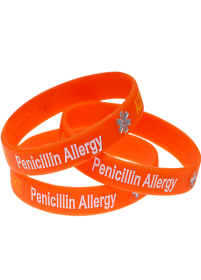


I'm currently starting a drugs trial for kidney cancer. I was diagnosed with renal cell carcinoma in July 2021, had a total nephrectomy (kidney removal) August 9th 2021. My results came back T3, stage 3 kidney cancer. As chemotherapy doesn't work for this type of cancer, I have been put on a drug trial, hoping it will slow my cancer down. I carry a card, telling doctors and GPS not to treat me and to treat me and to ring 24 hour oncology department. I carry this card in my purse, but feel I should be wearing AA bracelet to make it more obvious
Could you tell me if you have bracelets for trials please?
Kind Regards
Susan Lloyd
Yes, we supply to the UK and EU via www.mediband.com. We'll email you now with details. Thank you.
Mediband has a very large range of products available at https://www.mediband.com/gb/. However, the best solution for you would be to create a custom mediband:
https://www.mediband.com/gb/customised#___SID=U&p=3&gan_data=true
You should be able to fit most on there. If not, when placing your order, let us know the full phrase in the order notes.
regards,
Michael