


medical id bracelet australia

When emergencies strike, seconds can define survival. For carers and first responders, the ability to identify a patient’s medical condition instantly isn’t optional—it’s lifesaving. A small engraved band on the wrist can close the communication gap between the patient and the team providing care. This article explores why medical ID bracelets are vital, what they should contain, and how to choose the right one for dependable, daily protection.

Why Medical ID Bracelets Are Vital for Emergency Response

A medical emergency often begins with uncertainty. The patient may be disoriented, unconscious, or unable to speak, and responders have to make decisions in real time. Paramedics know that a few clear words—Diabetic on insulin, Allergic to penicillin—can completely change their approach. Medical ID bracelets turn that information into something visible, immediate, and trustworthy.

Consider an elderly person with dementia who collapses in a shopping center. Without identification, responders have no way to know her medications or conditions. But a durable stainless-steel bracelet engraved with “Dementia – Blood Thinner User – Contact Carer 0412 000 123” provides critical insight before the first question is even asked. This is what makes such jewelry indispensable: it speaks when the patient cannot.

As emphasized by the Epilepsy Foundation of Australia, medical ID devices reduce miscommunication and treatment errors. They allow first responders to act quickly and appropriately, preventing harmful drug interactions and ensuring faster stabilization.

Ultimately, these bracelets do more than share data—they restore control. They help healthcare professionals deliver the right care, reassure carers that loved ones are protected, and give patients the freedom to live independently with confidence.

What Information First Responders Need Most

When responders examine a patient, they first look for concise, readable details that shape medical decisions. The engraving should include only what matters in the critical window before full records are available.

Core Medical Details

Conditions such as diabetes, epilepsy, asthma, heart disease, or dementia must appear first. These directly affect how medications and procedures are applied during transport or triage.

Allergies and Medication Alerts

Severe allergies—penicillin, latex, shellfish, or nuts—must be listed clearly, as should regular medications that alter emergency treatment protocols, like insulin or blood thinners. Including the phrase “Carries EpiPen” or “Pacemaker Implanted” provides instant context.

Contact and Identification

An ICE (In Case of Emergency) number or carer contact allows hospitals to verify patient history within minutes. Some carers include the facility name to streamline communication.

The Power of Accurate Engraving

Precision in wording and engraving determines how effective a bracelet is in real emergencies. Deep laser etching lasts longer than printed text and resists moisture, abrasion, and heat. Keep language simple—avoid abbreviations that only specialists recognize. Test readability under low light; a bracelet that requires close inspection loses its purpose.

Key Features of the Best Medical ID Bracelets

Design choices affect not only comfort but also life-saving performance. A bracelet must balance legibility, strength, and daily usability.

Readability and Contrast

Fonts should be large and etched deeply for permanent visibility. Many first responders prefer high-contrast text—dark lettering against a matte background—because it remains readable in bright sunlight or at night under flashlight beams.

Durability and Materials

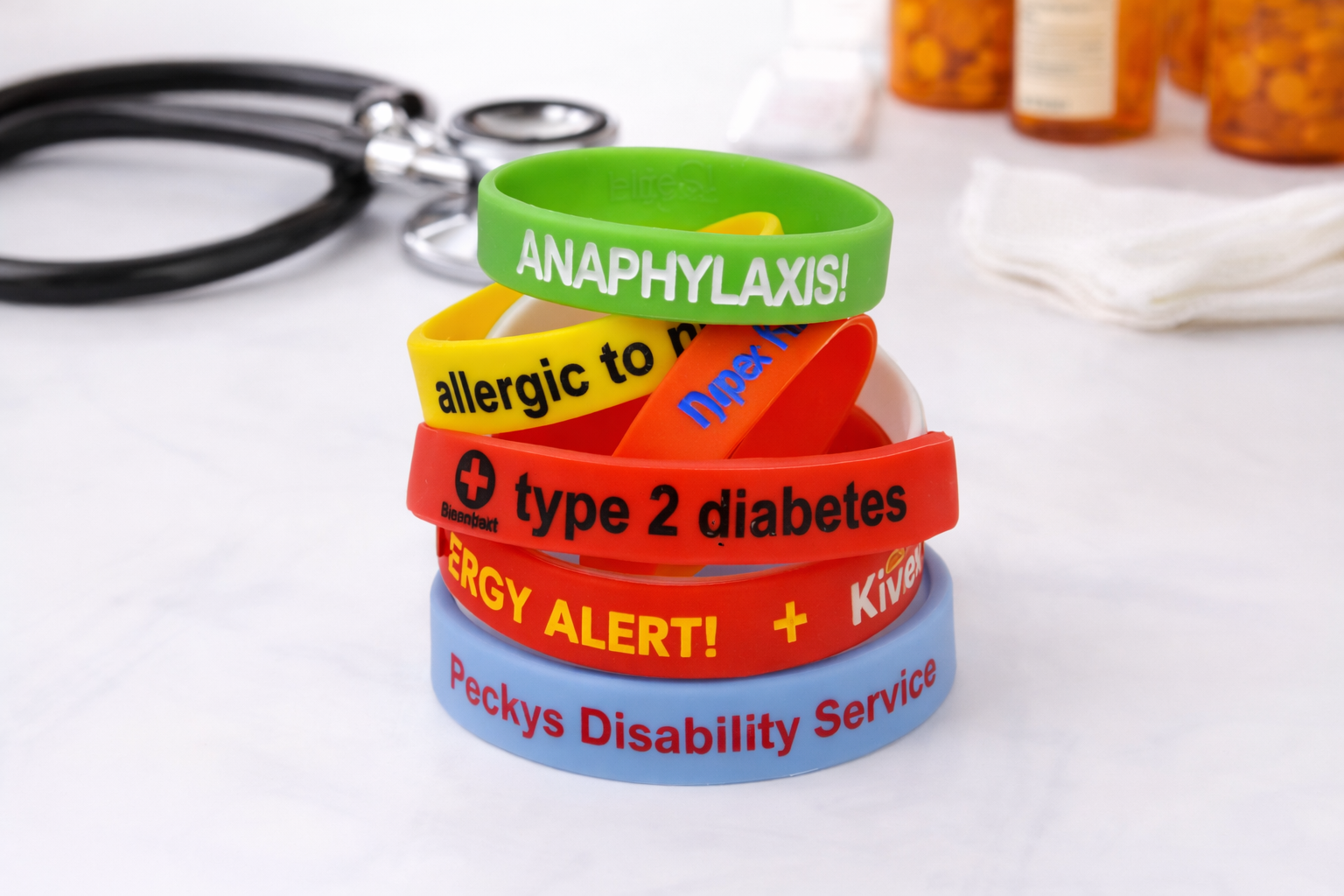
Surgical-grade stainless steel remains the professional standard: non-corrosive, water-resistant, and safe for hospital sanitation. For individuals with skin sensitivity or arthritis, medical-grade silicone provides flexibility without irritation. Hybrid bands with detachable steel plates combine comfort with longevity.

Fit, Form, and Comfort

A secure yet adjustable clasp ensures the bracelet stays in place without constricting blood flow. For older adults prone to swelling, a looser fit or expandable band prevents discomfort. Lightweight construction encourages daily wear—because a medical bracelet is only effective if it’s on the wrist when needed.

Ease of Removal and Hygiene

During hospital admission or diagnostic scans, staff may need to remove or reposition the bracelet. Adjustable fasteners or magnetic clasps make this quick and safe without breaking the band. Cleaning is equally important: wiping the surface weekly prevents residue build-up that could obscure engraving.

How Carers Can Choose the Right Bracelet for Their Clients

Carers play a critical role in selecting and maintaining medical ID jewelry. Their choices must consider not just medical data but lifestyle, comfort, and long-term compliance.

For seniors or individuals with cognitive conditions, choose bracelets that are secure yet unobtrusive. Locking clasps deter removal, while soft silicone designs prevent skin irritation. For children or active adults, waterproof options stand up to outdoor activities without fading engraving.

Carers should also account for Australia’s linguistic diversity. Including multilingual text or international medical symbols (⚕️) ensures comprehension by all responders, regardless of language. For patients traveling abroad, engraving the English term “Medical Allergy – See Wallet Card” bridges communication gaps with foreign medical teams.

Maintenance is an ongoing responsibility. Engraved data should be reviewed every six months to reflect changes in medication, dosage, or contact details. Keeping a spare bracelet at home or within the care facility guarantees continuity if one is misplaced.

Customization Tips for Carers

Thoughtful customization strengthens the bracelet’s utility:

  • Add a line for “Carer Contact” or facility phone number.
  • For dementia or autism patients, include the phrase “May Not Communicate Verbally.”
  • Use color cues—red for allergies, blue for chronic conditions—to help responders distinguish critical details at a glance.

Each small personalization enhances safety and ensures the wearer’s identity and needs are never lost in translation.

Trusted Medical ID Bracelet Australia Brands and Suppliers

The market for medical ID products is expanding, but not all providers meet medical standards. A trustworthy supplier uses certified materials, precise laser engraving, and adheres to safety norms recognized by Australian emergency services.

A reliable example is the range offered through medical ID bracelet Australia, which demonstrates how durability, readability, and comfort converge in well-engineered designs. These bracelets are crafted for long-term wear and optimized for quick visibility—meeting the practical needs of both carers and emergency professionals.

Beyond product selection, carers should verify engraving accuracy, warranty coverage, and replacement policies. The supplier should provide previews before manufacturing and confirm legibility compliance. Reading independent reviews from medical professionals adds another layer of assurance.

Practical Guidelines for Everyday Use

Once the bracelet is chosen, consistent use ensures it fulfills its purpose. Carers can support wearers through a few practical habits:

Encourage them to wear the bracelet at all times—even at home. Emergencies rarely happen in predictable places. Explain that the bracelet’s purpose is protection, not stigma.

Check the engraving monthly. If text becomes faint or smudged, request re-engraving before it’s unreadable. Avoid harsh cleaners that can erode the surface; use mild soap and water instead.

Pair the bracelet with a secondary ID card in the wallet. Together they create redundancy—one visible, one detailed. Keep emergency contacts updated in both places.

For carers overseeing multiple clients, maintain a small log noting bracelet types, engraving content, and replacement dates. This simple record ensures every patient’s identification remains valid and legible.

Conclusion: Helping Save Lives with Preparedness

In every emergency, knowledge is the first step toward stability. A medical ID bracelet condenses that knowledge into a few engraved words that can guide life-saving action before a single question is asked.

For first responders, it’s a trusted shortcut to clarity. For carers, it’s peace of mind that no crisis will unfold in silence. And for patients, it’s an emblem of independence—proof that safety and autonomy can coexist.

Choosing, customizing, and maintaining a medical ID bracelet transforms an ordinary accessory into a vital medical safeguard. It’s not jewelry; it’s a promise of preparedness—an assurance that help will always have the information it needs, precisely when seconds matter most.

Don’t leave critical information to chance. Contact us today to explore our medical ID bracelet options, customize your engraving, and ensure you or your loved one is protected with a reliable, personalized safeguard. Your safety starts with one simple step—reach out to us now.