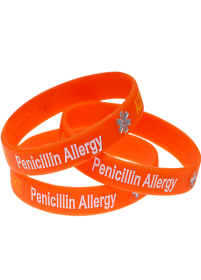
Why Playground Safety Looks Different for Kids with Medical Conditions
For most kids, the playground is just fun — climb, run, swing, fall, get up, repeat. For a child with a chronic condition, severe allergy, or critical medication, every playground visit comes with a quiet question: what happens if something goes wrong while I'm not there to help? The answer can't be "stay home from the playground." Children with medical conditions need active play just like every other child — for physical health, social development, and confidence. The answer is making sure the playground knows what to do.
According to HealthDirect Australia, the most common childhood emergencies at school and play involve asthma attacks, severe allergic reactions (anaphylaxis), epileptic seizures, and diabetic hypoglycaemia. Each of these has a known emergency response — but only if the responder knows the child's condition. A medical ID bracelet ensures they do, in seconds.

The Top 5 Playground Emergencies (and How a Medical ID Helps)
1. Anaphylaxis (Severe Allergic Reaction)
A child with peanut, tree-nut, dairy, or insect-sting allergy can react within minutes to even tiny exposure. A red allergy alert bracelet tells the supervising teacher or other parent: this child has anaphylaxis, use the EpiPen, call triple-zero. Without that signal, the response is delayed by precious minutes spent figuring out what's wrong.
2. Asthma Attack
Cold air, exercise, dust, and pollen all trigger childhood asthma. The bracelet flags the condition so adults know to find the inhaler, sit the child upright, and call for help if breathing doesn't improve in 15 minutes. Particularly important for kids whose asthma is intermittent (only flares on cold mornings or sport).
3. Epileptic Seizure
Most playground supervisors don't know how to recognise a seizure, especially absence seizures (which look like daydreaming) or focal seizures (which can look like behavioural problems). The bracelet identifies the condition immediately — so the response is appropriate care, not panic or punishment.
4. Diabetic Hypoglycaemia
Low blood sugar in a young diabetic child can present as confusion, tantrums, lethargy, or fainting. A medical ID telling the supervisor "Type 1 Diabetic — give glucose if disoriented" speeds the right response from minutes to seconds.
5. Cardiac Conditions
Children with heart conditions, pacemakers, or arrhythmias may collapse during play without warning. The bracelet alerts paramedics not to use standard defibrillation protocols where they're inappropriate, potentially saving the child's life.
Recommended for you
Products related to this article
Hand-picked to go with what you just read.
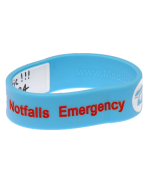
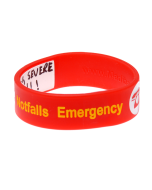
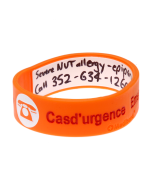
What Should Be Engraved on a Child's Medical ID Bracelet?
Less is more. The supervising teacher or paramedic needs to read the band in five seconds, not five minutes. The five priority fields:
- Child's first name — helps personalise care; calling them by name calms a frightened child.
- Primary condition — "Anaphylaxis – Peanut", "Type 1 Diabetic", "Epilepsy", "Asthma".
- Critical action — "Use EpiPen", "Give Glucose", "Inhaler in Bag", "Call Mum".
- Parent phone number — answered 24/7, ideally a mobile that's always on.
- "School: [Name]" — useful for kids on excursions away from their usual school.
Choosing the Right Bracelet for an Active Child
The best Mediband Kids' band is the one your child will wear without complaint:
Soft Silicone Write-On
The default choice for active kids — soft, waterproof, easy to update, and inexpensive enough to replace if lost or damaged. Available in bright colours kids actually like.
Bright Colours Help Visibility
Choose colours that catch a teacher's eye: red for allergy, blue for diabetes, orange for high visibility on excursions, purple for epilepsy. The colour itself becomes a quick identifier even before reading the engraving.
Reversible Designer Bands
For older kids and teens who feel self-conscious — patterned on one side, alert on the other. Worn alert-side-out at school and sport, fashion-side-out for social occasions.
Pair With a Wallet Card
Slip a matching wallet card into the school bag and excursion bag. Teachers can read the longer detail when needed.
How to Get Your Child to Actually Wear It
Compliance is the biggest barrier. Strategies that work:
- Let them choose the colour — ownership equals compliance. A bracelet they picked is one they'll wear.
- Tie wearing to a routine — on with shoes in the morning, off with pyjamas at night.
- Tell a positive story — "your superhero band", "your safety bracelet", "your special grown-up jewellery".
- Keep a spare in the school bag — for the day they lose one, break one, or it falls off during sport.
- Talk gently about why — "if you ever feel funny and can't talk, this tells the helper what to do".
- Match parents' bracelets — if the rest of the family wears one too, it's just normal.
What Schools and Carers Should Know
Beyond the bracelet itself, build a small playground safety system:
- Inform the school — every teacher, supervisor, and after-school carer should know the child's condition and emergency plan.
- Provide written instructions — laminated card with the condition, action steps, and emergency contacts.
- Stock medication on site — EpiPen, inhaler, glucagon kit, fast-acting glucose. School first aid kit + child's bag.
- Run drills — annual emergency drills at school cover kids with conditions just like fire drills cover everyone.
- Coordinate with friends' parents — kids visit other homes for play dates; the host parents need to know.
The bracelet is the constant — when nothing else (medication card, school bag, supervising adult) is to hand, the bracelet is on the wrist. That's why it's the foundation of the whole safety system.
The Mediband Kids Range
Browse our full medical alert bracelet collection, including soft silicone bands sized for children, condition-specific designs (allergy, asthma, epilepsy, diabetes), and bright colours kids actually want to wear. For deeper detail on what to engrave, see our medical alert bracelets first responder guide.
Frequently Asked Questions
At what age should a child start wearing a medical alert bracelet?
As soon as the child is mobile, social, and starting to spend time away from a parent — typically from age 2-3 onwards. Toddlers at daycare benefit, school-age kids essential, teens equally so. The bracelet is light and soft enough that even very young children adapt within days.
What if my child loses their bracelet at the playground?
Buy a multipack from the start so spares are always available. Soft silicone bands are inexpensive enough to replace as needed. Check the school bag and excursion bag for a backup, and keep one in the family medical kit at home. Most kids settle into a routine of leaving the band on at all times once they associate it with their morning routine.
Should the bracelet say "DIABETIC" or my child's specific medication?
Both, ideally. The condition (e.g., "Type 1 Diabetic") tells responders what category. The medication or critical action (e.g., "Insulin Pump", "EpiPen Required") tells them what to do or avoid. Combine in two short lines if space allows.
How do I tell my child's school about the bracelet?
Most Australian schools have a Health Care Plan template. Submit a written plan including condition, medication, emergency action, and the bracelet. Show the bracelet to your child's main teacher and the front office. Update the school each year as conditions or medications change.
Will the bracelet survive water, mud, sand, and rough play?
Yes — silicone Mediband Kids' bands are fully waterproof, mud-proof, and survive normal kid wear-and-tear. Engraving stays legible for 12-24 months on the silicone before needing replacement. Stainless steel versions last 10+ years for older children who want a more grown-up look.

Written by
Founder, Mediband
Founder of Mediband; over 20 years providing medical IDs worldwide.
← Previous
Medical Alert Bracelets — Support Your Life with Confidence (2026 Guide)
Next →
Penicillin Allergy Bracelet: Why Every Family Should Wear One (2026 Australian Guide)
Comment(s)