
By Michael Randall · Founder, Mediband
Medically reviewed · Updated June 2025 · 9 min read
Medically reviewed · Updated June 2025 · 9 min read
How to Read Food Labels — A Practical Australian Guide for Healthier Choices
Updated June 2025. Walk down any Australian supermarket aisle and you’ll see hundreds of products screaming "low-fat", "high-protein", "natural", "sugar-free". Most of these claims are technically legal but practically misleading. The only place the truth lives is on the back of the pack — the Nutrition Information Panel (NIP) and ingredients list, governed by Food Standards Australia New Zealand (FSANZ).
This guide is the practical Australian playbook for reading food labels in under 30 seconds: the four numbers that matter, the marketing tricks to ignore, and how to spot allergens that can land you (or your child) in an emergency department.
The Australian Food Label — Four Panels You Need to Read
Every packaged food in Australia must show these four panels by law:
- Nutrition Information Panel (NIP) — per 100g + per serve. Energy (kJ), protein, fat, sat fat, carbs, sugars, sodium.
- Ingredients list — descending order by weight. First three ingredients are usually 70%+ of the product.
- Allergen statement — bolded in the ingredients OR a separate "Contains" line.
- Country of origin — mandatory since 2018; the bar chart shows % Australian content.
Recommended for you
Products related to this article
Hand-picked to go with what you just read.
The 30-Second Label Scan
Here’s the order professional dietitians recommend:
- Step 1 — check the serving size (often misleadingly small)
- Step 2 — check the "per 100g" column (not per serve), it’s the only fair comparison
- Step 3 — check sugar + sodium against the traffic-light thresholds
- Step 4 — scan the first 3 ingredients (these dominate the product)
- Step 5 — check the allergen statement if relevant
The 4 Numbers That Actually Matter
The Heart Foundation + Diabetes Australia guidelines, simplified per 100g:
- Sugar: low <5g, medium 5-15g, high >15g
- Saturated fat: low <3g, medium 3-5g, high >5g
- Sodium: low <120mg, medium 120-600mg, high >600mg
- Fibre: good source >3g, excellent >6g
Memorise these four thresholds and you’ll out-shop 95% of supermarket buyers.
Marketing Claims You Can Ignore
Many label claims are technically legal but practically meaningless:
- "No added sugar" — the product may still be loaded with naturally occurring sugar from fruit concentrate or honey
- "99% fat-free" — often replaced with sugar to maintain taste
- "All natural" — this term is not legally defined in Australia
- "Lite" / "Light" — may refer to colour, texture, or taste rather than calories
- "Made with real fruit" — the real fruit may be 1% of the total
- "Multigrain" — doesn’t mean whole grain; could be 90% refined flour
Australian Allergen Labelling — The 10 Compulsory Allergens
FSANZ requires bolded disclosure of these 10 allergens:
- Peanut, tree nuts, milk, egg, soy, wheat (gluten), fish, shellfish (crustacean + mollusc), sesame, lupin
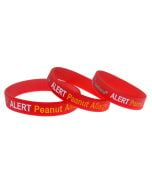
If you have a severe allergy, the bolded text in the ingredients list is your friend. The "may contain traces of" warning is voluntary in Australia — absence doesn’t guarantee safety. For severe allergies, call the manufacturer directly. Pair label-reading with a visible allergy alert bracelet so paramedics know which allergens to treat in an emergency.
Health Star Rating — What It Actually Means
The Health Star Rating (HSR) is the front-of-pack score from 0.5 to 5 stars introduced in 2014. Higher = healthier within its category. Caveats:
- Voluntary — manufacturers can opt out (and often do for unhealthy products)
- Compares within categories (a 4-star muesli is healthier than a 2-star muesli, not necessarily healthier than a 3-star fresh-fruit product)
- Doesn’t reflect ultra-processing status
- Better than nothing — use as a quick filter, never as the only check
Sugar by Many Names
Sugar appears in over 60 different forms on Australian labels. Common aliases:
- Glucose, fructose, sucrose, maltose, dextrose, lactose
- Cane sugar, raw sugar, brown sugar, coconut sugar
- High-fructose corn syrup, golden syrup, treacle, molasses
- Honey, agave, maple syrup, rice malt syrup
- Fruit juice concentrate, fruit puree concentrate
If sugar appears multiple times under different names in the ingredients, the product is sugar-dominant.
For Diabetic Households — Carb Counting via the Label
For anyone managing diabetes, label-reading is non-negotiable. Use the "Total Carbohydrate" line on the NIP (per serve). For Type 1 patients on insulin pump or basal/bolus regimens, the per-serve carbs translate directly into insulin units. Many AU diabetics now use the FoodSwitch app (sponsored by the George Institute) for quick label scanning.
Sodium — The Hidden Killer
The average Australian eats 3.4g of sodium per day — nearly double the WHO recommended max of 2g. 75% of dietary sodium comes from processed foods, not the salt shaker. High sodium drives cardiovascular disease, kidney damage, hypertension, and stroke risk. Aim for <600mg per 100g as the high threshold; ideally <400mg per 100g for daily foods.
Country of Origin — Beyond the Marketing
The "Australian Made" logo with the bar chart shows the % of Australian content. Reading tips:
- "Made in Australia from at least 90% Australian ingredients" — the gold standard
- "Made in Australia from imported and Australian ingredients" — could be 10% Australian or 90%; check the bar
- "Packed in Australia from imported products" — the actual ingredients are not Australian
Date Marking Rules
- Best Before — quality, not safety. Food past this date is still safe to eat if stored correctly.
- Use By — safety. Do NOT consume after this date; risk of bacterial illness.
- Baked On / Baked For — bakery items; eat within 2-3 days of "baked on".
Common Mistakes Aussies Make
- Reading "per serve" instead of "per 100g" (manufacturers shrink serves to flatter the numbers)
- Trusting front-of-pack claims over the ingredients list
- Assuming "organic" = "healthy" (organic sugar is still sugar)
- Ignoring serving size when comparing two products
- Not checking the allergen statement on familiar brands (formulations change without warning)
The Mediband Promise
For Australians managing chronic conditions — diabetes, severe allergies, coeliac disease, kidney disease — reading labels is daily safety work. Pair label literacy with a visible medical alert bracelet so emergency responders know your condition the moment they reach your wrist. Mediband bracelets are NDIS-registered, custom-engraved, and trusted by over 500,000 Australian families.
References & Further Reading
- Food Standards Australia New Zealand — Food Labelling Code (Chapters 1.2.2 + 1.2.3).
- Australian Government — Country of Origin Labelling Reference Document.
- Heart Foundation Australia — Front-of-Pack Labelling Position Statement.
- Diabetes Australia — Carbohydrate Counting + Label Reading Guide.
- ASCIA — Allergen Labelling in Australia (PEAL Roundtable Outcomes).
Frequently Asked Questions
Quick answers from the Mediband team
What's the most important number to check on an Australian food label?
Sugar per 100g, sodium per 100g, and saturated fat per 100g. Use the per-100g column (not per-serve) because serving sizes are designed to flatter the product. Aim for sugar <15g, sodium <600mg, saturated fat <5g per 100g for everyday foods.
Is the Health Star Rating reliable?
Useful as a quick filter, not a final answer. It compares products within categories only — a 4-star muesli is healthier than a 2-star muesli, but isn't necessarily healthier than a 3-star fresh fruit. It's voluntary, so manufacturers often opt out for low-rated products. Use alongside the ingredients list and Nutrition Information Panel.
What does 'no added sugar' actually mean?
Only that the manufacturer didn't add table sugar. The product may still be loaded with naturally occurring sugars from fruit concentrate, honey, agave, rice malt syrup, or other ingredients. Check 'Sugars' per 100g and the ingredients list for sugar aliases (glucose, fructose, dextrose, maltose, etc.).
How can I tell if 'Australian Made' means most of the food is from Australia?
Look for the bar chart on the front of the label. 'Made in Australia from at least 90% Australian ingredients' is the gold standard. 'Made in Australia from imported and Australian ingredients' could mean 10% Australian — always check the bar percentage.
How do I read a food label if I have a severe food allergy?
Every Australian label bolds the 10 compulsory allergens (peanut, tree nuts, milk, egg, soy, gluten, fish, shellfish, sesame, lupin) in the ingredients list. The 'may contain traces of' warning is voluntary, so absence doesn't guarantee safety. For severe allergies, contact the manufacturer directly and pair label-reading with a visible allergy alert bracelet.
What's the difference between 'Best Before' and 'Use By' on Australian food labels?
'Best Before' is about quality — the food is safe to eat past this date if stored correctly, just may have reduced texture or flavour. 'Use By' is about safety — do not consume after this date due to bacterial illness risk. 'Baked On' applies to bakery items, which should be eaten within 2-3 days.
Should I trust 'natural' and 'pure' claims on food labels?
No. 'Natural' is not legally defined in Australia and means almost anything the manufacturer wants. 'Pure' has limited regulation. Both are marketing terms, not health claims. Always check the ingredients list and Nutrition Information Panel — that's the only truth on the label.

Written by
Founder, Mediband
Founder of Mediband; over 20 years providing medical IDs worldwide.
← Previous
How to Track Your Health: Wearables, Vitals & Medical IDs
Next →
What a Mediband Can Do For You — Adult Australian Guide 2025
Comment(s)