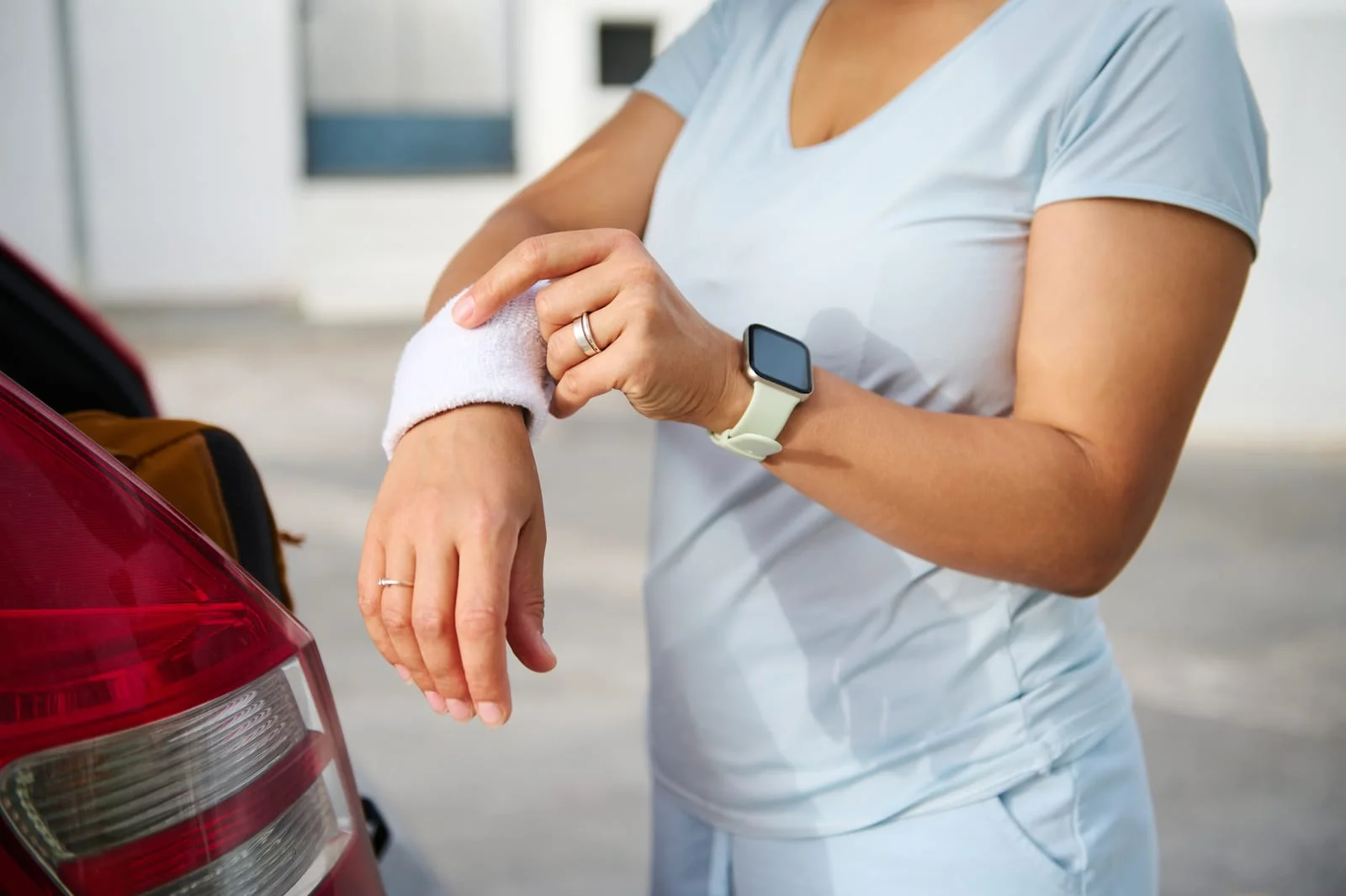

Why a Medical ID Bracelet Belongs on the Back-to-School List
The first-week-of-school checklist usually looks like new shoes, hat, lunch box, drink bottle, library bag, and a stack of books. For families managing food allergies, asthma, diabetes, epilepsy, or autism, there's one item that quietly sits at the top of "non-negotiables" — the medical ID bracelet. It comes between the school nurse's office and a worried teacher's first reaction in a real emergency.
Schools are wonderful places, but they're busy. A class of 25, a casual relief teacher who doesn't know your child, a noisy lunch break, a cross-country run on a hot afternoon. In any of those moments, your child can have a reaction, an attack, or a meltdown when no parent is in the room. A clear medical ID on their wrist closes the gap.
Which Kids Need a Medical ID for School?
Any child whose treatment, diagnosis, or care could be affected in an emergency — which is more children than parents often realise. The most common school cases:
- Food allergies — peanut, tree nut, dairy, egg, sesame, shellfish, soy. Around 1 in 10 children worldwide now lives with a food allergy.
- Asthma — especially exercise-triggered or severe attacks needing a reliever inhaler.
- Type 1 diabetes — to flag insulin therapy and protect against the wrong glucose treatment.
- Epilepsy — so first responders don't restrain or move a child during a seizure.
- Autism, non-verbal, or sensory conditions — to explain communication needs to a stranger in a panic.
- Heart conditions, bleeding disorders, or rare metabolic disorders — anywhere wrong treatment could harm.
Even Children Without a Diagnosed Condition Benefit
For excursions, school camps, sports carnivals, or busy public events, a wristband with name and a parent's contact phone is invaluable if your child becomes separated from the group. Lost-child situations resolve in minutes when there's a clear contact number on the wrist.
Recommended for you
Products related to this article
Hand-picked to go with what you just read.
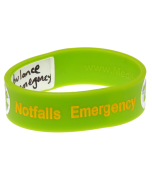
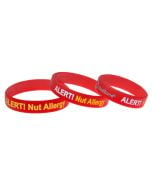
What to Engrave or Write on a School Medical ID
Keep it short and emergency-relevant — first responders and teachers must read it at a glance, in a panic. The five priorities:
- Child's first name (last name if there's space)
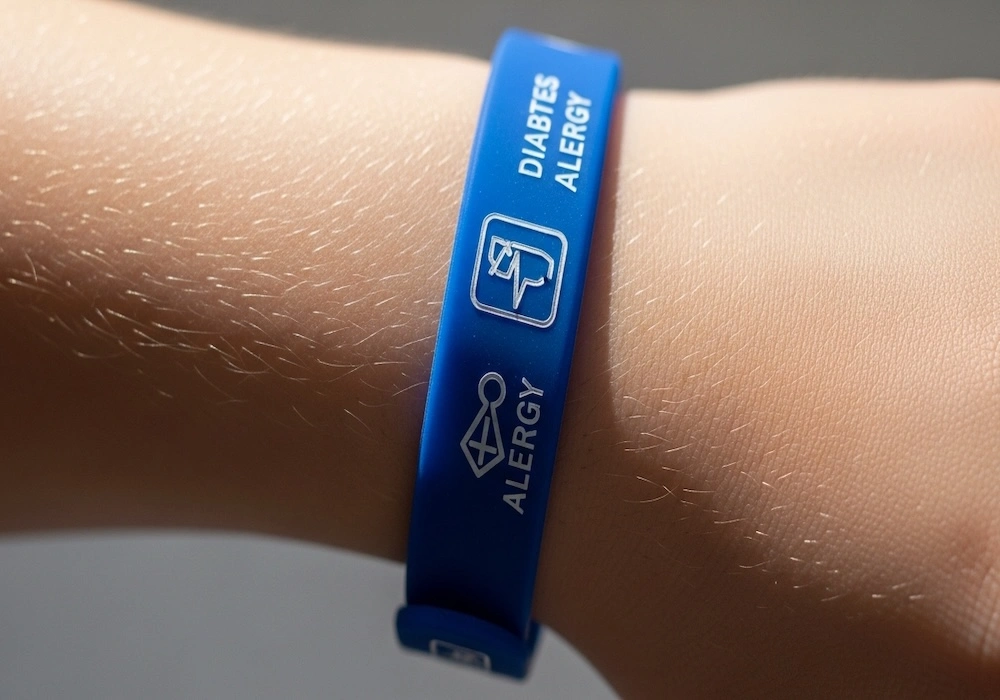
- Primary medical alert — "Type 1 Diabetic", "Anaphylaxis – Peanut", "Epilepsy", "Non-Verbal Autism"
- Critical action — "EpiPen", "Insulin", "Inhaler", "Call Mum"
- Parent or guardian phone number — the one always answered first
- "See school care plan" — for longer instructions kept in the school office
For write-on bands, refresh the ink at the start of each term. Sweat, pool water, sunscreen, and rough play can fade marker pen faster than expected.
Tying the Bracelet Into Your Child's School Care Plan
The medical ID is one part of a school safety system that also includes the formal care plan signed off by your GP, school principal, and family. The bracelet is the always-on alert. The care plan is the detailed playbook. Both need to exist:
Anaphylaxis Care Plan
Lists triggers, EpiPen location, exact signs of reaction, exact actions for each minute. Kept in the office and ideally in the classroom. The bracelet flags the child as needing one — the plan tells the staff exactly how.
Asthma Care Plan
Specifies preventer and reliever doses, when to use a spacer, when to call an ambulance. Pinned in the school office and on the classroom wall. The bracelet flags the child has asthma — the plan tells the teacher how to help.
Diabetes Management Plan
Insulin schedule, hypo signs, snacks allowed, glucagon location. Especially critical for primary-school-aged children with Type 1. The bracelet says "diabetic" — the plan describes the daily care routine.
Epilepsy Plan
Seizure signs, what NOT to do (don't restrain, don't put anything in the mouth), when to call an ambulance, recovery position guidance. The bracelet says "epilepsy" — the plan removes any guesswork.
Choosing the Right School ID for a Child
Children's tastes — and wrists — change quickly. The right ID is one your child will keep on. Look for:
Comfort
Soft silicone or fabric beats metal at a young age. Avoid sharp edges, charms that catch, or rigid clasps that pinch. Test for skin reactions before the first school day.
Visibility
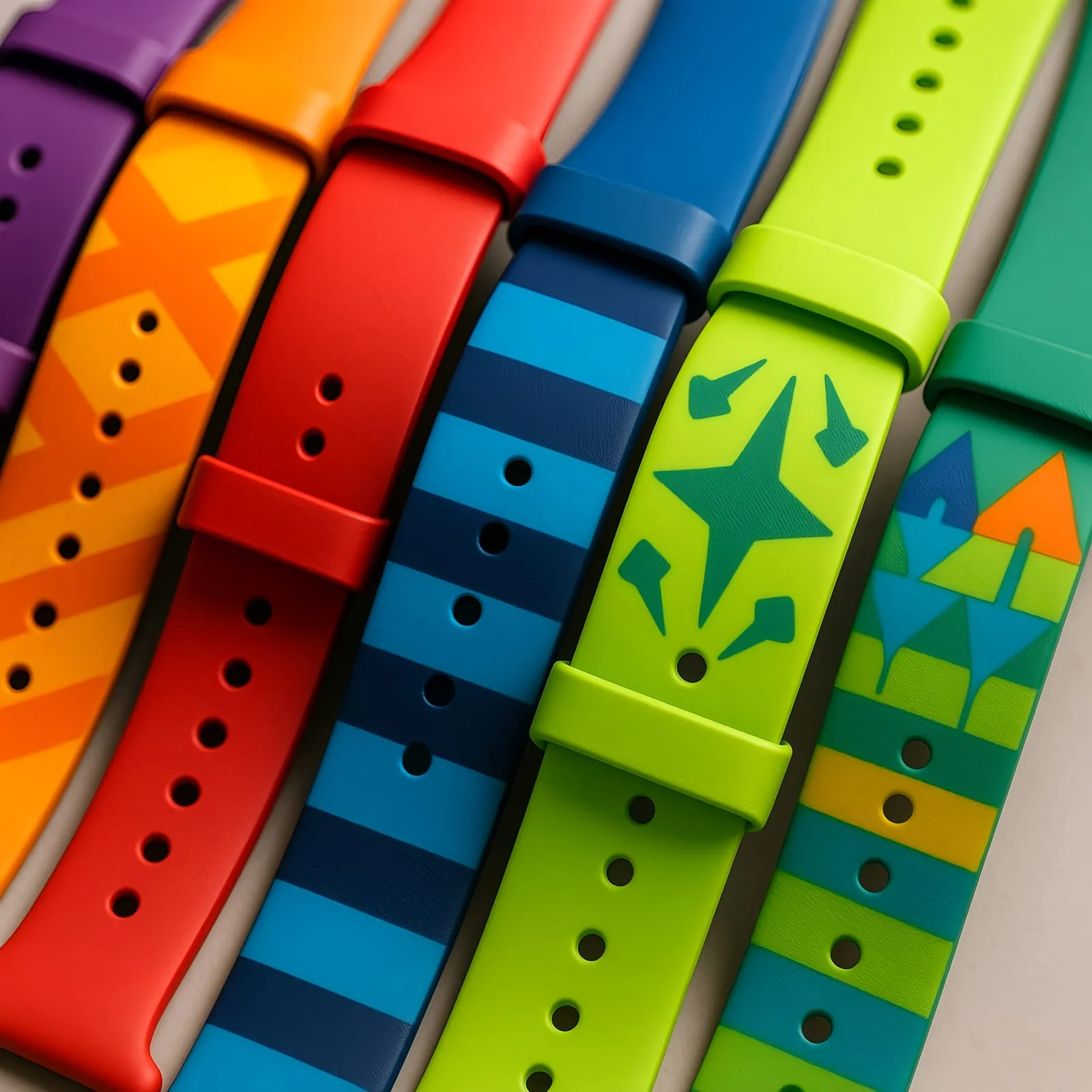
Bright colours — orange, neon green, yellow, red — are easy for a teacher or bystander to spot in a crowd. Subtle silver bracelets disappear under sleeves at exactly the wrong moment.
Durability
Children's bands need to survive paint, glue, sandpit, monkey bars, swimming pool, and lunch spills — daily, all year. Pick waterproof, tear-resistant materials with strong but kid-safe clasps.
Update Flexibility
Write-on silicone is best when contact numbers, allergens, or doses change. Engraved metal is best for stable conditions that don't change for years.
Helping Your Child Wear the Bracelet Every Day
The best ID is the one your child puts on without a battle. Tactics that work:
- Let your child pick the colour — ownership equals compliance.
- Tie it to the morning routine — wrist on with shoes, off with pyjamas.
- Spare in the school bag — in case one is lost during play.
- Match it to a favourite character or hero — many designer bands look more like jewellery than medical gear.
- Talk about it gently — age-appropriate: "If you ever feel funny and can't talk, this tells the helper what to do."
What School Staff Should Know
Inform the teacher, casual relief teachers, sports staff, and excursion leaders that your child wears a medical ID. Add a note to the school's electronic record. According to HealthDirect's anaphylaxis guidance, schools that combine clear identification with documented care plans dramatically reduce the risk of incorrect emergency response. The bracelet plus the care plan together is the gold standard.
Frequently Asked Questions
Can my child wear a medical ID bracelet to school every day?
Yes — schools welcome medical IDs as part of their student safety practice. Notify the school during enrolment, supply a wallet card or care plan, and ask for the band to be noted in your child's medical file. Schools generally cannot refuse a medical alert worn by a student with a documented condition.
What information should be on a child's school medical ID?
Five essentials: child's name, primary medical condition, critical action or medication, parent contact number, and "see school care plan". Skip home address, full date of birth, or background medical history that doesn't help in an emergency. Less is more — first responders need to read it fast.
What's the difference between a medical ID bracelet and a school care plan?
The medical ID is the always-on alert worn on the wrist. The care plan is the detailed instructions kept in the school office and classroom — exact medications, doses, signs to watch for, and emergency steps. The bracelet flags the alert; the plan provides the playbook. Both belong together.
Will my child take their bracelet off during sport or swimming?
The right band stays on. Choose waterproof silicone or stainless steel that can be worn in the pool. For sports requiring strict no-jewellery policies (rare), a silicone band is usually accepted because it's flexible and not metal. Always carry a spare in the school bag for replacement.
How do I update the bracelet when my child's medication or condition changes?
Write-on silicone bands are the easiest to update — simply rewrite with a permanent fine-tip pen and re-check weekly. Engraved metal bands can be re-engraved or replaced inexpensively. As a rule of thumb, review the engraving at the start of each term and after any GP review.

Written by
Founder, Mediband
Founder of Mediband; over 20 years providing medical IDs worldwide.
← Previous
Custom Medical Alert Bracelets: 7 Best Practices for Design
Next →
Medical Alert Bracelets for Sports & Athletes: Complete Guide
Comment(s)