
By Michael Randall · Founder, Mediband
Medically reviewed · Updated May 2026 · 12 min read
Medically reviewed · Updated May 2026 · 12 min read
Why Home Food Safety Matters More Than You Think
Updated May 2026. Your own kitchen is statistically the most dangerous place to eat. Food Standards Australia New Zealand estimates Australians experience 4.67 million food-related illnesses every year — the majority from home-prepared meals, not restaurants. Add a household member with a food allergy and the stakes climb dramatically.
These seven rules are the foundation of safe food preparation at home, with practical tips for households living with food allergies, coeliac disease or chronic conditions affected by food choices.
The Stats: Food Poisoning in Australia
FSANZ 2024 surveillance data on Australian food-borne illness:
- 4.67 million Australians experience food-borne illness each year
- 32% originate in the home kitchen, not restaurants
- $2.4 billion in annual productivity loss
- Salmonella + Campylobacter cause 60% of bacterial cases
- 76 deaths per year, mostly elderly + immunocompromised
Most of these are preventable with the seven rules below.
Recommended for you
Products related to this article
Hand-picked to go with what you just read.
1. Refrigerate Perishables Within 2 Hours
The “danger zone” for bacteria is 5°C to 60°C. Anything sitting in that range for over two hours — one hour on a hot day above 32°C — should be binned. Store all perishables at or below 5°C.
Check your fridge with a $10 thermometer. Many home fridges run 1-2°C warmer than the display reads. Set yours to 3-4°C to give yourself a buffer.
2. Read Every Label, Every Time
Ingredient lists change quietly. Manufacturers reformulate products without warning. If you have an allergy, read the label every single time — even on a brand you’ve bought for years.
Look for “may contain traces of” warnings. In Australia these are voluntary, so absence doesn’t mean safety. When in doubt, contact the manufacturer or use the ASCIA barcode-scanner app.
3. Separate Raw and Cooked Foods
Use different chopping boards for raw meat, raw seafood, and ready-to-eat foods. Wash your hands between handling steps. Cross-contamination is responsible for over a third of home food-poisoning incidents.
Colour-coded boards (red = raw meat, blue = raw fish, green = vegetables, white = ready-to-eat) are the kitchen industry standard for a reason.
4. Build a Dedicated Allergy-Safe Zone
If anyone in the household has a serious allergy, dedicate one shelf, one chopping board, one toaster (or air-fryer) and one set of utensils to allergy-safe food. Colour-coding works wonders for kids and visiting carers.
For severe allergies, separate the allergy-safe zone physically — ideally a different bench, not just a different shelf.
5. Cook to the Right Internal Temperature
Eye-balling doneness is not safe. Use a meat thermometer:
- Whole poultry: 74°C
- Ground meat: 71°C
- Whole cuts of beef, pork, lamb: 63°C with a 3-minute rest
- Fish: 63°C or until flesh flakes
- Reheated leftovers: 74°C right through
- Eggs: yolk and white firm (not runny)
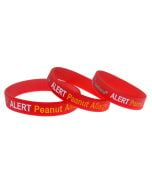
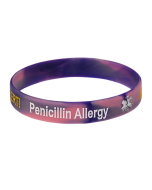
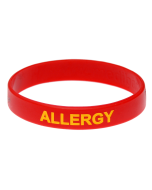
6. Wear a Visible Allergy Bracelet
If you have a serious food allergy, an allergy alert bracelet serves two roles. At home, it reminds visiting family, carers and tradespeople. Outside the home — on accidental ingestion, in a restaurant emergency, at a party — it tells paramedics exactly what to treat and what to avoid.
Pair it with an EpiPen in a cross-body bag and an Action Plan for Anaphylaxis on the fridge.
7. Have a Reaction Plan Everyone Knows
Print the ASCIA Action Plan, stick it inside the pantry door, and walk every household member through it. Where is the EpiPen? What are the early signs of anaphylaxis? Who calls 000?
Run a household drill twice a year. It feels excessive until the night you actually need it.
Eating Out With Food Allergies
The 80/20 rule applies — 20% of restaurants cause 80% of allergy incidents. Avoid buffets, bakeries and self-serve salad bars on a peak Saturday night. Call ahead, ask to speak to the chef, and confirm cross-contamination protocols. Wear your bracelet, and don’t let your kid touch the bread basket.
Six restaurant-day questions for serious allergies:
- What oil is your fryer? (cross-contamination from shellfish or peanut oil)
- Is the bread baked here or bought in? (sesame, sulphites, gluten)
- What’s in the marinade? (soy, fish sauce, hidden allergens)
- Are you using shared chopping boards?
- What sauces are house-made vs. bottled?
- Who in your kitchen is the allergy-aware staff member tonight?
Cross-Contamination: The Silent Killer
Studies show cross-contamination causes more accidental allergic reactions than mislabelling, mistaken ingredients, or eating-out errors combined. Three places it hides most:
- Shared cooking oil in the deep fryer or stir-fry pan.
- Knife and chopping board reuse between raw allergens and ready-to-eat foods.
- Toasters — gluten residue lingers in a shared toaster for weeks.
Food Storage by Type
Where each food belongs in the fridge:
- Top shelf (warmest): drinks, leftovers
- Middle shelves: dairy, eggs
- Bottom shelf (coldest): raw meat, fish — in a sealed container, never above ready-to-eat foods
- Crisper drawer: fruit + vegetables, separated to slow ethylene-driven ripening
- Door shelves (warmest spot): condiments only, never milk
For Different Chronic Conditions
Food safety routines that matter most for specific conditions:
- Coeliac disease — dedicated toaster, separate butter knife, gluten-free chopping board
- Diabetes — consistent carb portions, glucose-aware snack planning, regular meal timing
- Severe immunosuppression (chemo, transplant) — avoid soft cheeses, deli meats, raw seafood, raw eggs
- Pregnancy — same as immunosuppression plus listeria-safe deli meat protocols
- Renal/CKD — potassium + phosphorus awareness, low-sodium standards
Building a Food-Safety Routine That Sticks
Three habits to build over the next 30 days:
- Sunday fridge audit — bin anything past use-by, wipe down every shelf, rotate older items to the front.
- Two-hour rule — never let cooked food sit out longer than two hours. Set a kitchen timer if you’re entertaining.
- Label-read habit — even on regular brands, read the label every time. Once-a-month reformulation is normal.
The Mediband Promise
Mediband’s allergy and dietary alert bracelets have helped over 200,000 Australians live confidently with food allergies, coeliac disease and chronic dietary conditions since 2008. Visible, comfortable, recognised by every paramedic crew in the country.
References & Further Reading
- FSANZ (2024). Annual Food Safety Surveillance Report. Food Standards Australia New Zealand.
- ASCIA — Anaphylaxis Action Plan for Personal Use.
- Coeliac Australia — Gluten-Free Kitchen Setup Guidelines.
- OzFoodNet — Australian Food-Borne Disease Outbreak Surveillance.
- Diabetes Australia — Carbohydrate Counting and Meal Planning.
Frequently Asked Questions
What's the most common cause of home food poisoning in Australia?
Salmonella from undercooked poultry and contaminated eggs. Campylobacter from raw chicken is a close second. Together they account for around 60% of bacterial food poisoning cases (FSANZ 2024 data).
How long can cooked food sit out before it's unsafe?
Two hours at room temperature, one hour above 32°C. After that, bacteria multiply rapidly even if the food still looks and smells fine. Refrigerate or freeze leftovers within 90 minutes to be safe.
Are 'may contain traces of' warnings reliable?
Not always. In Australia, these warnings are voluntary — some manufacturers add them as a blanket precaution, others omit them despite real risk. If you have a serious allergy, contact the manufacturer or avoid the product.
Should an adult with a food allergy still wear a medical bracelet?
Yes — the most severe anaphylactic reactions happen to adults aged 20-40, often during travel or eating out. A medical bracelet ensures paramedics treat correctly when you can't speak. Sydney Children's Hospital data shows visible IDs save 6 emergency minutes on average.
How often should I check my fridge temperature?
Once a month with a thermometer. Most home fridges run 1-2°C warmer than the display. Set it to 3-4°C to give yourself a buffer. The lowest shelf at the back is the coldest spot.
What's the best way to avoid cross-contamination at home?
Colour-coded chopping boards (red for raw meat, blue for fish, green for vegetables, white for ready-to-eat), separate utensils between steps, and a dedicated toaster if anyone has coeliac disease. These three changes alone prevent the majority of home incidents.
Can I prepare allergy-safe food in the same kitchen as the allergen?
Yes, with strict protocols: dedicated chopping board, washed hands, washed utensils, no airborne flour, and ideally a separate cooking surface. For peanut and tree-nut allergies, the safest practice is to remove the allergen from the kitchen entirely.

Written by
Founder, Mediband
Founder of Mediband; over 20 years providing medical IDs worldwide.
← Previous
Why Melbourne GPs Recommend Medical Alert Bracelets (2025)
Next →
Exercise With a Medical Condition — 2025 Australian Safety Guide
Comment(s)