
By Michael Randall · Founder, Mediband
Medically reviewed · Updated October 2025 · 12 min read
Medically reviewed · Updated October 2025 · 12 min read
Why Family Medical History Matters — A 2025 Australian Guide
Updated October 2025. Around 30% of Australian chronic disease has a strong hereditary component (RACGP genomics position statement 2024). Yet only 15% of Australian adults have ever sat down with their family and documented who had what condition, when it presented, and how it was managed. That gap costs lives — doctors who don’t know your family history can’t screen you for inherited risk early enough.
This guide is the practical Australian playbook for mapping your family medical history, understanding genetic risk, talking to relatives about hereditary conditions, and protecting yourself + your kids with the right preventive screening. Built from RACGP, Cancer Council Australia, Heart Foundation, Diabetes Australia, and 17 years of Mediband customer feedback.
The Australian hereditary disease snapshot
- 30% of chronic disease has strong hereditary component (RACGP 2024)
- 5-10% of cancer cases are clearly inherited (BRCA, Lynch syndrome, familial polyposis)
- 1 in 4 Australian adults has a first-degree relative with cardiovascular disease
- 40% of Type 2 diabetes risk is genetic
- Type 1 diabetes — 6% genetic risk if one parent affected, 30% if both
- 15% of Australian adults have documented family medical history
Recommended for you
Products related to this article
Hand-picked to go with what you just read.
What "family medical history" actually means
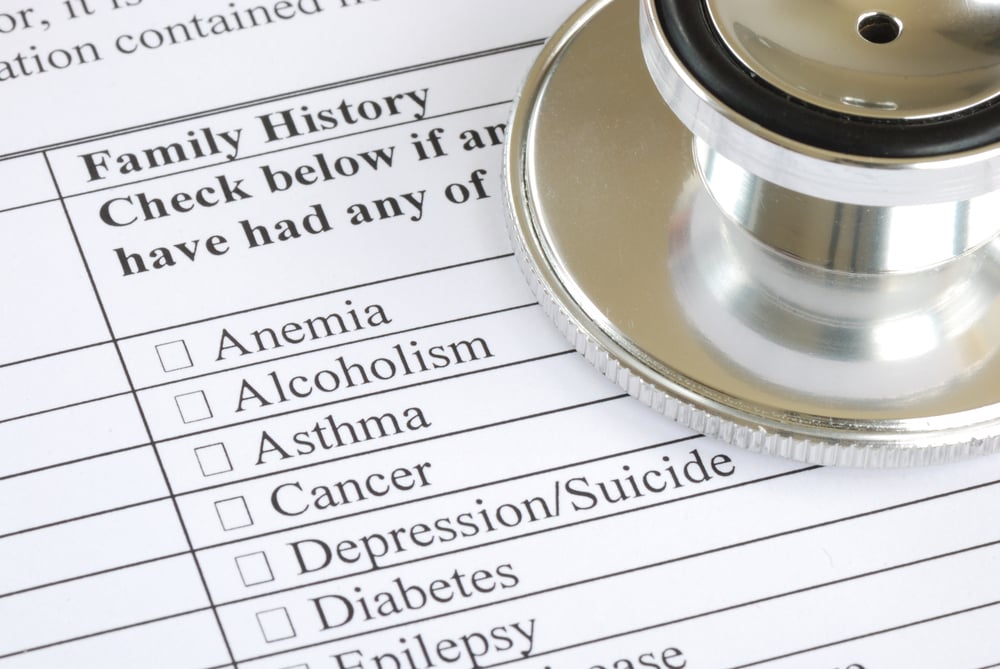
It’s not just "Mum had cancer". A useful family medical history includes:
- Condition — specific diagnosis (not "heart trouble" but "heart attack" or "atrial fibrillation")
- Age at diagnosis — especially important: 35 vs 75 changes risk dramatically
- Relationship — first-degree (parent/sibling/child) carries highest signal
- Outcome — survived, recovered, ongoing, fatal
- Lifestyle context — smoker? sedentary? rural/urban? known triggers?
- Multiple affected relatives — pattern matters more than single case
The 8 conditions Australian GPs ask about
RACGP family history collection focuses on:
- Heart disease (heart attack, stroke, sudden cardiac death <60)
- Cancer (breast, bowel, prostate, ovarian, melanoma)
- Type 1 + Type 2 diabetes
- Hypertension
- Stroke
- Mental health (depression, schizophrenia, bipolar)
- Severe allergies + anaphylaxis
- Autoimmune conditions (rheumatoid arthritis, lupus, coeliac, IBD)
How to gather your family medical history
Step 1 — Map first-degree relatives (highest signal)
Mother, father, full siblings, biological children. Ask each one: any chronic condition? Age it started? Severity? Outcome?
Step 2 — Extend to second-degree
Grandparents, aunts, uncles, half-siblings. Especially important if first-degree info is limited (e.g. adoption, estrangement).
Step 3 — Document specific conditions
Don’t accept vague terms. "Granddad died of old age" is not useful. Push for: "Granddad died of heart attack at 68". Family memory may not have it — check death certificates if available.
Step 4 — Note ethnic risk factors
Some hereditary conditions cluster by ethnicity:
- Indigenous Australians: higher Type 2 diabetes + cardiovascular + rheumatic heart risk
- Ashkenazi Jewish: BRCA1/2 mutation rate ~10x general population
- Mediterranean / Middle Eastern: thalassaemia, familial Mediterranean fever
- South-East Asian: G6PD deficiency, hepatitis B reactivation risk
Step 5 — Update annually
New diagnoses happen yearly. Refresh every January or after each Christmas family gathering.
Sensitive conversations — how to ask
Some Australian families avoid discussing health (cultural, generational, privacy reasons). Tactical approaches:
- Frame as "helping the kids": "I’m mapping our family history so the grandchildren’s doctors know what to screen for"
- Use a neutral template (Cancer Council + RACGP both have free family-tree forms)
- Ask via written email if face-to-face is hard
- Don’t pressure for mental health history if relative is uncomfortable — partial info is still useful
- Be reciprocal — share your own info too

How GPs use family history
An accurate family medical history changes Australian GP screening decisions:
- Bowel cancer screening: standard age 50; family history starts at 40 (or 10 years before earliest case)
- Breast cancer screening: standard 50-74; BRCA family history starts at 30 with MRI + mammography
- Cardiovascular risk: family history of premature CVD doubles your absolute risk calculation
- Type 2 diabetes screening: every 3 years standard; annual if strong family history
- Genetic testing: only offered when family pattern fits Medicare-rebated indications
For Australians: Medicare-rebated genetic testing exists for BRCA, Lynch syndrome, familial hypercholesterolaemia, cardiac conditions, and more. Eligibility requires documented family pattern.
Family history + your kids
If you have a strong family history of:
- Type 1 diabetes — consider TrialNet screening (free auto-antibody testing for relatives)
- Cardiac sudden death < 40 — refer to genetic cardiology, ECG for all first-degree relatives
- Severe food allergy — up to 50% sibling risk; ASCIA early introduction protocols
- BRCA + early breast cancer — daughters from age 18 enter genetic counselling pathway
- Lynch syndrome / FAP — colonoscopy from teenage years
Where the medical alert bracelet fits
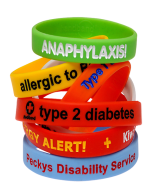
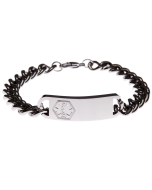
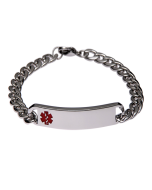
For chronic-condition kids identified through family history (Type 1 diabetes, severe allergy, cardiac conditions), a visible medical alert bracelet is the safety device that catches everything else.
Engraving for hereditary conditions:
- Specific condition (not "family history" — the current diagnosed condition)
- Critical medication if relevant
- Allergy info if applicable
- First name + parent ICE contact

Free Australian family history templates
- Cancer Council Australia — cancer.org.au — Family Cancer Risk template
- RACGP Genomics — racgp.org.au — full family-tree clinical template
- HealthDirect — healthdirect.gov.au — consumer-friendly guide
- Heart Foundation — heartfoundation.org.au — cardiovascular family-history form
Download one, complete it, share with your GP at the next annual check.
What if you don’t know your family history?
Common Australian scenarios:
- Adoption — check if adoptive paperwork includes biological-family medical info
- Family estrangement — document the gaps + tell the GP "unknown"
- Deceased relatives — death certificates list cause of death + Medicare records may have history
- Immigrant family — older relatives may have different medical-record traditions; ask in their language if needed
"Unknown" is itself a useful data point for the GP — they screen more broadly when family history is missing.
Privacy + emotional considerations
- Australian Privacy Act protects family medical info — share only with consent
- Insurance: life-insurance + income-protection applications can ask about family history; legal protections exist (Genetic Discrimination Moratorium 2024)
- Emotional weight: family history conversations sometimes surface grief or unresolved family conflict — pace yourself
- Genetic testing results: don’t reveal to other family members without their explicit consent
The "5-minute family conversation" template
If you have one 5-minute window with a relative, ask these:
- "Has anyone in our family had a heart attack or stroke under 60?"
- "Any cancers in the family? Which type, what age?"
- "Any diabetes — which type, who, what age?"
- "Any severe allergies or anaphylaxis?"
- "Any mental health diagnoses you’re comfortable sharing?"
Document the answers within 24 hours while memory is fresh.
For Australian families managing inherited conditions
- Type 1 diabetes alert bracelets
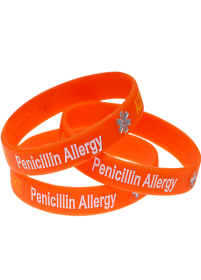
- Allergy alert bracelets
- Epilepsy alert bracelets
- Kids medical alert bracelets
NDIS + genetic conditions
Several Australian inherited conditions (cystic fibrosis, muscular dystrophy, Huntington’s, severe autism) are NDIS-funded. Mediband medical alert bracelets fall under Consumables for eligible participants.
The Mediband promise
Mediband has supported over 500,000 Australians + families managing chronic conditions since 2008. Permanent laser engraving, medical-grade silicone + 316L steel, NDIS-registered, Australian-designed. Trusted by paramedics, GPs, genetic counsellors, and specialist clinicians.
References & further reading
- RACGP (2024). Genomics in General Practice Position Statement.
- Cancer Council Australia. Family Cancer Risk Assessment Guide.
- Heart Foundation Australia. Cardiovascular Family History Resources.
- Diabetes Australia. Type 1 + Type 2 Genetic Risk Information.
- NHMRC. Genetic Testing in Clinical Practice Guidelines.
- Medicare Australia. MBS Genetic Testing Eligibility Schedule.
Frequently Asked Questions
Quick answers from the Mediband team
How much family medical history do I really need to know?
Minimum useful set: all first-degree relatives (parents, full siblings, children) plus second-degree (grandparents, aunts, uncles) for the 8 RACGP-tracked conditions. Specific diagnosis, age it started, and outcome — vague terms like 'heart trouble' aren't useful clinically.
Can I get genetic testing for inherited conditions in Australia?
Yes, when family pattern fits Medicare-rebated indications. Australian Medicare covers genetic testing for BRCA1/2 (breast/ovarian cancer), Lynch syndrome (bowel cancer), familial hypercholesterolaemia, cardiac sudden-death conditions, and several rare diseases. GP referral required.
What if I don't know my family medical history because of adoption?
Document gaps and tell your GP. Adoption paperwork sometimes includes biological-family medical info. With unknown history, GPs screen more broadly. The Australian Privacy Act allows adopted people to apply for biological-family medical records under specific circumstances.
Does family medical history affect life insurance applications?
Some Australian insurers ask about family history. Important: Australia's Genetic Discrimination Moratorium 2024 prohibits insurers from using genetic test results against you for life insurance up to specific cover amounts. Family-history disclosure remains legal but increasingly regulated.
Should my kids wear a medical alert bracelet if conditions run in the family?
Only if they're DIAGNOSED with the inherited condition — not just 'at risk'. Family history alone doesn't warrant a bracelet, but if they develop Type 1 diabetes, severe allergies, epilepsy, or any chronic condition affecting emergency care, a Mediband becomes essential.
How do I ask elderly relatives about sensitive medical history?
Frame as helping the next generation: 'I'm doing this for the grandkids' doctors.' Use a written template (Cancer Council + RACGP free) to make it feel structured, not interrogative. Be reciprocal — share your own info too. Don't push if uncomfortable; partial info is still useful.
Are inherited condition bracelets NDIS-claimable?
Yes for eligible participants with diagnosed conditions (Type 1 diabetes, severe allergies, cystic fibrosis, Huntington's, severe autism, etc.). Mediband is a registered NDIS provider — bracelets fall under Consumables. Most plans cover one replacement per year.

Written by
Founder, Mediband
Founder of Mediband; over 20 years providing medical IDs worldwide.
← Previous
How to Use Your Mediband — Complete Setup, Care & Daily Wear Guide
Next →
Staying Healthy in a Busy World — Time-Poor Adult Guide
Comment(s)