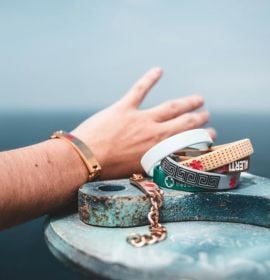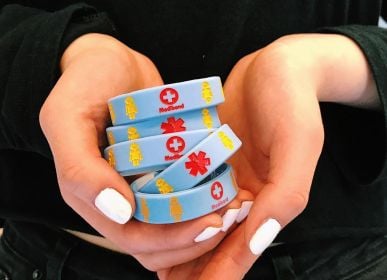
If you take an anticoagulant — warfarin, apixaban (Eliquis), rivaroxaban (Xarelto) or dabigatran (Pradaxa) — a medical alert bracelet gives a paramedic one of the most useful pieces of information they can have in the first minute of an emergency: that your blood does not clot the way theirs expects. Here is why that matters, what to put on the band, and how to choose one.
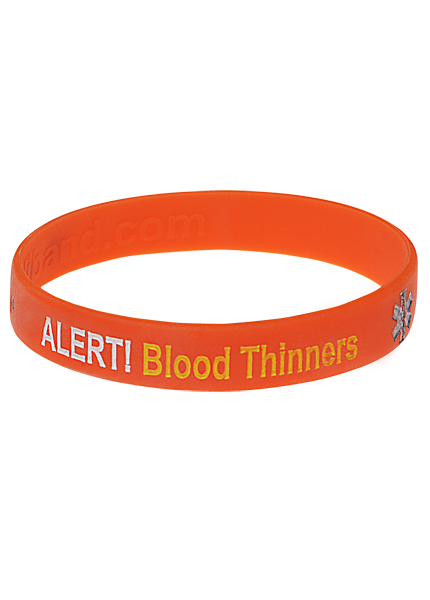
Quick answer: Yes — if you take a blood thinner, wearing a medical ID is widely recommended by clinicians. It tells emergency responders that you are at higher risk of bleeding, which changes how they treat a fall, a car accident or a head knock. Engrave your medication (and the reason for it) plus an emergency contact. This is general information, not medical advice — confirm what to wear with your prescribing doctor or pharmacist.
Designed in Australia since 2004
4.9★ verified customer rating
NDIS-registered supplier
Why blood thinners are an emergency-relevant fact
Anticoagulants and antiplatelet medicines reduce your blood’s ability to clot. That is exactly what they are meant to do — they lower the risk of a stroke or a dangerous clot for millions of people with atrial fibrillation, a mechanical heart valve, a past clot or a recent stent. The trade-off is that any bleeding, internal or external, is harder to stop.
In an emergency a paramedic often cannot ask you. If you are unconscious after a fall or a crash, the fact that you take a blood thinner shapes their decisions straight away: a minor head knock is watched far more closely, bleeding is managed differently, and the hospital team is warned before you arrive. A medical ID on your wrist speaks for you when you cannot.
A person on an anticoagulant can bleed significantly from an injury that would barely trouble someone else — and after a head injury, the risk can build over hours. A visible medical ID is the fastest way to make sure that fact is not missed.
What to put on a blood thinner medical alert bracelet
Keep it short. A responder scans a wrist in a few seconds, so the most important facts go first.
| Line | What to include | Example |
|---|---|---|
| 1 | Your anticoagulant, by name | WARFARIN / APIXABAN (Eliquis) |
| 2 | The reason, if space allows | AF – on anticoagulant |
| 3 | Name + emergency contact | Sarah 0412 345 678 |
Naming the specific drug helps — warfarin is reversed differently from the newer direct oral anticoagulants (apixaban, rivaroxaban, dabigatran), so the exact medicine is useful to the hospital team. If you also have a condition such as diabetes or a pacemaker, that belongs on the band too.
Shop blood thinner & heart-condition IDs →
Pre-printed, write-on or engraved: which band suits you
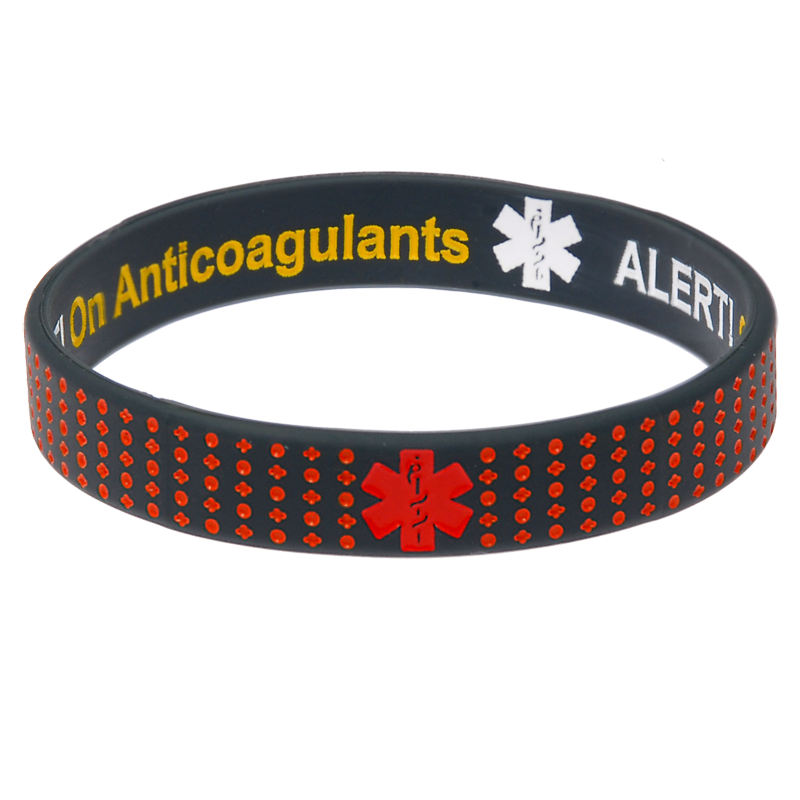
The right style depends on how likely your details are to change and the look you want. If your medication is stable, an engraved band lasts for years. If you are newly diagnosed and your dose or drug may change, a write-on or reversible silicone band is easy to update.
| Type | Best for | Detail |
|---|---|---|
| Pre-printed silicone | A single, stable fact (e.g. a moulded ANTICOAGULANT band) | The alert is printed and fixed — there is no space to add your own text |
| Write-on silicone | New diagnosis, changing dose, kids, travel | Hand-write your details on the panel and update them anytime |
| Engraved stainless steel | Stable medication, a jewellery-grade look | Laser-engraved and hard-wearing; engraved within 24–48 hours then dispatched |
| Custom ID (engraved or custom-printed) | Your exact drug, dose and contact | Made to order through Custom ID |
If you need your specific medication, dose or emergency contact added, choose a Custom ID or a write-on band — a pre-printed band cannot carry text you add yourself.
Where to buy one in Australia
Some pharmacies carry a small range of generic silicone bands, useful for a same-day purchase. For a band engraved with your own medication and emergency contact, most Australians order direct. Mediband has designed medical IDs in Australia since 2004, in silicone and stainless steel, kids to adult sizes, shipped Australia-wide. For a fuller run-through of every buying option, see our guide on where to buy a medical ID bracelet.
Browse medical alert bracelets →
A note for family and carers
If you care for someone on a blood thinner — an older parent, or a family member with atrial fibrillation — a medical ID is a simple safeguard for the days you are not there. Pair it with a wallet card listing their full medication list, and make sure the people around them know the band exists and what it means.
General information, not medical advice. This article is general information and is not a substitute for advice from a health professional. Never start, stop or change an anticoagulant, or decide what to engrave, without talking to your prescribing doctor or pharmacist. For non-urgent health questions in Australia you can call Healthdirect on 1800 022 222. In an emergency, call 000.
Frequently asked questions
Should you wear a medical alert bracelet if you take blood thinners?
Yes. Clinicians widely recommend a medical ID for anyone on an anticoagulant. It tells emergency responders you are at higher risk of bleeding, which changes how they treat an injury, a fall or a head knock — especially if you cannot speak for yourself. Confirm the details with your prescribing doctor.
What should a warfarin or blood thinner medical ID say?
Put the medication name first — for example WARFARIN or APIXABAN (Eliquis) — then the reason if there is room (such as AF), then your name and an emergency contact number. Naming the exact drug is helpful because warfarin and the newer direct oral anticoagulants are managed differently in hospital.
Which blood thinners are worth flagging on a medical ID?
Any anticoagulant: warfarin, apixaban (Eliquis), rivaroxaban (Xarelto), dabigatran (Pradaxa) and edoxaban, as well as antiplatelet medicines such as clopidogrel where your doctor advises. If you are unsure whether your medicine counts, ask your pharmacist.
Do chemists sell blood thinner medical alert bracelets?
Some pharmacies stock a small range of generic silicone bands, which can be handy for a same-day purchase, but engraved options with your own medication and contact details are usually ordered online. You can see the blood thinner and heart-condition range here.
How does a medical alert bracelet work in an emergency?
Paramedics and emergency staff are trained to check the wrist and neck for a medical ID. When they find one, they read your key conditions and medications straight away — before you reach hospital — and treat you accordingly. It is a low-tech, always-on way to carry the facts that matter most.

Written by
Founder, Mediband
Founder of Mediband; over 20 years providing medical IDs worldwide.
Comment(s)