Why Custom Medical Alert Bracelets Are Worth the Effort
The whole point of a medical alert bracelet is that it gets worn. A perfect ID locked in a drawer because it's ugly, uncomfortable, or feels "too medical" is no help to anyone. That's where customisation earns its place. A custom medical alert bracelet is one designed around the wearer — their condition, their style, their daily life, and the way they want to be seen.
People who choose custom bands wear them more consistently. That alone justifies every minute of design care up front. Beyond consistency, customisation lets you carry the exact information that matters most for your situation — not a one-size-fits-all label that tries to cover every patient.
The Core Information Every Custom Bracelet Should Carry
However stylish or personalised your design, the ID must do its job in an emergency. Five fields, in priority order:
- Wearer's first name (last name optional, useful for adults)
- Primary medical condition — the diagnosis that most affects treatment
- Critical medication or allergy — what NOT to give, or what's life-saving
- Emergency contact phone number — answered 24/7 by someone who can speak for you
- "See wallet card" or QR pointer — for fuller history without crowding the band
Five lines of clear, prioritised text beat fifteen lines of detail no one can read in a hurry. Less is more.
Common Mistakes When Customising
The most common errors come from over-personalising the wrong way:
- Decorative engraving that obscures alert text — pretty is good, illegible is bad.
- Quotes or dates of birth replacing critical info — your wedding date doesn't help a paramedic.
- Tiny fonts to fit more words — first responders need to read at arm's length, in a panic.
- No "Star of Life" or universal medical symbol — these flag the band as medical at a glance.
- Wrong contact — list the person who actually answers their phone, not the loved one with bad reception.
Recommended for you
Products related to this article
Hand-picked to go with what you just read.
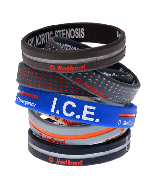
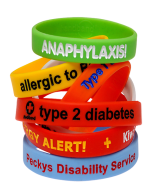
Choosing Materials and Style That Suit Your Life
The right material is the one your wearer will tolerate every day, in every situation they live through. Different lifestyles call for different choices:
Engraved Stainless Steel
Polished, durable, and dressy — looks good with business attire and casual wear alike. Engraving stays crisp for years. Ideal for stable conditions where info won't change. Hypoallergenic 316L stainless steel is the gold standard.
Designer Reversible Bands
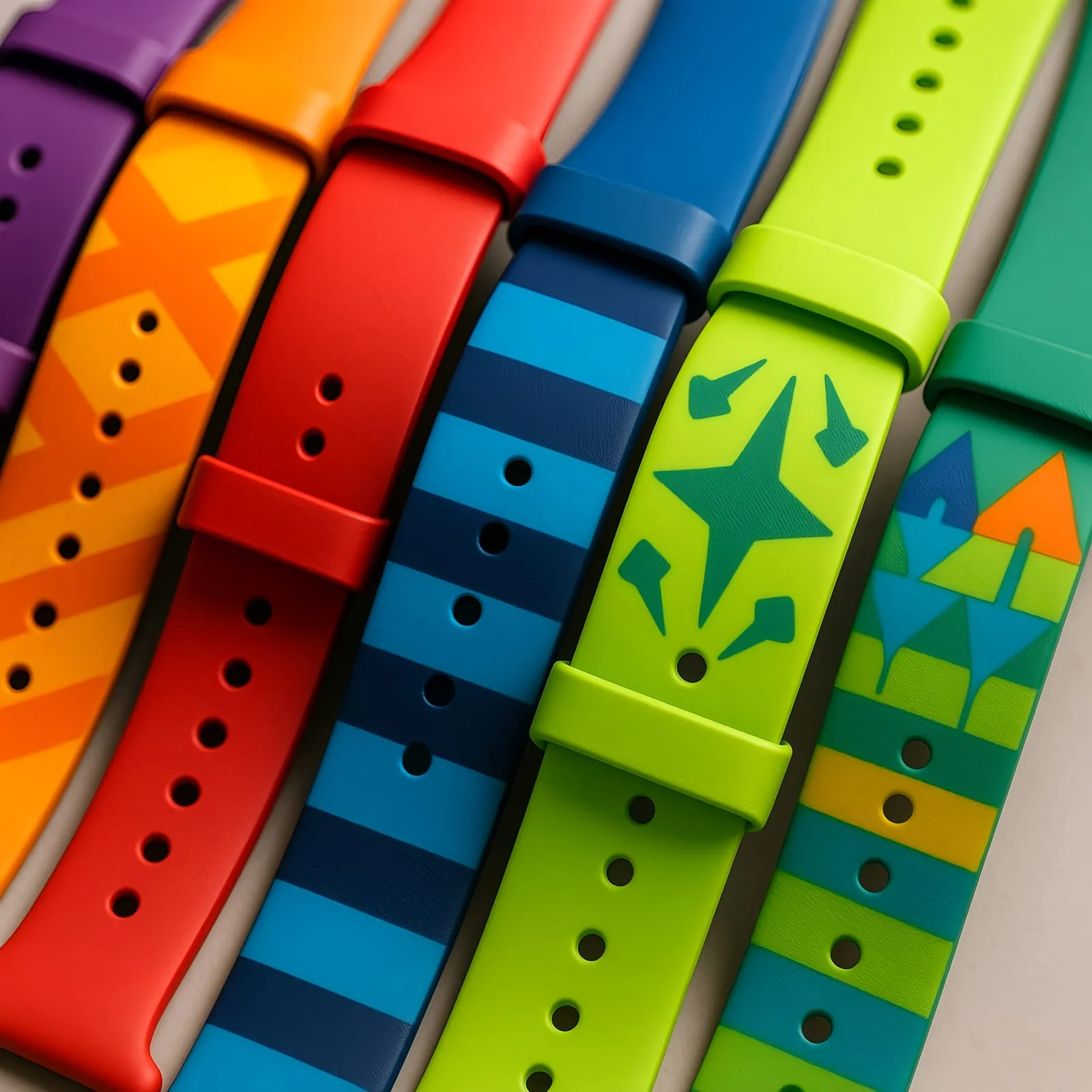
Stylish on one side, alert on the other. The wearer flips the band based on context — alert side out at the doctor or hospital, designer side out for daily life. Popular with teens, working professionals, and anyone who feels self-conscious.
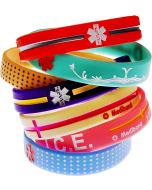
Custom Silicone (Write-On or Engraved)
Soft, waterproof, washable, and forgiving. Perfect for athletes, kids, and anyone whose information might change. Cost-friendly enough to replace seasonally or as conditions evolve.
Premium Materials — Rose Gold, Sterling Silver, Leather
For occasions when the wearer wants the band to look like jewellery first and a medical ID second. Ideal for adults attending events, weddings, formal dinners — when an obvious medical band feels out of place.
Designing for Wearability
A custom medical alert bracelet has to survive real life. Pay attention to:
- Sizing — measure the wearer's wrist with a tape measure (just below the wrist bone). Choose adjustable links or stretch fits for kids and seniors.
- Clasp type — snap clasps for kids and seniors; lobster clasps for daily-wear adults; magnetic for arthritic hands.
- Weight — heavy stainless can fatigue thin wrists; lighter materials are better for athletes and children.
- Hypoallergenic test — patch-test new materials, especially for skin sensitivities.
- Waterproofing — pool-safe and shower-safe matters more than people expect.
How to Order a Custom Medical Alert Bracelet (Without Losing the Plot)
The biggest mistake when customising is trying to fit too much. Here's a workflow that keeps the order short and the band useful:
- Decide the goal — daily wear, sports, hospital admission, formal occasions, all of the above?
- Pick the material and style — based on the wearer's habits, allergies, and aesthetic preference.
- Write the engraving on paper first — see it at full scale before committing.
- Show it to a paramedic, nurse, or doctor friend — they'll instantly say if anything is missing or unclear.
- Order a sample band — many suppliers will send a single test piece before a bulk family order.
- Plan for replacements — bands wear out; order with a future re-order in mind.
Where the Industry Is Headed
Custom medical alert design is moving fast. According to HealthDirect's medicines guidance, having clear medication information ready in an emergency is a key safety practice — and customised IDs increasingly use QR codes that link to a digital profile, scannable from any smartphone. Some bands now incorporate NFC chips for instant phone-tap access. The traditional engraved metal isn't going away — but it now sits alongside smarter, more flexible options for the wearer who wants both function and style.
Frequently Asked Questions
How much engraving can I fit on a custom medical alert bracelet?
Most bands hold 4-6 lines of about 20 characters each — roughly 100 characters total. Stick to the priority list: name, condition, critical med/allergy, contact. For longer histories, use a "see wallet card" pointer. Tiny fonts help nobody — keep print readable at arm's length.
Can I have a personalised quote or symbol added?
Yes — but never at the expense of the medical alert text. Most engravers will add a small symbol or initials next to the alert info if there's room. Keep the medical content unobstructed; decorative additions go in margins or on the reverse side.
What's the difference between a reversible designer band and a regular medical bracelet?
A reversible designer band has two visible sides — a stylish or decorative pattern on one, and the medical alert text and Star of Life on the other. The wearer can flip the band depending on the setting. Regular medical bracelets show alert info constantly.
How long does engraving last on stainless steel and silver bands?
Properly done laser or deep-stamp engraving on stainless steel lasts a decade or more — the metal can wear before the engraving does. Silver and rose gold engraving can soften over years of polishing; ask your supplier about deep-engraving for premium-metal pieces.
Should I order more than one custom bracelet?
Yes — a primary band for daily wear, plus a backup or alternate-style band for sports, formal occasions, or travel. If your bracelet is ever lost, broken, or being repaired, you don't want to be without an ID for days. Many wearers order two from the start.

Written by
Founder, Mediband
Founder of Mediband; over 20 years providing medical IDs worldwide.
← Previous
Medical Records — Health Privacy and Safety in 2026
Next →
Medical ID Bracelet for Kids: A Back-to-School Safety Essential
2 Comment(s)
robyn clyde
Nov 22, 2015 19:47
I am a diabetic how much I the band
Michael Randall
Nov 27, 2015 22:18
Pricing for medibands are displayed on all product pages. Please visit www.mediband.com for further details.