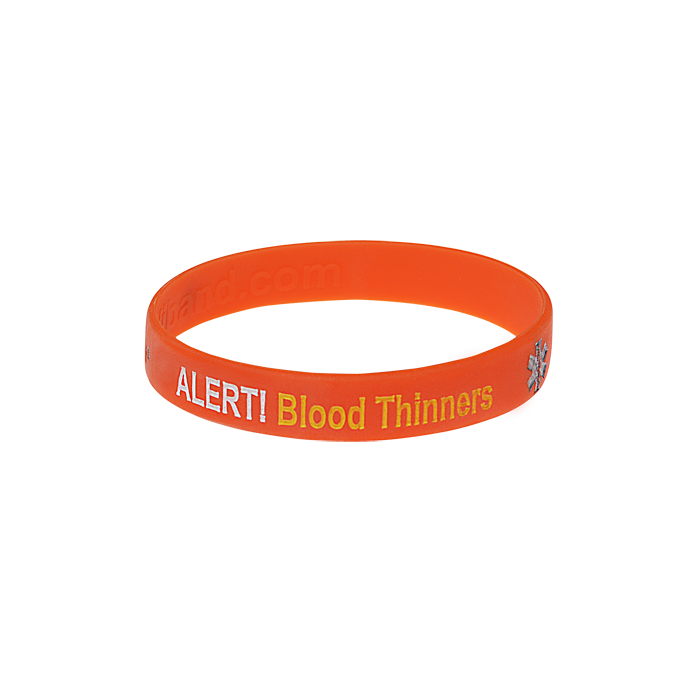
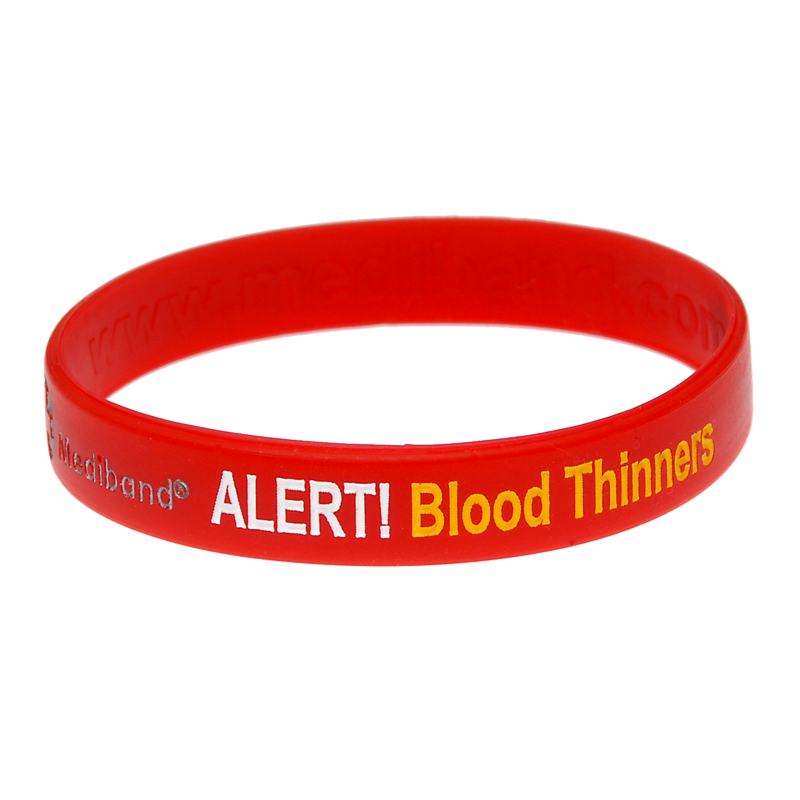
Blood Thinners - High Risk of Bleeding Medical Bracelet
£4.13
SKU
B1792
Secure checkout
VISA
Mastercard
Apple Pay
Google Pay
+5 more
Also accepted
AMEX
Afterpay
Zip
Klarna
PayPal
Enjoy life more knowing that you - or your loved one - can get immediate and appropriate treatment should something happen.
4.9 · 85 reviews
Since 2004
Looking for the full anticoagulant & pacemaker ID guide?
The Pacemaker hub covers anticoagulation engraving (warfarin, apixaban, dabigatran, rivaroxaban + reversal agents), AED placement (10cm ARC), MRI-conditional engraving and the full Mediband cardiac range. Same engraving conventions apply for blood-thinner-only wearers.
Stay safe
Anticoagulants, or blood thinners, are commonly used to treat conditions involving blood clots such as strokes, deep vein thrombosis, and pulmonary embolisms. It is also prescribed as a preventative measure against possible occurences of blood clots after major surgery. However, decreasing blood's ability to form clots comes with a high risk of excessive bleeding. Alerting attending medical professionals to your current medications play a large role in their diagnosis and prescribed treatment. Bleeding risk caused by anticoagulants is especially important in the case of needing major surgery, as excessive bleeding increases the risk of surgery. Alerting your attending physician to your use of anticoagulants allows your physician and surgeon to take safe preventative measures to lessen this risk, and ensure your surgery is performed as safely as possible.
Are you currently on a type of blood thinner medication? A patient's medical history is vital to the type of treatment received as well as the response time of medical professionals in the case of an emergency. Wearing a medical ID that states your current blood thinner medication alerts medical professionals to your most current medial history, and allows them to quickly identify the types of treatments suitable for you. This lowers the risk of a misdiagnosis or receiving the wrong treatment if no one is available to provide your patient history.
Enjoy life more knowing that you - or your loved one - can get immediate and appropriate treatment should something happen.
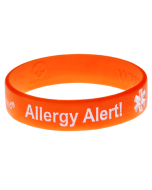
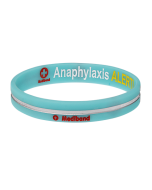
Phrase 1: Alert! Blood Thinners
Phrase 2: Alert! High Risk of Bleeding
Colour: Orange
Colour Infill: Yellow & White
Just started on anticoagulants? Read our blood thinners guide for safety tips, side effects and common medication questions.
Browse our full range of blood thinner bracelets.
What to engrave on a blood thinner bracelet
The band front is already printed, so the engraving is where you add the detail specific to you. Space is limited, so every line has to earn its place.
| Line | What to put | Why |
|---|---|---|
| Band front | ALERT! Blood Thinners | Pre-printed — read at a glance without handling |
| Line 1 | Your full name | Identifies the wearer if they cannot speak |
| Line 2 | The specific medication | "Warfarin", "Apixaban" — more useful than the drug class alone |
| Line 3 | An emergency contact number | Someone who knows your history and prescriber |
Name the medication, not just the category
"Blood thinners" tells a responder the class. The specific name tells them which one, and the different anticoagulants are not managed identically. If your prescription changes, the engraving is worth updating rather than leaving out of date.
Keep it to what matters in the first minute
A medical ID is read quickly, often by someone who has never met you. Name, medication, contact number. Resist listing a full history — detail that cannot be scanned at speed dilutes the lines that can.
For condition information itself, rather than what to put on a band, Healthdirect Australia is the reference to use, and your prescriber or pharmacist is the person to ask about your own medication.
Choosing between the styles we carry
Pre-printed silicone (this band)
The message is printed and colour-filled into the band, with your details engraved. Lightweight, waterproof, and low enough cost that keeping a spare is realistic. Suits everyday wear, sport and shower.
Reversible write-on and designer styles
The reversible anticoagulant bracelet carries the alert on one side and a plain face on the other, so it reads as jewellery until it needs to be turned over. Worth considering if the reason you would stop wearing an ID is how it looks.
Medication-specific bands
If you are on a single named anticoagulant long term, a band naming it directly removes a step for responders. See the Warfarin bracelet or the Xarelto bracelet. If you also have a pacemaker, the pacemaker bracelet and the pacemaker hub cover the combined engraving conventions.
Wearing and caring for the band
It only works if it is on
The most common failure of any medical ID is that it was taken off for a shower, a shift or a game and not put back. Silicone is waterproof and light specifically so it can stay on, which is why it outperforms smarter-looking IDs that live in a drawer.
Keeping the engraving readable
Engraved text is cut into the silicone rather than printed on top, so it does not rub off. Rinse the band occasionally with soap and water — the recess can hold grime over time, which is what makes engraving harder to read, not wear.
Check the fit
The band should sit snugly enough not to slide over the hand but loose enough to turn. A band that slips off is worse than no band at all, because you will believe you are wearing one. Check the fit again after significant weight change, and for children check it every few months as they grow.
Ordering more than one
Aged-care homes, disability and NDIS providers, schools and clinics often order medical IDs in quantity rather than one at a time, with different engraving on each band. We handle that as a single order with a per-wearer engraving list, so you are not placing forty separate checkouts.
It is also worth ordering a spare for yourself. A band that is lost on a Friday leaves you without identification until a replacement arrives, and at this price a second band is cheap insurance. For quantities, engraving lists or an account, request a bulk quote.
Blood thinner medical bracelet FAQs
What should I engrave on the bracelet?
Your name, the specific anticoagulant you take, and an emergency contact number. The band front already reads ALERT! Blood Thinners, so the engraving is for the detail that is specific to you.
Should I name the exact medication?
Where you can, yes. Naming the specific anticoagulant is more useful to a responder than the drug class alone. If your prescription changes, update the band rather than leaving old information on your wrist.
Is the engraving permanent?
It is cut into the silicone rather than printed on the surface, so it does not wear off with daily use, showering or sport. Occasional cleaning keeps it legible.
Can I wear it in water?
Yes. The band is silicone and waterproof, so it can be worn showering, swimming and playing sport. That matters, because an ID removed for those activities is an ID not being worn.
What size should I order?
Choose the size that sits snugly without sliding over the hand, and that you can still rotate on the wrist. See the sizing guidance on this page, and if you are between sizes the smaller one is generally safer for retention.
Where can I read about the medication itself?
For information about anticoagulants and how they work, see Healthdirect Australia. For anything about your own prescription, dose or bleeding risk, speak to your prescriber or pharmacist — we make identification products, not medical recommendations.
Browse the full medical alert bracelet range.
SKU B1792Manufacturer Mediband
| SKU | B1792 |
|---|---|
| Manufacturer | Mediband |
Shipping
In-stock orders are dispatched the same business day when placed before 12pm AEST, Monday to Friday (excluding public holidays). Orders placed after 12pm AEST, or on weekends and public holidays, are dispatched the next business day.
Express, Regular and Courier delivery estimates are shown at checkout and apply from the dispatch date.
More information about shipment and delivery times can be found on our shipping page.
Returns & guarantee
100% Quality Guarantee. Your satisfaction is our priority. If there is a confirmed quality issue, return the item to us in its original condition and packaging within 14 days of receipt and we will issue a full refund (excluding the original delivery charge) or replace the item.
In-stock items may be exchanged for a different size or colour, provided they are returned as new, unworn and in their original packaging within 14 days of receipt.
Custom and made-to-order items are produced to your specification, so we do not accept returns or exchanges for change of mind, size or colour. Please check your size, colour, spelling and details carefully before ordering. First Aid Kits and Defibrillator Supplies also cannot be returned or exchanged except for a confirmed quality issue.
Please view terms and conditions for further information.
Loading reviews…
Complete your order