When seconds count in a medical emergency, the difference between life and death can hinge on a small piece of adhesive paper. Medical stickers have quietly become one of healthcare's most underappreciated heroes, working behind the scenes to protect patients from preventable harm.
The reality is sobering: medication errors affect millions of patients annually, and miscommunication between healthcare providers remains a leading cause of adverse events. Medical stickers for patients serve as a visual safety net that alerts doctors, nurses, and emergency responders to critical health information before they prescribe, dispense, or administer care.
Understanding how these simple tools function—and why they matter—can help both healthcare providers and patients appreciate their life-saving potential.
What Are Medical Stickers and How Do They Work?
Medical stickers are specialized labels designed to convey essential health information quickly and clearly in clinical settings.
Unlike standard labels, these stickers use color-coding, symbols, and concise text to communicate urgent patient data that healthcare professionals need to see immediately. They function as instant visual alerts that bypass the need to search through lengthy medical records during time-sensitive situations.
The healthcare industry relies on several distinct types of sticker medical products, each serving a specific purpose:
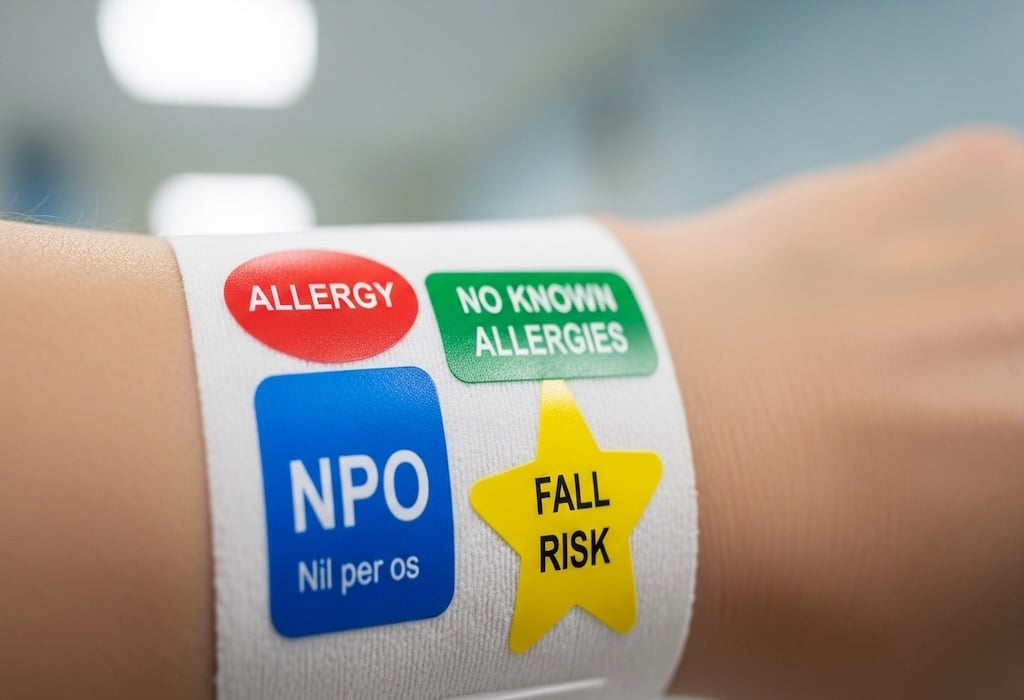
- Allergy alert stickers typically feature bright red backgrounds with bold text indicating substances the patient must avoid
- Chronic condition stickers identify ongoing health issues such as diabetes, epilepsy, or hemophilia
- Emergency alert stickers provide critical information for first responders, including blood type and emergency contacts
- Medication reconciliation stickers track prescribed drugs and prevent dangerous interactions
- Medical equipment stickers warn about devices like pacemakers or insulin pumps that require special consideration
These medical stickers for patients appear in various locations throughout the healthcare system. Hospitals apply them to patient wristbands, ensuring the information travels with the patient from admission through discharge. Pharmacies affix them to prescription bottles and medication packaging, while some patients attach medical stickers to personal items like wallets or phone cases to alert emergency personnel when they cannot communicate their medical needs.
Why Medical Stickers Are Important for Patient Safety
Preventing Medication Errors
Medication mistakes represent one of the most common—and most preventable—sources of patient harm in healthcare settings. When a sticker medical identifier clearly indicates that a patient is allergic to penicillin or currently taking blood thinners, it creates a visual checkpoint that prompts healthcare providers to double-check their decisions.
Research published in BMJ Quality & Safety examined the implementation of color-coded alert systems in hospital settings and found that visual identification systems, including medical stickers, contributed to a 41.6% reduction in preventable adverse drug events across participating institutions.
The speed at which healthcare professionals must work, particularly in emergency departments and intensive care units, increases the risk of oversight. Medical stickers for patients act as cognitive shortcuts, drawing attention to critical information without requiring someone to read through an entire chart. This becomes especially valuable during shift changes, when new staff members assume care for patients they've never treated before.
Improving Communication Between Healthcare Providers
Healthcare delivery involves multiple professionals working in coordination—doctors, nurses, pharmacists, technicians, and specialists. Each handoff between providers creates an opportunity for information to be lost or misunderstood. Sticker medical systems establish a standardized visual language that transcends verbal communication barriers and ensures consistency across different departments and care teams.
When a patient moves from the emergency room to radiology to a hospital floor, those stickers travel along, maintaining continuity of critical information. This becomes particularly important for patients who cannot advocate for themselves due to unconsciousness, language barriers, cognitive impairment, or age.
Reducing Allergic Reactions
Allergic reactions to medications, latex, or other medical materials can range from mild discomfort to life-threatening anaphylaxis. Medical stickers provide immediate identification of known allergens, allowing healthcare teams to proactively adjust their treatment plans and select alternative options. This preventive approach proves far more effective than responding to an allergic reaction after it occurs.
The visual prominence of allergy stickers also creates a culture of awareness among healthcare staff. When everyone on the care team can see at a glance that a patient has multiple drug allergies, it reinforces careful prescribing practices and encourages additional verification steps.
How Medical Stickers Support Specific Health Conditions
Chronic Conditions
Patients living with chronic illnesses require specialized consideration during medical treatment. Medical stickers for patients with conditions like diabetes alert providers that the patient may have unique blood sugar management needs, peripheral neuropathy, or increased infection risk. For individuals with kidney disease, stickers prompt healthcare teams to adjust medication dosages appropriately, since impaired kidney function affects how the body processes many drugs.
- Common chronic conditions that benefit from sticker medical identification include:
- Diabetes – alerts staff to blood sugar monitoring needs and hypoglycemia risks
- Epilepsy – informs about seizure precautions and rescue medications
- Hemophilia or bleeding disorders – critical before surgical procedures or invasive tests
- Kidney disease – prompts medication dosage adjustments
- Liver disease – affects drug metabolism and requires specialized care considerations
Allergic Reactions
Beyond medication allergies, some patients react to common medical supplies and environmental factors in healthcare facilities. Latex allergy stickers have become standard in hospitals, prompting staff to use latex-free gloves, equipment, and supplies. Food allergy stickers matter in hospital settings where meals are provided, preventing exposure to allergens through dietary services.
Contrast dye allergies represent another critical category, since many diagnostic imaging procedures rely on these substances. A clearly visible sticker prevents a potentially fatal reaction by alerting radiology staff to use alternative imaging protocols.
Mental Health Conditions
Mental health stickers serve important functions in acute care settings. They may indicate that a patient experiences severe anxiety during medical procedures and requires additional support. Autism spectrum stickers help healthcare providers understand that the patient may have sensory sensitivities, communication differences, or need modified approaches to care.
For patients with dementia or cognitive impairment, medical stickers for patients alert staff to confusion risks, wandering concerns, and the need for enhanced supervision throughout their healthcare experience.
Other Conditions
Heart disease stickers inform providers about cardiac considerations before procedures that might stress the cardiovascular system. Respiratory condition stickers highlight patients with asthma, COPD, or other breathing difficulties who may need supplemental oxygen. Anticoagulation therapy stickers warn that the patient takes blood thinners, which affects everything from dental work to surgery planning.
Selecting the Right Medical Stickers
Healthcare facilities must choose sticker medical products that meet their specific needs.
The selection process should consider durability—stickers must withstand frequent hand washing, sanitizers, and the general wear of the clinical environment without peeling, fading, or becoming illegible.
Understanding Sticker Categories
Different situations call for different types of medical stickers. Permanent stickers work well for ongoing conditions that won't change, while removable stickers suit temporary situations or when information needs regular updates. Size and placement also matter—stickers must be large enough to read quickly from a reasonable distance but not so large they cover other important information.
Color standardization helps create consistency across healthcare systems. Many facilities follow industry conventions where red indicates allergies, yellow signals cautions or fall risks, and purple often designates advance directive information.
Best Practices for Application
Proper application of medical stickers for patients requires attention to placement and protocol.
- Essential practices for effective sticker implementation include:
- Consistent placement on wristbands or charts so healthcare providers know exactly where to look
- Clean, dry surfaces to ensure proper adhesion and longevity
- Logical organization when multiple stickers are needed, with the most critical information most prominently displayed
- Staff training to ensure everyone understands what different stickers mean and how to respond
- Regular audits to verify that stickers remain legible and accurately reflect current patient information
- Clear protocols for when stickers get applied, who has authority to apply them, and how often they should be reviewed
Common Mistakes to Avoid
Several pitfalls can undermine the effectiveness of sticker medical systems. Overuse diminishes their impact—when every patient has multiple stickers for minor concerns, truly critical alerts can get lost in the visual noise. Inconsistent application creates confusion and reduces reliability.
Outdated information poses serious risks. A sticker indicating an allergy that was later determined to be a misdiagnosis but never removed could lead providers to avoid an effective treatment unnecessarily. Regular review and update processes prevent this problem.
Implementing Medical Stickers in Different Healthcare Settings
Hospital and Emergency Department Use
Hospitals represent the primary environment where medical stickers prove most critical.
Emergency departments benefit particularly from sticker systems because they treat patients who often arrive unconscious, confused, or unable to communicate their medical history. When paramedics apply sticker medical identifiers during transport or upon arrival, they provide emergency physicians with immediate access to life-saving information. The fast-paced nature of emergency care means doctors and nurses may have only seconds to assess a patient before making treatment decisions.
Inpatient hospital units use these visual alerts throughout a patient's stay. From admission through discharge, medical stickers for patients follow them as they move between departments for tests, procedures, and treatments.
Outpatient and Long-Term Care Facilities
Outpatient clinics, dialysis centers, and infusion therapy locations use medical stickers to maintain safety during repeated visits. Long-term care facilities and nursing homes employ sticker systems to help staff members who work with dozens of residents remember each person's unique medical requirements.
Home health agencies sometimes provide patients with sticker medical tools to keep on refrigerators or near front doors, ensuring that if emergency services are called, responders can quickly identify critical health information.
Pharmacy and Medication Management
Pharmacies use medical stickers for patients on prescription bottles to reinforce important information about proper usage, storage, and potential interactions. These reminders help patients and caregivers manage medications safely at home, reducing the risk of accidental misuse or dangerous combinations.
Moving Forward with Medical Stickers
Medical stickers represent far more than simple labels—they are essential communication tools that bridge gaps in healthcare delivery and protect vulnerable patients from preventable harm. From allergies to chronic conditions, these visual alerts ensure that critical health information reaches the right people at the right time, even in chaotic emergency situations or during routine care transitions.
The effectiveness of sticker medical systems depends on thoughtful implementation, consistent application, and ongoing commitment from healthcare organizations. When used properly, medical stickers for patients create layers of safety that catch potential errors before they cause harm.
For patients and families, understanding the role of these tools can help you advocate for your own safety. Don't hesitate to ask healthcare providers about the stickers you see or request them if you have critical allergies or conditions that require immediate identification. These small but mighty tools prove that sometimes the simplest solutions provide the strongest protection in healthcare's complex world.